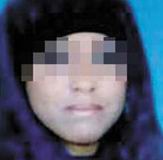
Nasra al-Enezi
Mass murderer Jennifer San Marco
Mass murderer · USA · 2006
Jennifer San Marco (December 6, 1961 – January 30, 2006) was a former US Postal…
7 victims
Jennifer San Marco
Mass murderer · USA · 2006
Jennifer San Marco (December 6, 1961 – January 30, 2006) was a former US Postal…
7 victims
 Judy Kirby
Mass murderer · USA · 2000
Judy Kirby was found guilty of murder for intentionally causing a head-on crash…
7 victims
Judy Kirby
Mass murderer · USA · 2000
Judy Kirby was found guilty of murder for intentionally causing a head-on crash…
7 victims
 Michele Anderson
Mass murderer · USA · 2007
Michele Kristen Anderson was charged in connection with the Carnation Massacre,…
6 victims
Michele Anderson
Mass murderer · USA · 2007
Michele Kristen Anderson was charged in connection with the Carnation Massacre,…
6 victims
 Geneviève Lhermitte
Mass murderer · Belgium · 2007
Geneviève Lhermitte was a Belgian woman convicted for killing her five children…
5 victims
Geneviève Lhermitte
Mass murderer · Belgium · 2007
Geneviève Lhermitte was a Belgian woman convicted for killing her five children…
5 victims
 Lulonda Flett
Mass murderer · Canada · 2011
Lulonda Flett (accused; sentenced to five life sentences) · Evelyn Laforte (mot…
5 victims
Lulonda Flett
Mass murderer · Canada · 2011
Lulonda Flett (accused; sentenced to five life sentences) · Evelyn Laforte (mot…
5 victims
 Rev. Gerald Robinson
Murderer · USA · 1980
Rev. Gerald Robinson (born April 14, 1938) was an American murderer and a Roman…
1 victim
Rev. Gerald Robinson
Murderer · USA · 1980
Rev. Gerald Robinson (born April 14, 1938) was an American murderer and a Roman…
1 victim
 George Percy Stoner
Murderer · United Kingdom · 1935
George Percy Stoner was sentenced to death on May 31, 1935. His sentence was co…
1 victim
George Percy Stoner
Murderer · United Kingdom · 1935
George Percy Stoner was sentenced to death on May 31, 1935. His sentence was co…
1 victim
 Scott Allen Hain
Homicide · USA · 1987
Scott Allen Hain was executed by lethal injection in Oklahoma on April3, 2003.…
2 victims
Scott Allen Hain
Homicide · USA · 1987
Scott Allen Hain was executed by lethal injection in Oklahoma on April3, 2003.…
2 victims
 Sylvester & Gavin Beukes
Mass murderers · Namibia · 2005
The Kareeboomvloer massacre occurred on the Kareeboomvloer farm in the Hardap R…
8 victims
Sylvester & Gavin Beukes
Mass murderers · Namibia · 2005
The Kareeboomvloer massacre occurred on the Kareeboomvloer farm in the Hardap R…
8 victims
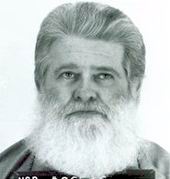 Michael Wayne Ryan
Murderer · USA · 1984
Michael Wayne Ryan (born 3 August 1948) was an American white supremacist and m…
2 victims
Michael Wayne Ryan
Murderer · USA · 1984
Michael Wayne Ryan (born 3 August 1948) was an American white supremacist and m…
2 victims
- Gender
- female
- Country
- Kuwait
- Location
- Al Jahra, Kuwait
- Date of birth
- 1986
- Age at first offence
- 23
- Characteristics
- revenge, arson, domestic violence, torture
- Victim profile
- Women and children
- Method of murder
- Fire
- Date(s) of murder
- August 15, 2009
- Years active
- 2009
- Date of arrest
- Next day
- Status
-
Sentenced to death
Sentenced to death on March 30, 2010
Background
Nasra Yussef Mohammad al-Enezi, known as Nasra al-Enezi, was the 23-year-old ex-wife of Zayed Zafiri, 36. The wedding fire occurred during wedding celebrations in which Zafiri was taking a second wife. Nasra al-Enezi and Zafiri had two children, Shaqha, 5, and Muhammad, 3, who were described as mentally handicapped.
The offence
The Kuwaiti wedding fire was an arson attack during a wedding ceremony in Jahra, Kuwait. Nasra al-Enezi poured petrol on a tent where women and children were celebrating and set it on fire. The tent had only one exit and did not meet fire safety regulations. The blaze engulfed the tent within three minutes and trapped many inside.
The government’s interior ministry and fire service reporting described the event as deliberate arson and noted gross errors in the marquee’s layout and supplies, including a lack of more than one entrance, the presence of large amounts of inflammable items, and overcrowding. Investigations at the scene found evidence of flammable substances.
Victims were all women and children because wedding celebrations were described as segregated along gender lines.
Investigation
Police were investigating a deadly blaze at a wedding tent that killed women and children. Early reporting said the ex-wife of the groom had confessed to starting the fire. Interior ministry spokesmen described identifying the perpetrator who confessed to committing the crime for personal reasons.
The Kuwait Fire Service Department’s final report highlighted gross errors and confirmed that the cause of the fire that led to deaths was arson. The report emphasised enforcing licensing requirements for events held in marquees to avoid tragedies in the future. It proposed measures including banning the holding of weddings in unlicensed tents.
Arrest
Nasra al-Enezi was arrested on August 16, a day after 41 women and children died in a fire at a wedding tent in Jahra, west of Kuwait City. Earlier, she was initially believed to be the groom’s ex-wife, but her defence lawyers said she was still his wife.
Defence lawyers alleged that after her arrest Nasra was two-months pregnant and was “deliberately aborted” by a prison guard with the help of an Asian nurse. They said prison officials failed to send her to the hospital for examination of what caused the abortion. Defence counsel said Kuwaiti law provided that death sentences for pregnant women were automatically commuted to life imprisonment, and they argued this might be the reason she was aborted.
On the plea hearing, Nasra denied setting the tent on fire and killing the people. When asked by Judge Adel al-Sager if she had set the crowded tent on fire and killed the people, she responded: “no”.
Trial
Nasra al-Enezi faced a murder trial after being accused of premeditated murder and starting a fire with the intent to kill.
Plea hearing (October 27, 2009)
A brief hearing took place in which Nasra was brought to the courtroom from the central prison, accompanied by five female guards. She was pale and looking frail and was allowed to sit outside the dock. She entered the court with her face fully covered; guards removed the cover revealing her stunned face.
When she approached Judge Adel al-Sager, she refused to answer questions. The judge ordered guards to give her water and told her to sit, and the judge then proceeded with other cases. At the judge’s second attempt to ask her plea, she denied the charges. Her three lawyers called for her release pending the full trial and accused prison officials of mistreating her. The prosecutor presented no arguments during the hearing.
Her lawyers said she was still married to Zayed Zafiri. They also said she denied involvement in the incident.
Judge Adel al-Sager rejected all defence petitions and set November 17 for the next session to hear defence arguments.
Confession and recantation
After arrest, al-Enezi recanted a confession she had given to police. In court, she stated she had only sprayed the tent with cursed water and did not set it on fire.
Sentencing
Nasra al-Enezi was found guilty of premeditated murder and starting a fire with the intent to kill. She was sentenced to death on March 30, 2010.
Appeals
A June 2011 report described ongoing debate in Kuwait about the woman’s death sentence. It said that on June 12th the Supreme Court upheld the Appeals Court’s decision to execute her. The decision was described as the first time in Kuwait’s history that the highest court upheld a death sentence for a woman.
Outcome
The Supreme Court upheld the Appeals Court’s decision to execute Nasra al-Enezi.
Aftermath
After the fire, Kuwait banned wedding tents. The incident triggered debate and discussion in Kuwait about safety standards for wedding tents and the application of licensing and fire safety rules. MPs demanded a probe into why authorities failed to apply strict safety and security rules for wedding tents. The interior ministry advised citizens against setting up tents in residential areas as they could obstruct rescue operations.
Emir Sheikh Sabah al-Ahmad al-Sabah expressed deep sympathy with the families of the victims and said he would not accept greetings on the occasion of the Muslim fasting month of Ramadan. Several MPs called on the government to declare a state of national mourning.
Other details
The incident was described as the deadliest civilian disaster in Kuwait in the last 40 years and “one of the worst civilian disasters in Kuwait’s modern history.” Reporting varied on early death toll figures: it was described as killing at least 57, 58, 55, and 43 women and children across different reports, with about 90 others wounded or with around 80 people injured in other reporting. Forensic identification was described as being needed because most bodies were charred beyond recognition, and DNA tests were described as needed to identify victims.
Witness and trial participants named in connection with the case included:
- Zaid al-Khabbaz, defence attorney
- Judge Adel al-Sager
- Defence attorney Khaled al-Awadhi, who spoke to reporters
- Defence attorney Saqqaf al-Saqqaf, who spoke to AFP
- Brig Gen Jassem al-Mansouri, a fire department chief quoted to AP
- Colonel Mohammad al-Sabr / Colonel Mohammad Al-Sabr, interior ministry spokesman (name variants)
- Colonel Mohammad al-Saber, an interior ministry spokesman quoted to Reuters
- Emir Sheikh Sabah al-Ahmad al-Sabah
Verbatim quotations included in the case reporting were:
- Nasra Yussef Mohammad al-Enezi, when asked by Judge Adel al-Sager if she had set the crowded tent on fire and killed the people: “no”
- Zaid al-Khabbaz, on the court not listening to the defence from the beginning: “did not listen to the defence from the beginning so the verdict was decided in advance”
- Zaid al-Khabbaz, describing the case progression: “an ordinary criminal case and became a case of public opinion with interference from political interests, which led to the issuance of a death sentence”
- Dr. Abdul Wahab Zafiri: “The issue from the beginning was very tragic. This disaster has many victims.”
- Dr. Abdul Wahab Zafiri: “I do not mean only those who died but also those who were injured or who witnessed the tragedy and were psychologically affected to a large degree, which may prevent them from attending such events again.”
- Dr. Abdul Wahab Zafiri, opposing the death penalty while showing sympathy: “The circumstances surrounding the accused pushed her to act in this manner. As for the victims' families, no one can blame them for not waiving their right to retribution. Some of them might even view death as insufficient for the torment of losing their loved ones.”
- Khidr al-Baroon: “In view of her young age and lack of experience, she lost control when she felt intense jealousy and experienced the trauma of her husband marrying another woman.”
- Khidr al-Baroon, hoping for reduction: “He hoped that the emir would reduce the punishment.”
- Najla al-Naqi, supporting the death sentence: “the best deterrent to any woman thinking of committing such an act”
- Najla al-Naqi: “It is not reasonable for the victims' families to waive their right (of retribution), especially since many families lost mothers and daughters.”
- Engineer Saleh al-Harbi: “It does not make sense for a woman, lured by the devil to kill 58 human beings, to stay alive.”
- Brig Gen Jassem al-Mansouri: “It was a horrific scene with bodies and many shoes stuck to the ground at the only exit. They must have trampled over one another.”


Spotted an error, or have more information about this case?