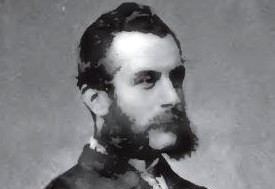
Eugéne-Marie Chantrelle
Murderer Charles Peace
Murderer · United Kingdom · 1876
Charles Peace was executed by hanging in Leeds on February 25, 1879. Charles Pe…
2 victims
Charles Peace
Murderer · United Kingdom · 1876
Charles Peace was executed by hanging in Leeds on February 25, 1879. Charles Pe…
2 victims
 William Henry Bury
Murderer · United Kingdom · 1888
William Henry Bury was executed by hanging in Dundee on April 24, 1889. He was…
2 victims
William Henry Bury
Murderer · United Kingdom · 1888
William Henry Bury was executed by hanging in Dundee on April 24, 1889. He was…
2 victims
 George Lamson
Murderer · United Kingdom · 1881
George Lamson was an English physician who, after the Crimean War, suffered fro…
1 victim
George Lamson
Murderer · United Kingdom · 1881
George Lamson was an English physician who, after the Crimean War, suffered fro…
1 victim
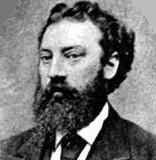 Henry Wainwright
Murderer · United Kingdom · 1874
Henry Wainwright was executed by hanging outside Newgate on 21st December 1875.…
1 victim
Henry Wainwright
Murderer · United Kingdom · 1874
Henry Wainwright was executed by hanging outside Newgate on 21st December 1875.…
1 victim
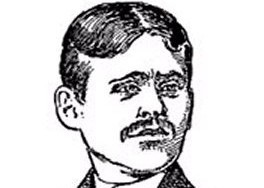 Israel Lipski
Murderer · United Kingdom · 1887
Israel Lipski Israel Lipski (1865 - 1888) was born Israel Lobulsk. He was of Po…
1 victim
Israel Lipski
Murderer · United Kingdom · 1887
Israel Lipski Israel Lipski (1865 - 1888) was born Israel Lobulsk. He was of Po…
1 victim
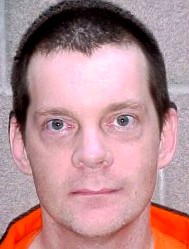 Milo Stanley
Murderer · USA · 1986
Milo Stanley was convicted in Yavapai County of fatally shooting his wife, Susa…
2 victims
Milo Stanley
Murderer · USA · 1986
Milo Stanley was convicted in Yavapai County of fatally shooting his wife, Susa…
2 victims
 Robert & Jonathan Maskell
Murderers · United Kingdom · 2005
January 2004 — Robert and Jonathan Maskell and Dwane Johnston left their birthd…
1 victim
Robert & Jonathan Maskell
Murderers · United Kingdom · 2005
January 2004 — Robert and Jonathan Maskell and Dwane Johnston left their birthd…
1 victim
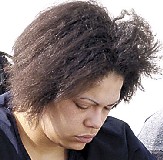 Shonda Walter
Murderer · USA · 2003
Name: Shonda Walter Victim: James Sementelli (83-year-old) Shonda Walter was se…
1 victim
Shonda Walter
Murderer · USA · 2003
Name: Shonda Walter Victim: James Sementelli (83-year-old) Shonda Walter was se…
1 victim
 Yahya Hussein Al-Raghwah
Murderer · Yemen · 2008
This is criminal justice, Yemen style. A man accused of raping and murdering an…
1 victim
Yahya Hussein Al-Raghwah
Murderer · Yemen · 2008
This is criminal justice, Yemen style. A man accused of raping and murdering an…
1 victim
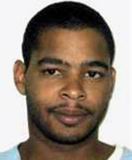 Jerry Terrell Jackson
Murderer · USA · 2001
Jerry Terrell Jackson was a Black male. He grew up in James City County. He was…
1 victim
Jerry Terrell Jackson
Murderer · USA · 2001
Jerry Terrell Jackson was a Black male. He grew up in James City County. He was…
1 victim
- Gender
- male
- Country
- United Kingdom
- Location
- Edinburgh , Scotland, United Kingdom
- Date of birth
- 1834
- Age at first offence
- 44
- Characteristics
- parricide, poisoner, to collect insurance money
- Victim profile
- H is wife Elizabeth Dyer, 26
- Method of murder
- Poisoning (by inserting opium into her food)
- Date(s) of murder
- January 1, 1878
- Years active
- 1878
- Date of arrest
- 4 days after
- Status
-
Executed
Executed by hanging at Calton Prison on May 31, 1878
Case details
Eugéne-Marie Chantrelle was a French-born school teacher who lived in Edinburgh. He poisoned his wife, Elizabeth Cullen Dyer, by inserting opium into her food.
Background
Chantrelle was born in Nantes in France in 1834, the son of a shipowner. He received an excellent education and studied at Nantes Medical School. In 1848, during the French Revolution, he appears to have lost all his money and left the medical school. He attended medical classes in Strasbourg and Paris, but despite showing promise he does not seem to have taken up a medical position.
In 1851, having developed republican sympathies, he joined protesters in Paris and received a sabre wound. The rise of the Napoleonic party forced him to travel to America, then northern England, and in 1866 he arrived in Edinburgh. As a cultured man and an excellent linguist, he gained connections in the educational world. He wrote books on the French language, which were adopted as textbooks, and he tutored in French, German, Latin and Greek.
He obtained a teaching post at a private school called Newington Abbey. Here he met and formed an inappropriate relationship with a pupil, Elizabeth Cullen Dyer. To hide the shame, he married Elizabeth in 1868 when she was sixteen. The first of four children was born two months after the wedding.
The offence
Chantrelle poisoned his wife, Elizabeth Cullen Dyer, by inserting opium into her food. He took out an insurance policy the previous year for one thousand pounds that included a clause for accidental death. He tried to disguise the poisoning by making the death look as if it was the result of a broken gas main in the bedroom.
Investigation
On New Year’s Day 1878, Elizabeth Chantrelle became unwell. A servant girl, given the day off, returned next morning to find her mistress unconscious. The servant girl called her master, and he asked if she could smell gas; she could not, but later there was a smell of gas and she turned it off at the meter.
Elizabeth was taken to the Royal Infirmary. Despite suggestions that she had been poisoned by coal gas, Professor Maclagan concluded that the symptoms were of narcotic poisoning and not gas. Elizabeth died later that afternoon without regaining consciousness.
A post mortem could find no trace of narcotic poisoning, but it showed that Elizabeth had not died of gas poisoning. The servant girl had seen stains of vomit on Elizabeth’s nightdress, and examination showed the presence of opium.
Immediately after Elizabeth’s funeral on 5 January 1878, where Chantrelle behaved in a very emotional manner, he was arrested. The case preparation involved a huge amount of evidence, with 115 witnesses and 198 productions.
Arrest and charges
Chantrelle was arrested immediately after Elizabeth’s funeral on 5 January 1878 and charged with poisoning his wife by administering opium in orange and lemonade.
Trial
The trial began on 7 May 1878. Chantrelle pleaded not guilty and the trial lasted four days. There was much public interest. The jury reached a “guilty” verdict in an hour and ten minutes. The death sentence was passed.
It was proved that Chantrelle was acquainted with the use and effects of poison, that he had opium in his possession, and that he had tried to explain his wife’s death by other means than poison. It was also proved that his protestations of innocence before he had been accused of anything were suspicious, that the fractured gas pipe in his wife’s bedroom had been deliberately broken, and that he had treated his wife cruelly and had threatened to poison her.
Chantrelle maintained that the stains on his wife’s nightclothes were put there to incriminate him, although he could not say by whom.
There was disquiet about some members of the jury, and the lack of poison in the body caused comment. A public petition was sent to the Home Secretary stating that evidence at the trial had been circumstantial. The Scotsman published details of meetings being held to protest at the death sentence. This was all to no avail.
Sentencing
The death sentence was passed after the jury verdict.
Appeals
Outcome
Chantrelle was hanged at Calton Prison on 31 May 1878. He never admitted his guilt.
A plaster cast of the head was taken for scientific purposes for use at the Phrenological Museum.
Timeline
- 1834 — Eugéne-Marie Chantrelle was born in Nantes, France the son of a shipowner
- 1848 — During the French Revolution, he appears to have lost all his money and left the medical school
- 18?? — Eugene attended Nantes medical School
- 18?? — Eugene attended medical classes in Strasburg and Paris
- 1851 — Eugene developed communistic tendencies and opinions (aged 17)
- 1851 — Eugene sailed to America after the success of the opposing Napoleonic Party
- 1851 — Elizabeth Dyer born (18.07.1851) daughter to John James Dyer and Elizabeth
- 1862 — Eugene moved to England: Newcastle and Leicester
- 1866 — Eugene moved to Edinburgh
- 1866 — Started teaching at the Private School: Newington Academy, Edinburgh
- 1866 — Met Elizabeth Dyer as a 15yr old student at Newington Academy, Edinburgh
- 1868 — Married Elizabeth at St Giles Cathedral (11.08.1868)
- 1868 — First son born 2 months later (22.10.1868) Eugene John Chantrelle
- 1870 — Male child born (18.04.1870)
- 1871 — Male child born (29.05.1871): Louis? (seven yrs when mother died)
- 1876 — James Ernest Chantrelle born (06.12.1876)
- 1877 — Financial hardship
- 1877 — October 18th Eugene took out £1000 life insurance with “Star Accident Insurance Co. Ltd” on Elizabeth; payable only in case of accident
- 1878 — January 1st Elizabeth complained of illness
- 1878 — January 2nd unconscious, taken to the Royal Infirmary, died
- 1878 — January 5th funeral, Eugene arrested immediately after and charged with murder
- 1878 — 3rd post-mortem because symptoms did not tally with supposed gas poisoning
- 1878 — Evidence of stains on nightdress found to be opium
- 1878 — January 22nd Chemical analysis first report
- 1878 — January 28th Inventory of bottles found at 81a George Street
- 1878 — March 4th Chemical analysis second report
- 1878 — Trial over four days May 7th – May 10th 1878
- 1878 — Found guilty of murdering his wife
- 1878 — May 31st Executed in the confines of Calton Jail and buried in the grounds home last updates contact
Other details
Chantrelle abused and bullied Elizabeth in every way possible, and on occasion she returned to her mother and at other times called the police. She once contacted a lawyer about divorce, but shrank from the exposure such a move would have caused at the time, and her deep affection for the children caused her to stay.
Chantrelle’s drunken, abusive and immoral habits began to tell on his professional work. He started to get into difficulties with money. His favourite threat against his wife was that he would poison her, although it is doubtful that he meant this until his money worries suggested a way of benefiting through her death.
On 5 January 1878, Chantrelle was arrested immediately after the funeral.
Chantrelle was forty four when he died.
Spotted an error, or have more information about this case?