
Bobby Wayne Swisher
Murderer Russell Ellwood
Murderer · USA · 1991
Russell Ellwood was a former taxi driver. Authorities suspected him of killing…
20 victims
Russell Ellwood
Murderer · USA · 1991
Russell Ellwood was a former taxi driver. Authorities suspected him of killing…
20 victims
 Robert Martines Perez
Murderer · USA · 1994
Name: Robert Martines Perez · Other name used in proceedings: Robert Martinez P…
15 victims
Robert Martines Perez
Murderer · USA · 1994
Name: Robert Martines Perez · Other name used in proceedings: Robert Martinez P…
15 victims
 Billy Frank Vickers
Murderer · USA · 1993
Billy Frank Vickers Vickers was executed by lethal injection in Texas on Januar…
14 victims
Billy Frank Vickers
Murderer · USA · 1993
Billy Frank Vickers Vickers was executed by lethal injection in Texas on Januar…
14 victims
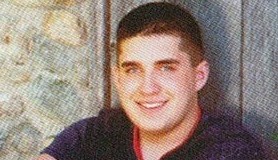 Tyler Peterson
Mass murderer · USA · 2007
Tyler Peterson committed suicide by shooting himself the same day victims. Tyle…
6 victims
Tyler Peterson
Mass murderer · USA · 2007
Tyler Peterson committed suicide by shooting himself the same day victims. Tyle…
6 victims
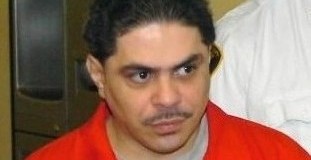 Anthony Santos
Homicide · USA · 2006
Anthony J. Santos was convicted of stabbing another man to death inside a Bethl…
1 victim
Anthony Santos
Homicide · USA · 2006
Anthony J. Santos was convicted of stabbing another man to death inside a Bethl…
1 victim
 Shonda Johnson
Murderer · USA · 1997
Shonda Johnson was also known as Shonda Nicole Richards. She was White. She was…
1 victim
Shonda Johnson
Murderer · USA · 1997
Shonda Johnson was also known as Shonda Nicole Richards. She was White. She was…
1 victim
 Richard Donald Foster
Murderer · USA · 1984
Richard Donald Foster was executed by lethal injection in Texas on May 24, 2000…
1 victim
Richard Donald Foster
Murderer · USA · 1984
Richard Donald Foster was executed by lethal injection in Texas on May 24, 2000…
1 victim
 Donald J. Hall
Murderer · USA · 1992
Donald J. Hall (DOC ID 990113) · Donald Hall was sentenced to death on November…
1 victim
Donald J. Hall
Murderer · USA · 1992
Donald J. Hall (DOC ID 990113) · Donald Hall was sentenced to death on November…
1 victim
- Gender
- male
- Country
- USA
- Location
- Augusta County, Virginia, USA
- Date of birth
- March 2, 1976
- Age at first offence
- 21
- Characteristics
- kidnapping, rape
- Victim profile
- Dawn McNees Snyder (female, 22)
- Method of murder
- St abbing with knife
- Date(s) of murder
- February 5, 1997
- Years active
- 1997
- Date of arrest
- February 23, 1997
- Status
-
Executed
Executed by lethal injection in Virginia on July 23, 2003
Case record: Bobby Wayne Swisher
Status / outcome
Bobby Wayne Swisher was executed by lethal injection in Virginia on July 23, 2003.
Timeline
- February 5, 1997 — Dawn McNees Snyder disappeared from a florist shop where she worked in Stuarts Draft in Augusta County.
- February 21, 1997 — Snyder’s body was found near a riverbank about two miles from the florist shop; animals had eaten extensive portions of her face, neck, and upper chest.
- February 22, 1997 — Swisher, age 20, was at an apartment with two friends, one of whom was Clarence Henry Ridgeway, Jr.; Swisher told Ridgeway that he had abducted, raped, sodomized, and killed Snyder.
- February 23, 1997 — Sergeant William E. Lemerise, Sergeant K.W. Reed, and two other deputies went to a house where Swisher resided with his uncles, Paul H. Swisher and William E. Swisher; Swisher accompanied the deputies for questioning.
- February 24, 1997 (after midnight) — Swisher confessed in an audiotaped confession after being twice read his Miranda rights.
- April 28, 1997 — An Augusta County grand jury indicted Swisher for capital murder of Dawn McNees Snyder and related non-capital offenses.
- October 29, 1997 — A jury convicted Swisher of capital murder and related convictions; jurors were to decide whether to recommend the death penalty or life in prison after a sentencing hearing concluded Thursday.
- February 1998 — The Supreme Court of Virginia sentenced Swisher to death for the capital murder.
- 1998 (Direct appeal) — The Supreme Court of Virginia affirmed Swisher’s conviction and sentence of death in Swisher v. Commonwealth , 506 S.E.2d 763 (Va. 1998) (Direct Appeal).
- July 1, 2003 — Governor Mark R. Warner delayed Swisher’s scheduled execution by three weeks to allow defense attorneys time to argue before the Virginia Supreme Court.
- July 17, 2003 — The appeal to the Virginia Supreme Court was turned down on procedural grounds.
- July 22, 2003 — Swisher’s execution was scheduled for July 22, 2003 after the Governor declined to intervene again; he was pronounced dead on July 23 following execution by lethal injection.
- July 23, 2003 — Swisher was executed by lethal injection; he was pronounced dead at 9:05 p.m. after a lethal injection at Greensville Correctional Center in Jarratt.
Background
Bobby Wayne Swisher was a high school dropout and a former construction worker. He had been on death row since February 20, 1998 and had been a trustee for nearly all of his years on death row. He became a “born again” Christian in 2002.
The offence
On February 5, 1997, Dawn McNees Snyder disappeared from a florist shop where she worked in Stuarts Draft in Augusta County. Her body was found on February 21, 1997, near a riverbank about two miles from the florist shop.
Swisher abducted Dawn McNees Snyder from her flower shop at knifepoint. He forced her to leave through a rear door and directed her to go with him. He took her to a field near the South River.
Swisher raped Snyder and performed oral sodomy on her. After he raped her, she put her clothes on, and he forced her to perform another act of oral sodomy.
Swisher decided to kill Snyder because she had “seen his face.” He “pulled out the butcher knife” that had “ridges around the edge of the blade,” and he “slit her across the left side of the face and was holding her; then slit her throat and then gouged her and then tossed her into a river.” Swisher watched her in the river and asked her, “[a]re -- are you dead yet?” After Snyder floated for awhile, Swisher saw her “crawl up the bank.” Swisher then ran away, going straight to his house from that field. Swisher threw his knife in the river.
Animals had eaten extensive portions of her face, neck, and upper chest. A medical examiner, Dr. David Oxley, performed an autopsy but was unable to render an opinion about the specific cause of death. He did state that it was an inescapable conclusion that Snyder’s death was the result of violent causes “probably related to the neck.” Dr. Oxley was not able to determine positively whether the victim’s throat had been cut because animals had eaten her larynx, trachea, and the large arteries and veins that were in her neck. The exact cause of death was not determined.
Investigation
After the slaying, Swisher told a friend about the murder. Clarence Henry Ridgeway, Jr. later contacted the Augusta County Sheriff’s Office after being informed by Swisher.
Swisher was taken in for questioning. He admitted in an audiotaped confession that he sodomized, raped, and murdered Snyder by cutting her throat and that after he cut her throat, he threw her into the South River.
Sergeant William E. Lemerise and Sergeant K.W. Reed advised Swisher that he was a suspect in the murder of Dawn Snyder and asked if Swisher would accompany the deputies to the Sheriff’s Office for questioning. Swisher accompanied the deputies.
Swisher’s transportation to the Sheriff's Office included restraints. Sergeant Lemerise informed Swisher that he would be required to wear handcuffs while en route because of a departmental policy requiring restraints for safety considerations, even though he was not under arrest. When Swisher arrived at the Sheriff’s Office, the handcuffs were immediately removed and he was taken to a “briefing room,” described as an open room with a coffee machine and a drink machine, and without bars on the windows or door locks.
In the briefing room, Swisher was permitted to smoke cigarettes and was given coffee. Sergeant Lemerise explained to Swisher that he was not under arrest, that he was a suspect, that sheriff’s personnel would ask questions, and that he was free to leave. Swisher spoke with the deputies but did not confess until after he was arrested and twice read Miranda rights after midnight on February 24.
Arrest / detention
Swisher resided with his uncles, Paul H. Swisher and William E. Swisher. On February 23, 1997, deputies went to that house and Swisher accompanied them to the Sheriff’s Office.
At the Sheriff’s Office, Swisher was taken to a briefing room where he was told he was free to leave.
Trial
Indictment and charges
On April 28, 1997, an Augusta County grand jury indicted Swisher for:
- capital murder of Dawn McNees Snyder “in the commission of abduction with the intent to defile the victim of such abduction or in the commission of or subsequent to rape or forcible sodomy in violation of Code § 18.2-31”
- abduction with intent to defile Snyder in violation of Code § 18.2-48
- rape of Snyder in violation of Code § 18.2-61 and forcible sodomy of Snyder in violation of Code § 18.2-67.1
Verdicts
Swisher was tried before a jury and found guilty of the charged offenses.
The jury fixed Swisher’s punishment at:
- life imprisonment for the abduction with intent to defile conviction
- life imprisonment for the rape conviction
- life imprisonment for the forcible sodomy conviction
Penalty phase and sentencing
In the penalty phase of the capital murder trial, the jury fixed Swisher’s punishment at death. The jury found that he represented a continuing serious threat to society and that his offense was outrageously or wantonly vile, horrible, or inhuman because it involved torture, depravity of mind, or aggravated battery to the victim.
After considering a report prepared by a probation officer pursuant to Code § 19.2-264.5, the trial court sentenced Swisher in accord with the jury verdicts.
Evidence
On February 22, 1997, Swisher was at an apartment with two friends, one of whom was Clarence Henry Ridgeway, Jr. Swisher told Ridgeway that he abducted, raped, sodomized, and killed Snyder.
Swisher’s confession to Ridgeway included the following details, stated verbatim as part of the case record:
“You know the woman, Dawn Snyder ... I killed her.”
He also related the following events:
- that on February 5, 1997 about 7:15 p.m., Swisher’s uncle drove Swisher by car to a grocery store near the florist shop where Snyder worked
- that Swisher left the grocery store and walked to the florist shop
- that Swisher entered the shop, approached Snyder, and said, “I have a gun in my pocket.”
- that Swisher showed Snyder a “butcher knife with ridges” and directed her to go with him
- that Swisher forced Snyder to leave the florist shop through a rear door and they walked for some distance until they reached a field by the South River
- that Swisher stopped Snyder and told her to “suck his dick.”
- that Swisher forced Snyder to perform an act of oral sodomy and made her remove her clothes
- that after he raped her, she put her clothes on and he forced her to perform another act of oral sodomy
- that Swisher decided to kill Snyder because she had “seen his face.”
- that he “pulled out the butcher knife” with “ridges around the edge of the blade,” and then “slit her across the left side of the face and was holding her; then slit her throat and then gouged her and then tossed her into a river.”
- that he walked along the riverbank, watching her in the river and asking her, “[a]re--are you dead yet?”
- that after Snyder floated for awhile, Swisher saw her “crawl up the bank”
- that Swisher then ran away, “straight to his house from that field”
- that Swisher threw his knife in the river
- that after his confession to Ridgeway, Swisher stated, “[i]t feels like [I] could do it again.”
Swisher’s DNA was used as evidence. The highest concentration of blood on Snyder’s clothing appeared on a shirt around the neck area extending onto the chest area.
Forensic scientist Patricia Taylor, in the Forensic Biology Unit of the Western Regional Laboratory for the Commonwealth of Virginia, qualified as an expert on forensic DNA. Taylor examined panties found on Snyder’s body. Her examination revealed DNA consistent with Swisher’s DNA in semen deposited on Snyder’s panties. Taylor testified that the odds of the DNA found on Snyder’s panties belonging to someone other than Swisher were “one in 380,000,000 in the Caucasian population.”
Spots of blood were found on Swisher’s coat. Taylor testified that the DNA profile obtained from that coat was consistent with the DNA profile of Snyder and different from the DNA profile of Swisher. Taylor testified that the probability of randomly selecting an individual unrelated to Snyder with a DNA profile consistent with the DNA on Swisher’s coat was approximately “one in 1.3 billion in the Caucasian population.”
Taylor also testified that the DNA profile obtained from spermatozoa heads extracted from the victim’s stomach and esophagus were consistent with Swisher’s DNA profile.
Appeals
Swisher’s appeals included both the automatic review of the death sentence and his appeal of his capital murder conviction and related non-capital convictions. The case Swisher v. Commonwealth , 506 S.E.2d 763 (Va. 1998) (Direct Appeal) affirmed his conviction and death sentence. The Supreme Court of Virginia consolidated the automatic review of Swisher’s death sentence with his appeal of the capital murder conviction.
The Supreme Court of Virginia held that:
- defendant was not entitled to bill of particulars
- deputies did not violate defendant’s Miranda rights by questioning defendant at sheriff’s office before arrest
- defendant voluntarily consented to testing of his jacket for blood
- defendant was not entitled to change of venue based on media coverage
- indictment adequately informed defendant of charges against him
- voluntary immediate drunkenness was not admissible to disprove malice or reduce offense to manslaughter
Sentencing / execution
Execution details
Swisher was executed at Greensville Correctional Center in Jarratt. He was pronounced dead at 9:05 p.m. after a lethal injection.
Before the injection, Swisher was led into the execution chamber and strapped to a gurney. He raised his head and appeared to smile as the prison chaplain spoke to him in his ear.
Swisher made a final statement:
“I hope you all can find the same peace in Jesus Christ as I have.”
Clemency and scheduling
Swisher’s execution was originally scheduled for July 1, but Governor Mark R. Warner delayed it by three weeks to allow defense attorneys time to argue before the Virginia Supreme Court. Warner issued a statement explaining that Swisher’s execution date would be delayed for three weeks until July 22, 2003, for the sole purpose of allowing Swisher to petition the Supreme Court of Virginia and assert his claim regarding the verdict form. Warner stated he would not intervene if the Court denied relief or refused to consider the petition on procedural or other grounds.
Defense attorneys sought clemency and argued Swisher was entitled to a new sentencing hearing because the jury was not told that life in prison without the possibility of parole was also an option. The Supreme Court of Virginia rejected the appeal on procedural grounds on July 17, 2003.
Other details
- Trial judge: Thomas H. Wood, J.
- Supreme Court opinion included the statement: “HASSELL, Justice.”
- Commonwealth’s Attorney Lee Ervin testified to jurors in closing remarks, including remarks about Snyder and Swisher’s actions while she struggled toward the riverbank, stating: “She's splashing around and he's standing, looking down, saying 'Aren't you dead yet, aren't you dead yet,'”
- Defense attorney Gordon Poindexter Jr. argued in closing remarks: “If he hadn't taken her down there and cut her neck and thrown her in the water she wouldn't have died,” and: “That doesn't mean he committed capital murder. There are other kinds of murder.”
- Swisher’s mother, Blanche Swisher, sobbed through most of her testimony during sentencing as she described her son’s life lacking discipline, including that “He wouldn't listen to nobody,” and that “It tore Bobby up pretty bad.”
- Swisher’s father rarely saw the boy and at times denied being his father.
Spotted an error, or have more information about this case?