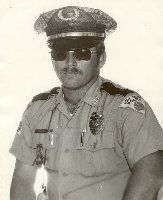
John Edward Swindler
Murderer Ervil LeBaron
Murderer · USA · 1972
Ervil Morrell LeBaron (1925 to August 16, 1981) was the leader of a polygamous…
35 victims
Ervil LeBaron
Murderer · USA · 1972
Ervil Morrell LeBaron (1925 to August 16, 1981) was the leader of a polygamous…
35 victims
 Brian Kevin Rosenfeld
Murderer · USA · 1985
Brian Kevin Rosenfeld Brian Kevin Rosenfeld was sentenced to three concurrent l…
23 victims
Brian Kevin Rosenfeld
Murderer · USA · 1985
Brian Kevin Rosenfeld Brian Kevin Rosenfeld was sentenced to three concurrent l…
23 victims
 Marvin Gray
Murderer · USA · 1975
Marvin Gray was convicted killer who claimed responsibility for 23 slayings and…
23 victims
Marvin Gray
Murderer · USA · 1975
Marvin Gray was convicted killer who claimed responsibility for 23 slayings and…
23 victims
 Yahweh ben Yahweh
Murderer · USA · 1980
Yahweh ben Yahweh was born and legally named Hulon Mitchell Jr. (October 27, 19…
23 victims
Yahweh ben Yahweh
Murderer · USA · 1980
Yahweh ben Yahweh was born and legally named Hulon Mitchell Jr. (October 27, 19…
23 victims
 Ricky Lee Grubbs
Murderer · USA · 1984
Ricky Lee Grubbs — defendant · Jerry Russell Thornton — victim (found dead insi…
1 victim
Ricky Lee Grubbs
Murderer · USA · 1984
Ricky Lee Grubbs — defendant · Jerry Russell Thornton — victim (found dead insi…
1 victim
 Stephanie Nicole Erends
Murderer · USA · 2008
Stephanie Nicole Erends was convicted of first-degree murder with special circu…
1 victim
Stephanie Nicole Erends
Murderer · USA · 2008
Stephanie Nicole Erends was convicted of first-degree murder with special circu…
1 victim
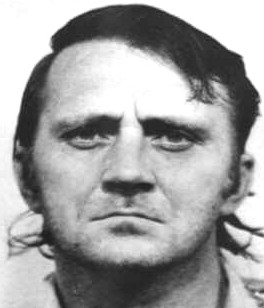 William Vandiver
Murderer · USA · 1983
William E. Vandiver was a White male. His date of birth was 08-26-1948. His exe…
1 victim
William Vandiver
Murderer · USA · 1983
William E. Vandiver was a White male. His date of birth was 08-26-1948. His exe…
1 victim
 Frederick Michael Baer
Murderer · USA · 2004
Frederick Michael Baer was sentenced to death on June 9, 2005. Aggravating circ…
2 victims
Frederick Michael Baer
Murderer · USA · 2004
Frederick Michael Baer was sentenced to death on June 9, 2005. Aggravating circ…
2 victims
- Gender
- male
- Country
- USA
- Location
- Sebastian County, Arkansas, USA
- Date of birth
- 1944
- Age at first offence
- 32
- Characteristics
- torture, to avoid arrest, history of mental illness
- Victim profile
- ??? - Randy Basnett, 30 ( Fort Smith police officer )
- Method of murder
- Shooting
- Date(s) of murder
- ??? - September 24, 1976
- Years active
- 1976
- Date of arrest
- Same day
- Status
-
Executed
Executed by electrocution in Arkansas on June 18, 1990
Background
John Edward Swindler was executed by electrocution in Arkansas on June 18, 1990.
Swindler was wanted for the murders of two teenagers in Columbia, S.C., his hometown, when he stopped at a service station in Fort Smith, Arkansas on September 24, 1976.
Swindler had been ordered to undergo examinations at the Arkansas State Hospital in Little Rock prior to his first trial in order to determine his mental condition, and he spent thirty-six days at the state hospital.
Swindler was represented at his second trial by Don Langston, now a state circuit-chancery judge in Sebastian and Crawford Counties. Judge Langston had also represented Swindler at his first trial and won the reversal of that conviction in the Arkansas Supreme Court. Langston was an attorney for over seventeen years (seven with the public defender's office) at the time of the second trial. Langston was assisted by John W. Settle, now a municipal judge in Fort Smith, Arkansas.
The offence
On September 24, 1976, Swindler, in flight from South Carolina where he was wanted for the murders of two teenagers, stopped off at a service station in Fort Smith, Arkansas apparently to ask directions to Kansas City.
At the service station, Swindler was approached by Randy Basnett, a Fort Smith police officer. Swindler shot and killed Officer Basnett.
Officer Basnett stopped at the service station across from Arkansas State Police headquarters in Fort Smith, Arkansas.
While Officer Basnett was at the service station, Swindler pulled into the same location.
After Officer Basnett radioed dispatchers that Swindler was at the service station, backup officers were dispatched to his location.
Before other officers could reach Basnett’s location, Swindler reached inside his car, ostensibly to retrieve his driver’s license. Instead of a driver’s license, Swindler came out of the car with a pistol in his hand and began firing at Officer Basnett, hitting him twice in the chest.
Swindler then scrambled back into his stolen vehicle and sped away.
Officer Basnett shot six times at Swindler’s vehicle as he fled. Two bullets struck Swindler and the remaining four hit the fleeing car.
In addition to firing at the fleeing car, the evidence in the state court record included that shots were fired in the direction of the station-store front.
The evidence was that the officer was struck twice and that Swindler fired twice, and the Arkansas Supreme Court concluded that this did not mean Swindler had any regard for other people in the vicinity.
The Arkansas Supreme Court found that there were at least three people other than the officer in the vicinity: Tinder, Cardwell, and Mrs. Cardwell. It found that Swindler could not even swear that he only shot twice, that he could not swear that he knew he shot a policeman until after it was done, and that Tinder was standing behind the counter inside a store front that was virtually all glass. The Arkansas Supreme Court also found that there may have been a few gasoline pumps or stanchions between Swindler and the store front but that the evidence still showed ample evidence Swindler had no regard for the lives of others in the vicinity.
Investigation
Information about Swindler—his crimes, the vehicle he was driving, and the fact that he was armed and dangerous—had been given to Fort Smith Police Department officers in their daily briefing that day.
When officers found and arrested Swindler in a wooded area east of the scene of the shooting, he had several weapons and hundreds of rounds of ammunition in his possession.
Arrest
Officers found and arrested Swindler in a wooded area east of the scene of the shooting.
At the time of arrest, Swindler had several weapons and hundreds of rounds of ammunition in his possession.
Trial
First conviction and reversal
Swindler was convicted of capital felony murder for the shooting death of Officer Basnett, and was sentenced to death.
The Supreme Court of Arkansas overturned that conviction because the trial court erroneously refused to grant a change of venue from Sebastian County (the situs of the killing) and because the trial court failed to excuse three jurors.
Swindler v. State, 264 Ark. 107, 569 S.W.2d 120 (1978).
Retrial, second conviction, and appeals
Swindler was retried in Scott County, Arkansas, which adjoins Sebastian County. He was convicted of capital felony murder for the second time and sentenced to death.
The second conviction and death sentence were affirmed by the Supreme Court of Arkansas.
Swindler v. State, 267 Ark. 418, 592 S.W.2d 91 (1979), cert. denied, 449 U.S. 1057, 101 S.Ct. 630, 66 L.Ed.2d 511 (1980).
Swindler sought post-conviction relief pursuant to Rule 37 of the Arkansas Rules of Criminal Procedure. This relief was denied by the Supreme Court of Arkansas.
Swindler v. State, 272 Ark. 340, 617 S.W.2d 1 (1981), cert. denied, 454 U.S. 933, 102 S.Ct. 431, 70 L.Ed.2d 240 (1981).
After exhausting state post-conviction remedies, Swindler filed a writ of habeas corpus in the District Court pursuant to 28 U.S.C. Secs. 2242 and 2254. He alleged six grounds for relief:
- A venireman was erroneously excluded after he voiced only general objections to the death penalty.
- Swindler was improperly denied a second change of venue.
- Jurors biased against Swindler were seated against the objections of defense counsel.
- Swindler was denied a continuance at the penalty phase of his trial to enable him to present a witness on his behalf.
- An “aggravating circumstance” was erroneously considered by the jury during the penalty phase of his trial.
- Swindler was denied effective assistance of counsel at trial.
After a hearing, the District Court denied Swindler’s petition.
693 F.Supp. 760 (E.D. Ark. (1988)).
Swindler appealed and repeated his six grounds for relief. The Court of Appeals for the Eighth Circuit affirmed the District Court’s judgment denying the petition.
The appeal was docketed as 88-2387, and the Court of Appeals for the Eighth Circuit proceedings included:
- Submitted April 12, 1989.
- Decided Sept. 26, 1989.
- Rehearing and Rehearing En Banc Denied Nov. 6, 1989.
The appellate panel included Circuit Judges BOWMAN and WOLLMAN, and Senior Circuit Judge HENLEY.
Voir dire juror exclusion issue
Swindler contended that a member of the venire, Mr. Carmack, was excluded improperly after expressing only a general objection to the death penalty.
The opinion set out a quoted standard from Wainwright v. Witt and Witherspoon v. Illinois as discussed in the court’s analysis. It also included a quoted standard from Witt:
“prevent or substantially impair the performance of his duties as a juror in accordance with his instructions and his oath.”
The decision addressed whether excluding prospective capital sentencing jurors because of opposition to capital punishment required proof that the juror’s opposition would “automatically” vote against the imposition of the death penalty, and it addressed the deference owed to state trial judge determinations.
The opinion reproduced the voir dire of Carmack, including the following exchanges:
Q. Let me ask you this. Do you think the death penalty is proper punishment for some crimes?
A. I wouldn't think so.
Q. Do you believe in the death penalty?
A. Not so much.
Q. Do you understand that under the law of Arkansas that it is the jury that finds whether a person is guilty or not guilty, and then if the jury finds the defendant guilty then the jury actually sets the punishment, that is not done by the Judge. Now, if you were on this jury, and you listened to all the evidence, could you, under any circumstances, vote for the death penalty?
A. I wouldn't want to.
Q. I understand you might not want to, but you know it is the law of Arkansas, and if you listened to the evidence and you found that under our law this was a proper case for the death penalty, then could you follow Arkansas law, or would you stick to your own personal feelings?
A. Well, now I would stick to what I believe in.
Q. So are you telling me that no matter what the facts are, or what the law is, that you would not vote for the death penalty?
A. No, I don't think I would.
Q. Okay, now you say you don't think you would. Can you tell me for sure that you would or would not?
A. Well, I wouldn't then, I will put it that way.
Q. No matter what the facts were, or what the law was, you would not vote for the death penalty?
A. No, I don't believe I could, and then have a clear conscience.
MR. KARR: I submit him for cause, Your Honor.
THE COURT: All right, Mr. Carmack, apparently what you are telling Mr. Karr is that you do oppose or have conscientious objections to the death penalty?
A: Right.
THE COURT: Now, what he has asked you is, and I want to ask you, too, to be sure that I understand. Is that feeling that you have or your belief so fixed and strong that regardless of what the facts might be, regardless of how bad they might be, or how aggravating they might be, in any case, that under no circumstances could you consider imposing the death penalty?
A. I wouldn't.
THE COURT: In any case?
A. I don't believe I would.
DEFENSE ATTORNEY: I have no questions, your Honor.
THE COURT: All right, he will be excused for cause. (Tr. 1446-48).
The Court of Appeals concluded the voir dire provided ample support for the trial court’s determination that Carmack should be excused due to his opposition to the death penalty.
Second change of venue
Swindler argued that he was entitled to a change of venue because of adverse pretrial publicity around his retrial, and he argued that an Arkansas statute limiting a criminal defendant to one change of venue was unconstitutionally applied.
After Swindler’s first conviction was reversed by the Arkansas Supreme Court because the trial court failed to grant a change of venue, Swindler’s trial was transferred to Scott County, adjacent to Sebastian County. The opinion stated Waldron, the County seat, was about 45 miles south of Fort Smith, the situs of the crime.
Swindler requested a change of venue at the close of each day of voir dire on the ground that the voir dire established that an impartial jury could not be seated.
The trial judge expressed reservations as to his authority to grant the motion because of the Arkansas venue statute but expressed willingness to consider constitutional implications if necessary.
After the jury had been selected, Swindler moved again for a change of venue. The trial court denied the motion, noting the Arkansas statute and also denying it on the ground that the jury was impartial.
The Court of Appeals concluded the trial court did not err in denying Swindler’s second change of venue motion.
The opinion described the voir dire duration as five days covering nearly 900 pages, and it stated that one hundred and twenty veniremen were examined and seventy-nine were excused for cause, though not all were excused on account of pretrial publicity.
It noted Swindler’s argument that ninety-eight out of the 120 veniremen had some knowledge of the case, and it discussed that a well-informed venire panel was not by itself dispositive of prejudice. It quoted a principle that the accused is not entitled to an ignorant jury but a fair one:
“The accused is not entitled to an ignorant jury, just a fair one.”
It stated that the key question was whether pretrial publicity was so intensive and extensive, or the examination revealed such prejudice, that a court could not believe jurors’ answers regarding impartiality.
It also stated the passage of time between the first and second trials was a relevant factor and described the record factors minimizing publicity effects, including that the second trial was conducted over two years after the commission of the crime and over thirteen months after the first trial, and that it was over forty-five miles from the situs of the murder.
Jurors Sunderman, Staggs, and Jones
Swindler argued the trial court erred in refusing to excuse for cause three impaneled jurors who he contended exhibited fixed opinions as to his guilt: Sunderman, Staggs, and Jones.
The Court of Appeals reviewed the record and concluded there was fair support for the trial court’s determination that the jurors were impartial.
For juror Sunderman, the opinion stated he had heard and read about the shooting and Swindler’s first trial, and it reproduced parts of his voir dire showing he would lay aside any opinion and base his decision on the facts in the second trial.
For juror Staggs, the opinion stated Staggs had heard about the shooting and the first trial and that, despite ambiguous responses requiring court interjection for clarification, the record supported the trial court’s impartiality determination.
For juror Jones, the opinion described extensive voir dire and stated that his responses indicated he did not want to serve on the jury. It stated that Jones had formed an opinion after the first conviction and that extensive questioning by defense counsel clarified his position. The opinion included verbatim excerpts from Jones.
“[I]f I was put on that jury I would listen to what was said, and base my opinion on that, period.” (Tr. 1158).
And it included another verbatim reiteration:
“I am trying to make it clear to you, which I think is unnecessary, that I would take the evidence and the law in the case and base my opinion on that.” (Tr. 1158).
The Court of Appeals concluded the trial court decision not to excuse Jones for cause was fairly supported by the record.
The opinion also included an additional illustrative exchange with defense counsel after Staggs indicated he had formed an opinion as to Swindler’s guilt after the first trial. The exchange included multiple verbatim questions and answers:
Q. Do you have that opinion at this time?
A. Yes, I guess you would say, to an extent. Not that I couldn't change it if it was different, but I still believe, you know, you would have to have some confidence in the people.
Q. Is that a fixed opinion, you feel you would have difficulty getting rid of that opinion?
A. No, I can accept facts.
Q. I am asking you, would you require something from the defendant's side of the case before you would change the opinion that you have?
A. No. If I was on the jury I could listen, you know, to the trial; and if there was a difference, I wouldn't pay any attention to my opinion because if I listen to that I will listen to the facts that are brought out.
Q. You would not compare the State's evidence, or whatever the evidence might be with what had been reported?
A. I would only want to hear what went on at the present.
Q. Now, if you felt that the opinion was making it difficult for you while you were deliberating on the case, after the case was presented to you, and you felt you were having difficulties getting rid of your opinion, or your opinion was conflicting with what the evidence had been, do you feel you could report that to the Court, the Judge?
A. I wouldn't serve on it if I couldn't drop my opinion; I wouldn't go with a thought either way. (Tr. 1235-37).
Continuance at penalty phase regarding electrocution
Swindler contended he was denied a fair trial when the trial court refused to grant a continuance at the penalty phase to offer testimony of an expert about the effects of electrocution on the human body.
The Court of Appeals found no merit, stating a trial court had broad discretion in ruling on continuances, and that the testimony was irrelevant as mitigating evidence because whether death by electrocution constituted cruel and unusual punishment was a question of law, not for the jury.
Aggravating circumstance instruction about great risk of death
Swindler argued the trial court committed constitutional error by instructing the jury that it could consider as an aggravating circumstance whether the defendant knowingly created a great risk of death to a person other than the victim.
The Court of Appeals addressed Ark. Code Ann. Sec. 5-4-604(4) (1987). It stated Swindler had objected based on lack of evidence, and it concluded the instruction was supported by evidence.
It quoted the Arkansas Supreme Court’s findings:
[S]hots were fired in the direction of the station-store front. The evidence is that the officer was struck twice and that Swindler fired twice, but that does not mean that Swindler had any regard for other people in the vicinity. According to the evidence there were at least three people other than the officer in the vicinity; Tinder, Cardwell and Mrs. Cardwell. Swindler could not even swear that he only shot twice; he could not swear that he knew he shot a policeman until after it was done. Tinder was standing behind the counter inside a store front that was virtually all glass. The fact that there may have been a few gasoline pumps or stanchions between Swindler and the store front begs the question.... There was ample evidence Swindler had no regard for the lives of others in the vicinity. Swindler, 267 Ark. at 434, 592 S.W.2d at 99.
Sentencing
Swindler was sentenced to death after each capital felony murder conviction.
A legislative act in 1983 made lethal injection the Arkansas method of execution. Inmates sentenced to death before the legislation was adopted were allowed to choose how they would die.
Swindler refused to choose between lethal injection and electrocution. The Department of Correction stated that by not choosing, Swindler effectively picked electrocution.
Swindler became the last inmate to die in Arkansas’ electric chair. He also became the first person executed by the state of Arkansas since Furman v. Georgia, 408 U.S. 238 (1972), after new capital punishment laws passed in Arkansas came into force on March 23, 1973.
Appeals
Eighth Circuit habeas appeal (affirmed)
Swindler appealed the District Court’s denial of his petition for a writ of habeas corpus under 28 U.S.C. Sec. 2254.
The Court of Appeals affirmed the District Court and stated it found Swindler’s claims meritless.
Ineffective assistance of counsel claims
Swindler also argued ineffective assistance of counsel, and the Court of Appeals applied the two-prong test from Strickland v. Washington.
Swindler argued his counsel rendered ineffective assistance because they failed to follow statutory procedures when moving for a change of venue. The Court of Appeals addressed Arkansas procedure requiring change of venue motions to be accompanied by affidavits or sworn testimony. It stated Swindler’s trial counsel waited until voir dire to move for a change of venue and that none of the six motions for change of venue was supported by affidavits. It also addressed counsel’s explanation that he felt he could better show prejudice through the responses of veniremen at voir dire, and it noted that counsel moved at the close of each day of voir dire and supported the final motion with exhibits including information concerning the population of Scott County, the number of registered voters, and a jury list with notations indicating reasons for exclusion.
The Court of Appeals agreed with the District Court that failure to follow statutory procedures in moving for a change of venue was not sufficiently serious to amount to constitutionally deficient performance, and it found Swindler suffered no prejudice from the failure.
Swindler also claimed ineffective assistance based on counsel’s alleged failure to investigate and offer mitigating evidence regarding his mental problems at the penalty phase. The Court of Appeals addressed that counsel testified he had read a report prepared before the first trial on Swindler’s mental condition, including historical data from outside sources, medical history, physical, psychiatric, and neurological examinations, a psychological assessment by the staff psychologist, and a psychiatric history.
Counsel testified:
“I think that my basis [for not introducing the report] was that I read over the reports. And I felt that what was in those reports was more damaging than was helpful.” (H.Tr. 15).
When asked about the contents, counsel testified:
“Well, it was of course, unfavorable to [Swindler], but--well, we--what we were afraid to do was offer part of it because then the prosecutor, I'm sure, would want to offer all of it, and there was some damaging comments either from Mr. Swindler or something else in those reports that we felt would not be helpful to us.” (H.Tr. 74).
The Court of Appeals noted counsel did not consider the report to be mitigating evidence and concluded that Swindler did not show counsel’s decision not to introduce the report was constitutionally deficient.
Swindler also argued counsel was ineffective for failing to request that the trial court admonish jurors not to discuss or read about the case. The Court of Appeals stated the trial court had admonished potential jurors on the first day of voir dire and included the admonition verbatim:
All right, now to you jurors whose names were not read, you will be excused until 9:30 tomorrow morning. And again, it is important that you do know that you cannot remain in the courtroom during examination of individual jurors. I would say this to you, also. None of you have been selected on the jury, but all of you are on the jury panel. So certainly do not permit anyone, under [any] possible circumstances, to discuss this case in your presence. Certainly you should not discuss it with any other member of the jury panel. (Tr. 684-85).
The Court of Appeals concluded failure to request an additional admonition did not rise to the level of constitutionally ineffective assistance of counsel.
The Court of Appeals concluded Swindler had not shown any constitutional flaw in his conviction or sentence, and it affirmed the judgment denying the habeas petition.
Outcome
Swindler was 47 years old at the time of execution. He was to be electrocuted for killing Randy Basnett, a Fort Smith police officer, in September 1976.
The execution was the seventh set for Swindler on death row, and the U.S. Supreme Court had rejected his latest request for a stay of execution in a 7-2 vote on Saturday.
Gerald Coleman, a lawyer for Swindler, said after the ruling:
“It does not look good,” Gerald Coleman, a lawyer for Mr. Swindler, said after the ruling.
“It looks like the execution will go on.”
Coleman reported that Swindler took news of the decision “like a man.” Coleman also reported:
“He wasn't happy, of course,” he said.
“He just told me to make sure he was cremated, and that he hoped that the people of Arkansas after his execution will take a long hard look at the death penalty.”
James Lee, a spokesman for the Arkansas Attorney General, agreed that Swindler’s options were few and stated:
“They could try again, all the way to 9 o'clock” Monday tonight, Mr. Lee said.
“But the likelihood of getting a stay is almost nil.”
The execution date was described as Monday at about 9 P.M.
It was stated the execution could be the first of two in Arkansas in eight days, with Ronald Gene Simmons scheduled to die on June 25, after receiving two death sentences for the 1987 killings of 16 people, including 14 family members.
Aftermath
Officer Randy Basnett died in the ambulance on the way to Sparks Regional Medical Center.
Officer Basnett was laid to rest in the Roselawn Cemetery in Fort Smith on Monday, September 27.
Randy Monroe Basnett was born September 18, 1946.
Randy Basnett was a patrolman for the Fort Smith Police Department.
Randy lived with his wife, Cindy, at 914 “P” Street in Barling, Arkansas. Living with Randy and Cindy were stepson Bill Howard, stepdaughter Shanon Howard, and Amanda (infant daughter of Randy and Cindy).
Amanda Basnett Kinsey had two daughters, Jessica (9), and Awbrey (2).
Randy was a member of the First Baptist Church of Barling.
The Murder section described Officer Basnett stopping at “the 5800 block of Kelley Highway” service station across from Arkansas State Police headquarters in Fort Smith.
The appellate opinion also noted that Swindler had been caught shortly thereafter and that Swindler’s victims included Officer Basnett.
Other details
The case’s procedural history included the Arkansas Supreme Court reversals and affirmations cited in the appellate opinion:
- Swindler v. State, 264 Ark. 107, 569 S.W.2d 120 (1978).
- Swindler v. State, 267 Ark. 418, 592 S.W.2d 91 (1979), cert. denied, 449 U.S. 1057, 101 S.Ct. 630, 66 L.Ed.2d 511 (1980).
- Swindler v. State, 272 Ark. 340, 617 S.W.2d 1 (1981), cert. denied, 454 U.S. 933, 102 S.Ct. 431, 70 L.Ed.2d 240 (1981).
- District Court denial: 693 F.Supp. 760 (E.D. Ark. (1988)).
The appellate opinion discussed juror-exclusion standards and referenced Wainwright v. Witt, Adams v. Texas, Witherspoon v. Illinois, Patton [v. Yount], and other U.S. Supreme Court standards as part of its analysis.
Warden David White said Swindler might have wanted the notoriety of being the last Arkansas inmate to die in the chair, and it was stated that he was only execution on the new electric chair constructed by the state in the 1970s.
Swindler refused to choose between lethal injection or electrocution, and by not choosing he effectively picked electrocution.
The opinion record included references to venues, including Sebastian County and Scott County, and it discussed Waldron as the County seat located about 45 miles south of Fort Smith.

Spotted an error, or have more information about this case?