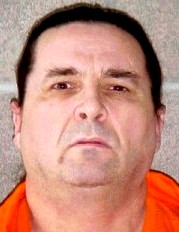
Bobby Lee Tankersley
Murderer Brian Kevin Rosenfeld
Murderer · USA · 1985
Brian Kevin Rosenfeld Brian Kevin Rosenfeld was sentenced to three concurrent l…
23 victims
Brian Kevin Rosenfeld
Murderer · USA · 1985
Brian Kevin Rosenfeld Brian Kevin Rosenfeld was sentenced to three concurrent l…
23 victims
 Russell Ellwood
Murderer · USA · 1991
Russell Ellwood was a former taxi driver. Authorities suspected him of killing…
20 victims
Russell Ellwood
Murderer · USA · 1991
Russell Ellwood was a former taxi driver. Authorities suspected him of killing…
20 victims
 Robert Martines Perez
Murderer · USA · 1994
Name: Robert Martines Perez · Other name used in proceedings: Robert Martinez P…
15 victims
Robert Martines Perez
Murderer · USA · 1994
Name: Robert Martines Perez · Other name used in proceedings: Robert Martinez P…
15 victims
 Billy Frank Vickers
Murderer · USA · 1993
Billy Frank Vickers Vickers was executed by lethal injection in Texas on Januar…
14 victims
Billy Frank Vickers
Murderer · USA · 1993
Billy Frank Vickers Vickers was executed by lethal injection in Texas on Januar…
14 victims
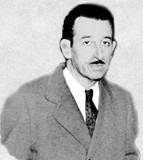 Arnold Axilrod
Murderer · USA · 1955
Arnold Axilrod was a dentist. He was 49 years old and had a reputation as a lad…
1 victim
Arnold Axilrod
Murderer · USA · 1955
Arnold Axilrod was a dentist. He was 49 years old and had a reputation as a lad…
1 victim
 Alex Ramon Maquera
—
Alex Ramón Maquera Atencio, alias “Loco del Martillo”, was convicted and senten…
Alex Ramon Maquera
—
Alex Ramón Maquera Atencio, alias “Loco del Martillo”, was convicted and senten…
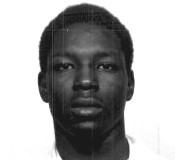 Robert Anthony Carter
Homicide · USA · 1981
Robert Anthony Carter was executed by lethal injection in Texas on May 18, 1998…
2 victims
Robert Anthony Carter
Homicide · USA · 1981
Robert Anthony Carter was executed by lethal injection in Texas on May 18, 1998…
2 victims
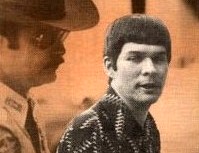 Arthur Frederick Goode
Homicide · USA · 1976
Arthur Frederick Goode was executed by electrocution in Florida on April 5, 198…
2 victims
Arthur Frederick Goode
Homicide · USA · 1976
Arthur Frederick Goode was executed by electrocution in Florida on April 5, 198…
2 victims
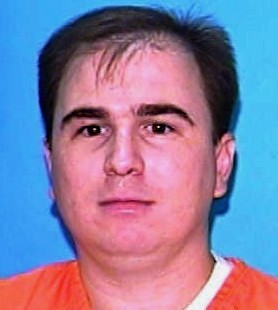 Eric Scott Branch
Murderer · 1993
Eric Scott Branch · 01/11/93 — Eric Scott Branch attacked Susan Morris in the u…
1 victim
Eric Scott Branch
Murderer · 1993
Eric Scott Branch · 01/11/93 — Eric Scott Branch attacked Susan Morris in the u…
1 victim
- Gender
- male
- Country
- USA
- Location
- Yuma County, Arizona, USA
- Date of birth
- May 28, 1952
- Age at first offence
- 39
- Characteristics
- rape, mutilation, dismemberment
- Victim profile
- Thelma Younkin, 65 ( neighbor)
- Method of murder
- Strangulation with her oxygen tube
- Date(s) of murder
- November 17, 1991
- Years active
- 1991
- Date of arrest
- —
- Status
-
Life imprisonment
Sentenced to death on May 18, 1994; resentenced to life in prison on August 1, 2008
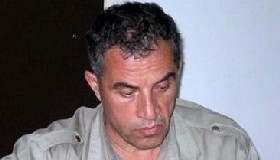
Case record: Bobby Lee Tankersley
Background
Bobby Lee Tankersley lived in a hotel in Yuma, Arizona, in the same place as the victim, a 65-year-old woman. Tankersley’s grandson allegedly owed Tankersley some money for drugs. Tankersley had told the victim’s daughter that the victim’s grandson would "live to regret it" if he did not meet with him.
The victim had severe lung disease and utilized an oxygen tank on a continuous basis.
The offence
On November 17, 1991, Tankersley asked a neighbor where the victim resided and then entered her room with a strange look on his face. The victim was later discovered dead by her son.
When the victim’s son exited the victim’s room after finding her body, he encountered Tankersley, who asked, "what's the matter Mike?"
The victim died from ligature strangulation, apparently from her own oxygen tubes. The victim was sexually assaulted, and there was severe trauma to her vagina.
The victim’s body was found nude except for her bra, which was forced aside, exposing her breasts. There were numerous deep bite marks on her breasts and face, and one of her ear lobes had been bitten off. Feces were smeared on the victim’s body.
Investigation
A jury convicted Tankersley in 1993 of raping Younkin and strangling her with the oxygen tubing that helped her breathe. At trial, a forensic dentist testified that he could match Tankersley’s teeth to many purported bite marks on the victim’s body.
In the resentencing proceedings, Judge Thomas A. Thode granted a new sentencing hearing based on inconclusive DNA tests and questions about the bite-mark evidence used to convict Tankersley. During a hearing held over several days, DNA analysts disagreed over whether they could exclude Tankersley as a contributor to genetic material swabbed from marks on the victim’s body. The tests were ambiguous because they involved mixtures of multiple genetic profiles. The disagreement centered on how confident forensic analysts should be when small amounts of DNA from mixtures are involved.
Thode also re-examined evidence of Tankersley’s alcoholism and blackouts that had been presented at a hearing several years earlier.
Trial
Presiding Judge: Thomas A. Thode Prosecutor: Mary White
Start of Trial: October 19, 1993 Verdict: November 10, 1993
At trial, a forensic dentist testified he could match Tankersley’s teeth to many purported bite marks on the victim’s body.
Sentencing
Sentencing: May 18, 1994
The aggravating circumstance found was especially cruel, heinous, and depraved behavior. The mitigating circumstance found was none sufficient to warrant leniency.
During the resentencing proceedings, Judge Thomas A. Thode wrote:
"The DNA evidence standing alone does little if anything to exculpate the defendant from his guilt, but the inconclusive DNA as to critical bite marks may be argued to diminish the appearance of extreme brutality," Thode wrote. "The new DNA evidence also raises other questions as to what happened the night of the murder."
Thode also wrote:
"The bite marks were a prime factor in this court's previous decision to exact the ultimate penalty."
Thode wrote:
"Is the evidence of such nature and effect that it would change the sentence? Were this sentence other than death, the court would be inclined to think not. However, in this case we have imposed the ultimate punishment under our Constitution and traditional moral values."
John Todd, the assistant Arizona attorney general who presented the state's case, said:
the judge had "correctly found that the new evidence did not warrant a new trial, [but] that he felt more comfortable having a jury of Mr. Tankersley's peers impose the appropriate sentence."
Appeals
Outcome
Tankersley’s case reached the Arizona Supreme Court, resulting in a published opinion: State v. Tankersley, 191 Ariz. 359, 956 P.2d 486 (1998).
The case narrative also references that the Arizona judge’s ruling questioned the bite-mark evidence used in 1994 to sentence Tankersley to death for the slaying three years earlier of Thelma Younkin, Tankersley’s neighbor in a low-budget motel along what then was Yuma’s Skid Row.
Aftermath
The Chicago Tribune reported that the death row inmate won resentencing and that a judge granted a new sentencing hearing based on inconclusive DNA tests and questions about bite-mark evidence.
A Tribune series titled "Forensics Under the Microscope" was referenced, stating that DNA tests such as those in the Krone case have revealed that even leading bite-mark experts make false matches.
The Tribune report also stated that prosecutors asked the Arizona Supreme Court to order new DNA tests in the Tankersley case after Krone was released in 2002.
The Tribune report included a statement by Tankersley’s lead attorney, Jennifer Sparks:
she was "somewhat disappointed" by the judge's ruling. "We had hoped he would go further and order a new trial, which we thought the evidence justified," she said.
The Tribune report included statements by Tankersley’s father, Leo Tankersley:
"that's better than nothing," he said. "The one thing I always figured was the evidence they used was that bite [mark]--and that's nothing," Leo Tankersley added. "I never thought they had enough evidence to convict him, so I'm glad he's getting a resentencing."
In connection with the resentencing hearing, the Tribune report stated that Judge Thomas Thode set a hearing for Jan. 19 to consider scheduling and other issues for the resentencing hearing in front of a new judge because Thode retired.
The Tribune report stated:
- If Tankersley was resentenced to death, he could appeal again to the Arizona Supreme Court.
- If sentenced to life in prison, he would be eligible for parole after 25 years and would get credit for time served.
Tankersley was resentenced to life in prison on August 1, 2008.
Spotted an error, or have more information about this case?