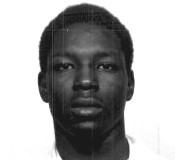
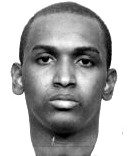
Robert Anthony Carter
Homicide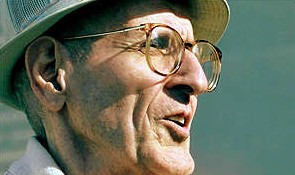 Jack Kevorkian
Homicide · USA · 1990
Jack Kevorkian (born May 26, 1928) was a controversial American pathologist. He…
130 victims
Jack Kevorkian
Homicide · USA · 1990
Jack Kevorkian (born May 26, 1928) was a controversial American pathologist. He…
130 victims
 Edward Charles Allaway
Homicide · USA · 1976
Edward Charles Allaway Edward Charles Allaway was found not guilty by reason of…
7 victims
Edward Charles Allaway
Homicide · USA · 1976
Edward Charles Allaway Edward Charles Allaway was found not guilty by reason of…
7 victims
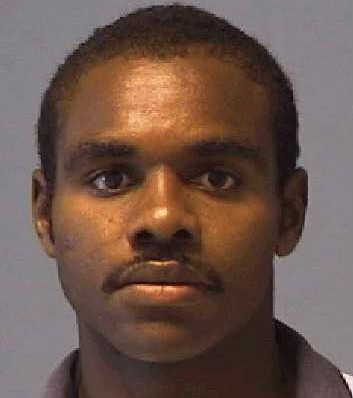 Clinton Bankston
Homicide · USA · 1987
15 August 1987 — Ann Morris (63), her sister Sally Nicholson (59), and Sally’s…
5 victims
Clinton Bankston
Homicide · USA · 1987
15 August 1987 — Ann Morris (63), her sister Sally Nicholson (59), and Sally’s…
5 victims
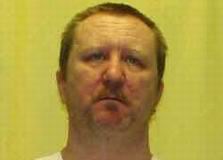 Michael Benge
Murderer · USA · 1993
Michael Benge (male, white) was convicted in Butler County of aggravated murder…
1 victim
Michael Benge
Murderer · USA · 1993
Michael Benge (male, white) was convicted in Butler County of aggravated murder…
1 victim
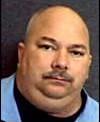 Michael James McNeely
Murderer · USA · 1993
Michael James McNeely was the defendant in a criminal case before the Supreme C…
1 victim
Michael James McNeely
Murderer · USA · 1993
Michael James McNeely was the defendant in a criminal case before the Supreme C…
1 victim
 Liz Carroll
Murderer · USA · 2006
Liz Carroll was sentenced to 54 years to life in prison on February 22, 2007. M…
1 victim
Liz Carroll
Murderer · USA · 2006
Liz Carroll was sentenced to 54 years to life in prison on February 22, 2007. M…
1 victim
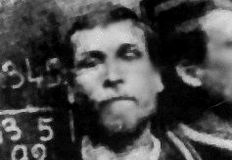 Albert Milsom
Murderer · United Kingdom · 1896
Albert Milsom (33) was executed by hanging at Newgate Prison on June 9, 1896. ·…
1 victim
Albert Milsom
Murderer · United Kingdom · 1896
Albert Milsom (33) was executed by hanging at Newgate Prison on June 9, 1896. ·…
1 victim
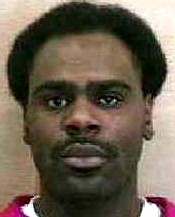 Michael Earl Sexton
Murderer · USA · 1990
Michael Earl Sexton was executed by lethal injection in North Carolina on Novem…
1 victim
Michael Earl Sexton
Murderer · USA · 1990
Michael Earl Sexton was executed by lethal injection in North Carolina on Novem…
1 victim
- Gender
- male
- Country
- USA
- Location
- Harris County, Texas, USA
- Date of birth
- February 10, 1964
- Age at first offence
- 17
- Characteristics
- juvenile (17), robbery
- Victim profile
- R. B. Scott, 63 (owner beauty supply store) / Sylvia Reyes, 17 (manager service station)
- Method of murder
- Shooting (.38 caliber revolver)
- Date(s) of murder
- June 19/24, 1981
- Years active
- 1981
- Date of arrest
- —
- Status
-
Executed
Executed by lethal injection in Texas on May 18, 1998
Case record: Robert Anthony Carter
Status / outcome
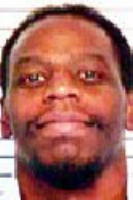
Robert Anthony Carter was executed by lethal injection in Texas on May 18, 1998.
Timeline
- June 24, 1981 — Robert Anthony Carter shot Sylvia Reyes during a robbery at a southeast Houston service station.
- June 18, 1981 — Robert Anthony Carter fatally shot R.B. Scott during a robbery of a beauty supply store in Houston.
- May 18, 1998 — Robert Anthony Carter was executed by lethal injection in Texas.
- October 1991 — Amnesty International highlighted Carter’s case in its 1991 report titled United States of America: The Death Penalty and Juvenile Offenders (AI index: AMR 51/23/91).
- September 1991 — A Texas statute was changed to allow consideration of mitigating circumstances, but it did not apply retroactively to Carter.
- June 1986 — Dr. Dorothy Lewis examined Robert Carter at the New York University School of Medicine.
- November 1997 — Amnesty International delegation, including Pierre Sané, met with Robert Carter and other death row inmates in Texas.
- March 1998 — Amnesty International published USA: The Death Penalty in Texas: Lethal injustice (AI Index: AMR51/10/98).
- April 22, 1998 — Joseph Cannon was scheduled to be executed in Texas (described as a separate case).
- May 1989 — United Nations ECOSOC resolution 1989/64 was adopted, recommending “eliminating the death penalty for persons suffering from mental retardation or extremely limited mental competence”.
- April 1992 — The United States ratified the International Covenant on Civil and Political Rights (ICCPR).
- 1977 — The United States signed the ICCPR; it also signed the American Convention on Human Rights (ACHR).
Background
Robert Anthony Carter was 34 years old at the time of execution. He was identified as a juvenile offender at age 17.
Carter was from a very poor family and was one of six children. His mother and stepfather whipped and beat the children with belts and electric cords.
Carter received serious, untreated childhood head injuries. The material described injuries including being hit on the head with a brick at age five; a dinner plate his mother threw at him smashing on impact with his head on another occasion; and at age ten being hit so hard on the head with a baseball bat that the bat broke. It also described that he apparently received no medical attention for these injuries.
Carter held a series of jobs. Employers described him as obedient, hard-working, cooperative and trustworthy.
Carter helped a frail, elderly neighbour who ran a local cafe by escorting her home each night with the day’s takings, usually between $500 and $1000, until his arrest for Reyes’ murder.
The offence
June 24, 1981: Shooting death of Sylvia Reyes
Robert Anthony Carter was sentenced to die for the June 24, 1981 shooting death of 18-year-old Sylvia Reyes during a robbery at a southeast Houston service station.
The evidence described Sylvia Reyes being shot once in the chest with a .38 caliber pistol as she tried to stop Carter from taking $150 from the cash register. Reyes died about an hour after the shooting.
Carter told police he used a borrowed .38-caliber pistol to shoot Sylvia Reyes. He obtained about $150 and wound up with $37 after splitting the loot with some friends.
June 18, 1981: Killing of R.B. Scott during a robbery
Robert Anthony Carter was also implicated in the June 18, 1981 slaying of 63-year-old R.B. Scott during the robbery of a beauty supply store in Houston.
Carter confessed to killing R.B. Scott.
The material described that during his capital murder trial Carter was implicated in the June 18, 1981 slaying, and that this other murder was still pending adjudication at the time.
Investigation / arrest details
The material described that on Carter’s arrest he was kept in isolation during interrogation. He initially declined to make a statement but later confessed.
Carter confessed to the shooting of Miss Reyes and to another murder. He waived his right to have a lawyer present.
The material stated that Carter told police he used a borrowed .38-caliber pistol to shoot Miss Reyes.
The material also described a contested issue related to a prosecution witness identity: Carter’s present petition to the US Supreme Court alleged that the prosecution presented an “imposter witness.”
Trial
Conviction and sentencing
Robert Anthony Carter was sentenced to death on 10 March 1982 for the shooting murder of Sylvia Reyes on 24 June 1981.
Carter was 17-years and three months old at the time of the crime and had no previous criminal record.
The material stated that the jury was not invited to consider in mitigation Carter’s age, borderline mental retardation, brain damage or childhood abuse.
The material stated that the sentencing proceedings lasted only a few hours and that the jury deliberated for just 10 minutes before sentencing him.
The material stated that when Carter arrived on death row in 1981 at age 18, he was the youngest person there and earned the nickname “Youngblood” from his fellow convicts.
Prosecutorial argument during sentencing
The material stated that the prosecutor speculated to the jury that if Carter was sentenced to life imprisonment he would be released early on parole, and described life imprisonment as a “slap on the wrist”.
The material stated that, in the closing arguments, defence counsel appealed to the jury to show mercy and give Carter consideration of life, “even though he doesn’t deserve a great deal of consideration” and “you can go either way in this case and your consciences could be clear”.
The material described a statement made by the prosecutor in closing argument in response to defense witnesses: “Doesn’t it say a lot about Mr Carter’s probability to do violence when nobody can come say a good word about him except his mother?”
Other witnesses and identity-parade allegations
The material stated that Carter’s attorneys’ petition alleged that some prosecution witnesses had failed to identify Carter in identity parades, and that the jury remained unaware of this.
The material also described that one prosecution witness at the original trial “transpired to be impersonating the person who actually claimed to have seen the crime,” and stated that Carter’s current attorneys said that this witness had signed a sworn statement that he did not testify at the trial.
Allegations about trial counsel performance
The material described that Carter was represented by two court-appointed lawyers who failed to properly investigate the case, talk to Carter before the trial, locate potential witnesses, present mitigating evidence, obtain Carter’s medical records, or investigate compelling evidence about his background.
The material stated that the petition alleged there were at least 19 witnesses willing to testify whom they never contacted.
The material stated that the petition alleged that although Carter’s attorneys “had doubts about Carter's mental capabilities,” they failed to investigate this or ask for a psychiatric examination which would have been provided at their own request.
The material described defence counsel failing to object to trial errors, including repeated references to the unadjudicated second murder, and failing to challenge the validity of Carter’s confession even though they apparently suspected he might be retarded.
The material stated that defence counsel failed to explore the precise nature of Carter’s involvement in the crime compared with other possible accomplices.
The material also described that defence counsel failed to properly request all possible exculpatory or mitigating information from the prosecutor, leaving the jury unaware that several prosecution witnesses had failed to identify Carter in identity parades.
The material described that the jury was not invited to consider Carter’s age as mitigating evidence.
Mental health and injuries
An examination conducted in June 1986 by Dr. Dorothy Lewis, a psychiatrist at the New York University School of Medicine hired by Carter’s appeal attorneys, found that Carter was “significantly retarded” with a full-scale IQ of 74, and “seriously brain damaged” and suffered from mental retardation and brain damage.
Dr. Lewis found that Carter suffered several severe head injuries as a child resulting from accidents and abuse.
The material described that in an incident shortly before Sylvia Reyes’ murder Carter was shot in the head by his brother, with the bullet lodging near his temple. Carter afterward suffered seizures and fainting spells, for which he did not receive medical treatment.
Dr Lewis described that Carter’s mental disabilities limited his capacity to understand or reflect on what he or others were doing and that when confused he displayed poor judgment. Dr Lewis described Carter’s thinking as “childlike”.
The material also stated that the brutal abuse left Carter unusually subservient to and compliant with persons in authority.
The material stated that no inquiry was conducted to determine whether Carter knowingly and voluntarily waived his right to a lawyer and his right not to incriminate himself following his arrest.
Appeals
The material stated that a final appeal was pending before the United States Supreme Court.
The present petition to the US Supreme Court was filed on the basis that the prosecution presented an “imposter witness.”
The material stated that the appeal was denied by Texas appeal courts, which stated that “the State did not knowingly or intentionally present an 'imposter' witness”, and that the presentation of this testimony was “cumulative” and Carter had not shown it to be “harmful” or that there was any reasonable likelihood that any false testimony concerning the witness' identity could have affected the jury's judgement.
The material stated that lower federal courts also denied relief on this point without holding a hearing.
The material described a second ground for the appeal: failure of trial counsel to prepare for or present evidence concerning Carter’s mental health.
This was denied by the court of appeals, which held that because Carter had previously been found mentally competent to stand trial, his attorneys were not ineffective in not addressing his mental health.
The material stated that the court rejected Carter’s contentions regarding defence counsel’s closing arguments, stating they “fell within 'the wide range of reasonable professional assistance'”.
The material described the petition’s position that evidence that should have been presented at Carter’s sentencing hearing “would at least have given Carter a fighting chance. Without it, he was doomed”.
It also alleged that counsel’s closing arguments “ensure[d] him the death penalty” and that failure to link pleas for mercy with mitigating evidence about whether Carter was likely to constitute a future danger to society gave nothing of substance to the jury regarding future dangerousness.
The material described that following the question relating to the future dangerousness issue, Carter’s attorney reportedly told the jury: “Can we guess this man is forever doomed...after being under that discipline [of serving a life sentence in prison] for the first time in his life that he is then going to be probably a menace to society”.
Final statement / last remarks
In Carter’s brief final statement, he expressed love and thanks to the 5 people he selected to watch him die.
His last statement included: “I love all of you all. Thank you for caring so much about me. Keep the faith. I am going to a better place. I hope the victim’s family will forgive me because I didn’t mean to hurt no one or kill no one. I love you all. Robert”
The material also included that Carter expressed “I hope the victim's family will forgive me, because I didn't mean to hurt or kill no one.”
The material stated that Carter apologized in an interview before his execution and said: “I wish I could take it all back. It's a mistake you made, and I've learned that since I've been here. You can't forget knowing you killed somebody. It hurts. Your conscience always works on you.”
The material also included a reflection attributed to the lawyer who prosecuted Carter: “It's kind of sad. He was only 17. But he was a young person who didn't exercise very good judgment.”
Other details
Carter’s education and designation as juvenile offender
The material described Carter’s education level as 10th grade.
The material stated that he was the only person executed from Harris County who was under 18 when he killed.
It also stated that the state had executed seven inmates who were 17 at the time of their offense.
The material described that Carter likely would not be the last and stated that the state had 29 more inmates on death row, with 11 sentenced to death in Houston.
Quantity and selection of death-watch attendees
The material stated that Carter selected 5 people to watch him die.
Amnesty International involvement and quotes
The material stated that Amnesty International opposed the death penalty unconditionally as “the ultimate cruel, inhuman and degrading punishment and a violation of the right to life.”
It also stated that Amnesty International did not argue that juvenile offenders or others who committed violent crimes should not be held criminally liable or subjected to severe penalties where appropriate.
The material described that Amnesty International was concerned about Carter’s legal representation at trial, that experts diagnosed him as mentally retarded and seriously brain damaged, and that he was subjected to abuse and neglect as a child.
The material described Amnesty International urging review and clemency through the Board of Pardons and Paroles, with clemency rules stating the governor may commute a sentence of death only if he receives a favorable recommendation from a majority of the Board.
The material described that in November 1997 Pierre Sané met with Carter and other death row inmates and later spoke of his “overwhelming and emotionally draining” reaction.
Pierre Sané’s quoted remarks included: “I had never before met a healthy human being who knew the exact date, time and way in which he would be killed in cold blood. We have witnessed how a deliberate policy aimed at dehumanizing prisoners is implemented coldly, professionally and heartlessly. The effect is such that it has also dehumanised their keepers. The condemned await their deaths in rows of tiny cages reminiscent of the dark ages, their spirits are slowly broken. The conveyor belt of death in Texas must be stopped.”
Mentions of Joseph Cannon and execution date
The material stated that Joseph Cannon, also a juvenile offender, was scheduled to be executed in Texas on 22 April 1998, and referenced an Amnesty International urgent action relating to that case.
International standards and legal context
The material stated that the execution of people aged 18 at the time of the crime was expressly forbidden under international law.
It listed treaties and standards including the ICCPR, the ACHR, the UN Convention on the Rights of the Child, and the Safeguards guaranteeing protection of the rights of those facing the death penalty adopted by the UN Economic and Social Council (ECOSOC) in 1984 (Resolution 1984/50).
The material stated that the US signed the ICCPR in 1977 and ratified it in April 1992, reserving its right “subject to its Constitutional constraints” to impose capital punishment on persons below 18 years of age.
It stated that the US signed the ACHR in 1977 but had not ratified it.
The material stated that if Carter’s execution went ahead as scheduled it would contravene ECOSOC resolution 1989/64 adopted in May 1989.
Juvenile execution statistics
The material stated that the USA accounts for the majority of known juvenile executions and probably has more juvenile offenders on death row.
It stated that at least 60 juvenile offenders were on death row at the end of 1997, with 25 in Texas, and that the material described nine juvenile executions since 1990.
It listed other countries where juvenile executions were reported in the 1990s: Iran, Pakistan, Saudi Arabia, Yemen and Nigeria.
It stated that 24 of the 36 US states with the death penalty allowed imposition of death sentences on juvenile offenders.
It stated that between the resumption of executions in 1977 and the end of 1997, the USA put to death 432 prisoners nationwide, with Texas accounting for one-third (144).
It stated that by the end of 1997, a total of 74 people had been executed in 17 states, with 37 of those executions occurring in Texas.
Nickname and identification on death row
The material stated that Carter earned the nickname “Youngblood” from fellow convicts when he arrived on death row in 1981 at age 18.
Execution method
The material specified execution by lethal injection in Texas on May 18, 1998.
Spotted an error, or have more information about this case?