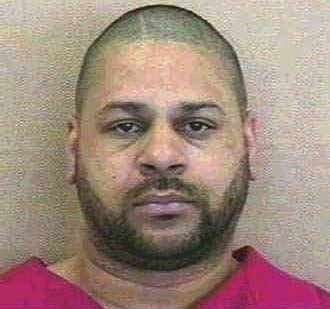
Charlie Mason Alston
Murderer Brian Kevin Rosenfeld
Murderer · USA · 1985
Brian Kevin Rosenfeld Brian Kevin Rosenfeld was sentenced to three concurrent l…
23 victims
Brian Kevin Rosenfeld
Murderer · USA · 1985
Brian Kevin Rosenfeld Brian Kevin Rosenfeld was sentenced to three concurrent l…
23 victims
 Yahweh ben Yahweh
Murderer · USA · 1980
Yahweh ben Yahweh was born and legally named Hulon Mitchell Jr. (October 27, 19…
23 victims
Yahweh ben Yahweh
Murderer · USA · 1980
Yahweh ben Yahweh was born and legally named Hulon Mitchell Jr. (October 27, 19…
23 victims
 Russell Ellwood
Murderer · USA · 1991
Russell Ellwood was a former taxi driver. Authorities suspected him of killing…
20 victims
Russell Ellwood
Murderer · USA · 1991
Russell Ellwood was a former taxi driver. Authorities suspected him of killing…
20 victims
 Robert Martines Perez
Murderer · USA · 1994
Name: Robert Martines Perez · Other name used in proceedings: Robert Martinez P…
15 victims
Robert Martines Perez
Murderer · USA · 1994
Name: Robert Martines Perez · Other name used in proceedings: Robert Martinez P…
15 victims
 Christie Scott
Murderer · USA · 2008
Defendant: Christie Michelle Scott (also referred to as Christie Michelle Bray…
1 victim
Christie Scott
Murderer · USA · 2008
Defendant: Christie Michelle Scott (also referred to as Christie Michelle Bray…
1 victim
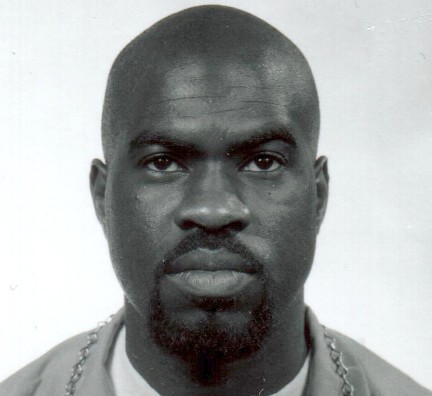 Keith Lamont Patton
Murderer · USA · 1983
Keith Lamont Patton participated in an attack involving a parked car at Washing…
1 victim
Keith Lamont Patton
Murderer · USA · 1983
Keith Lamont Patton participated in an attack involving a parked car at Washing…
1 victim
 Fletcher Mann
Murderer · USA · 1980
Fletcher Thomas Mann was executed by lethal injection in Texas on June 1, 1995.…
2 victims
Fletcher Mann
Murderer · USA · 1980
Fletcher Thomas Mann was executed by lethal injection in Texas on June 1, 1995.…
2 victims
 Gregory Edward Wright
Murderer · USA · 1997
Gregory Edward Wright was the defendant. · Donna Duncan Vick was the victim, de…
1 victim
Gregory Edward Wright
Murderer · USA · 1997
Gregory Edward Wright was the defendant. · Donna Duncan Vick was the victim, de…
1 victim
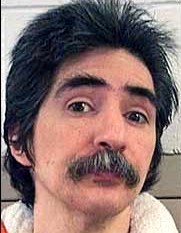 Roberto Arguelles
Serial killer · USA · 1992
Roberto Arguelles was serving a sentence for child molestation when he confesse…
4 victims
Roberto Arguelles
Serial killer · USA · 1992
Roberto Arguelles was serving a sentence for child molestation when he confesse…
4 victims
 Jerald Harjo
Murderer · USA · 1988
Jerald Wayne Harjo was convicted of first degree murder in Seminole County, Okl…
1 victim
Jerald Harjo
Murderer · USA · 1988
Jerald Wayne Harjo was convicted of first degree murder in Seminole County, Okl…
1 victim
- Gender
- male
- Country
- USA
- Location
- Warren County, North Carolina, USA
- Date of birth
- February 10, 1959
- Age at first offence
- 31
- Characteristics
- revenge
- Victim profile
- Pamela Renee Perry, 25
- Method of murder
- Asphyxiation or suffocation
- Date(s) of murder
- November 30, 1990
- Years active
- 1990
- Date of arrest
- —
- Status
-
Life imprisonment
Sentenced to death November 3, 1992; commuted to life in prison in 2002
Case overview
Charlie Mason Alston was convicted for the murder of Pamela Renee Perry and was sentenced to death in Warren County Superior Court on November 3, 1992. His death sentence was commuted to life in prison in 2002.
The offence
Pamela Renee Perry died sometime during the late evening hours of November 30, 1990 or the early morning hours of December 1, 1990.
Pamela Perry’s mother discovered her daughter’s body on the morning of December 1 after returning home from work. Pamela was lying face down on a pillow in her bedroom. When her mother lifted Pamela’s head, she discovered Pamela’s face had been beaten severely.
The Chief Medical Examiner for the State of North Carolina performed an autopsy and testified that Pamela received a number of blunt-force injuries to her face. The examiner testified that Pamela suffered:
- substantial bruising and swelling over her entire face and neck
- bruising and lacerations to her right eye
- bruising on the left side of her neck
- a tear in the skin at the corner of her mouth
- a series of tears in the skin on the right cheek
- tears in the skin on her left ear
- tears to the skin along the left side of her jaw, approximately one inch deep
- a tear to the inner surface of her lip
- several scrapes and abrasions
The internal examination disclosed blood over the surface of the brain, resulting from the blows to the face, and hemorrhaging inside her neck, larynx, and trachea. Pamela also had bruises and bleeding in the eyes.
The medical examiner testified that the injuries were probably caused by a hammer that was found on Pamela’s bed. The medical examiner testified that Pamela did not die as a result of the blunt-force injuries, but died as a result of asphyxiation or suffocation, normally taking at least 3 to 4 minutes to accomplish. The medical examiner testified that Pamela was alive when she received the blunt-force injuries.
The prosecution evidence described that Alston repeatedly smashed Pamela’s face with a hammer, leaving a wall sprayed with blood, and then held her face against a pillow until she suffocated in her bed.
The prosecution evidence also described that Alston was charged with stealing about $100 in change that Pamela, a waitress, kept in a jar at her bedside.
Background and relationship
Charlie Alston and Pamela Perry had been dating each other for approximately one year. At some point prior to the murder, difficulties arose between the two of them.
Pamela received threatening phone calls from Alston. Alston told Pamela that she had a beautiful face and that he would hate to have to “smash it in” and “mess [it] up.” Pamela filed a complaint with the Warren County Sheriff’s Department.
Police testified that Pamela told them the caller sounded like Alston and threatened to kill her during one of the phone calls.
Pamela’s mother testified that Pamela was a waitress and received a large quantity of quarters from tips earned on her job. Most of the coins had been rolled and placed in a large jar on a table in her bedroom containing more than $100. When Pamela’s body was discovered, the jar was found empty at the edge of her bed.
Prior incident and assault charge
Other testimony revealed that Alston broke into Pamela’s home and assaulted her and a friend. During this incident, he beat her in the head and was charged with assault.
Alston was found guilty, placed on probation, and ordered to pay for Pamela’s medical bills. Two days later, Pamela was found dead.
Investigation and evidence
Police were focused on Alston because he had slapped Pamela six weeks before the killing when he broke into her trailer and found her with another man.
Sheriff’s deputies received a 911 call for help, and detective Fonzie Flowers showed up an hour after the sheriff’s department received the call. During the autopsy, medical examiner John Butts noticed Pamela’s fingernails were ragged, as if she had scratched her killer. He sent the nails and scrapings to the sheriff’s office. The sheriff’s office records showed they were never turned over for testing to the State Bureau of Investigation’s crime lab.
Medical examiner evidence and hammer
The Chief Medical Examiner for the State of North Carolina testified to blunt-force injuries and asphyxiation/suffocation. The medical examiner testified that the injuries were probably caused by a hammer found on Pamela’s bed.
Trial evidence concerning money, stores, and drugs
A clerk at a convenience store testified that on the night after Pamela was discovered dead, Alston came into the store and purchased gas and a soft drink with quarters.
Testimony showed that Alston also purchased $40 to $45 worth of crack cocaine and paid with change around the time of the murder.
Other testimony described that shortly after the murder, Alston bought a small amount of gasoline and a soft drink with change at a convenience store, purchased crack cocaine with quarters, and exchanged $40 in coins for dollar bills from the dealer’s housemate.
After the crack dealer agreed to testify against Alston, drug charges against the dealer were reduced from selling crack, a felony, to possession, a misdemeanor. During the trial, the dealer couldn’t recall when Alston made the purchase.
Victim fear and threatening calls
Pamela had told friends and family that she received threatening phone calls from Alston.
Pamela’s mother testified about threatening calls and described what Alston told Pamela.
Additional witness testimony and circumstances
The evidence described that at the time of the murder:
- Pamela’s mother discovered Pamela’s body on the morning of December 1 after returning home from work.
- Another man was supposed to take Pamela to the train station in Raleigh to pick up her niece at midnight.
- The same man was inside Pamela’s mobile home when detective Fonzie Flowers showed up.
Testimony from Pamela’s mother and police also included that she feared not only Alston, but also an unidentified former boyfriend from Durham.
Fingerprints and evidence on Alston’s clothing
Evidence described that police found two unidentified fingerprints on the coin jar that did not match Alston’s.
Evidence described that no blood or fibers were found on Alston’s clothing.
Additional trial evidence described that authorities tested for blood and did not find anything on Alston’s clothing, and tested for fibers on his clothing and fingerprints and did not find anything.
DNA testing disputes and evidence loss contentions
A federal district judge ruled in 1999 that Alston wasn’t entitled to DNA testing because his lawyers couldn’t prove that police had lost or destroyed the skin scrapings in “bad faith,” as required by the 1984 Supreme Court case U.S. v. Trombetta.
Alston contended his innocence could have been proved by DNA tests on evidence that had since disappeared.
Alston’s appeal lawyers contended that trial attorneys never asked to review the sheriff’s department case files and never presented key evidence that could have led a jury to cast reasonable doubt on his guilt.
During the appeals described, Warren County Sheriff Johnny Williams wrote a brief letter to the courts in which he stated: “I Johnny M. Williams, Sheriff of Warren County, has [sic] diligently searched the evidence room and all other areas throughout the Sheriff's Department for fingernail scrapings from the victim in this case. Inwhich [sic] I have been informed that the evidence was turned over to this department.”
In 1996, when Edwards took over the case, he discovered the medical examiner’s records that had never been obtained by Alston’s trial attorneys.
During 1996, Sheriff Johnny Williams declined to discuss what happened to the skin scrapings or the department’s procedures for cataloging and preserving evidence.
Mark Edwards stated: “If the state has DNA, and if they can just lose it because it would help the defendant, then there has to be severe consequences, or else the police won't have any incentive to preserve evidence.”
Statements and quotes
Pamela’s prior statements to law enforcement included threats attributed to Alston and the warning that he would “smash it in” and “mess [it] up.”
Sentencing
Charlie Alston was sentenced to death on November 3, 1992 in Warren County Superior Court for the murder of Pamela Renee Perry.
Appeals
The North Carolina Supreme Court affirmed Alston’s conviction and sentence of death on September 8, 1995.
On November 16, 2001, the United States Court of Appeals for the Fourth Circuit dismissed Alston’s appeal of the District Court’s denial on the grounds that his notice of appeal was not timely filed.
On August 10, 1999, the United States District Court denied Alston’s petition for habeas corpus.
All prior appeals in state and federal courts were rejected.
Clemency and commutation
On January 10, 2002, Governor Michael Easley commuted Alston’s sentence to life in prison without parole.
Correction Secretary Theodis Beck set an execution date for January 11, 2002 on December 3, 2001.
The case narrative described that Easley commuted Alston’s death sentence to life in prison. Easley did not specify why he commuted the sentence and stated only that after scrutinizing the case, “the appropriate sentence ... is life in prison without parole.”
Press secretary Fred Hartman was quoted as saying: “The governor doesn't discuss what factors he considers in clemency requests, says press secretary Fred Hartman, and in fact, Easley has never explained why he reduced death row inmate Robert Bacon's sentence to life in October but rejected clemency requests from five others who were executed this year.”
Timeline
- 1990-11-30 / 1990-12-01 — Pamela Renee Perry died sometime during the late evening hours of November 30, 1990 or the early morning hours of December 1, 1990
- 1990-12-01 — Pamela Perry’s mother discovered her daughter’s body on the morning of December 1
- 1992-11-03 — Charlie Alston was sentenced to death in Warren County Superior Court
- 1995-09-08 — North Carolina Supreme Court affirmed Alston’s conviction and sentence of death
- 1996 — Edwards took over the case and discovered medical examiner’s records never obtained by Alston’s trial attorneys; Williams wrote a letter regarding diligent searching for fingernail scrapings
- 1999-08-10 — United States District Court denied Alston’s petition for habeas corpus
- 2001-11-16 — United States Court of Appeals for the Fourth Circuit dismissed Alston’s appeal because his notice of appeal was not timely filed
- 2001-12-03 — Correction Secretary Theodis Beck set an execution date for January 11, 2002
- 2002-01-10 — Governor Michael Easley commuted Alston’s sentence to life in prison without parole
Outcome
Charlie Mason Alston’s death sentence was commuted to life in prison in 2002.
Other details
Charlie Alston was described as an ex-boyfriend of Perry.
The narrative described that no one witnessed the killing and that no blood or fingerprint evidence was ever linked to Alston.
Alston scheduled to die by lethal injection was described as set for January 11, 2002 at Central Prison.
The narrative described that prosecutors said evidence including scrapings from beneath Perry’s fingernails would confirm the guilty verdict.
Janine Fodor was quoted as stating: “Commutation is sort of a middle-ground compromise,”
Edwards was described as seeking DNA-related testing under a state law that required police to keep DNA evidence in storage and test it at the request of inmates trying to prove their innocence.
State Rep. Joe Hackney was quoted as stating: “The legislative intent is to provide added protection to make sure no innocent people were convicted,”
State Sen. Frank Ballance Jr. was quoted as stating: “We didn't think about what would happen if the evidence was lost,”
A law professor, Jim Coleman, was quoted as stating: “The courts are not going to grant a new trial under the possibility that there is evidence that could exonerate him.”
Jim Coleman was also quoted as stating: “Once a person is convicted, the whole system is set up to make sure they remain convicted. It's almost impossible to overturn a jury verdict.”
Jim Coleman was quoted as stating about constitutional safeguards: “The U.S. legal system was predicated on constitutional safeguards based on the philosophy that it is better to free 10 guilty people than imprison an innocent person.”
“That no longer is true, he says. "Now, in order to get people who are guilty, we are willing to incarcerate a few innocent people.”
Jim Coleman was quoted as stating: “The significance of DNA cases goes beyond a single individual case,”
“We have to examine what else went wrong. Why was an innocent man convicted? DNA cases give insight into how the system is working or not working.”
Spotted an error, or have more information about this case?