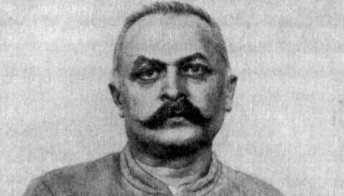
Ernst Wagner
Spree killer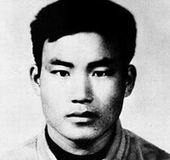 Woo Bun-Kon
Spree killer · South Korea · 1982
Woo Bun-Kon, also known as Woo “Power” Bum-Kon (February 24, 1955–April 27, 198…
57 victims
Woo Bun-Kon
Spree killer · South Korea · 1982
Woo Bun-Kon, also known as Woo “Power” Bum-Kon (February 24, 1955–April 27, 198…
57 victims
 Woo Bun-Kon
Spree killer · South Korea · 1982
Woo Bun-Kon carried out a spree killing in Sang-Namdo, South Korea, and killed…
57 victims
Woo Bun-Kon
Spree killer · South Korea · 1982
Woo Bun-Kon carried out a spree killing in Sang-Namdo, South Korea, and killed…
57 victims
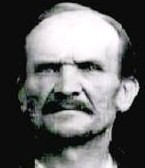 Georg Karl Grossmann
Serial killer · Germany · 1913
Georg Karl Grossmann, who commonly called himself just Karl Grossman (also give…
50 victims
Georg Karl Grossmann
Serial killer · Germany · 1913
Georg Karl Grossmann, who commonly called himself just Karl Grossman (also give…
50 victims
 Martin Bryant
Spree killer · Australia · 1996
Martin Bryant was born May 7, 1967, and was the elder of two children of Mauric…
35 victims
Martin Bryant
Spree killer · Australia · 1996
Martin Bryant was born May 7, 1967, and was the elder of two children of Mauric…
35 victims
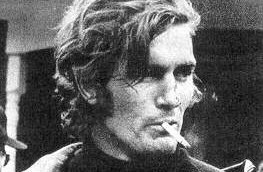 Paul John Knowles
Spree killer · USA · 1974
Paul John Knowles (April 17, 1946 – November 18, 1974) was an American spree ki…
35 victims
Paul John Knowles
Spree killer · USA · 1974
Paul John Knowles (April 17, 1946 – November 18, 1974) was an American spree ki…
35 victims
 Steven James Rollins
Murderer · USA · 2001
Steven James Rollins was thirty-seven years old when he killed John Bussell, an…
1 victim
Steven James Rollins
Murderer · USA · 2001
Steven James Rollins was thirty-seven years old when he killed John Bussell, an…
1 victim
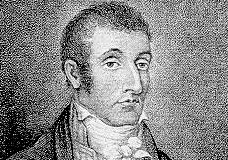 John Bellingham
Assassin · 1812
John Bellingham murdered Spencer Perceval, the British Prime Minister and Chanc…
1 victim
John Bellingham
Assassin · 1812
John Bellingham murdered Spencer Perceval, the British Prime Minister and Chanc…
1 victim
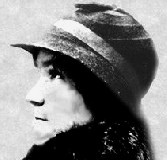 Charlotte Bryant
Murderer · United Kingdom · 1935
Charlotte Bryant, also known as Charlotte McHugh, was born in Londonderry in 19…
1 victim
Charlotte Bryant
Murderer · United Kingdom · 1935
Charlotte Bryant, also known as Charlotte McHugh, was born in Londonderry in 19…
1 victim
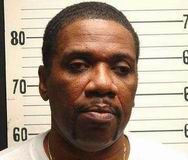 Charles Walton Wright
Murderer · USA · 1984
Charles Walton Wright was convicted of two counts of premeditated first degree…
2 victims
Charles Walton Wright
Murderer · USA · 1984
Charles Walton Wright was convicted of two counts of premeditated first degree…
2 victims
 Edmund Zagorski
Murderer · USA · 1983
Edmund George Zagorski was convicted in 1984 of the first degree premeditated m…
2 victims
Edmund Zagorski
Murderer · USA · 1983
Edmund George Zagorski was convicted in 1984 of the first degree premeditated m…
2 victims
- Gender
- male
- Country
- Germany
- Location
- Degerloch/Mühlhausen an der Enz, Germany
- Date of birth
- September 22, 1874
- Age at first offence
- 39
- Characteristics
- spree killer, serial rapist, history of mental illness, torture, arson, revenge
- Victim profile
- His wife and four children / 8 men and 1 girl Method of murders: St abbing with knife - Shooting
- Method of murder
- —
- Date(s) of murder
- September 4, 1913
- Years active
- 1913
- Date of arrest
- Same day
- Status
-
Acquitted / overturned
Found not guilty by reason of insanity.
Case record: Ernst Wagner
Background
Ernst August Wagner (September 22, 1874 – April 27, 1938) was a German spree killer.
He was born on September 22, 1874 in Eglosheim near Ludwigsburg as the ninth of ten children, not including one half-brother and half-sister. Most of his siblings died early, so that in 1913 only two sisters and one brother remained.
His father, a poor peasant with drinking problems, died one day before Ernst Wagner's second birthday, and the indebted family was forced to sell their farm. His mother tried to make a living of a small shop and soon remarried. Due to Mrs. Wagner's many affairs the marriage was again divorced when Ernst was seven years old.
Ernst Wagner was known as the “widow's boy” in the village. He suffered from depression and suicidal thoughts, though he was quite intelligent and did well enough at school to earn a public stipend, allowing him to study and become a teacher.
After his exam he worked as auxiliary teacher at several schools in Württemberg from 1894 to 1901. In April 1900 he was suspended for half a year because of severe nervousness and irritability. He then went to Switzerland for two months, where he tried to sell some of his poems to newspapers.
In July 1901 he was assigned as teacher to Mühlhausen an der Enz, where he stayed until 1902. Some time in the summer of 1901, in drunk condition, he sodomized an animal. After that, he became increasingly wary and suspicious that others might know of his deed and began to see signs and hints that the villagers of Mühlhausen were mocking him for this act of bestiality. He bought a revolver, which he always carried with him from that point, so that he could evade a potential arrest.
He began an affair with Anna Friedericke Schlecht, the daughter of a local innkeeper. She became pregnant from him in spring of 1902. Ernst Wagner hated the Schlecht-family, thinking that his future father-in-law despised him, and he tried to elude the finally unavoidable marriage.
In December of the same year, Wagner's mother, to whom he felt deeply attached, died. He had his final examination as a teacher and was transferred to Radelstetten, a poor and isolated village. Although being embittered about being ordered to such a place temporarily eased his feelings of constant persecution, the incident of sodomy continued to haunt him.
On December 29, 1903 he and Anna Schlecht married in Ludwigsburg, mostly due to pressure from outside, as their daughter Klara was already 10 months old. Ernst Wagner never made a secret out of the fact that he did not love his wife anymore and thought she was intellectually inferior to him, considering her to be more of a servant than his wife. Wagner's friends also stated that he always treated her kindly.
In the summer of 1904 he once again went to Switzerland, trying twice to commit suicide there—once by drowning himself and by jumping off a bridge—though both attempts failed because he was “according to his own words, too weak .” His wife bore four more children in the following years; the last was Rudoplh Alfred Wagner, born in July 1909, who died on September 22 of the same year. This was on Ernst Wagner's 35th birthday, and he apparently was quite indifferent to the death of his son.
Some time in 1906 or 1907, thinking that the people from Mühlhausen had passed on their knowledge about his crime, the feelings of being ridiculed and watched by others returned. As a consequence, he began to make plans to take revenge on those whom he deemed to be the cause of his misery: the villagers, and especially the men, of Mühlhausen.
In autumn 1907 he bought the first Mauser pistol, the other following in 1909. With his bicycle, which he loved more than anyone or anything else, he made extensive journeys through the surrounding area and trained his shooting skills in remote forests.
Between 1909 and 1911 he made several requests to be transferred to another school, which was finally granted. On May 1, 1912 he began his work at a school in Degerloch, a suburb of Stuttgart. At that time he also decided to go ahead with his plan to avenge the derision he endured. Even in his new workplace he saw hints of people “knowing.” He initially chose the spring of 1913 to put it into practice but finally determined the last days of the summer holidays for his revenge.
In the days leading to the murders he wrote several letters to explain his deed.
The offence
Wagner began his killing spree on September 4, 1913 at about 5 a.m., when he knocked his sleeping wife unconscious by hitting her on the head with a blackjack. He then stabbed her numerous times in her throat and chest with a dagger, cutting her carotid arteries and hitting her heart and lungs. After that he successively entered the bedrooms of his two sons, Robert and Richard, and his daughters, Klara and Elsa, and stabbed each of them in their throat and chest.
Wagner initially claimed that he had also hit his children with the blackjack, though later he was uncertain of this. All of his victims died of massive haemorrhaging.
After covering his family members' bodies with blankets, Wagner got out of his blood-soaked nightshirt and washed himself. He then packed a bag with three guns (two Mauser C96 and a small revolver), 500 rounds of ammunition, a black veil from his wife and a belt. He left his home, leaving a note at his own door that the family was jaunting to Ludwigsburg. He also left another note at the door of Mrs. Stepper, the proprietor of the house he was living in, ordering milk and leaving behind 35 pfennige as payment.
With his cycle he drove towards Stuttgart and took a train to Ludwigsburg, where he bought a backpack. He then made his way to his brother's home in Eglosheim, arriving at about 11 a.m. As his brother was not at home, Wagner chatted a while with his wife, telling her he wanted to spend the night at their home after fetching his children from Mühlhausen, and that the house should stay accessible to him during the night.
In an unobserved moment he hid 228 rounds in a haystack in the garden.
Wagner, accompanied by his nephew and niece, walked to the next train station, where he took a train to Bietigheim at about 1 p.m. From there he headed towards Großsachsenheim, where he mailed letters to several people, including some of his relatives. One letter, addressed to his sister, read: “Take poison! Ernst” ( Nimm Gift! Ernst ). He also mailed letters to theologian and philosopher Christoph Schrempf, as well as a newspaper. He returned to Bietigheim, where he got his bicycle checked by a mechanic, and mailed two copies of his auto-biography, one again to Christoph Schrempf.
At about 7 p.m. he left for Mühlhausen an der Enz.
In the hills near Mühlhausen at about 11 p.m., he girdled himself with the belt, put a cap on his head, and took the two Mauser C96 along with a handbag containing ammunition, the black veil and a file. His bicycle and the small revolver were later found hidden in a corn field.
He set out to cut the telephone lines to the village, but the poles looked too high and there was heavy rain, so he dropped that part of his plan and immediately went into Mühlhausen. There he set fire to four barns.
With the lower part of his face hidden with the veil, he began walking through the streets, shooting at any male person that crossed his path. Wagner later claimed that his female victims were accidentally hit.
In total he spent about 80 rounds and shot 20 people, instantly killing eight of them, as well as two animals. Several buildings burned to the ground. Villagers, with help of the military, managed to extinguish the fires. A ninth person, Jakob Knötzele, was mortally wounded and died a few hours after the shooting had ended.
At one point Wagner forgot to reload his weapons. Three men then struck him down with hoes and sabres. He suffered several wounds in his face and right hand, and his left hand was smashed and nearly cut off. Knocked unconscious, he was disarmed and left for dead, but at 2 a.m. a police officer found him lying on the street, still breathing.
When he regained consciousness, Wagner immediately confessed to killing his family. He stated that he would have committed suicide in the end, but as this was now impossible, he would appreciate if he had been sentenced to death and decapitated.
Finally, in the evening of September 5, Wagner, who expressed concerns that he might get ill if he stayed too long in Mühlhausen, was brought to a hospital in Vaihingen. His left forearm was amputated and his other wounds treated.
A contemporaneous newspaper account described that “A TEACHER named Wagner suddenly became insane at Muhlhausen yesterday.” It said that “The maniac first stabbed his wife and four children to death, and then, arming himself with a revolver, went into the heart of the town; where he set fire to several houses.” It described him as “a man of 40 years of age” and said he did not show any sign of mental disturbance when he emerged from the house. It said he was noticed attempting to fire the town later and had ignited several barns and houses before he was detected. It stated that the villagers attempted to capture him, believing he was a brigand, as he was wearing a mask and veil, and that he had with him “two army revolvers and 250 cartridges.” It said he “quickly shot and killed 10 of his would-be capturers and wounded 23 more, some of whom will probably die.” It said he took refuge in a cowshed and that “he killed a bullock with his last bullet.” It said “a few of the bolder spirits, armed with pitchforks and scythes, cut him down in his retreat, and terribly injured him,” including that “One of his hands was cut off.” It said his papers found in his home showed he “had carefully planned the crime.” It included a statement that “A letter addressed to a Stuttgart newspaper has been unearthed, declaring that he wished to become the devil's ally.” It also stated that “The doctors are unable to detect any evidence of irresponsibility.”
Another passage described a mass killing in which “a 39-year-old schoolteacher by the name of Wagner acted out his own Gotterdammerung.” It said he “rose before dawn and as quietly and painlessly as possible killed his wife and four children” and that he mailed letters, including “one, containing a complete confession,” addressed to “Stuttgart's largest newspaper.” It said he took a train to Muehlhausen “113 miles away,” where “in the middle of the night he set several large fires,” and that as villagers ran into the street he shot them “killing eight men and one girl immediately; twelve more were severely injured” and that “When he ran out of ammunition, he was overpowered” and “the terrified townsmen were astounded to recognize the murderer as the teacher who had moved away a dozen years earlier.” It said “Wagner died in an asylum 25 years later.” It further said that he discussed “every aspect of his life -- with one exception” and that he “traced his crime back to one or more sodomistic acts which he would never describe, committed while teaching in the village.” It said “the psychiatrists wondered if these things had actually happened or were fantasy.” It described that Wagner “convinced himself that the villagers knew about those acts, that they watched, mocked, and ridiculed him,” and that he lived in constant dread of arrest and carried “two loaded pistols on his wedding day in 1903.” It also stated that he “developed his murderous plan three years after leaving Muehlhausen” and that in 1913 he “interpreted an earthquake as a mystical sign that he must act.”
Victims
The victims included:
- Anna Wagner, Wagner's wife
- Klara Wagner, 10, his daughter
- Elsa Wagner, 8, his daughter
- Robert Wagner, 6, his son
- Richard Wagner, 5, his son
- Marie Magdalena Bader, 10
- Georg Friedrich Bauer, 64
- Johann Friedrich Geissinger, 60
- Adolf Heinrich Knötzele, 52
- Johann Jakob Knötzele, 50
- Johann Georg Müller, 54
- Jakob Franz Schmierer, 32
- Christian Thomas Vogel, 65
- Christian Widmaier, 68
- Jakob Knötzele, mortally wounded and died a few hours after the shooting had ended
The spree resulted in 20 people being shot, with at least 9 deaths, and it included two animals killed.
Investigation
After Wagner was found breathing at 2 a.m., he regained consciousness and confessed to killing his family. He stated that he would have committed suicide in the end, but as this was now impossible, he wanted to be sentenced to death and decapitated.
His papers found in his home were described as showing he had carefully planned the crime. A letter addressed to a Stuttgart newspaper was described as declaring that he wished to become the devil's ally.
Arrest / apprehension
Villagers, with help of the military, managed to extinguish the fires during the spree. At one point Wagner was struck down by three men with hoes and sabres, suffered multiple wounds and was left for dead. A police officer found him lying on the street at 2 a.m. while he was still breathing.
Trial
After several psychiatric assessments diagnosed him as suffering from paranoia, he became the first person in Württemberg to be found not guilty by reason of insanity.
A newspaper passage described that public opinion demanded his execution and that a violent newspaper debate raged because Wagner's life was spared when it was recognized during the pretrial examination that he was mentally ill. It said he was committed to an insane asylum.
Sentencing / confinement
He was brought to an asylum in Winnenthal. He commenced to write several plays and dramas. He died there in 1938 of tuberculosis.
Outcome
He was found not guilty by reason of insanity.
Aftermath
He died on April 27, 1938 in the asylum. The material described that Wagner lived embittered for failing to find acclaim as a literary figure and that at autopsy his brain showed no gross pathology; it was sent for microscopic study and no abnormal findings were reported. It stated that Professor Gaupp concluded his series of papers with the statement that “in spite of all the efforts to follow his mental processes, there remains a part that is beyond human comprehension.”
“in spite of all the efforts to follow his mental processes, there remains a part that is beyond human comprehension.”
Professor Gaupp
Another passage described that he wrote homicidal dramas, with the intent of putting himself in the role of murderer and arsonist, and that the execution of the murder went “like clockwork, quite mechanically.”
“like clockwork, quite mechanically.”
Wagner
It also described that he acted “as though under a compulsion, like ‘having been pushed into it,’” and described his mental state as “apathetic and excited at the same time.”
“having been pushed into it”
“apathetic and excited at the same time.”
Other details
A passage said the perpetrators first stabbed his wife and four children, and then went into the heart of the town, set fires, and shot at capturers while wearing a mask and veil. It described him having “two army revolvers and 250 cartridges,” and it said one of his hands was cut off during the overpowered phase.
The psychiatric and biographical material also described:
- The psychiatrists wondered if Wagner’s sodomistic acts “actually happened or were fantasy.”
- Wagner traced his crime back to “one or more sodomistic acts which he would never describe.”
- Wagner felt continuously observed, mocked, and ridiculed, and lived in constant dread of arrest.
- He believed that “there was never a direct statement,” but that he “heard” pointed remarks containing hints.
- He planned to kill himself and his children out of pity to save them from a future target of contempt and evil slander, and out of revenge on the people of Muehlhausen.
- His letters included a message “Take poison! Ernst” ( Nimm Gift! Ernst ) addressed to his sister.
- He mailed letters and two copies of his auto-biography, including to Christoph Schrempf.
- He hid 228 rounds in a haystack in the garden in Eglosheim during his travel before the spree.
- He set fire to four barns in Mühlhausen an der Enz.
- He later amputated his left forearm and treated his other wounds at a hospital in Vaihingen.

Spotted an error, or have more information about this case?