Abram Antone
Murderer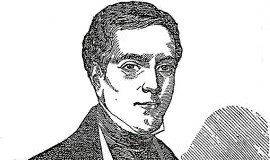 Jereboam Beauchamp
Murderer · USA · 1825
Jereboam Orville Beauchamp was an American lawyer and convicted murderer who wa…
1 victim
Jereboam Beauchamp
Murderer · USA · 1825
Jereboam Orville Beauchamp was an American lawyer and convicted murderer who wa…
1 victim
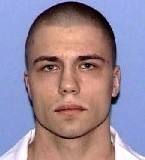 Clinton Lee Young
Murderer · USA
Clinton Lee Young (born July 19, 1983) was convicted of murdering two men in No…
2001 victims
Clinton Lee Young
Murderer · USA
Clinton Lee Young (born July 19, 1983) was convicted of murdering two men in No…
2001 victims
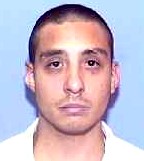 Ivan Abner Cantu
Murderer · USA
Name: Ivan Abner Cantu · TDCJ number: 999399 · Date of birth: 06/14/1973 · Age…
2000 victims
Ivan Abner Cantu
Murderer · USA
Name: Ivan Abner Cantu · TDCJ number: 999399 · Date of birth: 06/14/1973 · Age…
2000 victims
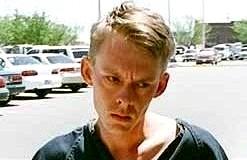 Michael John Yowell
Murderer · USA
Name: Michael John Yowell · TDCJ number: 999334 · Date of birth: 01/25/1970 · P…
1998 victims
Michael John Yowell
Murderer · USA
Name: Michael John Yowell · TDCJ number: 999334 · Date of birth: 01/25/1970 · P…
1998 victims
 Michael Duane Zack
Murderer · USA
Michael Duane Zack was convicted and sentenced to death for the 06/13/96 murder…
1996 victims
Michael Duane Zack
Murderer · USA
Michael Duane Zack was convicted and sentenced to death for the 06/13/96 murder…
1996 victims
 John Doyle Lee
Murderer · USA · 1857
Name: John Doyle Lee Lifespan: September 12, 1812 - March 23, 1877 Legal outcom…
120 victims
John Doyle Lee
Murderer · USA · 1857
Name: John Doyle Lee Lifespan: September 12, 1812 - March 23, 1877 Legal outcom…
120 victims
 Javier Suarez Medina
Murderer · USA · 1988
Javier Suarez Medina (Offender: Javier Medina #944) was convicted and sentenced…
1 victim
Javier Suarez Medina
Murderer · USA · 1988
Javier Suarez Medina (Offender: Javier Medina #944) was convicted and sentenced…
1 victim
 Jeffrey Dale Tiner
Murderer · USA · 1993
Name: Jeffrey Dale Tiner · Case title: State of Oregon, Plaintiff on Review, v.…
1 victim
Jeffrey Dale Tiner
Murderer · USA · 1993
Name: Jeffrey Dale Tiner · Case title: State of Oregon, Plaintiff on Review, v.…
1 victim
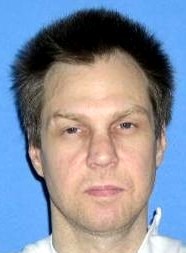 Charles Edward Smith
Murderer · USA · 1988
Charles Edward Smith was executed by lethal injection in Texas on May 16, 2007.…
1 victim
Charles Edward Smith
Murderer · USA · 1988
Charles Edward Smith was executed by lethal injection in Texas on May 16, 2007.…
1 victim
 Jody Lynn Bowman
Homicide · USA · 2003
Jody Lynn Bowman was acquitted of a murder charge by a Florida jury in May 2004…
1 victim
Jody Lynn Bowman
Homicide · USA · 2003
Jody Lynn Bowman was acquitted of a murder charge by a Florida jury in May 2004…
1 victim
- Gender
- male
- Country
- USA
- Location
- Madison County, New York, USA
- Date of birth
- 1750
- Age at first offence
- 65
- Characteristics
- revenge
- Victim profile
- John Jacobs (principal witness against his daughter)
- Method of murder
- Shooting
- Date(s) of murder
- 1815
- Years active
- 1815
- Date of arrest
- —
- Status
-
Executed
Executed by hanging on September 12, 1823
Case overview
Abram Antone was born in the year 1750 and was executed by hanging on September 12, 1823. His father was a Stockbridge Indian and his mother was the daughter of an Oneida chief. His parents removed to the county of Chenango, where he lived for the most part.
Timeline
- 1776 — Abram Antone took up arms in favor of the Americans.
- 1810 — Mary, Abram Antone’s daughter, formed a connection with a young Indian, and the connection was soon broken off.
- 1815 — Abram Antone killed John Jacobs, the principal witness against his daughter Mary.
- About 1798 — Abram Antone committed a murder at Chenango Point that was well attested and to which he assented.
- September 12, 1823 — Abram Antone was executed in Morrisville.
Background
Abram Antone described himself as having been in three battles fought for the Americans and fought bravely. When asked how many of the enemy he had slain, he replied: “More that that,” and held up both hands with fingers spread, adding that he could not tell exactly how many because, though he often pointed his rifle, on account of much smoke he could not always tell whether he had killed or not.
Abram Antone asserted that he had once been employed by Gov. George Clinton on a secret mission and observed that he was a great friend to him. He denied it had been asserted that he was a British Indian. He described himself as having been bred in the true spirit of his savage ancestors and as bold and adventurous.
The first murder of Abram Antone that was well attested and to which he assented was committed at Chenango Point about 1798. He later removed to Canada ten or twelve years before his death.
The offence
Murder at Chenango Point (about 1798)
Abram Antone believed an Indian who distributed the government allowance to different tribes had defrauded him of some part of the money. He declared his intention to kill the Indian and carried it out at the raising of an Indian house near the Point. The Indian whom he had threatened was present, armed. Abram Antone sat on a piece of timber within the frame until the house raising was finished and the people assembled in number to fifty for the purpose of drinking. He then took aim and shot the Indian directly through the heart. He walked deliberately off afterward. The Indians buried the body, and he paid a sum of money to the tribe for a ransom.
Murder of an infant child
Abram Antone was accused of and a wife’s account described his killing of his own infant child. The account said that returning from an assembly of Indians one evening to his wigwam, he found his little infant of four or five months old crying. The wife’s account stated that he snatched the child from its mother’s arms and raked open a hot bed of coals, burying the infant beneath them. The account stated that this version was allowed by his wife and well attested by others.
Murder in Canada while pursuing an enemy
In Canada, during a removal from one encampment to another, Abram Antone was overtaken by a company of men on horseback. One of them insulted the squaws in Abram Antone’s company. Abram Antone resented it, and another man struck him with his whip, calling him an Indian dog, and rode off with his companions, laughing at Abram Antone’s threats of vengeance.
Abram Antone left his friends to seek his encampment alone and pursued the travelers for many days without success, closely dogging them. He eventually disguised himself by painting his face warrior fashion, entered a public house where the horsemen had put up, and was permitted to lodge before the fire. The particulars described that he noticed where the bedroom of one horseman was located, arose in the night with a noiseless step, entered the room, struck him on the left side, and that the blow did not require repetition. The groan of the victim was lost in Abram Antone’s yell as he burst from the house before the family could oppose him. The particulars of this murder were described as having been received from a civilized Indian of the Stockbridge tribe who probably heard them from Abram Antone himself.
Abram Antone confessed to the murder of a white man in Canada.
Mary Antone’s murder and John Jacobs’s role
In 1810, Mary, the daughter of Abram Antone, formed a connection with a young Indian of the Stockbridge tribe. The connection was soon broken off, and the young man left Mary for one more agreeable. Mary was so enraged that she determined to kill her rival and effected it by stabbing her with an Indian knife. When Mary was arrested and on her way to prison, she was described as manifesting remarkable indifference as to her fate. She justified herself concerning the murder of the squaw by observing that she had “got away her Indian, and deserved to die.”
Mary was executed in Peterboro, in this county, and John Jacobs was identified as the principal evidence against her. He was also described as very active in Mary’s arrest. Abram Antone considered Jacobs the principal cause of his daughter’s death. Before and after Mary’s execution, Abram Antone openly threatened to kill Jacobs at the first opportunity. Jacobs left the country and did not return until Abram Antone sent him word that he would not molest him, described as probably intended to bring Jacobs into his power.
Investigation, arrest, and detention
Abram Antone was described as having been in hiding for several years after Mary’s execution and after the threatened killing.
It was described that after Jacobs returned relying on Abram Antone’s promise, Jacobs was hoeing corn in a field with men present when Abram Antone came up in a friendly way, shaking hands until he came to Jacobs. While grasping Jacobs’s hand in apparent friendship, Abram Antone slipped a long knife from out of the frock sleeve of his left arm and pronounced: “How d’ ye do, brother!” The narrative stated that Abram Antone plunged the knife into Jacobs’s body, striking him three times under the short ribs. Jacobs fell at the first blow. Abram Antone gave a terrific yell and bounded off before anyone had recovered presence of mind to pursue him.
After the killing, that night Abram Antone was described as being pursued by a number of Indians and being surprised in his hiding-place, but escaping due to fleetness. He was described as going constantly armed with a rifle and knives, accompanied by dogs, and that his sons daily ministered to his needs while concealed in the forest. He was described as being often surrounded by officers in pursuit but managing to escape.
The narrative stated that there was an attempt to take Abram Antone while he was encamped on Mr. John Guthrie’s land in the town of Sherburne. Two large and resolute Indians obtained information that he was alone in his camp and went to the wigwam. Abram Antone was described as discovering the rustling noise, seizing his rifle, and pointing at the foremost. He declared that if the man advanced a step further he would shoot him dead. After parleying for a short time, the pursuers withdrew.
The narrative stated that Abram Antone’s trusty rifle was not loaded, a circumstance that he frequently boasted afterwards. It was also described that he grew so bold and fearless that he marched through towns and villages in open day without fear of being taken. It was said that in the village of Sherburne he entered a store where about twenty men were present and drank until intoxicated.
Abram Antone was ultimately betrayed into the hands of a posse of officers by a man who won his confidence by professions of friendship. The man decoyed him by getting him out of his cabin to have a trial with him in shooting at a mark. After Abram Antone discharged his piece, the officers who were stationed in secret rushed upon and secured him. It was described as including a desperate struggle in which Abram Antone fought manfully, showing exceeding strength and agility and was considerably bruised in the conflict.
Trial
During Abram Antone’s confinement, several pious people endeavored to explain the principles of the Christian religion to him, but he either could not or would not understand them. He was described as having no idea of a Saviour and as having mentioned through the interpreter that he put his trust in God, or more properly the Great Spirit. He was asked if it was the God of the Christian or the spirit worshiped by his fathers.
The narrative quoted Abram Antone’s reply: “THE GOD OF MY FATHERS!”
Abram Antone was asked about his execution. His hope of being reprieved was described as lasting until toward the last, when it failed. He expressed willingness to die but complained of the manner and said: “No good way!” He put his hands about his neck and said: “No good way to hang like a dog!” He then pointed to his heart and said he should be willing to be shot.
He was also described as being anxious about his body, feeling it would be obtained for dissection. He made no lengthy confession but assented to having committed the murder herein related, and only these. The narrative stated that several other atrocious murders had been attributed to him, and he utterly denied them.
The jury rendered a verdict of “guilty,” and, according to his sentence, Abram Antone was executed in Morrisville on Friday, the 12th day of September, 1823.
Sentencing
Abram Antone was sentenced such that he was executed in Morrisville on Friday, the 12th day of September, 1823. A large delegation of his own race was present, and the execution was described as public with a great concourse of people witnessing it.
Appeals
No appeals were described.
Outcome
Abram Antone was executed by hanging on September 12, 1823.
Other details
Abram Antone threatened to kill John Jacobs both before and after Mary Antone’s execution. Hunters came with their rifles fearing that the tribes would try to rescue him at the last hour, but it was described that there was no disturbance and he went to his death.
The narrative described a debate over how Abram Antone’s ferocity had been represented and cited Smith in his history of Madison and Chenango Counties as stating that the ferocity had been greatly exaggerated by tradition and history and that Antone had many noble traits of character. The narrative described Abram Antone as represented as a most wily and ferocious savage, while also including a quoted description of an “old warrior” with a noble countenance that had no expression of malice and features described as placable and bordering on serenity.
Spotted an error, or have more information about this case?