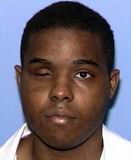
Andre Lee Thomas
Murderer Robert Martines Perez
Murderer · USA · 1994
Name: Robert Martines Perez · Other name used in proceedings: Robert Martinez P…
15 victims
Robert Martines Perez
Murderer · USA · 1994
Name: Robert Martines Perez · Other name used in proceedings: Robert Martinez P…
15 victims
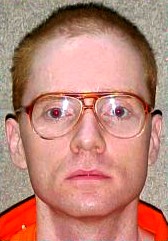 Robert Glen Jones
Murderer · USA · 1996
Defendant: Robert Glenn Jones (ADC#070566) · Co-defendant: Scott Nordstrom (ADC…
7 victims
Robert Glen Jones
Murderer · USA · 1996
Defendant: Robert Glenn Jones (ADC#070566) · Co-defendant: Scott Nordstrom (ADC…
7 victims
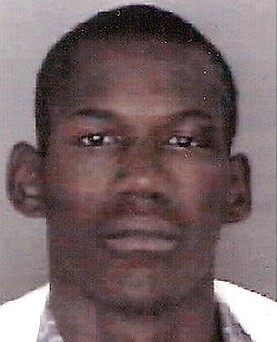 Joshua Wayne Andrews
Murderer · USA · 2000
Joshua Wayne Andrews was a serial killer accused of killing several people in V…
5 victims
Joshua Wayne Andrews
Murderer · USA · 2000
Joshua Wayne Andrews was a serial killer accused of killing several people in V…
5 victims
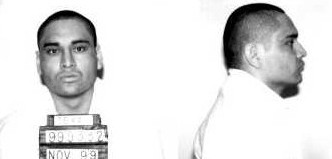 Juan Carlos Alvarez
Murderer · USA · 1998
Juan Carlos Alvarez, born on March 9, 1977, in San Luis, Mexico, was a Hispanic…
5 victims
Juan Carlos Alvarez
Murderer · USA · 1998
Juan Carlos Alvarez, born on March 9, 1977, in San Luis, Mexico, was a Hispanic…
5 victims
 David Earl Miller
Murderer · USA · 1981
David Earl Miller was convicted of first-degree murder for the May 1981 killing…
1 victim
David Earl Miller
Murderer · USA · 1981
David Earl Miller was convicted of first-degree murder for the May 1981 killing…
1 victim
 Daniel Lee Corwin
Serial killer · USA · 1987
Daniel Lee Corwin was a Texas death row inmate. Corwin was executed at lethal i…
3 victims
Daniel Lee Corwin
Serial killer · USA · 1987
Daniel Lee Corwin was a Texas death row inmate. Corwin was executed at lethal i…
3 victims
 Steven David Catlin
Murderer · 1976
Steven David Catlin was convicted of poisoning his mother and two of his wives…
3 victims
Steven David Catlin
Murderer · 1976
Steven David Catlin was convicted of poisoning his mother and two of his wives…
3 victims
 Shon Miller
Spree killer · USA · 1999
Shon Miller Sr. was a 22-year-old homeless man who was described as having a st…
4 victims
Shon Miller
Spree killer · USA · 1999
Shon Miller Sr. was a 22-year-old homeless man who was described as having a st…
4 victims
 Jorge Alfredo Salinas
Homicide · USA · 2001
Jorge Alfredo Salinas TDCJ Number: 999428 Date of Birth: 04/01/1984 Native Coun…
2 victims
Jorge Alfredo Salinas
Homicide · USA · 2001
Jorge Alfredo Salinas TDCJ Number: 999428 Date of Birth: 04/01/1984 Native Coun…
2 victims
 Rachael Mullenix
Homicide · USA · 2006
Defendant: Rachael Scarlett Mullenix (also referred to as Rachael Mullenix), 16…
1 victim
Rachael Mullenix
Homicide · USA · 2006
Defendant: Rachael Scarlett Mullenix (also referred to as Rachael Mullenix), 16…
1 victim
- Gender
- male
- Country
- USA
- Location
- Grayson County, Texas, USA
- Date of birth
- March 17, 1983
- Age at first offence
- 21
- Characteristics
- parricide
- Victim profile
- Laura Christine Thomas, 20 (his wife), Andre Lee Boren, 4 (his son), and Leyha Marie Hughes, 13 month old (his step-daughter)
- Method of murder
- Stabbing with knife
- Date(s) of murder
- March 27, 2004
- Years active
- 2004
- Date of arrest
- Same day (suicide attempt)
- Status
-
Sentenced to death
Sentenced to death on March 16, 2005
Case information
Andre Lee Thomas (TDCJ Number 999493) was born on 03/17/1983. He was received on 03/16/2005 and was 21 at the time of receipt. His education level was 09.
At the time of the offence he was 21. He was located in Grayson County, Texas.
His hair color was Black; he was Male. His race and gender of the victims were White Female, Unknown Female, and Unknown Male. The victims’ ages were 20 years old (his wife), 4 years old (his son), and 13 month old (his step-daughter). The victims’ names were Laura Christine Boren, Andre Lee Boren, and Leyha Marie Hughes.
Andre Lee Thomas had prior occupation as a Maintenance / Laborer. He had prior prison record None.
The offence
On 3/27/2004 in Grayson County, Texas, Thomas entered the residence of his wife, a twenty year old white female, and fatally stabbed her. He then fatally stabbed his son, a 4 year old male, and his step-daughter, a 13 month old female. Thomas then left the scene, walked home and stabbed himself three times in the chest.
The three victims had been stabbed and had large, gaping wounds to their chests.
According to Thomas’ statement to police, he believed God wanted him to kill his wife because she was “Jezebel” and to kill his wife’s daughter because she was evil. He also believed Bryant Hughes wanted to strangle Laura and the children.
In Thomas’ statement, he burst into the apartment and stabbed and killed Laura and the two children. He used a different knife on each victim. He carved out the children’s hearts and stuffed them into his pockets. He mistakenly cut out part of Laura’s lung instead of her heart and put that into his pocket. After stabbing himself in the heart, he believed it would assure the death of the demons that had inhabited his wife and the children. Because he did not die, he walked home, changed his clothes, put the hearts into a paper bag, and threw them in the trash.
Thomas then walked to his father’s house with the intention of calling Laura. He called Laura’s house instead and left a message on their answering machine:
“’Um, Sherry, there is Andre. I need y’alls help, something bad is happening to me and it keeps happening and I don’t know what’s going on. I need some help, I think I’m in hell. I need help. Somebody needs to come and help me. I need help bad. I’m desperate. I’m afraid to go to sleep. So when you get this message, come by the house, please. Hello?’”
Thomas then walked to his trailer where his girlfriend, Carmen Hayes, and his cousin, Isaiah Gibbs, were waiting for him. He told them he had just killed his wife and the two children. Hayes took him to the Sherman Police Department and he told a dispatcher he had just murdered the three and had stabbed himself in the chest. Thomas told police how he put the victims’ hearts in his pocket and left their apartment, took them home, put them in a plastic bag and threw them in the trash.
Investigation
Officer Chris Mullins of the Sherman Police Department was dispatched to a triple homicide on March 27, 2004. When he arrived at the victims’ apartment at 7:22 a.m., he saw that the front door had been “kicked in.” Inside the apartment, he found the bodies of Laura Christine Boren, Andre Lee Boren, and Leyha Marie Hughes. All three victims had been stabbed and had large, gaping wounds to their chests.
At about 9:30 a.m., Thomas entered the lobby of the Sherman Police Department and told Police Dispatcher Cindy Carr that he had just murdered his wife and wanted to turn himself in.
Officer Chuck Maudlin frisked Thomas for weapons. Maudlin testified that Thomas, who appeared lethargic and calm, asked, “Will I be forgiven?” and said he had stabbed himself in the chest. Detective Brice Smith handcuffed Thomas and arrested him. Smith later arrested him pursuant to an arrest warrant after transport for hospital treatment.
Arrest and custody events
Thomas was transported to a hospital for treatment and underwent surgery for self-inflicted stab wounds.
On March 29, 2004, Officer Brad Blankenship went to see Thomas at the hospital. Officer William Caver was on guard in Thomas’ hospital room.
Blankenship testified that he asked if Thomas would be willing to talk to police about the offense. Thomas replied, “Yes, if that means I get to tell my side of the story. Yes, I want to talk to you.” Blankenship told Thomas that another officer would take his videotaped statement after lunch, and Thomas agreed it would be “fine.” Blankenship had not yet advised Thomas of Miranda rights and Article 38.22, and Thomas asked something to the effect of, “Shouldn’t I have a lawyer?”
Blankenship attempted to clarify whether Thomas wanted to give a statement. Thomas said he thought he needed to have a lawyer first. Blankenship advised him that he would not be able to take the statement at that time because Thomas had said “the magic words” that he wanted an attorney. After Blankenship left the room, Caver testified that Thomas asked where Blankenship was and said, “I thought he wanted to talk.” Caver told Thomas that Blankenship had left because Thomas had “said the magic words.” Thomas told Caver that he changed his mind, he wanted to talk to Blankenship, and he did not need a lawyer. Caver advised him that he could represent himself.
Blankenship and Caver returned to Thomas’ room. Blankenship told Thomas that he “did not want to take a statement from him under those conditions” and he “wanted to confer with the County Attorney’s Office first.”
Thomas was released from the hospital and taken to the Sherman Police Department. On the afternoon of March 29, Detective Mike Ditto interviewed Thomas; the interview was videotaped. Ditto advised Thomas of rights under Article 38.22, and Thomas waived and agreed to talk.
Thomas told Ditto about his earlier interaction with Blankenship. He acknowledged that he initially had told Blankenship he wanted a lawyer but had then changed his mind. When Ditto asked if the other officer had said anything, Thomas responded:
“He started to say something, but I cut him off. . . . I figured that he was going to explain to me about my Miranda rights and I finished it for him.”
Thomas told Ditto that he had killed his wife, son, and stepdaughter and that God had wanted him to do it. He described his wife as a “jezebel” and his son as “the anti-Christ.” Toward the end of the interview, Thomas said he was tired and did not want to talk further. Ditto gave him his business card and told him to contact Ditto if he wanted to talk again later.
After Ditto’s interview, Thomas was taken to the Grayson County Jail and was magistrated by Judge Greg Middents and assessed by Nurse Natalie Sims.
Middents testified that he read Thomas’ warnings and rights twice because Thomas had been “kind of groggy or maybe under some medication.” Middents was satisfied Thomas understood his rights and requested that counsel be appointed.
Sims testified that she met with Thomas to complete his medical history and mental-health-screening questionnaires. She said Thomas was “somewhat lethargic, sleeping intermittently in his chair,” and that he told her he was given Darvocet right before his release from the hospital. She also said he appeared to understand questions and answer appropriately and seemed “oriented to time, place, and person.” She checked on Thomas on the evening of March 29 and said Thomas showed Ditto’s business card and told her he wanted to talk to Ditto. She said she told him that because it was late she would get in touch with Ditto the next day. She testified that the doctor’s orders were only for wound treatment and non-narcotic pain medication, generally Tylenol or Motrin, and that no narcotic pain medication was received after leaving the hospital.
On the morning of March 30, Sims contacted the Sherman Police Department and said Thomas wanted to talk to Ditto. When Ditto and Texas Ranger “Tony” Bennie came to the jail, Sims told them she believed Thomas was “oriented to person, place, time, and location,” and that he was “lucid,” “bright,” and “alert” before the interview.
At Thomas’ request, Sims was allowed to be present while he was questioned. The interview was audiotaped. Sims testified that, in her opinion, Thomas appeared to understand his rights and made an informed choice to talk to police. During the hour-long interview, Thomas again related that he killed the victims because they were evil and God wanted him to do it. He also said that he cut open the victims’ chests and ripped their hearts out and stabbed himself in the chest afterwards. Sims testified Thomas exhibited delusional behavior but knew “very much what was going on,” and that Thomas’s mental condition deteriorated in the days following the Ditto interview while she believed Thomas fully understood his rights and made an informed choice to waive them.
Two employees of the Grayson County Jail testified that on April 2, a few days after the statements, Thomas pulled out one of his eyeballs with his hands while alone in his holding cell. They testified he yelled, “It’s God’s will,” and said he had been reading his Bible.
Thomas was treated at East Texas Medical Center in Tyler after the Dec. 9 incident and was transferred to a prison psychiatric facility at the Jester Unit.
Trial
Thomas pleaded not guilty by reason of insanity.
The trial centered on the death of Leyha Marie Hughes. The indictment alleged that Thomas intentionally or knowingly caused her death, an individual younger than six years of age.
Trial evidence and jury
Photographs and autopsy reports pertaining to Laura Boren Thomas and Andre Lee Boren were admitted over objections. Crime-scene photographs included State’s Exhibits 12 through 15 and 19 through 21, described as black-and-white copies of original color photographs. Autopsy photographs included State’s Exhibits 54 through 60. Autopsy reports were State’s Exhibits 51 and 52.
The court found the photographs and reports were relevant to Thomas’ sanity because Laura and Andre were killed during the same criminal episode as Leyha and because Thomas’ statements to police provided evidence of his mental state. The court determined the probative value was not substantially outweighed by unfair prejudice.
The trial court also admitted testimony of Dr. Victor Scarano during the State’s case in chief on Thomas’ sanity at the time of the offense. The defence had raised insanity through cross-examination during the State’s case in chief and by pleading not guilty by reason of insanity, according to the appellate reasoning.
Thomas was later determined competent to stand trial. In April 2004, motions were filed to examine and evaluate competency. Two psychologists filed reports determining Thomas was incompetent. On June 16, 2004, the trial court found him incompetent and ordered commitment to the Texas Department of Mental Health and Mental Retardation-Vernon Campus for restoration to competency. In late July 2004, Thomas returned to Grayson County. A report that Thomas was competent was filed by Dr. Joseph Black, Chief Psychiatrist for the Competency Program at the Vernon Campus, and the trial court made a competency determination pursuant to Article 46B.084 after taking judicial notice of Dr. Black’s report.
The trial court denied Thomas’ request for a Geesa instruction defining “reasonable doubt.”
On voir dire, the State’s challenge for cause to prospective juror Michael Ross was granted. The record included Ross’s responses, including:
“Well, the honest answer to that is I really don’t know.” and “I think that would probably be right.” and “Could not. It would bother me if I ever had to.” and “Yeah, I think the death penalty would always have an influence on what my decision was, and I think it would be unfair to say I could do it, honestly, knowing that there’s the death penalty.” Ross also stated: “... I couldn’t honestly say that I could. You know, the death penalty is, like I said, basically a problem.”
Verdict and sentence
On March 11, 2005, a jury found Thomas guilty of capital murder in the stabbing death of Leyha Marie Hughes. Thomas was sentenced to death on March 16, 2005, after the jury rejected his insanity plea.
A sentencing opinion described by the appellate court stated that the trial judge sentenced Thomas to death based on the jury’s answers to the special issues under Texas Code of Criminal Procedure Article 37.071, sections 2(b) and 2(e).
Appeals
Thomas appealed his conviction and death sentence.
On appeal, the Texas Court of Criminal Appeals affirmed the judgment. The appellate court delivered its opinion on October 8, 2008. The case was not published.
The appeal included claims regarding suppression of videotaped and audiotaped statements and Miranda waiver. The appellate court noted that Thomas did not contend that he was coerced into waiving his Miranda rights. The court upheld the trial court’s findings that Thomas understood his rights and knowingly and intelligently waived them on March 29 and March 30, 2004.
Other appeal points addressed admission of photographs and autopsy reports; admission of Dr. Scarano testimony in the State’s case in chief; competency determination after earlier incompetency; refusal of a reasonable doubt instruction definition; ineffective assistance of counsel claims; and denial of a motion for new trial based on alleged jury misconduct.
The appellate court denied ineffective assistance of counsel claims analyzed under Strickland v. Washington and Hernandez v. State.
In the ineffective assistance analysis, the appellate court discussed counsel’s alleged failure to seek hearings and rulings on pretrial motions, noting discussions in the record regarding “Motion for Defendant to be Restrained by Least Restrictive Means” and “Motion to Require State to Reveal Agreement or Admonition,” and describing record inadequacy for other motions.
The appellate court also addressed alleged failure to request a post-commitment competency hearing and explained that counsel had counsel choices and the state hospital report found Thomas competent with “malingering” described, and that the appellant failed to show how requesting a competency hearing would have changed the outcome.
The appellate court also addressed claims about failure to present sanity evaluations and expert testimony, including Dr. Kate Allen testimony related to punishment and future dangerousness.
For jury misconduct, the appellate court discussed Texas Rule of Evidence 606(b) and rejected the argument that the jury had considered Thomas’ failure to testify when deciding deliberations.
Outcome
The Texas Court of Criminal Appeals affirmed Thomas’ conviction and death sentence.
In 2009, the appellate court characterized Thomas as “crazy” but “sane” under Texas law, and made a ruling described as controversial by the case material.
Also, in 2009 Thomas plucked out his last good eye and ate it while on death row on December 9, 2008. The case material described that this incident spurred jail officials to have Thomas psychologically evaluated and that Dr. Joseph Black later described Thomas as “malingering” and found him competent to stand trial after five weeks of medication and treatment at the Vernon State Hospital for the criminally insane.
Aftermath
Thomas was transferred and remained at the Jester Unit, a prison psychiatric facility near Richmond southwest of Houston, after an incident on Dec. 9 described in the case material.
A death row officer at the Polunsky Unit found Thomas in his cell with blood on his face and took him to the infirmary. Agency spokesman Jason Clark said:
“Thomas said he pulled out his eye and subsequently ingested it.”
Thomas’ trial attorney, Bobbie Peterson-Cate, was quoted as saying:
“He will finally be able to receive the mental health care that we had wanted and begged for from day 1,” and “He is insane and mentally ill. It is exactly the same reason he pulled out the last one.”
Thomas did not have an execution date stated in the case material.
Timeline
- 03/27/2004 — Thomas entered his wife’s residence in Grayson County, Texas, fatally stabbed his wife, his son, and his step-daughter, then walked home and stabbed himself three times in the chest.
- 03/16/2005 — Thomas was received; he was 21 at receipt.
- 03/11/2005 — A jury found Thomas guilty of capital murder in the stabbing death of Leyha Marie Hughes.
- 03/16/2005 — The trial judge sentenced Thomas to death.
- 12/09/2008 — Thomas plucked out his last good eye and ate it while on death row.
- 03/16/2005 — Sentenced to death.
- 10/08/2008 — The Court of Criminal Appeals delivered its opinion affirming the judgment.
- 03/19/2009 — The Court of Criminal Appeals issued a ruling described as controversial in the case material, addressing the “crazy” but “sane” legal framework under Texas law.
- 01/09/2009 — A quoted account described the Dec. 9 incident on death row and stated Thomas did not have an execution date.
Other details
Persons mentioned
- Bryant Hughes (identified as Laura’s boyfriend in the incident description)
- Carmen Hayes (identified as Thomas’ girlfriend who took him to the Sherman Police Department)
- Isaiah Gibbs (identified as Thomas’ cousin)
- Judge Greg Middents (magistrating judge at the Grayson County Jail)
- Nurse Natalie Sims (assessment and presence during interviews)
- Detective Mike Ditto (interviewer at the Sherman Police Department on March 29 and March 30)
- Officer Chris Mullins (first responder dispatched to the triple homicide)
- Police Dispatcher Cindy Carr (received Thomas in the lobby)
- Officer Chuck Maudlin (frisked Thomas; testified about “Will I be forgiven?”)
- Officer Brad Blankenship (hospital visit on March 29)
- Officer William Caver (on guard in the hospital room)
- Texas Ranger “Tony” Bennie (interviewed Thomas with Ditto on March 30)
- Jason Clark (agency spokesman who spoke about Thomas ingesting the eye)
- Bobbie Peterson-Cate (Thomas’ trial attorney)
- Dr. Joseph Black (Chief Psychiatrist for the Competency Program; later described Thomas as “malingering” in competency context)
- Dr. Victor Scarano (State expert who testified on sanity)
- Dr. Sheila Spotswood (medical examiner who used photographs and testified at trial)
- Judge Womack, J. (credited with delivering the opinion described in the case material)
- Michael Ross (prospective juror excused for cause)
- Kyle McCoy (identified in a proffer related to alleged jury misconduct during new trial motion)
- Sherrie St. Cyr (social worker who testified)
- William Bowen (physician who testified)
- Cactus Robin McGirk (psychologist at Grayson County Jail who assessed Thomas)
- Peter Oropeza (licensed psychologist for sanity and competency issues)
- Jim Harrison (clinical psychologist for competency)
- Dr. Kate Allen (defence expert on punishment issue of future dangerousness)
- Dr. Richard Rogers (psychologist whose report was prepared but he was never called to testify, with reasons not revealed in the material)
- Dr. Edward Gripon (appointed to assist the insanity defense; testimony quoted)
Verbatim quotations preserved
The record included many verbatim statements; key items appear in the sections above, including Thomas’ answering machine message, his “Will I be forgiven?” remark, the responses during hospital and jail questioning, and the quoted juror exchange during voir dire.
Spotted an error, or have more information about this case?