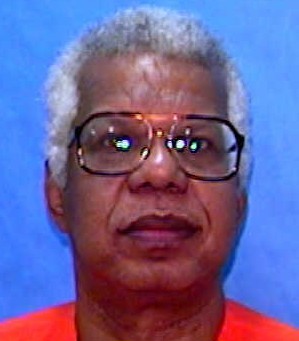
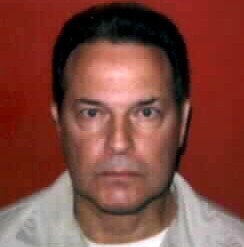
Terance Valentine
Murderer Brian Kevin Rosenfeld
Murderer · USA · 1985
Brian Kevin Rosenfeld Brian Kevin Rosenfeld was sentenced to three concurrent l…
23 victims
Brian Kevin Rosenfeld
Murderer · USA · 1985
Brian Kevin Rosenfeld Brian Kevin Rosenfeld was sentenced to three concurrent l…
23 victims
 Yahweh ben Yahweh
Murderer · USA · 1980
Yahweh ben Yahweh was born and legally named Hulon Mitchell Jr. (October 27, 19…
23 victims
Yahweh ben Yahweh
Murderer · USA · 1980
Yahweh ben Yahweh was born and legally named Hulon Mitchell Jr. (October 27, 19…
23 victims
 Russell Ellwood
Murderer · USA · 1991
Russell Ellwood was a former taxi driver. Authorities suspected him of killing…
20 victims
Russell Ellwood
Murderer · USA · 1991
Russell Ellwood was a former taxi driver. Authorities suspected him of killing…
20 victims
 Robert Martines Perez
Murderer · USA · 1994
Name: Robert Martines Perez · Other name used in proceedings: Robert Martinez P…
15 victims
Robert Martines Perez
Murderer · USA · 1994
Name: Robert Martines Perez · Other name used in proceedings: Robert Martinez P…
15 victims
 Elroy Chester
Spree killer · USA · 1997
Elroy Chester (TDCJ number 999280) was born on 6/14/1969 and was 29 at the time…
5 victims
Elroy Chester
Spree killer · USA · 1997
Elroy Chester (TDCJ number 999280) was born on 6/14/1969 and was 29 at the time…
5 victims
 Tyrone Chalmers
Murderer · USA · 1994
Defendant: Tyrone Chalmers Case name: Tyrone Chalmers v. State of Tennessee Jur…
1 victim
Tyrone Chalmers
Murderer · USA · 1994
Defendant: Tyrone Chalmers Case name: Tyrone Chalmers v. State of Tennessee Jur…
1 victim
 Tonya Ford
Murderer · USA · 2009
Tonya Ford was a Taylor County woman convicted of killing her police officer hu…
1 victim
Tonya Ford
Murderer · USA · 2009
Tonya Ford was a Taylor County woman convicted of killing her police officer hu…
1 victim
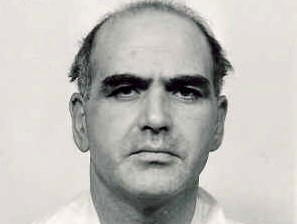 Abdelkrim Belachheb
Mass murderer · USA · 1984
Abdelkrim Belachheb was a Moroccan national. Marcelle Ford, a 32-year-old woman…
6 victims
Abdelkrim Belachheb
Mass murderer · USA · 1984
Abdelkrim Belachheb was a Moroccan national. Marcelle Ford, a 32-year-old woman…
6 victims
 George Stephenson
Mass murderer · United Kingdom · 1986
George Stephenson — defendant · John Daly — co-defendant · George Daly — co-def…
5 victims
George Stephenson
Mass murderer · United Kingdom · 1986
George Stephenson — defendant · John Daly — co-defendant · George Daly — co-def…
5 victims
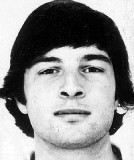 Paul Steven Haigh
Serial killer · Australia · 1978
Paul Steven Haigh was an Australian serial killer. · 1978 — After being paroled…
7 victims
Paul Steven Haigh
Serial killer · Australia · 1978
Paul Steven Haigh was an Australian serial killer. · 1978 — After being paroled…
7 victims
- Gender
- male
- Country
- USA
- Location
- Hillsborough County, Florida, USA
- Date of birth
- January 21, 1949
- Age at first offence
- 39
- Characteristics
- revenge, kidnapping, torture
- Victim profile
- Ferdinand Porche (the husband of his ex-wife)
- Method of murder
- Shooting
- Date(s) of murder
- September 9, 1988
- Years active
- 1988
- Date of arrest
- —
- Status
-
Sentenced to death
Sentenced to death April 12, 1990; convictions and sentence reversed and remanded for a new trial on 04/15/93; at retrial sentenced to death on 09/30/94; Florida Supreme Court affirmed sentence of death on 12/19/96; U.S. Supreme Court denied a Petition for Writ of Certiorari on 10/16/97; 3.850 Motion granted in part and denied in part on 08/01/02
Case information
Terance Valentine was prosecuted in the Thirteenth Judicial Circuit, Hillsborough County, Florida, under Case #88-12996. The sentencing judges were The Honorable M. William Graybill (Trial I) and The Honorable Diane Allen (Trial II). The attorneys were Thomas Meyers and Linda McKinley (Assistant Public Defenders) for Trial I; Walter M. Lopez Jr., Esq. and Simson Unterberger, Esq. for Trial II; Douglas S. Connor (Assistant Public Defender) for Direct Appeal I and Direct Appeal II. Collateral appeals were listed as “To Be Assigned.”
Terance Valentine’s date of birth was 01/21/49.
Background
Terance Valentine and his wife Livia Romero immigrated to the United States in 1975. The couple settled in New Orleans and adopted a child, Giovanna. After seeking a divorce from Valentine in 1986, Romero married Ferdinand Porche. Romero then relocated with her daughter and new husband to Tampa, Florida.
Shortly after the move, Romero began receiving threatening phone calls from Valentine.
The offence
On 09/09/88, Ferdinand Porche returned home to meet his family. When Porche entered the house, Valentine shot him in the back, severing his spinal cord and rendering him paralyzed from the waist down. Valentine said to Porche, “This is my revenge.”
Porche was forced to crawl into the bedroom where he saw his pregnant wife naked, bound and gagged, and his baby crying. Valentine then began to systematically beat and torture Porche, announcing, “I’m gonna kill you, but you’re gonna suffer.”
Valentine transported Porche and Romero to a remote location and shot them both.
Livia Romero survived the attack and informed police that Valentine was the assailant. In the weeks following her release from the hospital, Romero began to receive calls from Valentine. With the help of police recording devices, Romero taped her conversations with Valentine, which subsequently led to his arrest.
Investigation
Romero provided information to police after surviving the attack and later worked with police recording devices to tape conversations with Valentine, which led to his arrest.
Trial
Charges and indictment
Valentine was indicted on 09/21/88 on the following charges:
- Count I: Armed Burglary
- Count II: Kidnapping
- Count III: Kidnapping
- Count IV: Grand Theft 2 nd Degree Motor Vehicle
- Count V: First-Degree Murder
- Count VI: Attempted First-Degree Murder
First trial
On 01/25/90, Judge Graybill declared a mistrial after the jury could not reach a unanimous verdict as to Valentine’s guilt. A new trial was set for 03/26/90.
On 03/29/90, the new jury found the defendant guilty on all counts charged in the indictment.
On 03/30/90, upon advisory sentencing, the jury, by a 10 to 2 majority, voted for the death penalty.
On 04/12/90, the defendant was sentenced as follows:
- Count I: Armed Burglary — 99 years
- Count II: Kidnapping - 99 years
- Count III: Kidnapping – 99 years
- Count IV: Grand Theft 2 nd Degree Motor Vehicle – 5 years
- Count V: First-Degree Murder - Death
- Count VI: Attempted First-Degree Murder – Life
Retrial
On 04/15/93, the Florida Supreme Court reversed Valentine’s convictions and sentence and remanded for a new trial due to the trial court’s failure to conduct an adequate inquiry into allegations that the State used its peremptory challenges to exclude African Americans from the jury during voir dire. The Florida Supreme Court found a violation of State v. Neil, 457 So. 2d 481 (Fla. 1984).
On 07/16/94, at retrial, the jury found the defendant guilty on all counts charged in the indictment.
On 07/19/94, Valentine waived the jury’s advisory sentence recommendation.
On 09/30/94, at retrial, the defendant was sentenced as follows:
- Count I: Armed Burglary – Life
- Count II: Kidnapping - Life
- Count III: Kidnapping – Life
- Count VI: Attempted First-Degree Murder – 30 years
Appeals
Florida Supreme Court
A Direct Appeal was filed in the Florida Supreme Court on 05/14/90. Valentine argued that the trial court erred by failing to conduct an adequate inquiry into the defense’s claim that the State used peremptory challenges to exclude African Americans from the jury in violation of State v. Neil, 457 So. 2d 481 (Fla. 1984). Neil set forth the guidelines for determining whether a peremptory challenge was unlawfully exercised on the basis of race. The Florida Supreme Court also examined Valentine’s claim according to State v. Slappy, 522 So. 2d 18 (Fla. 1988). In Slappy, the Florida Supreme Court mandated that, unless the trial court can cite specific circumstances in the record to eliminate the all allegations of discrimination, then an inquiry must be conducted.
The Florida Supreme Court addressed the same issue in State v. Johans, 18 Fla. L. Weekly S124 (Fla. Feb. 18, 1993). In Johans, the Florida Supreme Court dictated that once a party made an objection to the use of peremptory challenges during voir dire and showed that the challenged individuals were from a specific race, then an inquiry must be conducted. Since Johans was not decided at the time of Valentine’s conviction, the Florida Supreme Court analyzed Valentine’s claim under the provisions of Neil and Slappy.
The Florida Supreme Court found error in the trial court’s failure to conduct an inquiry into the defense’s allegation that the State used peremptory challenges to exclude African Americans.
The Florida Supreme Court stated:
Although the above issue is dispositive of this case, we briefly evaluate several additional claims to assist the trial court in the event of retrial.
The court then found:
- No merit to the following claims:
- The State failed to obtain the daughter's consent prior to recording the family's telephone calls; and
- Romero's testimony concerning the Bronco was inadmissible hearsay.
- The following claims had merit:
- The daughter's taped conversation was inflammatory and irrelevant;
- Romero's taped statement that Valentine was a drug dealer was irrelevant;
- The daughter's prior inconsistent statement should not have been admitted without a proper foundation;
- The sentencing order was flawed by the court's failure to conduct an independent weighing of aggravating and mitigating circumstances; and
- The jury was improperly instructed on the aggravating circumstance of heinous, atrocious or cruel per Espinosa v. Florida, 112 S. Ct. 2926, 120 L. Ed. 2d 951 (1992).
The Florida Supreme Court reversed Valentine’s convictions and sentences and remanded for a new trial on 04/15/93. The case was docketed as Docket #75985 with citation 616 So. 2d 971, dated April 15, 1993.
After retrial, Valentine was convicted on all counts charged in the indictment and sentenced to death. He again filed a Direct Appeal in the Florida Supreme Court.
In that appeal, Valentine argued:
- Since he and Romero were never legally divorced, portions of her testimony should have been barred under the spousal evidentiary privilege;
- He was illegally arrested on a flawed warrant and thus his statements to law enforcement were tainted by the illegal arrest;
- The introduction of footprint evidence was error because it insufficiently linked to him to the crime; and
- His conviction for Attempted First-Degree Murder was erroneous.
The Florida Supreme Court affirmed Valentine’s sentence of death on 12/19/96. The case was docketed as Docket #84472 with citation 688 So. 2d 313, dated December 19, 1996.
U.S. Supreme Court
On 05/16/97, Valentine filed a Petition for Writ of Certiorari in the U.S. Supreme Court. The petition was denied on 10/16/97.
Post-conviction proceedings
On 05/28/98, Valentine filed a 3.850 Motion in the State Circuit Court. Amended 3.850 Motions were filed on 5/14/01 and 5/3/02. The motion was granted in part on 08/01/02 for an evidentiary hearing and denied in part the same day.
Timeline
- 09/09/88 — Ferdinand Porche returned home; Valentine shot Porche in the back, later tortured him, transported Porche and Romero to a remote location, and shot them both; Valentine told Porche, “This is my revenge.”
- 09/21/88 — Valentine was indicted on Count I armed burglary, Count II kidnapping, Count III kidnapping, Count IV grand theft 2 nd degree motor vehicle, Count V first-degree murder, and Count VI attempted first-degree murder.
- 01/25/90 — Judge Graybill declared a mistrial after the jury could not reach a unanimous verdict.
- 03/29/90 — A new jury found Valentine guilty on all counts.
- 03/30/90 — Advisory sentencing resulted in a 10 to 2 majority vote for the death penalty.
- 04/12/90 — Valentine was sentenced: Count I 99 years; Count II 99 years; Count III 99 years; Count IV 5 years; Count V death; Count VI life.
- 05/14/90 — Valentine filed a direct appeal in the Florida Supreme Court.
- 04/15/93 — The Florida Supreme Court reversed convictions and sentence and remanded for a new trial.
- 07/16/94 — At retrial, the jury found Valentine guilty on all counts.
- 07/19/94 — Valentine waived the jury’s advisory sentence recommendation.
- 09/30/94 — At retrial, Valentine was sentenced: Count I life; Count II life; Count III life; Count IV 5 years; Count V death; Count VI 30 years.
- 12/19/96 — The Florida Supreme Court affirmed Valentine’s sentence of death.
- 05/16/97 — Valentine filed a Petition for Writ of Certiorari in the U.S. Supreme Court.
- 10/16/97 — The U.S. Supreme Court denied the Petition for Writ of Certiorari.
- 05/28/98 — Valentine filed a 3.850 Motion in the State Circuit Court.
- 05/14/01 — An amended 3.850 Motion was filed.
- 05/03/02 — Another amended 3.850 Motion was filed.
- 08/01/02 — The 3.850 Motion was granted in part for an evidentiary hearing and denied in part.
Other details
Valentine said to Porche, “I’m gonna kill you, but you’re gonna suffer.”
In weeks following her release from the hospital, Romero received calls from Valentine. She taped her conversations with Valentine with the help of police recording devices, and those recordings led to his arrest.
In the appeal issues, Valentine’s conviction and sentencing were addressed along with evidentiary and jury-instruction issues, including the daughter's taped conversation, Romero's taped statement about Valentine as a drug dealer, the admissibility of the daughter's prior inconsistent statement, the sentencing order’s independent weighing of aggravating and mitigating circumstances, and jury instructions regarding the aggravating circumstance of heinous, atrocious or cruel per Espinosa v. Florida, 112 S. Ct. 2926, 120 L. Ed. 2d 951 (1992).
Valentine was characterized in relation to the trial court’s failure to conduct an adequate inquiry into allegations of peremptory challenges excluding African Americans during voir dire under State v. Neil and State v. Slappy, and the Florida Supreme Court considered State v. Johans for the procedural framework though Johans was decided after Valentine’s conviction.
Spotted an error, or have more information about this case?