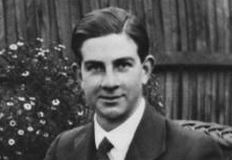
Norman Thorne
Murderer Albert Burrows
Murderer · United Kingdom · 1920
Albert Burrows (also named Albert Edward Burrows): married farm labourer who to…
4 victims
Albert Burrows
Murderer · United Kingdom · 1920
Albert Burrows (also named Albert Edward Burrows): married farm labourer who to…
4 victims
 Lock Ah Tam
Murderer · United Kingdom · 1925
Lock Ah Tam was 54 when he killed his wife and two daughters. He had been a suc…
3 victims
Lock Ah Tam
Murderer · United Kingdom · 1925
Lock Ah Tam was 54 when he killed his wife and two daughters. He had been a suc…
3 victims
 Walter Graham Rowland
Murderer · United Kingdom · 1934
Defendant: Walter Graham Rowland Age: 39 (labourer) Residence/Origin: from Mell…
2 victims
Walter Graham Rowland
Murderer · United Kingdom · 1934
Defendant: Walter Graham Rowland Age: 39 (labourer) Residence/Origin: from Mell…
2 victims
 Robert Yale Shulman
Serial killer · USA · 1991
Robert Yale Shulman (March 28, 1954 – April 13, 2006) was an American serial ki…
5 victims
Robert Yale Shulman
Serial killer · USA · 1991
Robert Yale Shulman (March 28, 1954 – April 13, 2006) was an American serial ki…
5 victims
 David M. Brewer
Murderer · USA · 1985
David M. Brewer was convicted and sentenced to death for aggravated murder. Joe…
1 victim
David M. Brewer
Murderer · USA · 1985
David M. Brewer was convicted and sentenced to death for aggravated murder. Joe…
1 victim
 Toribio Rodriguez
Murderer · USA · 1988
Toribio Rodriguez attacked Dawn Dearing in her Tucson apartment. On August 25,…
1 victim
Toribio Rodriguez
Murderer · USA · 1988
Toribio Rodriguez attacked Dawn Dearing in her Tucson apartment. On August 25,…
1 victim
 Stuart Campbell
Murderer · United Kingdom · 2001
Stuart Campbell (born 1958) was a builder who was convicted in December 2002 of…
1 victim
Stuart Campbell
Murderer · United Kingdom · 2001
Stuart Campbell (born 1958) was a builder who was convicted in December 2002 of…
1 victim
 Fred Tokars
Murderer · USA · 1992
Fredric W. Tokars (also written as Fred Tokars) was tried for the murder of his…
1 victim
Fred Tokars
Murderer · USA · 1992
Fredric W. Tokars (also written as Fred Tokars) was tried for the murder of his…
1 victim
 Barry George
Murderer? · United Kingdom · 1999
Barry George was also known as Barry Bulsara. He was born on 15 April 1960 in H…
1 victim
Barry George
Murderer? · United Kingdom · 1999
Barry George was also known as Barry Bulsara. He was born on 15 April 1960 in H…
1 victim
- Gender
- male
- Country
- United Kingdom
- Location
- Crowborough, Sussex, England, United Kingdom
- Date of birth
- 1900
- Age at first offence
- 24
- Characteristics
- dismemberment
- Victim profile
- Elsie Emily Cameron, 26 (his fiancee)
- Method of murder
- Strangulation
- Date(s) of murder
- December 5, 1924
- Years active
- 1924
- Date of arrest
- January 15, 1925
- Status
-
Executed
Executed by hanging at Wandsworth prison on April 22nd 1925
People
- Norman Thorne — defendant; electrical engineer; murdered Elsie Emily Cameron; later charged with murder; sentenced to death and executed.
- Elsie Emily Cameron — victim; typist; 26-year-old; wore glasses; missing from London after going to visit Thorne; found dead at Thorne’s farm; found to have had her head and legs severed; described as neurotic and unstable.
- John Norman Holmes Thorne — full name used in parts of the material for Norman Thorne.
- Bessie Coldicott (Elizabeth Ann Coldicott) — dressmaker; another woman whom Thorne met at a local dance; later called “Bessie” in the material.
- Mr and Mrs Cosham — neighbours who lodged Elsie while she spent days at the farm.
- Elsie’s father — sent a telegram to Norman asking after Elsie; later informed the police of Elsie’s disappearance.
- Mr Thorne Snr. — Norman’s father; advised Norman to wait regarding Elsie’s pregnancy claims.
- Two flower-growers — witnesses who saw Elsie carrying an attaché case while walking towards the farm at about 5.15pm on 5 December.
- Mrs Annie Price — neighbour; certain she had seen Elsie entering the farm on the day she vanished.
- Chief Inspector Gillan — Scotland Yard chief inspector who arrived to take over the case and decided there was enough to arrest Norman and search the farm.
- Sir Bernard Spilsbury — pathologist who carried out the post mortem; gave evidence at trial.
- Dr Robert Brontë / Dr Robert Brontë — defence pathologist who inspected the remains after Spilsbury’s post-mortem.
- Mr Justice Finlay — presiding judge at Lewes Assizes.
- Sir Henry Curtis Bennett — chief prosecuting counsel.
- J D Cassels — defending counsel for Norman Thorne.
- Detectives — police detectives who interviewed Thorne after the search and digging began.
- John Norman Holmes Thorne / Norman Thorne — quoted statements were attributed to Norman Thorne.
Background
Norman Thorne and Elsie Emily Cameron met in 1920. Elsie was a 26-year-old typist who wore glasses. Thorne was 18 and was an electrical engineer.
Elsie worried that if she did not find a man soon she would end up left on the shelf. She decided that Thorne would do for her and the couple started courting. When Thorne became unemployed in the summer of 1921, he decided to go into business for himself. His father gave him £100 and he bought a small piece of land at Blackness, Crowborough, Sussex, setting himself up as Wesley Poultry Farm. He worked hard building a series of sheds and runs and cycled back to London at weekends to see Elsie.
Thorne converted one of the shacks on the site into living accommodation and moved in. Elsie then traveled to Sussex, catching the train to Crowborough. She spent the days with Norman and lodged with a local family at night.
Elsie and Norman became engaged at Christmas 1922. Shortly after, Elsie lost her job and over the next few months had a series of jobs that she soon left for various reasons. About June 1923, Thorne’s business was not doing too well and he was reluctant to fix a wedding date.
At Whitsun 1924, Thorne went to a local dance and met Bessie Coldicott, a dressmaker. The material described Bessie as less demanding and uncomplicated, and stated Thorne’s feelings shifted from Elsie to Bessie.
In October, Elsie traveled to Crowborough and stayed a week. She lodged with Norman’s neighbours, Mr and Mrs Cosham, and spent her days at the farm.
After Elsie returned home, she wrote to Norman informing him that she was pregnant. Norman promptly wrote back telling her about Bessie. Elsie replied the following day telling him that he had got her pregnant and that she expected him to marry her before Christmas.
Sunday 30th November saw Elsie arrive unannounced at the farm about 11am. The material said that Elsie was in a highly agitated state and that Norman convinced her they would marry but that it must wait until he had sorted things out with his father. Elsie left just before 8pm and went back to London.
Mr Thorne Snr. visited Norman on Wednesday 3rd December to discuss Norman’s financial and personal plight. Mr Thorne Snr. advised Norman to wait if he had doubts about Elsie’s claims. Norman then wrote to Elsie informing her of this. Elsie could see the object of her dreams disappearing and decided to act.
The material also described Elsie as thoroughly neurotic and unstable: she had been a shorthand typist but was unemployed for six or seven months preceding her death because of her neurotic condition. In the first six months of 1924, she had been constantly under medical supervision for neurasthenia and loss of energy. It said that once, on a visit to Thorne’s parents, she had been hysterical and “difficult”. The material said her unstable mental condition manifested in a periodic conviction of her pregnancy that she told Thorne just before arriving at the farm, and that examination of the corpse showed this to be untrue.
The offence
On 5th December, Elsie Emily Cameron set out for Crowborough, Sussex, to visit Norman Thorne at his smallholding. Two farmworkers later said they had seen Elsie walking towards the farm at about 5.15pm on the 5th, carrying an attaché case.
When questioned by police, Thorne first denied that Elsie had been to the farm.
After police investigation and searches, Thorne later told detectives that he had not killed Elsie but knew where she was buried. He stated that she arrived unannounced on the farm, that they argued, and that he left around 9.30pm to meet Bessie and her mother at the station, leaving Elsie at the farm. He stated he returned about 11.30pm to find Elsie had used his washing line to hang herself from a beam. The material recorded Thorne’s account that he cut her down and then: “I got my hacksaw...and sawed off her legs, and the head.' He said he then buried the pieces under the chicken run.
In the trial section, additional verbatim account appeared in Thorne’s statement:
“When I opened the hut door I saw Miss Cameron hanging from a beam that supports the roof, by a piece of cord as used for the washing line. I cut the cord and laid her on the bed. She was dead. I then put out the lights. She had her frock off and her hair was down. I lay across the table for about an hour. I was about to go to Dr Turle and knock up someone to go for the police and I realised the position I was in, and decided not to do so. I then went down to the workshop… I got my hacksaw and some sacks and took them back to the hut. I took off Miss Cameron’s clothes and burned them in the fireplace in the hut. I then laid the sacks on the floor and sawed off her legs and the head by the glow of the fire. I put them in sacks, intending to carry them away, but my nerve failed me and I took them down to the workshop and I left them there. I went back to the hut and sat in the chair all night. Next morning, just as it got light, I buried the sacks and a tin containing the remains in a chicken run. It is the Leghorn chicken run, the first pen from the gate.”
The material recorded that Elsie Cameron’s corpse was found with her head and legs severed.
Investigation
Elsie disappeared after arriving at Thorne’s farm. On 10th December, Elsie’s father sent a telegram to Thorne asking after his daughter. Thorne replied that he had not seen her: “Not here… can’t understand.”
The next day, Elsie’s father informed the police of Elsie’s disappearance.
Two flower-growers established that Elsie had been seen by them carrying an attaché case while walking towards the farm at about 5.15pm on the 5th December. When the material described Thorne being spoken to, it said he was adamant that she had not been to the farm.
At the beginning of January, there was still no sign of the missing woman. Police paid a visit to a neighbour, Mrs Annie Price, who was certain she had seen Elsie entering the farm on the day she vanished.
Sussex police requested assistance from Scotland Yard and Chief Inspector Gillan arrived to take over the case. After reviewing the evidence available, he decided there was enough to arrest Norman and search the farm.
The farm was searched. In an Oxo-cube tin, police found Elsie’s watch, bracelet and some jewellery. After searching outbuildings, police began digging.
The next morning after digging started was cold and wet but the material said things went well for police and they soon unearthed Elsie’s case.
That evening at 8pm, Chief Inspector Gillan told detectives that Thorne said he hadn’t killed the woman but knew where she was buried. The material described Thorne’s account of seeing Elsie on the farm that day and her alleged suicide using the washing line.
The material also described alternative investigative accounts: it said a female neighbour who had not been aware of the commotion came forward about a month after Elsie Cameron’s disappearance to say she had seen the missing girl walking through the gate of Thorne’s farm on December 5th. It then said that as a result, Crowborough police called in Scotland Yard on January 11th, and digging began in earnest. It further stated that on January 15th, Elsie Cameron’s corpse, with head and legs severed, was found. It also stated that Thorne then said Elsie had indeed arrived at his farm on December 5th.
Arrest
Chief Inspector Gillan arrived at Norman Thorne’s farm on 14th January, and Thorne was taken into custody.
Trial
Norman Thorne was charged with murder.
The trial took place at Lewes Assizes. The material named:
- Mr Justice Finlay as presiding judge,
- Sir Henry Curtis Bennett as chief prosecuting counsel, and
- J D Cassels as defending counsel for Norman Thorne.
The material recorded that the defence claimed the death was suicide rather than murder, and said that concealment, lies, and dissection were due to overwhelming fear. It also stated that Elsie’s neurotic and unstable condition was never in doubt.
The prosecution’s case included reliance on absence of rope marks and the presence of injuries found by the pathologist. It also described that there was controversy between pathologists.
Evidence and medical testimony
The material described controversy between pathologist Sir Bernard Spilsbury and Dr Robert Brontë called by the defence.
Sir Bernard Spilsbury carried out a post mortem and the material stated he found no sign of rope marks. It also stated he said there was no evidence of hanging. The material reported that Spilsbury observed injuries and bruises:
- “8 bruises on the head, face arms and legs”
- It stated that “All of them had been inflicted shortly before death”
- It stated that “one on the temple caused by a crushing blow.”
The material reported that Spilsbury also pointed out:
- the absence of signs of asphyxiation, and
- “scars around the neck that would be expected in the case of a hanging.”
Dr Robert Brontë, called by the defence, inspected the remains a month after Spilsbury’s post-mortem. The material said Brontë suggested that “creases on the neck that may have been made by a rope.”
The material also reported police examination of the beams in the shack and said there was no sign of a rope having been suspended from any of them.
In the trial narrative, the material described experiments carried out with an 8 stone weight fastened to the beam from which Elsie was said to have been hung:
- In the first experiment the weight was slowly raised and swung, leaving marks on the beams.
- In the second experiment the weight was placed on a chair and the chair was kicked away, also leaving marks on the beams. It stated that no such marks were left from the alleged hanging.
The material included a specific quotation from Thorne’s defence testimony about the letters and fear:
“I thought of the letters I had written” It then continued with Thorne’s explanation as quoted in the material: “I remembered I had been telling people that I wanted to break off the engagement. I remembered that it was known that another girl had been walking out with her. In view of these things, I became afraid.”
Trial testimony (questions and answers)
The material recorded questioning by Curtis Bennett:
- Curtis Bennett asked: “On the morning of December 5th’ began Curtis Bennett ‘were you still in love with Elsie Cameron?’”
- Thorne answered: “Yes”
- Curtis Bennett then asked: “On that morning were you still in love with this other woman?.”
- Thorne replied: “Yes”
- Sir Bernard continued asking: “On that morning which of these two girls that you were in love with did you desire to marry?. ”
- Thorne answered: “I do not know I was particularly desirous of marrying any at the time.”
- The questioning continued: “Which did you intend to marry in the future?’
- Thorne said: “Well’ said Norman ‘of the two, I suppose I thought more of the other girl.’”
The material also stated that before dismissing Thorne from the witness box, Judge Finlay questioned him about whether he had tried to resuscitate Elsie or fetch a doctor. Thorne admitted: “No”.
The material described an eloquent closing speech by Cassels, a “massive reply by Curtis Bennett,” and a “careful, thorough summing up by Finlay” that did not disguise his belief that the Crown case had been proved.
Verdict
On 16th March, the jury retired and returned a guilty verdict.
The material also gave a separate timing sequence: “At 5.12 on the fifth day of the case the jury retired. By 5.40 they returned to pronounce a verdict of guilty.”
Sentencing
After a guilty verdict, Norman Thorne was sentenced to death.
Appeals
The material stated that when the case was taken to the Court of Criminal Appeal, an application was made for the medical evidence to be reviewed by a Commissioner appointed by the Court. The application was rejected, as was the appeal. The material then stated that Thorne was ultimately hanged.
Outcome
Norman Thorne was hanged at Wandsworth prison on 22nd April 1925.
The material also stated that the 22nd would have been Elsie’s twenty-seventh birthday.
Other details
The material included additional verbatim correspondence and statements:
- Thorne’s reply to Elsie’s father by telegram: “Not here… can’t understand.”
- A remark attributed to Thorne about police inquiries: “I want to help all I can”
The material also included verbatim letters sent to Elsie’s London home (as described):
- “Where did you get to yesterday. I went to Groombridge but you did not turn up.”
- “I was expecting a letter today especially after not hearing from you.”
The material described Elsie arriving unannounced at the farm and then leaving:
- Elsie left just before 8pm after Norman convinced her they would marry.
The material recorded that Thorne had earlier asked one Press photographer to photograph him feeding chickens at a particular spot, which later turned out to be Elsie Cameron’s burial site.
The material referred to Elsie’s burial location as:
- “the chicken run” and later specified in Thorne’s statement:
- “It is the Leghorn chicken run, the first pen from the gate.”
The material stated Thorne was being pressured into marrying Elsie when he had already fallen for another girl, and it said Elsie had told him she was pregnant to make up his mind for him. It also stated the case became known as the “Chicken Run Murder.”

Spotted an error, or have more information about this case?