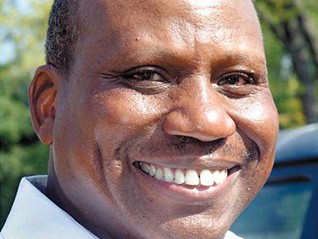
Charles Lee Thornton
Mass murderer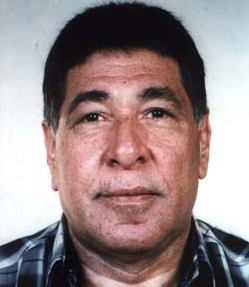 Gameel Al-Batouti
Mass murderer · USA · 1999
Gameel Al-Batouti (also rendered “Gamil ElBatouty” or “El Batouty” in U.S. offi…
216 victims
Gameel Al-Batouti
Mass murderer · USA · 1999
Gameel Al-Batouti (also rendered “Gamil ElBatouty” or “El Batouty” in U.S. offi…
216 victims
 Omar Mateen
Mass murderer · USA · 2016
Omar Mir Seddique Mateen was an American mass murderer who killed 49 people and…
49 victims
Omar Mateen
Mass murderer · USA · 2016
Omar Mir Seddique Mateen was an American mass murderer who killed 49 people and…
49 victims
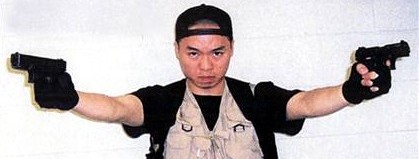 Seung-Hui Cho
Mass murderer · USA · 2007
Seung-Hui Cho was a mass murderer who shot and killed 32 people and wounded man…
32 victims
Seung-Hui Cho
Mass murderer · USA · 2007
Seung-Hui Cho was a mass murderer who shot and killed 32 people and wounded man…
32 victims
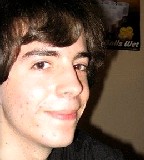 Adam Lanza
Mass murderer · USA · 2012
Adam Lanza, 20, fatally shot twenty children and six adult staff members in a m…
27 victims
Adam Lanza
Mass murderer · USA · 2012
Adam Lanza, 20, fatally shot twenty children and six adult staff members in a m…
27 victims
 Eric Harris
Mass murderer · USA · 1999
Eric Harris committed suicide by gunshot to the roof of the mouth on April 20,…
13 victims
Eric Harris
Mass murderer · USA · 1999
Eric Harris committed suicide by gunshot to the roof of the mouth on April 20,…
13 victims
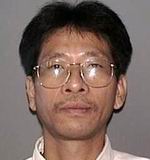 Jiverly Wong
Mass murderer · USA · 2009
December 8, 1967 — Jiverly Antares Wong was born. · late 1980s — Wong first cam…
13 victims
Jiverly Wong
Mass murderer · USA · 2009
December 8, 1967 — Jiverly Antares Wong was born. · late 1980s — Wong first cam…
13 victims
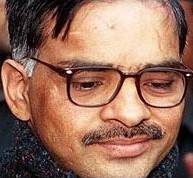 Javed Iqbal
Serial killer · Pakistan · 1998
Javed Iqbal (born 1956 in Lahore, Punjab, Pakistan; died October 8, 2001, in La…
100 victims
Javed Iqbal
Serial killer · Pakistan · 1998
Javed Iqbal (born 1956 in Lahore, Punjab, Pakistan; died October 8, 2001, in La…
100 victims
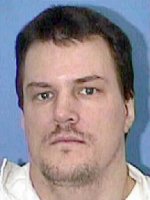 Troy Albert Kunkle
Murderer · USA · 1984
Troy Albert Kunkle was convicted of capital murder and sentenced to death for t…
1 victim
Troy Albert Kunkle
Murderer · USA · 1984
Troy Albert Kunkle was convicted of capital murder and sentenced to death for t…
1 victim
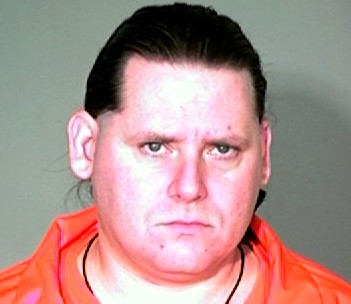 Darrel Pandeli
Murderer · USA · 1992
Darrel Pandeli was convicted of murder and sentenced to death, and his case ret…
2 victims
Darrel Pandeli
Murderer · USA · 1992
Darrel Pandeli was convicted of murder and sentenced to death, and his case ret…
2 victims
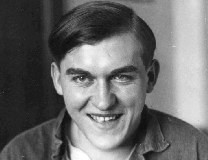 Gordon Northcott
Serial killer · USA · 1928
Gordon Stewart Northcott was a Canadian-born ranch owner who later murdered boy…
20 victims
Gordon Northcott
Serial killer · USA · 1928
Gordon Stewart Northcott was a Canadian-born ranch owner who later murdered boy…
20 victims
 Lindsey Lowe
Murderer · USA · 2011
Lindsey Lowe was convicted of felony murder, premeditated murder, and aggravate…
2 victims
Lindsey Lowe
Murderer · USA · 2011
Lindsey Lowe was convicted of felony murder, premeditated murder, and aggravate…
2 victims
- Gender
- male
- Country
- USA
- Location
- Kirkwood, Missouri, USA
- Date of birth
- December 23, 1955
- Age at first offence
- 53
- Characteristics
- revenge
- Victim profile
- Tom Ballman, 37 , police officer / Kenneth Yost, 61 , public works director / Michael H.T. Lynch, 63 , council member / Connie Karr, 51 , council member / William Biggs, 50 , police officer
- Method of murder
- Shooting
- Date(s) of murder
- February 7, 2008
- Years active
- 2008
- Date of arrest
- —
- Status
-
Died in custody
K illed during a shoot-out with the police the same day
Case record: Charles Lee Thornton
Status
Charles Lee “Cookie” Thornton was killed during a shoot-out with the police the same day.
Background
Charles Lee “Cookie” Thornton was 52 and was a lifelong resident of Meacham Park, a century-old, modest-sized, historically-black-super majority neighborhood in an initially unincorporated part of St. Louis County, Missouri. In 1992, a ballot proposition appeared under which Kirkwood would annex the Meacham Park area. After residents of both Meacham Park and Kirkwood approved the annexation, Kirkwood’s municipal codes became the law for Meacham Park.
In the 1990s, Thornton was active in civic and charitable organizations in Kirkwood. He ran for Kirkwood City Council in 1994, unsuccessfully. Via eminent domain, part of the Meacham Park area was taken for a large commercial development in the late 1990s in a tax increment financing project. Thornton, who foresaw that his construction company would get contracts in this development, was a public proponent of it, opposing the views of some others in Meacham Park. He sought and received work for his construction company during this commercial development. Family members and friends said he became resentful over having gotten less than he felt he had been promised.
In 1999, Thornton filed a complaint with the Equal Employment Opportunity Commission alleging racial discrimination in the awarding of contracts he had wanted. It was reported that he had never actually bid on the contracts.
In 1996, Thornton began receiving citations from Kirkwood for violations of city codes. In June 1998, he pleaded guilty to 6 violations and agreed to a five-phase plan to bring his property and his paving business into conformance with city codes within two years. That plan was not fulfilled, and Thornton began to leave new tickets unpaid.
By late 2001, Thornton had been cited many dozens more times by Kirkwood officials under municipal code enforcement actions for operating an unlicensed business from his home in a residentially-zoned incorporated area (after the 1992 annexation), illegal dumping, destruction of property, parking his construction company’s equipment near his home as he had always done, and other municipal code violations. Kirkwood said in a state court memorandum in 2003 that by May 2002, multiple trials in city and county courts had concluded with Thornton pleading guilty to, or being found guilty of, more than 100 of 114 charges. Charges were dropped, or Thornton was found not guilty, on at least a dozen other charges. Thornton said later in federal court and at Kirkwood city council meetings that he had received more than 150 tickets. Courts ordered that he pay nearly twenty thousand dollars in fines and court costs. Links to files showing scanned copies of most of the citations were placed online as part of an investigative story by a local television station.
Thornton filed for bankruptcy in December 1999. During the bankruptcy process, he was put on a plan to pay $4,425 a month for five years. Thornton stopped making the payments within four months. He moved the portion of his business that had for a while occupied a rental property in a nearby commercially zoned area back into his residentially-zoned neighborhood. Thornton did not pay the fines from the Kirkwood code violation cases concluded in 2001 and 2002. Instead, he appeared regularly at city council meetings complaining of persecution, fraud, and coverup by city officials. In 2003, he had signs on the side of his van in which he vowed he would never again “accept lies from the city of Kirkwood”.
Thornton repeatedly sued the city and Kirkwood public works director Ken Yost in state court unsuccessfully during a period of several years in the early 2000s. From around 2004 onward, Thornton acted as his own attorney despite having no education, training, or experience in the practice of law. In 2005, the Missouri Court of Appeals opinion dismissing his suit against Kirkwood and Ken Yost for malicious prosecution and civil rights violations termed his brief “largely incomprehensible”. After several years of lawsuits, he declined an offer from the city to let his fines remain unpaid in exchange for dropping his last lawsuit against the city and no longer disrupting council meetings.
On May 13, 2002, Thornton was convicted of assault on Ken Yost, Kirkwood’s public works director, who later became one of the murder victims. Thornton was arrested and handcuffed at two city council meetings in 2006. The first occasion was May 18, 2006, when he was charged with disorderly conduct and released. On June 1, 2006, the council considered resolutions to ban Thornton from attending or speaking at meetings, but both resolutions were defeated. Kirkwood mayor Mike Swoboda stated then: “We will act with integrity and continue to deal with him at these council proceedings. However we will not allow Mr. Thornton, or any other person, to disrupt these proceedings.”
On June 24, 2007, Thornton was charged with misdemeanor assault after a struggle outside PJ’s Restaurant in Kirkwood. Thornton had been picketing outside the restaurant and began stomping the owner until subdued by bystanders. The criminal case was pending.
Thornton often picketed in non-governmental but high-traffic locations in and near Kirkwood carrying signs complaining about Kirkwood officials. He sued the city in federal court for $350 on January 18, 2007. On March 15, 2007, Thornton entered a motion with the court to amend the January 18 suit in several ways, including adding a claim for $14 million in damages. On June 21, 2007, a federal judge denied the motion to amend the original federal lawsuit, leaving only the remaining original suit seeking $350 in damages.
As late as February 1, 2008—more than six months after the attempt to amend for an increased claim of damages had been denied, and three days after the entire remaining suit had been dismissed—Thornton continued to tell friends of his hopes of winning millions from the suit. A federal judge in St. Louis, Missouri ruled on January 28, 2008 on Thornton’s lawsuit claiming that free speech rights were violated by Kirkwood officials preventing him from speaking at meetings. The judge dismissed the claims, citing convictions for disorderly conduct at the 2006 meetings and concluding: “Because Thornton does not have a First Amendment right to engage in irrelevant debate and to voice repetitive, personal, virulent attacks against Kirkwood and its city officials during the comment portion of a city council public hearing, his claim fails as a matter of law.”
Included among documents from Thornton’s federal lawsuit were court filings, evidence, judgments, and other materials from several city, county, and state court cases, both criminal and civil, in which Thornton had been a plaintiff or a defendant. Witnesses, relatives, and acquaintances of Thornton reported that his motive for the shooting spree included anger about not receiving construction contracts he believed he was promised, his parking tickets, disputes with local government, and the dismissal of his federal lawsuit.
The offence
Shooting at Kirkwood City Hall
On February 7, 2008, Thornton parked his van on a side street near Kirkwood City Hall. He saw Kirkwood Police Sgt. William Biggs, who was on duty but walking across the street to pick up dinner nearby. In a parking lot across the street from City Hall, Thornton confronted Biggs and shot him with a .44 magnum revolver, killing him instantly. Before Thornton fired, Biggs had sent a distress signal on his radio to summon additional police officers. Thornton took Biggs’ .40 caliber handgun and entered City Hall.
Inside City Hall, in the city council chambers shortly after the meeting began and after the Pledge of Allegiance had just been recited, Thornton entered the room quietly from the back with both of his weapons concealed. He soon got close to his intended victims. He fatally shot Kirkwood Police Officer Tom Ballman in the head and continued shooting other victims at close range while reportedly repeating the phrase “Shoot the mayor!”
He fatally shot council members Connie Karr and Michael H.T. Lynch and Public Works Director Ken Yost. He shot Mayor Mike Swoboda twice in the head and left him for dead. Witnesses reported about 15 gunshots. Ignoring the four other council members, Thornton chased City Attorney John Hessel, who slowed Thornton by throwing chairs at him until escaping from the room.
All of this gunfire was audible at the Kirkwood police department building, located across a small parking lot from the rear entrance to City Hall. Two Kirkwood police officers rushed to the council chambers. Thornton fired on them from behind a desk. The officers returned fire; Thornton, who still had rounds left, sustained two wounds and died on the spot.
In total, Thornton killed five and wounded two people during his shooting spree.
Injuries and treatment
Mayor Mike Swoboda was taken to St. John’s Mercy Medical Center in critical condition. He was shot in the lower jaw, with the bullet exiting from his cheek, and he was also shot in the back of his head. He underwent surgery on February 7 and again on February 8, the latter surgery lasting three hours. His condition was upgraded after a few days to “serious” and after two weeks to “satisfactory”. He began eating soft food and talking. His family said he had no memory of the shootings. He would need reconstructive surgery for his face, and other long-term health effects were unknown.
A reporter for the local Suburban Journals, Todd Smith, was also injured. He was shot in the hand and was released from the hospital within 24 hours.
On April 18, Swoboda returned to City Hall to briefly address the last city council meeting before the expiration of his second and, due to term limits, final term as mayor.
Victims
- Tom Ballman, 37, police officer, killed
- Kenneth Yost, 61, public works director, killed
- Mike Swoboda, 69, mayor, originally critical; later released from hospital
- Michael H.T. Lynch, 63, council member, killed
- Connie Karr, 51, council member, killed
- Todd Smith, 36, reporter, released from hospital
- William Biggs, 50, police officer, killed
Investigation
The first killing occurred outside City Hall after Thornton confronted Sgt. William Biggs and shot him. Biggs had sent a distress signal on his radio to summon additional police officers before he was killed. Thornton took Biggs’ .40 caliber handgun before entering City Hall.
Gunfire was audible at the Kirkwood police department building across a small parking lot from the rear entrance to City Hall.
Arrest / detention
Thornton was not taken into custody; he died on the spot after police returned fire during the shoot-out.
Trial
Thornton was killed during the incident and did not proceed to trial for the shootings.
Sentencing
No sentencing occurred for the shooting incident because Thornton was killed during the shoot-out.
Appeals
No appeals occurred for the shooting incident.
Outcome
Thornton was killed during a shoot-out with the police the same day as the shootings.
Aftermath
Immediate reaction
On February 8, Deputy Mayor Timothy E. Griffin thanked the police for coming courageously to the aid of those in the council chambers, saying: “this is a tragedy of untold magnitude.” Police Chief Jack Plummer added: “we will move past this.”
Gerald Thornton, one of Charles Thornton’s brothers, told CNN that his brother Charles thought his “constitutional protections” were violated and that his act was the only option. In other interviews Gerald Thornton said: “my brother went to war tonight with the government,” that he could not resolve his problems through communication, and that “this was not a random rampage.” Gerald Thornton also served five years in Missouri prison for fatally stabbing a man in 1996.
Charles Thornton left a one-line note on his bed, saying: “The truth will come out in the end” or “The truth will win out in the end.” The note was considered to be a suicide note, indicating that Thornton may have intended to die in the shooting.
Arthur Thornton, one of Thornton’s brothers, said the family was “truly, truly sorry” for the shootings.
Stream added that the shooter had many problems with the city and for an unknown reason “he just snapped.”
Community meetings, vigil, and memorials
The Meacham Park Neighborhood Association (MPNA) met in the afternoon of February 8. Attendance included 100 people, including Thornton’s mother, and a “procession of ministers” who spoke at the meeting. Many spoke sympathetically of Thornton. Elder Harry Jones of Men and Women of Faith Ministries said: “This is something that took place over time, and perhaps it could have been avoided. There always has been a great divide between Kirkwood and Meacham Park.” Thornton’s mother spoke last, saying: “We’ve got to do things the Bible way. I’m sad that this happened.”
A blog entry from a minister who used to live and work in Kirkwood provided background about the relationship between Meacham Park and Kirkwood, including: “People who had lived in [Meacham Park] for generations were paid to move out so that Wal Mart could move in. [They] were made promises about how the money the city made from Wal Mart would be given to improve the living conditions in Meacham Park. When I met with the MPNA, there were residents who had been organizing and feeling frustrated for quite a while. They felt that the city officials were not following through on their promises and that the Meacham Park residents made a grave mistake in trusting the city officials....we were able to get our hands on some financial documents that flat out proved that the city promised money that they had not paid but there were legal loopholes that seemed insurmountable without a sea of money to devote to legal fees. When I stepped down from my work with Meacham Park, I knew that the frustrations were far from resolved.”
The town of Kirkwood mourned on February 8 with flags at half-staff, and with prayer services and vigils being held throughout the day. A vigil was held across the street from City Hall with black fabric held over the entrance of it and a memorial of flowers at 7 P.M. local time, about 24 hours after the shooting. Notes were left with the flowers, some addressing the deceased, including one note inside purple tulips saying: “Thank you Tom [Ballman], for being our friend. We will never forget you.”
Outside the Kirkwood police department building, various flowers and an American flag were laid in memoriam of the two officers killed during the shooting.
Other details
Notes from family and acquaintances
Thornton’s family said he had no memory of the shootings. His family also said he would need reconstructive surgery for his face, and other long-term health effects were unknown.
Witnesses, relatives, and acquaintances reported that Thornton’s motive for the shooting spree included anger about not receiving construction contracts he believed he was promised, his parking tickets, disputes with local government, and finally the dismissal of his federal lawsuit.
Gerald Thornton said Thornton’s “constitutional protections” were violated and that his act was the only option.
A local pastor described Thornton as “a very giving person” and said Thornton was looking forward to a jury trial in March, referring to a federal suit seeking $14 million from the city of Kirkwood.
Thornton’s mother said: “He was a child of God.”
Information about Thornton’s life and education (biographical material included in the case narrative)
Thornton was born Dec. 23, 1955. He graduated from Kirkwood High School in 1974 and played basketball, winning the triple jump state championship in 1973 and 1974. He graduated from Northeast Missouri State University (now Truman State University) in Kirksville in 1979 with a bachelor’s degree in business administration, held school records for both indoor and outdoor high jump (both set in 1979), and was named an All-American track star for both high and triple jumps. He was inducted into Truman’s sports hall of fame in 1994.
Thornton registered Cookco Construction with the state on Sept. 15, 1987.
He married Marilyn Ann Thomas on April 9, 1988, and Thomas gave birth to a daughter, Sarah Elizabeth, in 1991. Thomas and Thornton divorced on Nov. 4, 1993, and Thomas and daughter lived in West Palm Beach, Fla. Thornton ran unsuccessfully for Kirkwood City Council in April 1994, finishing fifth among six candidates.
Thornton married Maureen Carol Sutherlin on Aug. 26, 1995. Maureen had a bachelor’s degree in education from Harris-Stowe State University and a master’s degree in secondary administration from the University of Missouri-St. Louis. She had been a teacher at Nipher Middle School in Kirkwood and an assistant principal at Selvidge Middle School in Ballwin in the Rockwood School District. Since February 2004, she had worked for the Pinellas County Schools in Florida and was listed as a middle school principal in St. Petersburg.
Thornton’s business, finances, and family relationships (biographical and narrative material included)
Thornton signed a five-year lease on June 30, 1999 to pay $1,675 a month in rent for a building at 915 South Kirkwood Road. By December of that year, he was not paying rent and was not making property improvements as agreed to in the lease, and a judge allowed the landlord to evict Thornton.
Thornton filed for Chapter 13 bankruptcy on Dec. 17, 1999 to reorganize debts listed at $488,430.80, including claims by the state Department of Revenue, Caterpillar Financial Services Corp., and the Internal Revenue Service, as well as $10,425 from state child support services. On April 28, 2000, the court dismissed the bankruptcy case because Thornton failed to make consistent monthly payments of $4,425 to court.
On May 2001, Thornton was convicted of 19 city violations in Kirkwood and was fined $12,250. The narrative also stated that he eventually received more than 200 tickets and more than $20,000 in fines.
On June 23, 2001, Thornton was charged with assaulting Ken Yost. On May 13, 2002, Thornton was convicted of the assault charge against Yost and was also convicted of 26 ordinance violations, including parking violations and improper storage of equipment, fined a total of $6,200.
Thornton sued Kirkwood for malicious prosecution on Sept. 25, 2003 arguing the city should pay him $12 million; a judge dismissed the case. He appealed to the state Supreme Court, which refused to take the case and sent it to an appeals court. On Jan. 5, 2004, Thornton filed a federal lawsuit against the Missouri Supreme Court for not taking his case; it was dismissed. On April 26, 2005, a Missouri appeals court dismissed Thornton’s lawsuit against Kirkwood.
On May 18, 2006, Thornton interrupted a Kirkwood City Council meeting and was arrested for disorderly conduct when he refused to leave. On June 15, 2006, at a City Council meeting, Thornton set up a poster on an easel with a drawing of a donkey and led off with the words “jackass, jackass, jackass.” He was arrested for disorderly conduct and was later fined $2,000.
On Jan. 1, 2007, IRS filed a tax lien of $195,241 against Thornton’s assets, and a second IRS lien for $17,539 was filed March 8, 2007.
On Jan. 16, 2007, Thornton sued Kirkwood in St. Louis County court, accusing the city of “willfully and wrongfully” denying his right to speak at a public meeting. He asked that the city not be notified before a court decision and called it “Preliminary Injunction Without Notice.” Two days later, he filed a similar suit in federal court asking a judge to force Kirkwood to let him speak at meetings and requesting that more than $14 million in compensatory and punitive damages be added.
On June 24, 2007, Thornton picketed outside PJ’s Restaurant in Kirkwood. He struggled with owner Paul Cartier; Cartier fell, and Thornton stamped on Cartier’s leg until bystanders subdue him. Thornton was charged with misdemeanor assault. The criminal case was pending when Thornton was killed.
On Oct. 10, 2007, a St. Louis County judge dismissed Thornton’s free speech lawsuit.
Foreclosure proceedings begin in January 2008 on Thornton’s family house in St. Petersburg, Fla., listed in the names of Thornton’s wife, Maureen, and his brother, Arthur. The house was refinanced twice and the mortgage grew to $352,750 from an initial price of $124,900. On January 28, 2008, Thornton’s federal lawsuit was dismissed.
Timeline
- February 7, 2008 — Thornton arrived at Kirkwood City Hall and fatally shot Sgt. William Biggs outside the building, then entered City Hall with Biggs’ handgun and killed police officer Tom Ballman, councilwoman Connie Karr, councilman Michael H.T. Lynch, and Public Works Director Ken Yost; Mayor Mike Swoboda was critically wounded, and reporter Todd Smith was shot in the hand; police shot and killed Thornton at the scene
- February 8, 2008 — Deputy Mayor Timothy E. Griffin thanked police and said, “this is a tragedy of untold magnitude.” Police Chief Jack Plummer added: “we will move past this.”
- February 8, 2008 — Thornton’s family and community held memorial activities including an MPNA meeting attended by 100 people and a vigil across the street from City Hall with flowers and notes
- February 8, 2008 — A vigil was held at 7 P.M. local time across the street from City Hall with black fabric over the entrance of it and memorial flowers
- April 18, 2008 — Mayor Mike Swoboda returned to City Hall to briefly address the last city council meeting before expiration of his second and final term
Spotted an error, or have more information about this case?