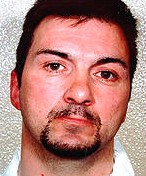
Barry George
Murderer? Derek Bentley
Murderer? · United Kingdom · 1952
Derek William Bentley (30 June 1933 – 28 January 1953) was a British teenager h…
1 victim
Derek Bentley
Murderer? · United Kingdom · 1952
Derek William Bentley (30 June 1933 – 28 January 1953) was a British teenager h…
1 victim
 Harold Greenwood
Murderer? · United Kingdom · 1919
Harold Greenwood (1874 – 17 January 1929) was an English solicitor who was accu…
1 victim
Harold Greenwood
Murderer? · United Kingdom · 1919
Harold Greenwood (1874 – 17 January 1929) was an English solicitor who was accu…
1 victim
 Oscar Slater
Murderer? · United Kingdom · 1908
Oscar Joseph Slater (8 January 1872 – 1948) was a victim of miscarriage of just…
1 victim
Oscar Slater
Murderer? · United Kingdom · 1908
Oscar Joseph Slater (8 January 1872 – 1948) was a victim of miscarriage of just…
1 victim
 Richard Allen Williams
Murderer? · USA · 1992
Boone County Prosecutor Kevin Crane dismissed the charges in August 2003 after…
10 victims
Richard Allen Williams
Murderer? · USA · 1992
Boone County Prosecutor Kevin Crane dismissed the charges in August 2003 after…
10 victims
 Andre Minnitt
Murderer? · USA · 1992
Andre Minnitt was convicted of crimes connected to the El Grande Market slaying…
3 victims
Andre Minnitt
Murderer? · USA · 1992
Andre Minnitt was convicted of crimes connected to the El Grande Market slaying…
3 victims
 Glen Edward Chapman
Murderer? · USA · 1992
Defendant: Glen Edward Chapman Legal case references: In the Supreme Court of N…
2 victims
Glen Edward Chapman
Murderer? · USA · 1992
Defendant: Glen Edward Chapman Legal case references: In the Supreme Court of N…
2 victims
 Gilberto Chamba
Serial killer · Ecuador / Spain · 1988
Gilberto Antonio Chamba Jaramillo was an Ecuadorian immigrant to Spain. He was…
9 victims
Gilberto Chamba
Serial killer · Ecuador / Spain · 1988
Gilberto Antonio Chamba Jaramillo was an Ecuadorian immigrant to Spain. He was…
9 victims
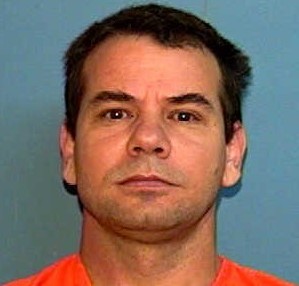 John Calvin Taylor
Murderer · USA · 1997
John Calvin Taylor · Date of sentence: 10/07/99 · Registry date of offense: 12/…
1 victim
John Calvin Taylor
Murderer · USA · 1997
John Calvin Taylor · Date of sentence: 10/07/99 · Registry date of offense: 12/…
1 victim
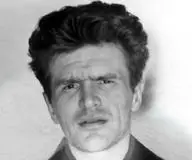 Walter Kelbach
Spree killer · USA · 1966
Walter Kelbach was 28 years old. Myron Lance was 25 years old. Kelbach and Lanc…
6 victims
Walter Kelbach
Spree killer · USA · 1966
Walter Kelbach was 28 years old. Myron Lance was 25 years old. Kelbach and Lanc…
6 victims
 Stephen McCoy
Murderer · USA · 1980
Stephen A. McCoy was executed by lethal injection in Texas on May 24, 1989. He…
2 victims
Stephen McCoy
Murderer · USA · 1980
Stephen A. McCoy was executed by lethal injection in Texas on May 24, 1989. He…
2 victims
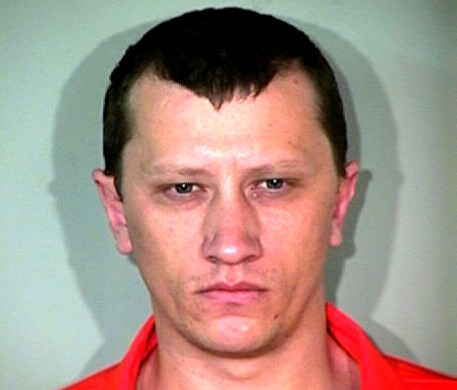 Beau John Greene
Murderer · USA · 1995
Beau John Greene was sentenced to death on August 26, 1996. Greene wrote a lett…
1 victim
Beau John Greene
Murderer · USA · 1995
Beau John Greene was sentenced to death on August 26, 1996. Greene wrote a lett…
1 victim
 Eugene Doerr
Murderer · USA · 1994
Eugene Doerr was sentenced to death on November 27, 1996. · September 24, 1994…
1 victim
Eugene Doerr
Murderer · USA · 1994
Eugene Doerr was sentenced to death on November 27, 1996. · September 24, 1994…
1 victim
- Gender
- male
- Country
- United Kingdom
- Location
- London, England, United Kingdom
- Date of birth
- April 15, 1960
- Age at first offence
- 39
- Characteristics
- history of mental illness, rape, torture
- Victim profile
- Jill Wendy Dando, 37 (British television presenter) Método de matar: Arma de fuego (9mm automatic pistol)
- Method of murder
- —
- Date(s) of murder
- April 26, 1999
- Years active
- 1999
- Date of arrest
- May 25, 2000
- Status
-
Acquitted on 1 August 2008 after conviction for murder of Jill Dando was sentenced to life imprisonment on 2 July 2001 and was overturned on appeal in November 2007
Case record: Barry George
Background
Barry George was also known as Barry Bulsara. He was born on 15 April 1960 in Hammersmith, London. His parents divorced when he was 13.
At 14, he attended the publicly-funded Heathermount boarding school in Sunningdale, Berkshire, for children with emotional or behavioural difficulties. After leaving school without qualifications, his only employment was as a messenger with the BBC for four months in 1977. He continued to show an interest in the BBC, including reading the in-house magazine Ariel and reportedly keeping four copies of the memorial issue which featured Jill Dando’s murder. He also exhibited an interest in celebrities, including Diana, Princess of Wales, and Prince Charles.
George adopted several pseudonyms, starting at school, where he used the name Paul Gadd, the real name of singer Gary Glitter. His parents were described as having a civilian police driver father, Alfred, and a mother, Margaret, who was Irish.
In 1980, after a failed attempt to join the Metropolitan Police, George posed as a policeman after obtaining false warrant cards. He was arrested and prosecuted for this. He appeared in court clad in glam rock clothing and untruthfully stated his name to be Paul Gadd. At Kingston Magistrate’s Court he was fined £25.
In 1980, George was charged and acquitted of indecent assault, but shortly afterwards he was convicted on a similar charge and received a suspended three-month sentence.
In 1983 George was convicted at the Old Bailey under the pseudonym “Steve Majors” for the attempted rape of a woman in his apartment block and served 23 months of a 33-month sentence.
Shortly before this, as revealed after his arrest for the Dando murder, George had been found attempting to break into Kensington Palace, then home of Diana, Princess of Wales. He was discovered on one occasion hiding in the grounds wearing a balaclava and carrying a knife, and in possession of a poem he had written to Prince Charles.
In May 1989 George married Itsuko Toide, described as a Japanese student. Ms Toide described the marriage as “of convenience – but nonetheless violent and terrifying.” After four months, she reported an assault to the police. George was charged, but the case was dropped before coming to court, and the marriage ended.
A psychologist who studied Barry George since his arrest for the Jill Dando murder concluded he was suffering from several different personality disorders and stated that he had an IQ of 75 and suffered from epilepsy.
The offence
Jill Dando was shot dead outside her home on 26 April 1999. She was described as an English journalist, television presenter and newsreader who worked for the BBC for 14 years. She was 37 years old at the time of her death.
On the morning of 26 April 1999, Dando left the Chiswick home of her fiancé, Dr. Alan Farthing, and returned alone by car to the house she owned but rarely visited in Gowan Avenue, Fulham, West London. As she reached her front door at about 11:32, she was shot once in the head.
Her body was discovered shortly afterwards by local resident Helen Doble. Dando was taken to the nearby Charing Cross Hospital where she was declared dead on arrival at 13:03 BST.
Bob Woffinden, The Guardian, July 2002:
“As Dando was about to put her keys in the lock to open the front door of her home in Fulham, she was grabbed from behind. With his right arm, the assailant held her and forced her to the ground, so that her face was almost touching the tiled step of the porch. Then, with his left hand, he fired a single shot at her left temple, killing her instantly. The bullet entered her head just above her ear, parallel to the ground, and came out the right side of her head.”
Forensic study indicated that Dando had been shot by a bullet from a 9mm automatic pistol, with the gun pressed against her head at the moment of the shot. The killer was described as a white man thought to be in his late 30s, seen walking from the scene of the attack.
Investigation
After the murder there was massive media coverage. An investigation by the Metropolitan Police, named Operation Oxborough, proved fruitless for over a year.
Within six months, the murder investigation team had spoken to more than 2,500 people and taken more than 1,000 statements. The police then concentrated attention on Barry George, who resided about half a mile from Dando’s house. He was described as having a history of stalking women and other antisocial behaviour. He was put under surveillance and eventually charged with Dando’s murder.
Dando’s status as a well-known public figure meant that she probably brought her into contact with thousands of people. This was described as generating speculation about the motive for her killing.
Detective Chief Superintendent Hamish Campbell arrived at Gowan Avenue and directed operations from a neighbour’s doorway. It was 12.15pm on Monday 26 April 1999.
The investigation initially had reports suggesting a woman, possibly Miss Dando, had been stabbed outside No 29. By then, a post mortem examination had confirmed that Miss Dando had been shot once behind the left ear, not stabbed as initially thought.
The investigation described a lack of “quality” witness evidence. Two neighbours gave differing descriptions of the clothes worn by a man seen running from the murder scene. Officers worked on three pools of suspects: the victim’s inner core of family and friends, anyone else who knew her, and strangers suspected by the public.
Mr Campbell’s initial thoughts were that Miss Dando had been targeted by a contract killer or an obsessed loner. In a daily decision log, he wrote that it was important to “be cautious and learn the lessons of the Rachel Nickell case”.
A police source told the Mail:
“You have got to be methodical. You must not get into ‘Let’s Do Something Syndrome’. You have got to have a plan.”
Police had at least one e-fit image of a suspect emerging from Bishop’s Park and waiting at a bus stop on the Fulham Palace Road. Mr Campbell and senior officers debated whether to release it to the media, and the incident room became bogged down in hundreds of sightings of men of similar appearance, each call being logged by an officer. The decision to put an innocent man under surveillance for two months was also described.
A normally reliable informant told detectives that underworld figure Stephen Savva, then 36, of Hainault, Essex, was responsible for the murder. From September to November 1999, Savva was under 24-hour surveillance by two teams of ten officers from Scotland Yard’s undercover unit SO11. Following new information, police realised that their initial information had been “rubbish” and that Savva had nothing to do with the murder. During the operation officers saw Savva stealing a Mercedes worth £120,000, for which he received a two-year jail sentence.
Mr Campbell reviewed the investigation and questioned why, when an unprecedented £250,000 reward on offer had been available, no one had been named as the killer. By the end of 1999, he grew convinced he was hunting a “lone obsessive,” described as “statistically the most difficult to find.” Mr Campbell said:
“We could not go on looking for an invisible link in Jill Dando’s life. If she had been the victim of a contract, why could we not find any reason for someone to kill her? All the people in her life and love life could not come up with an explanation.”
Clinical psychologist Dr Adrian West compiled two reports for Campbell assessing the likelihood that the murder was committed by a stalker/loner/obsessive. Dr West suggested that police examine previous intelligence files for records of suspects who had followed or harassed other celebrity figures, especially the Princess of Wales, “as the perpetrator might then have had to mourn and establish another icon”.
Twenty-four hours after the murder, an anonymous woman called police about an oddball who was “very strange” and “mentally unstable” and lived in Crookham Road. The caller said he possessed air weapons and possibly a crossbow but did not give his name. Over the following six weeks, police received further four calls from members of the public who gave information about a man’s odd behaviour on the day of the murder. Two callers identified him as Barry Bulsara (George’s fake identity). A detective went around to George’s flat eight times but got no reply.
Background inquiries revealed George had convictions for attempted rape and indecent assault. He had allegedly once, armed with a dagger, attempted to break into Kensington Palace to see Princess Diana and had changed his name to match those of his celebrity heroes.
Mr Campbell assessed the file on George, including a witness statement he gave to police on April 11, and realised he was probably a man seen in an agitated state at a taxi firm in Fulham on the day of the murder.
A warrant was obtained to search George’s flat on April 17 and 18. Police found an empty gun holster, gun magazines, and condolence messages about Miss Dando collected from neighbours. Police also found rolls of film which, when developed, showed “surveillance” pictures of 419 different women. Of 736 newspapers found at the flat which pre-dated the murder, eight featured articles on Miss Dando.
Crucially, police did not find a gun, but discovered a picture of George holding a blank-firing Bruni handgun of the type which could have been converted and used to kill Miss Dando.
After these discoveries, George was put under round-the-clock surveillance by a team of 30 officers from SO11.
In mid-May, a firearms expert rang Mr Campbell to say there was firearms residue in a pocket of George’s coat, consistent with residue found in Miss Dando’s hair. The firearms residue was described as being only 1,000th of an inch in diameter and credibility was described as being contested later. The decision was then taken to arrest George.
Mr Campbell said of the firearms residue:
“I thought that was a striking piece of evidence. What a coincidence. Whoever had killed Jill had the ability to be there on the Monday, had knowledge of stalking and firearms. There I was looking at a man who lived locally, had no job, had stalked women and had a tendency to lash out when frustrated.”
The prosecution case at first trial was described as being based on 15 key points including firearms residue, George’s knowledge of guns, witness sightings in Gowan Avenue, his agitated state after the murder, his obsession with celebrities, his attempts to create a false alibi, a blue-grey fibre found on Miss Dando’s raincoat said to match George’s trousers, and lies to police.
Arrest
George was arrested on May 25, 2000 and interviewed at Hammersmith Police Station.
Trial
George was tried at the Old Bailey. He was convicted of the murder of Jill Dando on 2 July 2001. He was sentenced to life imprisonment.
In the retrial, George pleaded not guilty to the murder.
George was covered by press coverage initially, especially of the prosecution portrayal of the defendant as highly obsessive, lacking in social skills and a danger to women. The prosecution case in the retrial differed from the first trial in that there was practically no scientific evidence because evidence relating to the FDR (firearm discharge residue) was ruled inadmissible by the trial judge, identified as Mr Justice Griffith Williams.
There was much evidence of George’s bad character admitted in the re-trial at the discretion of the trial judge. There were delays due to legal arguments and to the illnesses of the defendant and one of the jurors.
For the defence, William Clegg QC reminded the jury about evidence from three women from HAFAD (Hammersmith and Fulham Action on Disability) placing the defendant’s arrival at their offices at 11:50 or 12:00, which, according to Clegg’s argument, would have made it impossible for George to have committed a murder at Dando’s house at 11:30 and then gone home in the wrong direction to change.
Two neighbours who almost certainly saw the murderer immediately after the shooting had seen him go off in this direction, and later failed to identify Barry George at an identification parade. The trial ended with George’s acquittal on 1 August 2008.
Sentencing
On 2 July 2001, after conviction for the murder of Jill Dando, George was sentenced to life imprisonment.
Appeals
In 2002, the Court of Appeal addressed grounds including eyewitness testimony, scientific evidence, and the role of the trial judge, and concluded that the verdict of the jury was not unsafe; the appeal was dismissed.
In March 2006, Barry George’s lawyers sought an appeal on fresh evidence based on medical examinations suggesting he was not capable of committing the crime because of his mental disabilities.
A second defence argument was that two new witnesses said they saw armed police at the scene when George was arrested, contrary to official reports about the circumstances of his arrest. The Metropolitan Police maintained there were no armed officers present during the arrest of George.
Scientific evidence linking Barry George to the murder was described as including a single microscopic particle of what was said to have been gunshot residue, together with evidence as to the character of a fibre found on his clothing. The defence argued that the presence of armed officers and their involvement in his arrest might have been responsible for the gunshot residue.
In September 2006, following investigations by George’s campaigners and a Panorama documentary about the conviction, first broadcast in the UK on 5 September 2006, fresh evidence was submitted to the Criminal Cases Review Commission by the programme-makers and by George’s solicitor. The evidence concerned scientific analysis of the alleged gunshot residue, eyewitness evidence, and psychiatric reports. The programme revealed that the FBI had stopped using gunshot residue as evidence because it was extremely unreliable. Since then, the Crown Prosecution Service decided not to use gunshot residue as evidence in new cases in the UK.
On 20 June 2007, the Criminal Cases Review Commission announced it would refer George’s case to the Court of Appeal.
On 22 August 2007, George was refused bail prior to the hearing, which began on 5 November 2007.
One of the defence team’s main grounds was that the single particle of gunshot residue in the coat pocket was not evidence which conclusively linked George to the crime scene; it could have appeared due to contamination of the coat when it was placed on a mannequin to be photographed as police evidence.
On 7 November 2007 the Court of Appeal reserved judgement, and on 15 November 2007 announced the appeal was allowed and the conviction quashed. A retrial was ordered and George was remanded in custody, making no application for bail.
The reasoning described the prosecution as relying primarily on four categories of evidence: (1) one witness who identified him as being in Jill Dando’s street four and a half hours before the murder and other witnesses who saw a man in the street in the two hours before the murder who might have been George, despite not picking George out at an identity parade; (2) alleged lies told by George in interview; (3) an alleged attempt to create a false alibi; and (4) the single particle of firearm discharge residue found about a year after the murder in George’s overcoat.
The prosecution called expert witnesses whose evidence suggested that it was likely the particle of FDR came from a gun fired by Barry George rather than from some other source. Those witnesses and other witnesses from the Forensic Science Service told the Court of Appeal that this was not the right conclusion. The Court of Appeal concluded that, if this evidence had been given to the jury at the trial, there was no certainty that the jury would have found George guilty, so his conviction had to be quashed.
Outcome
George was acquitted on 1 August 2008 after the conviction was quashed on 15 November 2007 and a second trial began on 9 June 2008.
Jill Dando’s family and former fiancé Alan Farthing did not ask the police to reopen the investigation. George’s family and supporters were jubilant, claiming there had never been any worthwhile evidence against him. This view was articulated by Dando’s former agent, Jon Roseman, who stated that he had doubted George’s guilt from an early stage.
After George’s acquittal, a number of newspapers published articles suggesting that he was guilty of the Dando murder and other offences against women. In December 2009 George accepted substantial damages from a newspaper group following a libel action in the High Court.
Timeline
- 26 April 1999 — Jill Dando was shot dead outside her home in Gowan Avenue, Fulham, West London.
- 2 July 2001 — Barry George was convicted of Jill Dando’s murder and sentenced to life imprisonment.
- November 2007 — George’s conviction was overturned and quashed on appeal.
- 15 November 2007 — The Court of Appeal allowed the appeal and quashed the conviction; a retrial was ordered and George was remanded in custody.
- 9 June 2008 — The retrial began at the Old Bailey.
- 1 August 2008 — Barry George was acquitted.
Other details
People involved and other described participants
Jill Wendy Dando was also identified as the victim, and her fiancé was Dr. Alan Farthing. Helen Doble discovered her body.
Detective Chief Superintendent Hamish Campbell worked the investigation. Stephen Savva was described as an underworld figure investigated under Operation Oxborough. Dr Adrian West was described as compiling offender-profiler reports for Campbell. William Clegg QC was the defence representative in the retrial.
The trial judge in the retrial was identified as Mr Justice Griffith Williams. The CPS lawyer in the arrest phase was Alison Saunders, and the Director of Public Prosecutions consulted was David Calvert-Smith QC.
Early life educational and employment details
George attended Wormholt Park Primary School in White City, West London and later Northcroft School in Hammersmith for children with educational and behavioural disorders, and then moved to a residential school, Heather Mount, at Ascot, Berkshire, for children with emotional and behavioural disorders.
He was described as leaving school at 16 and living with his mother. The BBC employed him as a messenger but he lost the job five months later because he was not up to it.
Prior offending and related circumstances
George impersonated a police officer in 1980 and was fined £25. He was acquitted of indecent assault in 1980, then convicted on a similar charge and received a suspended three-month sentence.
In 1983, under the pseudonym “Steve Majors,” George was convicted at the Old Bailey for the attempted rape of a woman in his apartment block and served 23 months of a 33-month sentence.
He was found attempting to break into Kensington Palace (Diana’s residence) while in possession of a knife and balaclava, and holding a poem he had written to Prince Charles.
Marriage and later name changes
Itsuko Toide described the marriage as “of convenience – but nonetheless violent and terrifying.” After the marriage ended, George changed his name again, becoming Barry Bulsara, described as taking the real surname of Freddie Mercury.
Crime investigation lines and suspects considered
Lines of inquiry explored included:
- Theories that a jealous ex-boyfriend or an unknown lover had killed her, ruled out by detectives after interviewing friends and acquaintances and checking phone calls.
- A belief that somebody had hired an assassin as revenge connected to a Crimewatch conviction, ruled out by detectives after exhaustive inquiries.
- Various theories relating to Bosnian-Serb or Yugoslav groups.
- The possibility that a deranged fan killed Dando after she rejected his approaches, with Dando’s brother Nigel informing detectives that she had become concerned by “some guy pestering her” in the few days before her death; detectives ruled it out.
- A case of mistaken identity, judged unlikely because the killing took place on the doorstep of Dando’s own home.
- Actions taken by a professional rival or business partner.
Her agent Jon Roseman stated he had been interviewed as a suspect by police. The investigation considered professional killing but judged it unlikely that a professional assassin would have been well informed about Dando’s movements because she lived with her fiancé and was only rarely visiting her Gowan Avenue house.
CCTV evidence of Dando’s last journey, described as mainly security video recordings from Kings Mall shopping centre in Hammersmith on her way to Fulham, did not show any sign of being followed.
Nick Ross stated on Newsnight that retaliatory attacks by criminals against police, lawyers and judges were almost unknown in Britain.
Forensic examination of the shell case and bullet recovered from the scene suggested that the weapon used had been the result of a workshop conversion of a replica or decommissioned gun, and it was argued that a professional assassin would not use such a poor quality weapon.
Yugoslav connection detail
Michael Mansfield QC (defence barrister at George’s first trial) quoted from a National Criminal Intelligence Service report stating that the Serbian warlord leader Arkan had ordered Dando’s assassination in retaliation for the bombing of a television station in Belgrade by NATO aeroplanes on 23 April 1999. It was implied that Dando’s earlier presentation of an appeal for aid for Kosovan Albanian refugees may have angered Bosnian-Serb hardliners. The police did not believe Yugoslavs had killed Dando, and reasoned that only three days had separated the Belgrade bombing and the killing of Dando and no Yugoslav group had credibly claimed responsibility.
A quote from Bob Woffinden:
“Claims of responsibility are made by groups such as the IRA or ETA. In 60 years, there has not once been a claim of responsibility for an assassination carried out by east European secret services”.
Discredited link mentioned
A West Midlands petty criminal of Serbian descent was said to have boasted of the killing in a bar in Belgrade in September 2001. A jailed former cargo aircraft captain and two other witnesses stated they were present at the time of the alleged confession.
Evidence about gunshot residue (FDR) and scientific disputes
The Court of Appeal’s description included discussion that the experts’ trial conclusion about the particle of FDR coming from a gun fired by George rather than from another source was not the right conclusion. The Court of Appeal described uncertainty about whether the jury would have found George guilty if the correct evidence had been presented, and therefore quashed the conviction.
Retrial evidence about timing
During the retrial, the defence argued that evidence from three women from HAFAD placed George’s arrival at their offices at 11:50 or 12:00, which would have made it impossible to have committed a murder at Dando’s house at 11:30 and then gone home in the wrong direction to change.
Other described biographical elements of Jill Dando
Jill Dando was educated at Mendip Green Infant School, St Martin’s Junior School, Worle Comprehensive School and Broadoak Sixth Form Centre, where she was head girl. She studied journalism at South Glamorgan Institute of Higher Education in Wales.
She was a member of Weston-super-Mare Amateur Dramatic Society and Exeter Little Theatre Company, and she appeared in plays at the Barnfield Theatre. She volunteered at Sunshine Hospital Radio in Weston-super-Mare before her first job as a trainee reporter for the Weston Mercury, where her father and brother worked.
She joined the BBC in 1985 as a newsreader for BBC Radio Devon, then transferred to BBC South West and presented Spotlight South West. In 1986 she moved to London to present hourly daytime television news summaries. She later presented Breakfast News, BBC One O’Clock News, Six O’Clock News, the travel programme Holiday, the crime appeal series Crimewatch, and occasionally Songs of Praise. She was described as having previously been BBC Personality of the Year.
Crimewatch later reconstructed her murder in an attempt to aid the police in the search for her killer; after George’s acquittal, Crimewatch made no further appeals for information about Dando’s murder. At the time of her death she had presented one episode of The Antiques Inspectors and was scheduled to present the Six O’Clock News that evening, and she was featured on the cover of that week’s Radio Times magazine.
Spotted an error, or have more information about this case?