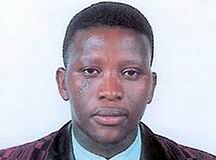
Norman Afzal Simons
Serial killer Louis Van Schoor
Serial killer · South Africa · 1986
Louis van Schoor was a security guard and an ex-policeman who was convicted and…
39 victims
Louis Van Schoor
Serial killer · South Africa · 1986
Louis van Schoor was a security guard and an ex-policeman who was convicted and…
39 victims
 Moses Sithole
Serial killer · South Africa · 1994
Moses Sithole (November 17, 1964) was a serial rapist and serial killer in Sout…
38 victims
Moses Sithole
Serial killer · South Africa · 1994
Moses Sithole (November 17, 1964) was a serial rapist and serial killer in Sout…
38 victims
 Sipho Thwala
Serial killer · South Africa · 1996
Sipho Mandla Agmatir Thwala (born 1968) was a South African rapist and serial k…
16 victims
Sipho Thwala
Serial killer · South Africa · 1996
Sipho Mandla Agmatir Thwala (born 1968) was a South African rapist and serial k…
16 victims
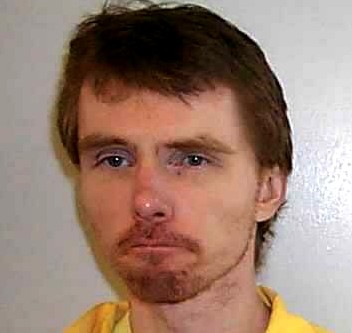 Timothy Alan Dunlap
Murderer · USA · 1991
Timothy Alan Dunlap was 35 and lived in Sellersburg, Indiana. He pleaded guilty…
2 victims
Timothy Alan Dunlap
Murderer · USA · 1991
Timothy Alan Dunlap was 35 and lived in Sellersburg, Indiana. He pleaded guilty…
2 victims
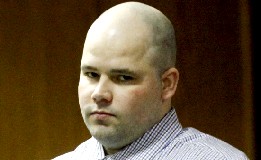 Joshua Durcho
Mass murderer · USA · 2009
Joshua Durcho was an Oklahoma man accused of strangling his ex-girlfriend and h…
5 victims
Joshua Durcho
Mass murderer · USA · 2009
Joshua Durcho was an Oklahoma man accused of strangling his ex-girlfriend and h…
5 victims
 Andre Lee Thomas
Murderer · USA · 2004
Andre Lee Thomas (TDCJ Number 999493) was born on 03/17/1983. He was received o…
3 victims
Andre Lee Thomas
Murderer · USA · 2004
Andre Lee Thomas (TDCJ Number 999493) was born on 03/17/1983. He was received o…
3 victims
 James Tenner
Murderer · USA · 1987
James Tenner was convicted of the hanging and murders of Alvin Smith and Donna…
2 victims
James Tenner
Murderer · USA · 1987
James Tenner was convicted of the hanging and murders of Alvin Smith and Donna…
2 victims
 Odell Barnes
Murderer · USA · 1989
Defendant: Odell Barnes (also referred to as Odell Barnes Jr.) · Date of birth:…
1 victim
Odell Barnes
Murderer · USA · 1989
Defendant: Odell Barnes (also referred to as Odell Barnes Jr.) · Date of birth:…
1 victim
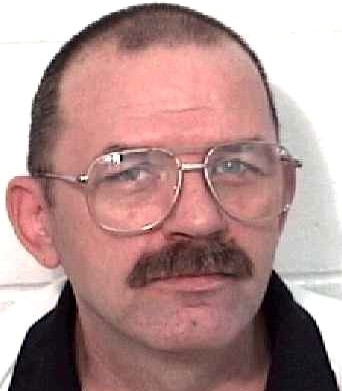 William Earl Lynd
Murderer · USA · 1988
William Earl Lynd was convicted in Berrien County of kidnapping with bodily inj…
2 victims
William Earl Lynd
Murderer · USA · 1988
William Earl Lynd was convicted in Berrien County of kidnapping with bodily inj…
2 victims
- Gender
- male
- Country
- South Africa
- Location
- Cape Town/Mitchells Plain, Western Cape, South Africa
- Date of birth
- 19 56
- Characteristics
- homosexual rapist, rape, serial rapist, kidnapping, former mental patient, mentally ill
- Victim profile
- Young boys aged between 9 and 13
- Method of murder
- Strangulation with pieces of their clothing
- Date(s) of murder
- 1986 - 1994
- Years active
- 1986–1994
- Date of arrest
- 1994
- Status
-
Life imprisonment
Sentenced to life in prison in 1998
Case record: Norman Afzal Simons
Background
Norman Afzal Simons was a former teacher. He later converted to Islam in 1993, taking on the name Avzal, and then converted back to Christianity in 1994. He played classical music and was capable of speaking seven languages including English, Afrikaans, Xhosa and French.
Simons was believed to be South Africa’s “Station Strangler.” South African authorities had been stumped by the growing body count of young boys of mixed race appearing dead around Cape Town from 1986 onwards. At one point, authorities asked for help from the Interpol and the FBI. Robert Ressler, the retired FBI expert who coined the term serial killer, was called in to develop a psychological profile of the killer. Authorities believed they had nabbed their killer after receiving Ressler’s profile.
Police believed Simons was the “Station Strangler,” South Africa’s most notorious serial killer, who may have killed 21 boys and a young man, all of mixed-race, during an eight-year murder spree. The “Station Strangler” was believed to have lured his victims away from train stations. Most victims were found in shallow graves around Cape Town after being sodomized and strangled.
A body was found with a note that read: “One more, many more in store.”
The offence
Simons’ victims were young boys aged between 9 and 13. Simons and his victims were described as mixed race from the Cape Malays community. The boys were found in shallow sandy graves with their hands tied behind their backs, with their shoes removed, their faces pushed into the sand, and with signs consistent with rape, sodomy, and strangling.
Victims were found face down with their hands tied behind their backs in shallow sandy graves. Their underwear was occasionally found around their necks, presumably used as a garrote. Hand-written notes were also found next to some victims.
Elroy van Rooyen, Simons’ final victim, was last seen boarding a train with Simons at Cape Town’s Strand train station. His body was found 10 days later with his hands tied behind his back.
According to police, Simons claimed his brother—who was murdered in 1991—was living inside him. Simons reported hearing voices ordering him to kill. The voices were described as starting after his brother sodomized him. Simons’ brother was described as an alcoholic rastafarian.
Simons raped and sodomised his victims before strangling them.
Investigation
Forensic tests showed that semen found on Van Rooyen’s body was not Simons’. Evidence of witnesses who said they had seen Simons with the boy was found inconclusive.
Police liaison chief Colonel Raymond Dowd admitted investigating the possibility of other killers being responsible for some of the Strangler murders. Police later announced that they were investigating charges against Simons arising from 10 other murders in 1994, and conceded that charges relating to another 10 murders between 1986 and 1992 might never be laid.
In connection with the murders attributed to the Station Strangler, an inquest was later opened into the deaths of the remaining victims. After further analysis, the victims’ parents did not come closer to an answer. On 9 December 2008, Regional Magistrate Marelize Rolle stated that she believed prima facie evidence showed Simons was probably responsible for the deaths of at least six of the other victims, but ruled out further prosecutions due to the time lapse.
Arrest
Simons was arrested in connection with the murder of Elroy van Rooyen. He stood trial for only one of the killings as police lacked evidence in the other cases.
The trial and subsequent procedural steps occurred after psychiatric observation. Simons was granted R1 000 bail in the Kuils River Magistrate’s Court soon after completing a 30-day period of psychiatric observation, after the court rejected evidence which formed the basis for his arrest.
He was later released and then rearrested in connection with Donovan Swartz’s death. Appearing in the Mitchell’s Plain Magistrate’s Court on August 13, his bail was extended.
Simons requested protective custody due to continual threats while he was out on bail. Protective custody was described as usually offered only to witnesses at risk, and the move was described as an acknowledgement of extreme anger around the Strangler murders.
Simons appeared in court in connection with the murder of nine-year-old Donovan Swartz, the second of two charges of murder that were put to him. So far he had not been asked to plead to either charge at the time described.
Trial
Simons faced charges of kidnapping, sodomy and murder arising from Elroy’s death.
Simons appeared before magistrates in 1995 on one charge of murder and kidnap. His three-month trial followed in 1995 and led to a conviction and life sentence in the later narrative.
During the trial process described, Defence counsel Koos Louw cross-examined Hercules and other state witnesses, challenging the reliability of information remembered from a year ago. During cross-examination on Wednesday, Louw accused Sergeant Andre Oliver, investigating officer in the Van Rooyen murder, of arresting Simons “without a grain of evidence” and of knowing that “if no further evidence came to light there would be serious problems”.
A trial-within-a-trial was described as contesting the admissibility of statements made by Simons to magistrates and police shortly after his arrest.
Fouzia Hercules, a witness who claimed she had seen Simons with Elroy on the day the boy disappeared, said she remembered his face because he was a stranger, and “we all know each other in the Strand”. Hercules had recalled earlier: “was like the face of a Bantu”. Simons’ face and complexion were described in relation to this testimony.
In a courtroom narrative, Simons stood in the dock with a religious paperback in his hand, and he attributed his calmness to his “faith in the Lord”.
In another quoted exchange, one woman asked during a recess: “Where does he go at lunchtime?” Her friend replied: “He goes to eat with the advocate.” The same narrative included a remark: “That’s why he’s so fat.”
Sentencing
Simons was sentenced to 25 years for murder and 10 years for kidnapping Elroy.
A narrative stated that the trial followed in 1995 and saw him sentenced to 25 years for murder and 10 years for kidnapping Elroy.
In 1998, the Bloemfontein High Court of Appeal rejected Simons’s appeal and increased his sentence to life imprisonment.
A headline narrative described Simons as having pronounced his own sentence with the words “Ek sal jou vrek doodmaak (I’ll kill you dead)” outside the magistrate’s court.
A separate narrative stated Simons was “facing only one of the 11 ‘Station Strangler’ charges” and described his bail and the reversal of police confidence as part of proceedings around the charges.
Appeals
Simons appealed his conviction in 1998; the Bloemfontein High Court of Appeal rejected his appeal and increased his sentence to life imprisonment.
Outcome
Simons was convicted for murder and kidnapping Elroy van Rooyen. His conviction was upheld after appeal in 1998, and his sentence was increased to life imprisonment.
The record also described that Simons was initially arrested in connection with 12 of the Station Strangler murders, but 11 of the charges were dropped before the case reached the Supreme Court.
Aftermath
Simons served his sentence at Drakenstein Maximum Correctional Facility in Paarl.
Forensic psychologist Micki Pistorius, who did extensive work on the Station Strangler killings in the 1990s, was described as being happy that the cases were revisited so that justice could finally be served for Mitchell’s Plain mothers.
In January 2008 court proceedings included an inquest reopening described as taking place in the Mitchell’s Plain magistrate’s court.
The narrative also described ongoing public searches and vigilante actions by Cape Flats parents, including large hunts and efforts to come face to face with the mass murderer by fine-combing bushes in Mitchell’s Plain.
Timeline
- October 1986 — The series was described as starting with the discovery of the body of Jonathan Claasen, 14, near Modderdam station in Bellville South.
- January 1987 — Yusuf Hoffman, 14, was found in bushes near the sewerage plant in Mitchell’s Plain.
- January (year not specified) — Mario Thomas of Manenberg was discovered in a field in Sarepta near Kuils River in an account of 1987 discoveries.
- April (year not specified) — An unidentified boy was found in bushes near Modderdam station.
- June (year not specified) — The body of Freddie Cleaves, 12, was discovered in a ditch in Belhar.
- August (year not specified) — The body of Samuel Nqaba, 15, was found in bushes off Modderdam Road in Bellville South.
- October 1992 — Jacobus Louw, 10, of Beacon Valley, Mitchell’s Plain, was found in the dunes near Mnandi Beach.
- March 19 (year not specified) — Elroy van Rooyen’s body was found; the narrative associated Simons’s subsequent arrest timing with this date.
- 1994 (January) — 11 bodies were described as being discovered in Cape Town in the Strangler’s so-called killing fields on the outskirts of Mitchell’s Plain.
- January 11 (year not specified) — Fabian Wilmore, 8, and Owen Hoffman, 10, were described as going missing together; their bodies were found lying together.
- January 27 (year not specified) — Police found six bodies: Fabian Wilmore, 8, Owen Hoffman, 10, Neville Samaai, 14, Marcellino Cupido, 9, Elroy van Heerden, 9, and an unidentified boy.
- December 21, 1993 — Marcellino Cupido went missing when he left his grandmother’s Mitchell’s Plain home for the nearby Town Centre complex.
- 1995 — Simons’s trial for one killing was described as lasting three months and occurring in 1995.
- 1998 — The Bloemfontein High Court of Appeal rejected Simons’s appeal and increased his sentence to life imprisonment.
- 8 years after 1994 — The narrative described Simons’s arrest as eight years later in 1994 after a sporadic series began in October 1986.
- August 13 (year not specified) — Simons appeared in the Mitchell’s Plain Magistrate’s Court and his bail was extended.
- 07 June 1994 — The narrative included that Simons, convicted for being “the station strangler,” arrived at the Kuils River Magistrate’s Court, Cape Town.
- 9 December 2008 — Regional Magistrate Marelize Rolle stated prima facie evidence showed Simons was probably responsible for at least six other victims and ruled out further prosecutions due to the time lapse.
Other details
The narrative included multiple details about victim discoveries by year and month:
- 1988 (year described) — Only one body was described as being found: that of Calvin Spire, nine, in a field near the University of the Western Cape in Bellville South.
- 1986 to 1992 (year range described) — Nine bodies were described as being found between 1986 and 1992.
- 1993 and 1994 (period described) — The narrative described “12 more bodies” being found between January and March 1994 and attributed to the Strangler.
- Two specific victims in one account — Donovan Swartz, 11, and Elino Sprinkle, nine-year-old, had their inquest reopened.
The narrative also described that Elino Sprinkle’s body was found in the same position as other victims: face down in a shallow grave with hands tied behind backs and pants wound tightly around their necks.
An account described that it became the largest hunt for a serial killer in South African criminal history. The then minister of law and order Hernus Kriel offered an initial reward of R100 000, later increased to R250 000 for information leading to the arrest and conviction of the killer.
A narrative described the police taskforce probing the case as scaled down since Simons’s arrest. Colonel Leonard Knipe, chief investigating officer, condemned “hysterical and unfounded reporting, which is more damaging than anything else” to the investigation.
The narrative also included references to threats and political context, including mentions of Hernus Kriel and National Party rallies, and an election timing in relation to police actions and public sentiment.
Simons was described as classified as a serial killer as he was alleged to be the notorious “station strangler” who stalked and killed 22 children on the Cape Flats in the 1980s, even though he was convicted of only one murder.
Spotted an error, or have more information about this case?