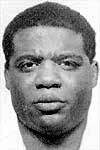
Jeffery Lee Griffin
Homicide Edward Charles Allaway
Homicide · USA · 1976
Edward Charles Allaway Edward Charles Allaway was found not guilty by reason of…
7 victims
Edward Charles Allaway
Homicide · USA · 1976
Edward Charles Allaway Edward Charles Allaway was found not guilty by reason of…
7 victims
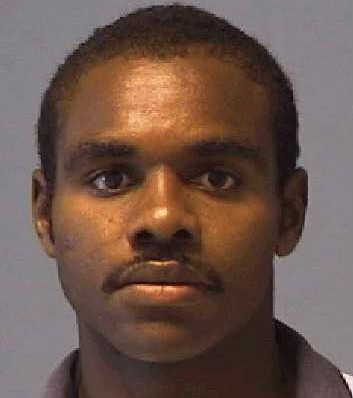 Clinton Bankston
Homicide · USA · 1987
15 August 1987 — Ann Morris (63), her sister Sally Nicholson (59), and Sally’s…
5 victims
Clinton Bankston
Homicide · USA · 1987
15 August 1987 — Ann Morris (63), her sister Sally Nicholson (59), and Sally’s…
5 victims
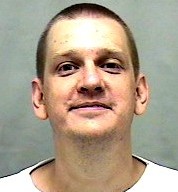 David Francis Brom
Homicide · USA · 1988
David Francis Brom (born October 3, 1971) killed his parents, brother, and sist…
4 victims
David Francis Brom
Homicide · USA · 1988
David Francis Brom (born October 3, 1971) killed his parents, brother, and sist…
4 victims
 William Hare
Serial killer · United Kingdom · 1827
William Hare and Brendan “Dynes” Burke committed serial murders in Edinburgh, S…
17 victims
William Hare
Serial killer · United Kingdom · 1827
William Hare and Brendan “Dynes” Burke committed serial murders in Edinburgh, S…
17 victims
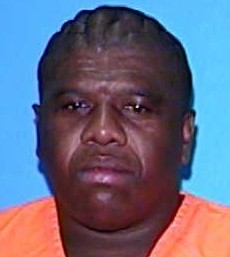 Curtis Windom
Murderer · USA · 1992
Curtis Windom was born on 01/29/66. The case proceeded in the Ninth Judicial Ci…
3 victims
Curtis Windom
Murderer · USA · 1992
Curtis Windom was born on 01/29/66. The case proceeded in the Ninth Judicial Ci…
3 victims
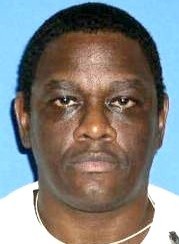 James Lewis Jackson
Murderer · USA · 1997
James Lewis Jackson was convicted of capital murder involving the strangling de…
3 victims
James Lewis Jackson
Murderer · USA · 1997
James Lewis Jackson was convicted of capital murder involving the strangling de…
3 victims
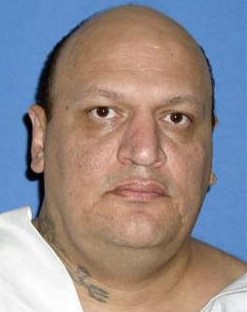 Ricardo Samaniego Ortiz
Murderer · USA · 1997
Ricardo Samaniego Ortiz was convicted of capital murder and sentenced to death…
1 victim
Ricardo Samaniego Ortiz
Murderer · USA · 1997
Ricardo Samaniego Ortiz was convicted of capital murder and sentenced to death…
1 victim
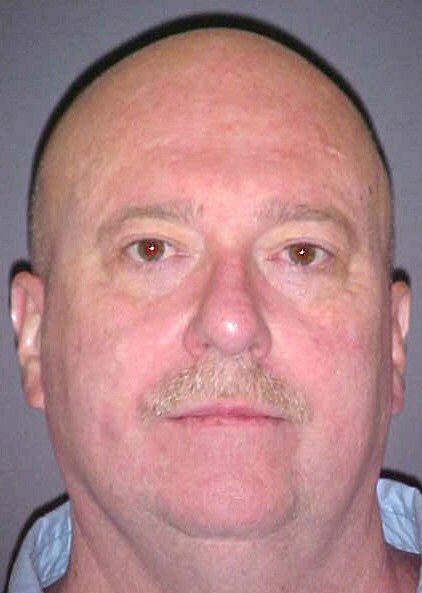 Jimmie Ray Slaughter
Murderer · USA · 1991
Jimmie Ray Slaughter was executed by lethal injection in Oklahoma on March 15,…
2 victims
Jimmie Ray Slaughter
Murderer · USA · 1991
Jimmie Ray Slaughter was executed by lethal injection in Oklahoma on March 15,…
2 victims
 John Katehis
Homicide · USA · 2009
John Katehis was a 16-year-old and was tried for the fatal stabbing of radio jo…
1 victim
John Katehis
Homicide · USA · 2009
John Katehis was a 16-year-old and was tried for the fatal stabbing of radio jo…
1 victim
- Gender
- male
- Country
- USA
- Location
- Harris County, Texas, USA
- Date of birth
- 1955
- Age at first offence
- 23
- Characteristics
- kidnapping, robbery, former mental patient
- Victim profile
- Sylvia Mendoza / David Sobotik, 19, and Horacio DeLeon, 7
- Method of murder
- St abbing with a deer-skinning knife
- Date(s) of murder
- July 1978/March 12, 1979
- Years active
- 1978–1979
- Date of arrest
- March 14, 1979
- Status
-
Executed
Executed by lethal injection in Texas on November 19, 1992
Case record: Jeffery Lee Griffin
Status / outcome
Jeffery Lee Griffin was executed by lethal injection in Texas on November 19, 1992.
Background
Jeffery Lee Griffin was a former mental patient.
Griffin had lived in the neighborhood and had frequented a north Houston convenience store where the night manager worked.
The offence
On March 12, 1979, Griffin drove David Sobotik, 19, night manager of a north Houston convenience store, and 7-year-old errand boy Horacio “Chito” DeLeon to a neighborhood. Griffin stabbed both with a deer-skinning knife.
Griffin later said he apologized to DeLeon as he stabbed him.
In his confession to police, Griffin said that once he got inside the store, “something told (me) to do it.”
Griffin robbed the store on March 12, 1979 before abducting and killing Sobotik and DeLeon.
Griffin later gave another statement to Detective Kent regarding the death of Sylvia Mendoza in July 1978. Griffin stated that approximately nine months previously he met Sylvia Mendoza near a night club, she asked for directions, and Griffin advised that she not walk alone at night. Griffin offered his assistance and Mendoza started kissing him. Mendoza climbed in a trash dumpster and removed her clothes. While they were having sex, Griffin started stabbing her “a lot of times.” Griffin altered his confession to make clear that he took the pistol from the store before he left with Sobotik and DeLeon.
Following the Sobotik and DeLeon killings, Griffin directed officers to the place where he discarded the knife he used in the slaying.
Griffin also frightened customers away after returning to the store by shooting at them with a pistol.
Investigation
On March 12, 1979, at about 11:45 p.m., Griffin informed Frank Chapa, a friend of Griffin, that Daniel Sobotik, the manager of the convenience store where Chapa worked, had been kidnapped.
According to the statement Griffin gave to police that night, Griffin saw Sobotik and Horatio DeLeon, “a seven-year part-time employee of the store,” leaving with two men. The statement said that when Griffin spoke to Sobotik, the men hit Sobotik, fired shots at Griffin, and drove away in Sobotik’s car with Sobotik and DeLeon.
Sobotik’s car was found at 7 a.m. on March 13, 1979; inside the car were the bodies of Sobotik and DeLeon.
Later in the day of March 13, Griffin arrived at the police station and repeated the statement he had given the night before. At that time he agreed to take a polygraph examination. The test indicated deception, and Griffin was arrested at 1:15 p.m. and taken before a magistrate who advised him of his constitutional rights.
Griffin did not request an attorney at that time.
Arrest
Griffin was arrested at 1:15 p.m. on March 13, 1979, and was taken before a magistrate who advised him of his constitutional rights.
Trial
Officer Doug Bostock described what happened next at trial:
“A. He was returned to the interview room in the Homicide Division, and we again went over his legal rights to make sure he understood them, sir.
[Q.] How did you do that? Did you take the warnings from a card? Did you taken them from a confession form?
A. We used the same warning the magistrate did, sir, and went over each point.
....
Q. Did you question him as to whether or not he understood what each one of these rights meant[?]
A. Yes, sir, we did.
Q. Did you tell him that he had a right to employ a lawyer, as reflected in there?
A. We did, sir, and he said he had a lawyer.
Q. Did you ask him whether or not he knew he had a right to remain silent?
Q. Did he understand that?
A. Yes, sir, he did.
Q. Did you tell him that he had a right to have a court appointed lawyer, if he couldn't afford a lawyer?
Q. Did he understand that concept?
A. Yes, sir, he replied he had a lawyer.
Q. He didn't want a court appointed lawyer, as far as you could tell?
A. He didn't want any lawyer, sir.
Q. Did you tell him that if he elected not to remain silent, that what he said would be taken down and probably used against him?
Q. Is that reflected on the warning that we are talking about?
A. Yes, sir.
Q. Did he say he understood that?
Q. Did he say at that point and time that he wanted to talk to you?
A. We asked him if he wished to talk to us, after all of this, and he said: Yes, I'll talk to you.
Q. Did he talk to you freely and voluntarily?
Q. How long did you talk to him while he was there in the interrogation room?
A. He talked to us until around 3:00 o'clock.
Q. So this would be from 2:00 o'clock to 3:00 o'clock?
A. Probably about 1:45 to about 3:00 o'clock, yes, sir.
Q. What were you talking about then? Were you talking about the previous statement or what?
A. We talked about the previous statement and some of his background, some of his way of life and so forth, where he lived, about the investigation itself, and then about 3:00 o'clock that afternoon, he looked at us and said: I think I want to talk to my lawyer.
What did you do then?
A. I asked him who his attorney was and he said it was Mr. Jennings. I pulled out a telephone book, looked up the number, dialed the number, gave him the telephone.
Q. Is that Tom Jennings?
A. I believe that's his first name, yes, sir.
Q. Is that the person you dialed, in any event?
A. Yes, sir. I called his office at which time I gave Mr. Griffin the telephone, and Detective Schultz and I stepped out of the office.
Q. What happened then?
A. He talked on the telephone sir. We didn't listen to the conversation. We left the door open where we could observe him, but we did not listen to the conversation.
Q. How long did the conversation take place?
A. Roughly between five and ten minutes, I believe, sir.
This would have been sometime after 3:00 o'clock, between 3:00 o'clock--
A. It was right around 3:00 o'clock when he stated that he would like to talk to his lawyer, that he had better talk to his lawyer, and then, after he hung up, we returned in there, and he advised us that he had, in fact, talked to his attorney, and about 3:30, his attorney called back and asked to talk to him. Again, we put him on the telephone and we left the office.
Q. Between 3:00 and 3:30, did you talk to him about the case?
A. We talked to Mr. Griffin mostly, I think, about what his attorney was advising him.
Q. Okay. Then, at 3:30, Mr. Tom Jennings again called the Homicide Office?
A. Well, Detective Schultz was advised that Mr. Jennings was on the telephone, and then Detective Schultz came back into the interview room and told Mr. Griffin that his attorney wanted to talk to him. We again left the interview room and allowed him to talk to Mr. Jennings on the telephone.
Q. How long did that conversation take?
A. Just a short conversation, just a minute or two, I believe.
Q. What happened after he hung up?
A. We re-entered the interview room and asked him what had happened, and he said Mr. Jennings had told him he was not going to represent him.
Q. Did you ask him then whether he wanted a lawyer?
A. Yes, sir. We asked him if he wanted to call another lawyer.
What did he say?
A. He said: No. He just didn't want to talk to any lawyers right now.
Q. Who was present when this was said?
A. Detective Schultz and I believe Detective Kent had come in by that time, and I don't recall if there was anybody else actually in the room then, sir.
Q. But, in any event, he said he didn't want any lawyer?
A. He said he didn't want any other lawyer now.
Q. Then what happened?
A. Detective Kent asked me if--When Detective Kent came into the room, he was behind me, and Mr. Griffin smiled at him. Detective Kent asked me if I would have any objections if he interviewed him, and I stated: No, and I leaned over and told Detective Schultz that Detective Kent wished to interview him, and Detective Schultz and I stepped out of the room, sir.”
Kent advised Griffin of his Miranda rights again. After talking to Detective Kent, Griffin confessed to killing David Sobotik.
In his confession, Griffin stated that he went to the convenience store where Sobotik worked at about 9:40 p.m. and that Sobotik asked Griffin to return the money Sobotik had paid Griffin for a watch. Griffin left the store to wait for Sobotik to finish working. When Sobotik was ready to leave, Griffin, Sobotik, and DeLeon got in Sobotik’s car and headed toward Griffin’s house. During the ride, Griffin said, “something strange started happening ... I pulled my knife and started stabbing David.” Griffin then started stabbing DeLeon. Griffin left the car screaming and went back to the store where he frightened customers away by shooting at them with a pistol. After this confession, Griffin directed officers to the place where he had discarded the knife he used in the slaying.
Griffin objected to the admission of his confession at trial. The objection was overruled on the ground that the confession was voluntary.
The Texas Court of Criminal Appeals rejected Griffin’s argument on appeal that, based on Edwards, the confession was inadmissible because it resulted from police-initiated questioning after he invoked his right to counsel. Griffin v. State, 665 S.W.2d 762 (Tex.Cr.App.1983).
Griffin was sentenced to death for killing Sobotik. Because he was sentenced to death in the Sobotik slaying, Griffin was never tried for killing the boy, Horacio DeLeon.
The state charged Griffin with killing a waitress the year before the convenience-store robbery but never tried him on that charge.
A federal habeas case described that Griffin raised eight issues on appeal, of which the Edwards issue was the only substantial question.
The habeas decision stated that Griffin’s statement was an unambiguous limited request and could not be interpreted as an invocation of his general right to counsel; because the police fully honored Griffin’s request to speak to his counsel, the question whether Griffin waived an invoked right to counsel was not raised in that case. The federal appellate court therefore denied habeas relief.
The federal appellate court also described other issues and disposed of them, including prosecutor closing argument, exclusion for cause of veniremember Sandra Jackson, oath required of each juror, psychiatric testimony, ineffective assistance of counsel, refusal to define certain terms in special interrogatories, and admission of extraneous offenses without prior notice. The court affirmed the judgment of the district court.
A dissenting opinion in the federal appeal argued that Griffin invoked his right to counsel and that Detective Kent, not Griffin, initiated the interrogation that elicited the confession.
In the dissent, the facts leading to the confession were described as follows: Griffin asked to speak to a lawyer; he telephoned Tom Jennings; the conversation occurred for 5–10 minutes; Jennings telephoned back shortly thereafter and talked with Griffin for a couple of minutes; after the second call, the officers asked Griffin what had happened and he responded that Jennings would not represent him; the officers asked if he wanted another attorney and Griffin replied that he did not want one at that time. The dissent stated that Kent then began a conversation with Griffin, explained Miranda rights including the right to court-appointed counsel, and Griffin waived rights, after which Kent elicited a confession. The dissent included Kent’s testimony:
“The only thing I told him, sir, was when I first got into the room, I said: Jeffery, I said, you know what you have done, and I know what you have done. I said, we need to sit down and talk about it, get it out in the open. He said at that time he liked the way I talked to him and started going into it.”
The dissent stated that it disagreed with the majority’s interpretation of what was said and its construction of Edwards v. Arizona and Connecticut v. Barrett.
Sentencing
Griffin was sentenced to death in the Sobotik slaying.
He was on death row for the last 13 years.
Appeals
Griffin’s petitions for a reprieve of execution based on his assertion of mental incompetence were turned down by the United States Supreme Court and several lower courts.
The federal appellate decision was described as follows:
- Jeffery Lee Griffin, Petitioner-Appellant, v. James A. Lynaugh, Director, Texas Department of Corrections, Respondent-Appellee.
- United States Court of Appeals, Fifth Circuit.
- July 28, 1987.
- Rehearing and Rehearing En Banc Denied Sept. 10, 1987.
- Appeal from the United States District Court for the Southern District of Texas.
- The judgment was affirmed.
The federal appellate court held that the police fully honored Griffin’s limited request to speak to his counsel and that the confession was properly admitted, denying habeas relief.
In the dissent, the author said that because Griffin asked to speak to a lawyer before he confessed, the confession was inadmissible under Edwards and that the interrogation that elicited the confession was initiated by Detective Kent.
In a footnote to the dissenting opinion, the dissenter stated that Griffin raised eight issues on appeal and that the Edwards issue was the only substantial question raised, and the dissent included additional notes, including that “Griffin has not established that the article 12.31(b) oath was actually given; the trial court transcript merely states that the jurors were sworn.”
Outcome / aftermath
Following robbing the convenience store on March 12, 1979, Griffin abducted Sobotik and DeLeon and drove away with them in Sobotik’s car. Both victims were later found stabbed to death 10 blocks from the store.
After robbing the store and before abducting Sobotik and DeLeon, Griffin apologized to DeLeon as he stabbed him, according to Griffin’s later account.
Sobotik and DeLeon were later found stabbed to death, and their bodies were located in Sobotik’s car found at 7 a.m. on March 13, 1979.
Griffin was executed by lethal injection in Texas on November 19, 1992.
Other details
Griffin’s education level was stated as 7th grade or less.
Frank Chapa was described as a friend of Griffin.
Horacio DeLeon was described as a 7-year-old errand boy and also as a seven-year part-time employee of the store.
The knife used in the stabbing was described as a deer-skinning knife.
The confession included that Griffin went to the convenience store at about 9:40 p.m.
The federal appellate decision discussed that Griffin’s confession was admitted because his request to speak to his attorney was an unambiguous limited request that was honored, and it referenced Edwards v. Arizona and Connecticut v. Barrett, as well as later Supreme Court decisions described within the opinion (Wyrick v. Fields, Oregon v. Bradshaw, Smith v. Illinois, and North Carolina v. Butler).
The federal appellate decision quoted the Supreme Court’s language in Barrett and Edwards as reproduced in the opinion.
The federal appellate decision included that the prosecutor’s statements in closing argument did not rise to the level required for habeas relief.
The federal appellate decision included that veniremember Sandra Jackson was properly excluded for cause under Witherspoon v. Illinois, as discussed through Wainwright v. Witt.
The federal appellate decision included that Griffin’s argument about the oath required of each juror was not properly before it due to the lack of an objection at trial and the application of Wainwright v. Sykes.
The federal appellate decision included that Griffin’s argument about the use of testimony of Dr. John Nottingham and Dr. Jerome Brown violated his fifth and sixth amendment rights was dismissed because Griffin introduced psychiatric evidence and thereby waived objections under the standard described in Williams v. Lynaugh, provided the evidence was rebuttal and properly limited.
The federal appellate decision included that Griffin’s ineffective assistance claim was rejected because the facts did not support it, and the record reflected that counsel was provided with psychologist’s reports and filed a motion in limine to suppress those reports.
The federal appellate decision included that the trial court’s refusal to instruct the jury on the meaning of “deliberate” and “intentional” in the penalty-phase special interrogatories was rejected by reference to Milton v. Procunier.
The federal appellate decision included that Griffin’s due process contention about introduction of extraneous offenses without prior notice was rejected because the record reflected Griffin was given notice.
A New York Times report described Griffin as executed by injection at the state prison in Huntsville for kidnapping and murdering the night manager of a Houston convenience store he had just robbed, and described that he had been on death row for the last 13 years.

Spotted an error, or have more information about this case?