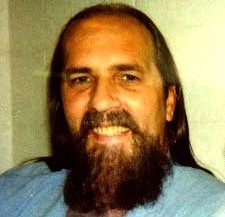
Jeffrey Dale Tiner
Murderer Brian Kevin Rosenfeld
Murderer · USA · 1985
Brian Kevin Rosenfeld Brian Kevin Rosenfeld was sentenced to three concurrent l…
23 victims
Brian Kevin Rosenfeld
Murderer · USA · 1985
Brian Kevin Rosenfeld Brian Kevin Rosenfeld was sentenced to three concurrent l…
23 victims
 Russell Ellwood
Murderer · USA · 1991
Russell Ellwood was a former taxi driver. Authorities suspected him of killing…
20 victims
Russell Ellwood
Murderer · USA · 1991
Russell Ellwood was a former taxi driver. Authorities suspected him of killing…
20 victims
 Robert Martines Perez
Murderer · USA · 1994
Name: Robert Martines Perez · Other name used in proceedings: Robert Martinez P…
15 victims
Robert Martines Perez
Murderer · USA · 1994
Name: Robert Martines Perez · Other name used in proceedings: Robert Martinez P…
15 victims
 Billy Frank Vickers
Murderer · USA · 1993
Billy Frank Vickers Vickers was executed by lethal injection in Texas on Januar…
14 victims
Billy Frank Vickers
Murderer · USA · 1993
Billy Frank Vickers Vickers was executed by lethal injection in Texas on Januar…
14 victims
 John Ingvar Lövgren
Serial killer · Sweden · 1957
John Ingvar Lövgren (22 October 1930 - 9 February 2002) was a Swedish serial ki…
4 victims
John Ingvar Lövgren
Serial killer · Sweden · 1957
John Ingvar Lövgren (22 October 1930 - 9 February 2002) was a Swedish serial ki…
4 victims
 Kevin Michael Watts
Murderer · USA · 2002
Kevin Michael Watts was a Black male who dropped out of school in the ninth gra…
3 victims
Kevin Michael Watts
Murderer · USA · 2002
Kevin Michael Watts was a Black male who dropped out of school in the ninth gra…
3 victims
 Charles Douglas Raby
Murderer · USA · 1992
October 15, 1992 — Charles Douglas Raby was convicted of killing Edna Franklin;…
1 victim
Charles Douglas Raby
Murderer · USA · 1992
October 15, 1992 — Charles Douglas Raby was convicted of killing Edna Franklin;…
1 victim
 Jackie Arklöv
Murderer · Sweden · 1999
Jackie Arklöv was sentenced to life imprisonment. Jackie Arklöv (born June 6, 1…
2 victims
Jackie Arklöv
Murderer · Sweden · 1999
Jackie Arklöv was sentenced to life imprisonment. Jackie Arklöv (born June 6, 1…
2 victims
- Gender
- male
- Country
- USA
- Location
- Lane County, Oregon, USA
- Date of birth
- May 16, 1958
- Age at first offence
- 35
- Characteristics
- white supremacist, gang
- Victim profile
- James Salmu
- Method of murder
- Shooting
- Date(s) of murder
- March 15, 1993
- Years active
- 1993
- Date of arrest
- May 1994
- Status
-
Sentenced to death
Sentenced to death on November 17, 2000; convictions and sentences were affirmed in part and reversed in part on automatic and direct review, and the case was remanded to the circuit court for further proceedings to correct the form of the judgment
Case information
- Name: Jeffrey Dale Tiner
- Case title: State of Oregon, Plaintiff on Review, v. Jeffrey Dale Tiner, Defendant on Review
- Court and filing: Supreme Court of the State of Oregon; filed May 18, 2006
- Case numbers: (CC 10-95-11814; SC S47643)
- Trial court: Circuit Court of Lane County
- Trial judge: Darryl L. Larson
Timeline
- March 1993 — With permission from his California parole officer, Tiner traveled to Springfield to visit Eklof.
- Late in 1999 — Tiner moved to dismiss the case for lack of a speedy trial; the trial court issued a written order rejecting the motion.
- June 10, 1997 — Trial was scheduled; the state received an adverse ruling concerning the admissibility of Eklof’s videotaped statements.
- July 7, 1997 — The state filed its notice of appeal.
- July 13, 1999 — The state moved to dismiss the appeal.
- November 17, 2000 — Sentenced to death on this date.
- May 6, 2005 — The case was argued and submitted.
- May 18, 2006 — The Supreme Court filed the decision.
Background
With permission from his California parole officer, Jeffrey Dale Tiner traveled to Springfield to visit Eklof in March 1993. Eklof and her three children resided with victim, who had invited them to live with him.
Tiner began serving an unrelated sentence in a Nevada prison in mid-1994. While in Nevada, he associated with members of a white supremacist gang, the Aryan Warriors. His upper body featured tattoos suggesting sympathy for white supremacy, including a swastika, a woodpecker, and the words "White" and "Pride." He also used an SS lightning bolt in a letter to his wife.
In December 1995, the State of Oregon indicted Tiner for aggravated murder and other crimes relating to the murder of the victim. In August 1996, while still serving his Nevada sentence, Tiner was transferred to Oregon. The trial court initially scheduled trial for November 1996 but granted Tiner’s motion to postpone the trial until June 10, 1997.
The offence
After a party at victim’s house, Tiner and Eklof told victim that they wanted him to leave his house that night. Eklof and Tiner argued with and then assaulted victim. By assaulting victim, Tiner risked revocation of his parole. Also, in violation of his parole conditions, Tiner had acquired a handgun.
Tiner killed victim with Eklof’s assistance. Tiner disposed of the body in a remote forested area of the Cascade Range.
Despite changes that Eklof and Tiner made to the interior of the house after victim’s disappearance—such as painting the walls and replacing the carpet—police found traces of blood in the house.
Tiner later boasted to others that he had killed victim and detailed how he had disposed of victim’s body.
Investigation
Police obtained evidence including traces of blood found in the house where Eklof and Tiner had made changes after victim’s disappearance.
Eklof participated in four videotaped interviews with police concerning the murder.
In May 1994, police arrested Eklof for victim’s murder. In November 1994, a mushroom hunter found victim’s remains near a logging road in the Cascade Range.
Arrest and detention
In mid-1994, Tiner began serving an unrelated sentence in a Nevada prison.
Trial
On June 10, 1997—the day set for trial—the state received an adverse ruling concerning the admissibility of Eklof’s videotaped statements. The trial court determined that only some of Eklof’s statements were admissible as evidence, although the state argued that all four videotapes of her interviews should be admitted in their entirety.
In light of the ruling, the state informed the court that it intended to appeal. On July 7, 1997, the state filed its notice of appeal. After that, more than a year and a half was devoted to settling the record on which the appeal would be based.
A few days before the state’s opening brief was due, the United States Supreme Court issued an opinion that caused the state’s appellate attorney to reconsider whether to proceed with the appeal: Lilly v. Virginia, 527 US 116, 119 S Ct 1887, 144 L Ed 2d 117 (1999) (plurality opinion regarding Sixth Amendment confrontation clause and hearsay exception against penal interest).
On July 13, 1999, a little more than two years after filing the notice of appeal, the state moved to dismiss the appeal. The Court of Appeals granted the motion and issued an appellate judgment.
The trial court set a new trial date of April 4, 2000.
Late in 1999, Tiner moved to dismiss the case for lack of a speedy trial. The trial court issued a written order, supported by findings, rejecting Tiner’s motion.
On April 4, 2000, trial began. A jury found Tiner guilty of aggravated murder, among other crimes, and imposed a sentence of death.
Sentencing
During the penalty phase, the state offered testimony of an investigator from the Nevada Department of Prisons.
The trial court imposed a life sentence with a 25-year minimum for the jury’s conviction for intentional murder under count three of the indictment. The jury convicted Tiner of aggravated murder as specified in count one and count two of the indictment and intentional murder as specified in count three of the indictment. The jury deliberated during the penalty phase before the penalty determinations were imposed.
Appeals
The case was before the Oregon Supreme Court on automatic and direct appeal of Tiner’s judgment of conviction and sentences of death.
The Supreme Court considered Tiner’s constitutional arguments regarding delays in bringing him to trial, objections about the state inspecting and photographing his tattoos, and arguments that the trial court should not have admitted evidence during the penalty phase of his gang affiliations while he was in prison in Nevada.
Speedy-trial arguments
The Oregon Constitution provided that "[n]o court shall be secret, but justice shall be administered, openly and without purchase, completely and without delay." The Supreme Court addressed the delay between Tiner’s indictment and trial.
Tiner argued that the delay was constitutionally significant due to more than four years between his indictment and trial, focusing on delay resulting from the state’s decision to appeal the trial court’s adverse ruling on admission of Eklof’s videotaped statements.
The state argued that its appeal was justified because admission of potentially pivotal evidence depended upon the appeal’s outcome and because of the seriousness of the offense charged.
The Supreme Court concluded that the state’s appeal had little chance of success and that the conclusion should have been obvious to the state’s attorneys from the outset.
On prejudice, the Supreme Court addressed claims including that Eklof became available as a witness, that a case decided during the pendency of appeal changed certain evidentiary rules, the death of a witness who might have testified about the caliber of a gun, and the unavailability of two Nevada prison guards who could have refuted Tiner’s association with white supremacist prison gangs.
The Supreme Court rejected the argument that the case should be dismissed, concluding that Tiner did not demonstrate that delay significantly prejudiced his ability to prepare his defense. The Supreme Court also rejected Tiner’s argument under the Sixth Amendment, concluding he did not assert his right to a speedy trial in timely fashion.
Tattoos: inspection and photographs
Tiner argued that the trial court erred by issuing an ex parte order authorizing the state to photograph tattoos on his upper body and by allowing those photographs at trial.
Background of the tattoo photographs
In September 1995, Tiner was brought to Oregon as a possible witness in Eklof’s trial. While in jail, the state told Tiner it wanted to take pictures of his tattoos. Tiner initially resisted but acquiesced after being informed he had no choice. Those photographs were not used at his trial.
In May 1997, the state sought an ex parte order permitting the state again to photograph Tiner’s tattoos based on a police detective’s affidavit. The affidavit stated the state wanted an expert to examine the tattoos to determine his affiliation with a white-supremacist gang in connection with the penalty-phase issue of future dangerousness under ORS 163.150(1)(b)(B).
The detective had contacted Swann, who previously had testified as an expert on prison gangs and was acquainted with Tiner from his time in prison in Nevada. Swann indicated that prisoners affiliated with those gangs displayed tattoos specific to those gangs and that the tattoos may indicate criminal history and rank within a gang organization.
The detective had provided Swann with the 1995 photographs, but the photographs had inadequate detail. The detective requested Tiner’s cooperation in photographing his tattoos again, but Tiner refused, telling the detective he would have to obtain a court order. The court granted the order, and the state obtained new photographs; those second photographs were admitted at trial.
Shortly after the photographs were taken, Tiner’s counsel objected and requested a hearing, arguing that no exigency existed. The state responded that it did not need an order to photograph Tiner while in custody. The trial court described its issuance of the order as being in the nature of a search warrant and stated Tiner would have an opportunity to challenge use of the photographs.
Near the trial date, Tiner moved to suppress any unlawfully seized evidence, including the photographs, under his state and federal constitutional rights against unreasonable searches and seizures, and also argued that displaying the tattoos to the jury would be unduly prejudicial. The state countered that Tiner had no privacy interest in his tattoos while in state custody.
After a hearing, the trial court concluded the state had authority to photograph Tiner while he was in custody.
During the guilt phase, one witness who had been present during the party preceding victim’s death could not make a positive identification of Tiner because his appearance had changed. The witness stated he would recognize Tiner based on distinct tattoos on Tiner’s upper body, including the words "San Diego," a picture of a bird, and a prison tower. Over Tiner’s objection, the state introduced photographs of Tiner’s tattoos that the witness recognized.
During the penalty phase, the state moved to allow a prison-gang expert, Scott, another investigator from the Nevada Department of Prisons, to inspect Tiner’s upper body so he could observe the tattoos personally prior to testifying, because the prior photographs had insufficient quality to permit a definitive statement about the significance of the tattoos. Scott wanted to examine one tattoo he could not discern from the photographs. The trial court permitted Scott to observe Tiner personally outside the jury’s presence with defense counsel present.
Self-incrimination
The Supreme Court concluded photographing Tiner’s tattoos and admitting the photographs did not violate his right against self-incrimination. It reasoned that tattoos identified Tiner and the state used them in part to help a witness identify him at trial, and that a defendant could be required to display part of the body without raising self-incrimination issues. The Supreme Court also concluded that the tattoos were preexisting documentary evidence available as part of discovery.
Lawfulness of search
The Supreme Court concluded the photographing of Tiner’s tattoos did not violate the Oregon Constitution or the Fourth Amendment. It stated that once Tiner was imprisoned, he had few rights regarding privacy and the state could compel photographing of distinguishing marks.
Right to counsel
The Supreme Court concluded photographing Tiner’s tattoos did not violate counsel rights. It characterized the act as collecting and recording preexisting evidence, not a critical stage of prosecution such as identification or testimony, and concluded that collecting existing evidence did not require defense counsel’s presence.
Penalty phase evidence of prison gang affiliations
During the penalty phase, the state presented testimony from an investigator from the Nevada Department of Prisons.
The testimony included that Tiner openly associated with members of the Aryan Warriors at the Nevada prison; displayed white-supremacist tattoos; used white-supremacist symbols in written communications; and that the Aryan Warriors had a history of violence.
Tiner argued the state should not have been permitted to present evidence of his beliefs because they were not relevant and, even if relevant, unfairly prejudicial. The state responded that Tiner had opened the door during the penalty phase and that it was entitled to rebut defense testimony that he did not associate with problem inmates.
Relevance
The Supreme Court concluded the evidence of Tiner’s association with a white-supremacist gang was relevant because it controverted Tiner’s evidence that he was a model prisoner and not involved with troublemakers.
Unfair prejudice
The Supreme Court rejected the argument that the admission of gang association evidence was unfairly prejudicial. It concluded the evidence was closely related to the state’s rebuttal of Tiner’s contention that he was not involved with prison gangs.
Outcome
The Supreme Court affirmed the judgment of conviction and sentences, including the sentences of death, in part and reversed in part. It concluded that trial court error occurred only in the form of the judgment and remanded the case for the limited purpose of correcting the form of the judgment.
Errors in form of the judgment requiring remand
The Supreme Court identified and required correction of three judgment-form issues:
Merging convictions: The jury convicted Tiner of intentional murder in count three and aggravated murder in counts one and two. The trial court had imposed a life sentence with a 25-year minimum for the intentional murder count. The final judgment did not merge count three into another count. The Supreme Court agreed the error was apparent and ordered that on remand the trial court merge the intentional murder count into the aggravated murder counts.
Life sentence on count three: The Supreme Court stated it need not address the argument about the life imprisonment sentence for count three because merging count three into another count would render the issue moot.
Multiple aggravated murder judgments and death sentences: Tiner maintained the trial court entered two convictions for aggravated murder and two sentences of death. The Supreme Court stated the trial court erred by imposing two convictions and two sentences of death and ordered correction. On remand, the trial court was to amend the judgment to merge the two aggravated murder convictions into a single conviction, enumerating separately the aggravating factors on which the conviction was based, and then impose a single sentence of death.
Other details
- The Supreme Court panel included Carson, Chief Justice, and Gillette, Durham, Riggs, De Muniz, and Balmer, JJ. Kistler, J., did not participate in the consideration or decision of the case.
- During its speedy-trial analysis, the Supreme Court discussed State v. Harberts, Barker v. Wingo, and State v. Goree as part of its legal framework and prejudice discussion.
- In addressing tattoo photographing and self-incrimination, the Supreme Court discussed Pennsylvania v. Muniz and State v. Fisher, and cited State v. Cram regarding compelled display of part of the body.
- In discussing counsel and photographing, the Supreme Court referenced State v. Classen and State v. Jones regarding critical stages and ex parte search-warrant practice.
Spotted an error, or have more information about this case?