Polly Barclay
Murderer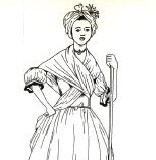 Susanna Cox
Murderer · USA · 1809
Susanna Cox (1785–1809) was a young domestic servant in Berks County, Pennsylva…
1 victim
Susanna Cox
Murderer · USA · 1809
Susanna Cox (1785–1809) was a young domestic servant in Berks County, Pennsylva…
1 victim
 Diane Spencer
Murderer · USA
Diane Louise Spencer was sentenced to life in prison in Michigan on March 13, 1…
1990 victims
Diane Spencer
Murderer · USA
Diane Louise Spencer was sentenced to life in prison in Michigan on March 13, 1…
1990 victims
 Miranda Barbour
Murderer · USA · 2013
Miranda Barbour, 19, defendant. · Elytte Barbour, 22, defendant and husband of…
100 victims
Miranda Barbour
Murderer · USA · 2013
Miranda Barbour, 19, defendant. · Elytte Barbour, 22, defendant and husband of…
100 victims
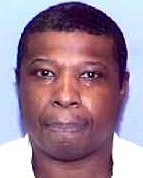 Denard Manns
Murderer · USA · 1998
1998-11-18 — Denard Manns entered the home of Michelle Robson in Killeen and se…
1 victim
Denard Manns
Murderer · USA · 1998
1998-11-18 — Denard Manns entered the home of Michelle Robson in Killeen and se…
1 victim
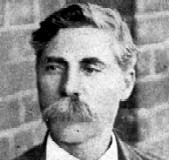 Floyd Allen
Murderer · USA · 1912
Floyd Allen (July 5, 1856 – March 28, 1913) was an American landowner and patri…
5 victims
Floyd Allen
Murderer · USA · 1912
Floyd Allen (July 5, 1856 – March 28, 1913) was an American landowner and patri…
5 victims
 Albert Foulcher
Murderer · France · 1993
Albert Foulcher was described as a former insurance agent and a gun enthusiast.…
5 victims
Albert Foulcher
Murderer · France · 1993
Albert Foulcher was described as a former insurance agent and a gun enthusiast.…
5 victims
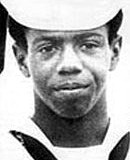 Mark Essex
Spree killer · USA · 1973
Mark James Robert Essex was a Navy veteran who engaged in a shooting and arson…
9 victims
Mark Essex
Spree killer · USA · 1973
Mark James Robert Essex was a Navy veteran who engaged in a shooting and arson…
9 victims
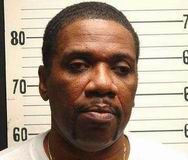 Charles Walton Wright
Murderer · USA · 1984
Charles Walton Wright was convicted of two counts of premeditated first degree…
2 victims
Charles Walton Wright
Murderer · USA · 1984
Charles Walton Wright was convicted of two counts of premeditated first degree…
2 victims
 Tina Lunney
Murderer · USA · 2009
Tina Lunney was sentenced to 40 years in prison on August 13, 2013. · July 22,…
1 victim
Tina Lunney
Murderer · USA · 2009
Tina Lunney was sentenced to 40 years in prison on August 13, 2013. · July 22,…
1 victim
- Gender
- female
- Country
- USA
- Location
- Wilkes County, Georgia, USA
- Date of birth
- ???
- Characteristics
- parricide
- Victim profile
- Mr. Barclay (her husband)
- Method of murder
- Shooting
- Date(s) of murder
- December 1805
- Years active
- 1805
- Date of arrest
- —
- Status
-
Executed
Executed by hanging in Georgia on May 13, 1806
Case record: Polly Barclay
Background
Polly Barclay was executed by hanging in Georgia on May 13, 1806. She was described as a widow and was characterized as an “attractive, young woman” who married an elderly man in good circumstances. After the marriage, she became “enamored of a young man, a laborer on the farm of Barclay,” and the two conspired together to murder her husband.
The offence
Polly Barclay was tried and convicted as a conspirator in the murder of her husband, referred to as “Mr. Barclay,” in Wilkes County, Georgia. The murder took place in the fall of the previous year, with tradition placing it in the fall or winter of 1805. Tradition described that two men came up the road at night in the fall (supposedly on a Saturday) from the direction of Augusta and stopped at Mr. Barclay’s cotton house, which stood on the road a short distance from his house. The men made some noise to make Mr. Barclay suppose that some person was stealing his cotton.
There were visitors at the dwelling house who reported that Mr. Barclay was not disposed to go out, but that his wife urged him to do so. Shortly after he went, a shot was heard, and those present reported that she said, “that shot killed my husband.” When found, Mr. Barclay was still living but the ball had cut off his tongue. He died in a few hours.
Mr. Barclay was buried on the spot where he fell. The burial place was marked “by two unhewn stones which were placed upon it and they can be still pointed out on the old Elberton and Augusta road a few miles beyond Sandtown. The grave is on the edge of the road...”.
Investigation
The case included discussion of suspicion arising through something about the money. After Mr. Barclay had sold his cotton in Augusta and returned, his wife was not at first suspected, but suspicion was aroused through something about the money. People talked, and various suspicious circumstances were told. When those circumstances were put together, they led to a belief in the guilt of his wife and her arrest.
A young boy was said to have been a witness at Polly Barclay’s trial. The boy witnessed a conversation in which Polly Barclay offered her brother $200 to kill Mr. Barclay.
A detail about another person involved in the events was included: Mark Mitchum was not charged, and nolle prosequi was mentioned as to him. The narrative also said he supposedly ran away upon hearing of the possible indictment.
Arrest
Polly Barclay was arrested after suspicion was aroused about the money and after people talked about suspicious circumstances that, when put together, led to a belief in the guilt of her and her arrest.
Trial
Trial proceedings occurred in May 1806 after a true bill of murder was put forth against William Nowland and Polly Barclay.
8 May 1806 — William Nowland trial William Nowland was tried and found not guilty on 8 May 1806. The next day he was to be a witness for the State.
9 May 1806 — Polly Barclay trial On 9 May 1806, Polly Barclay was put on trial. Opening statements, witness testimonies, closing arguments, jury deliberation, and the verdict all came in one day.
The verdict was stated as: “We the jury find the prisoner at the bar guilty but recommend her to mercy.”
The judge’s ruling was provided verbatim:
That you Polly Barclay be taken from this bar to the place from whence you came, there to remain until Friday the 30th, day of this present month of May, and that on the aforesaid 30th, day of May you are to be taken by a proper officer to a gallows previously to be erected in or near the town of Washington, and then and there on the day aforesaid, between the hours of ten o'clock in the forenoon and two o'clock in the afternoon, you are to be hung by the neck until you are dead and may God have mercy on your soul.
Sentencing
Polly Barclay was sentenced to be hung. The judgment included that she remain until Friday the 30th day of May, 1806, and then be taken to a gallows previously to be erected in or near the town of Washington, to be hung by the neck until dead. The outcome was later carried out on Friday, May 13, 1806.
Outcome
Polly Barclay was hung on a large white oak tree “which once stood on the north side of Main Street.” She was placed on a gallows just west of downtown Washington on Friday, May 13, 1806, and she gave her life. It was stated that she was the first white woman hanged in Georgia.
A further legend about execution method was included: it was said she was not hung by a rope but by a chain. Another detail also said she expected pardon and dressed herself in her best costume for congratulations by her admirers, and when it was the reverse instead of pardon, she went to death in her finest evening dress—the same she had made to wear at her reception.
The narrative also reported that when the officer came to take her to the hanging tree, she grappled for a piece of paper she saw in his pocket, believing it was a stay of execution.
Polly Barclay was buried in an unmarked, undisclosed grave.
Other details
Her co-conspirators were named as her brother William Nowland and her lover Mark Mitchum. It was said that Mr. Barclay was not killed by his wife’s hand, while she was convicted and punished for the crime.
Motive was described in multiple ways: some said the motive for murder was money, while others said it was committed because Polly wanted to be with her lover. It was said that it was likely a combination of the two.
A comparison was included regarding a separate case: Polly Barclay was said to have been the second woman to be hung for murder in Georgia, with Alice Riley of Savannah identified as belonging to the first such distinction.
A judge was named in connection with the trial as “future U.S. Senator Charles Tait.”
A later newspaper recollection from January 11, 1913 described additional execution details and place. It said:
Polly Barclay was the first white woman hanged in Georgia. She did not die on the gallows, but was hung in 1806, on an old oak, gnarled and storm-beaten now, standing on the Lexington road in the Hayward grove; and hung not with a rope but with a chain, and believers in the supernatural, especially negroes, drive by the weird spot in haste to this day, and some of the more superstitious of them declare that on dark, cloudy nights they can hear the rattle of the clanking chains. It was a noted case and created a great sensation at the time. The scene was in “Washington, Wilkes,” the historic old town, the grave still there and the historic old oak. She possessed far greater attainments than Susan Eberhart, though she had mind enough to easily dominate old man Spann. Polly Barclay was a magnetic woman, of personal charms, and called in her day something of a fast beauty, with fascinating manners and attractive personnel. But she never thought she would be hung, and expected pardon on the very day of her execution. So sure of it that she dressed herself in her best costume, ready for congratulations by her admirers, and when it was the reverse instead of pardon, she bravely went to death in her finest evening dress—the very same she had made to wear at her reception. Nor can it be said she had a rough and uneducated jury, for even in those days Wilkes, then a very large county, was peopled with the sons from the best families of Virginia and North Carolina.
The same later recollection stated that old Wilkes was called the “hornet’s nest” of the Revolution, and included a quote attributed to Gen. Toombs: “these men fought for their estates like feudal barons.”
A historical outline included that Wilkes County’s first court was Aug. 25, 1779, and that the court was composed of William Downs, Absalom Bedell and Benjamin Catchings. The grand jurors named were Stephen Heard, Barnard Heard, George Walton, John Glass, Charles Bedingfield, Daniel Burnett, Thomas Carter, Micajah Williamson, James McLean, Jacob Terrington, William R. Aycock, Robert Day, John Gorham, Dionysius Oliver, Holman Freeman, Dr. Daniel Coleman and Thomas Stroud. It also stated that at this court nine persons were sentenced to be hung, principally for treason.
It further stated that the opening of the superior court held in Washington in 1784 had George Walter as chief justice. It said the first courthouse was built in 1785 and Hon. William Smith was chief justice, and that barristers were required to wear gowns when arguing a case and the sheriff wore a gown and a sword as a badge of office, preceding the judge into court holding a drawn sword, citing old English custom and South Carolina custom up to the Civil War.
The later recollection also stated that the Washington tavern at the time was run by Micajah Williamson, and it described the tavern, including a “Gal in the Fountain” sign and a portrait of George Washington before the door, noting that the baron, Gen. John Clark, rode into town with too much old corn inside and shot a ball through the picture.
A list of named “celebrities” said to have gathered to discuss public events and especially the Polly Barclay case was included: John Dooly, Samuel Davis, William and Gabriel Toombs, John Wingfield, Gen. David Meriwether, William and Felix Gilbert, Joseph Henderson, Christopher Irvin, Oliver Hillhouse, George Walton, Oliver H. Prince, John Colley, Dr. Joel Abbott, Thomas Wingfield, Col. N. Long, Thomas Telfair, Gen. John Clark, Job and John Callaway, John H. Walton, Lawrence Bankston, Silas Mercer, Jacob Early, Peter Early, Lewis Parrott, Benjamin Taliaferro, James Lamar, John Talbot, William Terrell, Zachariah Lamar, G. Hay, Samuel Blackburn, John Appling, George Mathews, Sanders Walker, Burnett Pope, Thomas Wooten.

Spotted an error, or have more information about this case?