William Henry Flamer
Murderer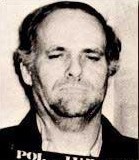 Ervil LeBaron
Murderer · USA · 1972
Ervil Morrell LeBaron (1925 to August 16, 1981) was the leader of a polygamous…
35 victims
Ervil LeBaron
Murderer · USA · 1972
Ervil Morrell LeBaron (1925 to August 16, 1981) was the leader of a polygamous…
35 victims
 Brian Kevin Rosenfeld
Murderer · USA · 1985
Brian Kevin Rosenfeld Brian Kevin Rosenfeld was sentenced to three concurrent l…
23 victims
Brian Kevin Rosenfeld
Murderer · USA · 1985
Brian Kevin Rosenfeld Brian Kevin Rosenfeld was sentenced to three concurrent l…
23 victims
 Marvin Gray
Murderer · USA · 1975
Marvin Gray was convicted killer who claimed responsibility for 23 slayings and…
23 victims
Marvin Gray
Murderer · USA · 1975
Marvin Gray was convicted killer who claimed responsibility for 23 slayings and…
23 victims
 Yahweh ben Yahweh
Murderer · USA · 1980
Yahweh ben Yahweh was born and legally named Hulon Mitchell Jr. (October 27, 19…
23 victims
Yahweh ben Yahweh
Murderer · USA · 1980
Yahweh ben Yahweh was born and legally named Hulon Mitchell Jr. (October 27, 19…
23 victims
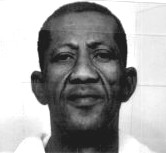 Clydell Coleman
Murderer · USA · 1989
Clydell Coleman was tried and convicted for the murder of Leetisha Joe. Coleman…
1 victim
Clydell Coleman
Murderer · USA · 1989
Clydell Coleman was tried and convicted for the murder of Leetisha Joe. Coleman…
1 victim
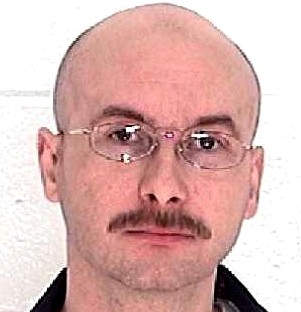 William Sallie
Murderer · USA · 1990
William C. Sallie was sentenced to death and convicted by a jury of malice murd…
1 victim
William Sallie
Murderer · USA · 1990
William C. Sallie was sentenced to death and convicted by a jury of malice murd…
1 victim
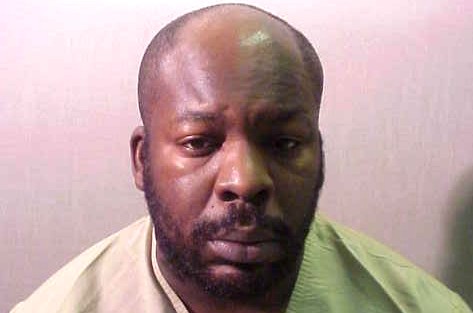 Marko Bey
Homicide · USA · 1983
Marko Bey was formerly of Neptune. He was 17 and 18 years old when he committed…
2 victims
Marko Bey
Homicide · USA · 1983
Marko Bey was formerly of Neptune. He was 17 and 18 years old when he committed…
2 victims
 Scott William Cox
Serial killer? · Several States USA / Canada · 1980
Name: Scott William Cox Tia Hicks vanished in 1990 after Scott William Cox was…
20 victims
Scott William Cox
Serial killer? · Several States USA / Canada · 1980
Name: Scott William Cox Tia Hicks vanished in 1990 after Scott William Cox was…
20 victims
 Timothy Blackburn
Murderer · USA · 1999
Timothy Blackburn escaped from the North Las Vegas jail with the help of his wi…
3 victims
Timothy Blackburn
Murderer · USA · 1999
Timothy Blackburn escaped from the North Las Vegas jail with the help of his wi…
3 victims
- Gender
- male
- Country
- USA
- Location
- Kent County, Delaware, USA
- Date of birth
- 1954
- Age at first offence
- 25
- Characteristics
- alcohol, robbery, convicted rapist
- Victim profile
- Byard Smith, 68, and Alberta Smith, 69 (his uncle and aunt)
- Method of murder
- Stabbing with knife
- Date(s) of murder
- February 7, 1979
- Years active
- 1979
- Date of arrest
- Next day
- Status
-
Executed
Executed by lethal injection in Delaware on January 30, 1996
Case record: William Henry Flamer
Background
William Henry Flamer was executed by lethal injection in Delaware on January 30, 1996.
Flamer was a nephew of Alberta Smith. He and his grandmother and father shared a residence.
Flamer was 40 at the time of his execution.
The offence
Byard Smith and Alberta Smith were killed in their home just outside Harrington, Delaware.
The bodies of Byard and Alberta Smith were discovered by their 35-year old son, Arthur, on the morning of February 7, 1979.
Byard Smith had been stabbed 79 times, primarily in the head and neck. Alberta Smith had been stabbed 66 times.
Both victims had been stabbed with two knives. The evidence described in the opinion reflected that both bodies had been stabbed with two different weapons: a bayonet and a smaller knife described as a kitchen paring knife. Nineteen of the wounds on Byard Smith were made by the bayonet, eight were from the paring knife, and 52 could have come from either weapon. Regarding Alberta Smith’s wounds, 25 wounds were inflicted by the bayonet, two by the paring knife, and 39 could have come from either weapon.
The Smiths were found on the floor of the living room, surrounded by blood and overturned chairs. Byard Smith’s pockets had been turned out and emptied. In the kitchen, packages of frozen food lay strewn about the floor. The Smiths’ car and television set were missing.
Flamer was tried before a jury in 1980 on four charges of murder in the first degree, possession of a deadly weapon during the commission of a felony, first-degree robbery, and misdemeanor theft.
At trial, a jury convicted Flamer on all charges, and the trial then proceeded to the penalty phase.
During Flamer’s confession, he gave the following account of the murders: after a day of drinking, he and Andre Deputy went to the Smiths’ house just before midnight in order to rob them; they brought a bayonet, a smaller knife, and a shotgun; they hid the shotgun outside the Smiths’ home; Flamer carried the smaller knife, and Deputy concealed the bayonet under his coat; to gain entry, Flamer told Alberta Smith that his grandmother had had a stroke and was missing; Flamer and Deputy stood just inside the house speaking to the Smiths for about ten or fifteen minutes until Flamer, acting on a signal from Deputy, began to stab Byard Smith with the smaller knife; he later threw the knife away when stopped by the police on Route 13; after Flamer began stabbing his uncle, Deputy began to stab Alberta Smith with the bayonet; at some point, Deputy also stabbed Byard Smith with the bayonet; after the couple died, the two men searched the bodies for money and found four wallets; they fled in the Smiths’ car, which they had loaded with property stolen from the house; the two men drove to Flamer’s home, where they stored some stolen items and burned three of the four wallets taken from the Smiths; the fourth wallet was recovered from Deputy when the men were arrested; Flamer left his home alone in the Smiths’ car; outside Felton, Delaware, he became so drunk that he fell asleep; when he awoke, the car’s battery was dead; he abandoned the car, went to the Blue Moon Tavern to meet Deputy and to shoot pool and drink, and he was arrested a few hours later.
The confession narrative associated the killings with robbing the Smiths to continue a drinking binge.
Investigation
Within hours of the discovery of the bodies, the police located the stolen car and identified William Henry Flamer, a nephew of Alberta Smith, as a possible suspect.
The police went to Flamer’s residence, which he shared with his grandmother and his father. Flamer’s grandmother invited the police to search the home.
In Flamer’s room, the police discovered packages of frozen food similar to those found on the floor of the Smiths’ kitchen.
The Smiths’ television set and fan were discovered in the kitchen closet, and a blood-encrusted bayonet was found on a stand in the kitchen.
The police presented their evidence to a Justice of the Peace and obtained a warrant to arrest Flamer for murder in the first degree.
Acting on information that Flamer was in the Blue Moon Tavern on Route 13, the police discovered him walking near the tavern with two companions. Flamer had blood on his hands and clothing and fresh scratches on his neck and chest.
The police arrested Flamer and brought his companions in for questioning. One companion, Ellsworth Coleman, was released soon thereafter. The other man, Andre Deputy, was found to be carrying several items belonging to the Smiths, including two watches and a wallet containing Byard Smith’s driver’s license, automobile registration, and Social Security card.
Flamer and Deputy were questioned, at times together and at times separately, from 4:00 in the afternoon until 7:00 or 8:00 that evening at Troop 5 in Bridgeville.
The men gave conflicting accounts, each blaming the other for the murders. Miranda rights were read to Flamer several times during the interrogation, and each time, he waived his right to an attorney.
Flamer later claimed at a suppression hearing that he repeatedly asked permission to call his mother so that she could contact Herman Brown, Sr., their family’s lawyer, to represent him. However, the Delaware courts did not credit this testimony and found that Flamer did not request an attorney until his arraignment.
There was a snowstorm on the day of the arrest. The Harrington Justice of the Peace had closed at 4 p.m. Instead of driving Flamer to Dover, the nearest available site for an arraignment, the police placed him in a cell in Troop 5 overnight.
Without further interrogation, Flamer was brought before the Harrington Justice of the Peace in the morning for his initial appearance.
Arrest
Flamer was arrested after the police found him walking near the Blue Moon Tavern on Route 13 with two companions, with blood on his hands and clothing and fresh scratches on his neck and chest.
Trial
Flamer asked the magistrate whether he could call his mother in order to ask about possible representation by Herman Brown, Sr. The magistrate told him he would be able to do so but also appointed the Public Defender to represent him in the interim. Flamer was then committed to Sussex County Correctional Institution without bail.
After the arraignment, Flamer called his mother, Mildred Smith, the half-sister of Alberta Smith. Flamer’s mother told him that Herman Brown, Sr. had retired. Flamer arranged to meet his mother at Troop 5 before he was taken to the correctional facility, and she spoke with her son briefly at Troop 5 after the arraignment.
Soon after Mildred Smith’s departure, Corporal Porter addressed Flamer as follows:
“I asked him, I said, ‘Do you believe in God?’ and he said, ‘Yeah.’ I said, ‘Then you got to believe in heaven and hell, right?’ He said, ‘Yeah.’ I said, ‘Well, then you’re going to burn in hell unless you get straight with me about what’s happened today’ or ‘what happened yesterday. I want you to tell me.’ I said, ‘You have to clear your conscience of what’s going on’ and this is when he started weakening up a little bit. He had some tears in his eyes and he said, ‘Okay, I’ll talk to you.’ That’s when I took him out of the cell. A short time later, Flamer confessed.”
Flamer confessed after being taken out of the cell.
Flamer’s confession was obtained before he had consulted an attorney.
Flamer was tried on four charges of murder in the first degree, as well as possession of a deadly weapon during the commission of a felony, first-degree robbery, and misdemeanor theft.
Defense counsel called as witnesses the defendant, his mother, and his grandmother. Defense counsel introduced into evidence the reports of a psychologist and psychiatrist who had examined Flamer. Both reports concluded that Flamer seemed to be of low but normal intelligence, with no symptoms of psychosis or other mental illness, and would be competent to assist in his own defense and to stand trial.
The psychiatrist’s report diagnosed Flamer as an alcoholic, and stated that he had admitted being intoxicated at the time of the murders.
After deliberating for about two hours and twenty minutes, the jury returned and imposed a penalty of death for each of the murder convictions.
In February 1983, the Delaware Supreme Court affirmed Flamer’s convictions on direct appeal, but withheld decision on the death sentences pending the resolution of two death-penalty cases before the United States Supreme Court.
After the denial of Flamer’s certiorari petition to the United States Supreme Court, and further briefing in the Delaware Supreme Court, the Delaware Supreme Court affirmed Flamer’s death sentences in September 1984.
Flamer again petitioned the United States Supreme Court for a writ of certiorari; the petition was denied on October 7, 1985.
Sentencing
A jury imposed a penalty of death for each of the murder convictions after deliberating for about two hours and twenty minutes.
Appeals
Flamer took an appeal from an order denying his petition for a writ of habeas corpus.
The appeal presented five arguments:
- His confession was obtained in violation of the Fifth and Sixth Amendments and therefore should have been suppressed.
- His trial counsel was constitutionally ineffective.
- The penalty-phase jury instructions violated the Eighth Amendment because they improperly implied that the jury’s imposition of a death sentence would be reviewed by an appellate court.
- The penalty-phase jury instructions violated the Eighth Amendment because they referred to vague and duplicative statutory aggravating circumstances.
- The district court record should have been expanded to include the criminal record of Flamer’s accomplice, Andre Deputy.
The appeal was considered by the United States Court of Appeals for the Third Circuit in an opinion by Circuit Judge Alito. The court stated that it rejected all of Flamer’s arguments other than the argument considered by the court in banc, which was addressed and rejected in a separate opinion filed simultaneously.
The court held that the order of the district court denying Flamer’s petition for a writ of habeas corpus was affirmed.
Sixth Amendment right to counsel; suppression of confession
Flamer argued that his confession should have been suppressed under Brewer v. Williams because he did not voluntarily waive his right to an attorney after arraignment, and that Michigan v. Jackson should be applied retroactively to require suppression.
The court concluded that the confession did not violate Flamer’s Sixth Amendment rights and that Flamer was not entitled to relief under the Sixth Amendment. The court also held that Jackson may not be applied retroactively in his case.
Fifth Amendment right to counsel; Edwards
Flamer argued that his confession must have been suppressed under Edwards v. Arizona and other Fifth Amendment jurisprudence.
The court described two Edwards-based arguments:
- Edwards should apply because Flamer allegedly asked for an attorney during custodial interrogation prior to arraignment by asking to call his mother.
- Edwards should apply because Flamer asked for counsel at arraignment before his confession.
The court held that Flamer did not invoke the Edwards right unambiguously in either respect and that he was not entitled to relief under the Fifth Amendment.
It also held that even if his invocation argument were not directly controlled by McNeil v. Wisconsin, his argument could not survive Teague’s nonretroactivity principle.
Ineffective assistance of counsel; Dennis Reardon
Flamer argued that he received constitutionally ineffective assistance from Dennis Reardon, his attorney in the original trial and direct appeal.
Flamer alleged errors:
- Failure to seek suppression of the confession on Fifth and Sixth Amendment grounds.
- Failure to present a “unified” defense theory.
- Inadequate cross-examination of the medical examiner.
- Calling Flamer to testify.
- Failure to make a closing argument in the guilt phase of the trial.
- Inadequate presentation of mitigating evidence and a cursory closing in the penalty phase of the trial.
The court reviewed each alleged error and rejected the ineffective assistance claim.
The court addressed:
- Admission of Flamer’s confession: it held that Flamer’s confession admission did not violate Fifth or Sixth Amendment rights and that counsel’s failure to seek suppression did not establish ineffective assistance.
- Failure to pursue a “unified” theory: it cited the Delaware Supreme Court’s adoption of the Superior Court finding that Flamer’s claim was contradicted by the evidence and that Reardon’s strategy was within the wide range of reasonable professional assistance.
- Cross-examination of the medical examiner: it held the proposed “third-knife” theory was speculative and that counsel’s omission of pursuit did not constitute constitutional error.
- Calling Flamer to testify: it held there was no basis to fault counsel for Flamer’s decision to testify falsely and that there was no reasonable probability of a different verdict.
- Waiver of closing argument in the guilt phase: it held Reardon’s decision was within the wide range of reasonable professional assistance and that there was no reasonable probability of a different outcome.
- Penalty-phase alleged errors: it held counsel’s performance did not meet the Strickland standard for ineffective assistance and that any alleged deficiencies did not prejudice Flamer.
In the penalty phase, the court reproduced Reardon’s brief closing argument verbatim:
“Good afternoon, your honor. Good afternoon, ladies and gentlemen. I am not going to review the evidence with you. You have heard it and you have heard it rehashed. I simply want to point out to you one important aspect. There is a codefendant Andre Deputy. His fate is out of your control. You heard the testimony. You heard Mr. Flamer talk. What part did Andre Deputy play in this? You must consider that in making your determination as to whether or not you are going to take William Henry Flamer 's life. Other than that, please--you have heard his mom. You have heard his grandmom. You have the medical reports. Ladies and gentlemen, although we are here today talking about murder, I am simply going to ask you to show mercy. Do not kill William Henry Flamer simply because the law and the state of Delaware say you can. There is a far, far greater law than anything conceived by this state and punished by this State which tells you thou shalt not kill. Thank you.”
The court also reproduced the prosecutor’s penalty-phase closing statement in part:
“Ladies and gentlemen, my last remarks are going to be very brief. That same law thou shalt not kill pertains to William Henry Flamer . He had a free choice in this matter and the conduct that he took part in. His free choice has brought him here today. Please be fair. All the state is asking is you consider all the factors in this case before your decision. Thank you.”
Jury instructions; Caldwell v. Mississippi
Flamer argued that a penalty-phase jury instruction created the impression that appellate review would be more expansive. The challenged instruction included the word “if”:
“Your unanimous recommendation for the imposition of the death penalty, if supported by the evidence, is binding on the Court.”
The court held that the inclusion of “if” did not change the instruction’s meaning and did not render it unconstitutional under Caldwell.
Expansion of the record to include accomplice evidence
Flamer argued the district court should expand the record to include evidence of Andre Deputy’s criminal record and also Deputy’s confession.
The court held it was not an abuse of discretion to refuse to expand the record to include Deputy’s criminal past. The court also held it was not an abuse of discretion to refuse to expand the record to include Deputy’s statement.
Other details
Prior convictions mentioned in penalty phase
During the penalty phase, the state presented no testimony and only one piece of evidence: a certified record of Flamer’s two felony convictions for check forgery.
Flamer’s psychological and psychiatric reports concluded he had low but normal intelligence and no symptoms of psychosis or other mental illness and would be competent.
Route and locations referenced
Locations referenced included Harrington, Delaware; Bridgeville (Troop 5); Route 13; Blue Moon Tavern; Dover; Sussex County Correctional Institution; Felton (outside Felton, Delaware); the Smiths’ home just outside Harrington; and Troop 5 in Bridgeville.
Death penalty procedural history described
Flamer filed a motion for state post-conviction relief pursuant to Delaware Superior Court Criminal Rule 35(a) in June 1986. This motion was denied, and he appealed to the Delaware Supreme Court.
In February 1988, the Delaware Supreme Court issued an order consolidating Flamer’s two post-conviction relief petitions and remanded for a second post-conviction hearing pursuant to newly promulgated Rule 61.
In April 1988, Flamer filed a new petition for post-conviction relief. The Superior Court denied the petition in June 1989, and the denial was affirmed by the Delaware Supreme Court in December 1990.
Flamer filed a federal habeas petition in August 1987. In July 1989, the petition was stayed because he had not exhausted state post-conviction remedies. After the Delaware Supreme Court affirmed denial of the state petition, the federal stay was lifted. In October 1991, Flamer filed his third amended petition in the district court, and in June 1993 the district court denied that petition (Flamer v. Chaffinch).
Timeline
- February 1, 1979 — Byard Smith and Alberta Smith were killed at their home in Harrington, Delaware.
- February 7, 1979 — Arthur, the Smiths’ 35-year old son, discovered the bodies in their home just outside Harrington.
- 1980 — Flamer was tried before a jury on four charges of murder in the first degree, possession of a deadly weapon during the commission of a felony, first-degree robbery, and misdemeanor theft; the jury returned convictions on all charges and later imposed a death penalty for each murder conviction.
- February 1983 — The Delaware Supreme Court affirmed Flamer’s convictions but withheld decision on the death sentences pending United States Supreme Court death-penalty cases.
- September 1984 — The Delaware Supreme Court affirmed Flamer’s death sentences.
- October 7, 1985 — The United States Supreme Court denied Flamer’s petition for a writ of certiorari.
- June 1986 — Flamer filed a motion for state post-conviction relief pursuant to Delaware Superior Court Criminal Rule 35(a).
- February 19, 1988 — The Delaware Supreme Court issued an order consolidating Flamer’s post-conviction petitions and remanded for a second post-conviction hearing.
- June 16, 1989 — The Superior Court denied Flamer’s post-conviction petition.
- December 1990 — The Delaware Supreme Court affirmed the denial of Flamer’s post-conviction relief.
- August 1987 — Flamer filed a federal habeas petition.
- July 1989 — The federal habeas petition was stayed for failure to exhaust state post-conviction remedies.
- October 1991 — Flamer filed his third amended petition in the district court.
- June 1993 — The district court denied the third amended petition (Flamer v. Chaffinch).
- February 16, 1994 — The appellate opinion was filed in William H. Flamer v. State of Delaware (No. 93-9000).
- January 30, 1996 — Flamer was executed by lethal injection in Delaware.
- January 31, 1996 — The New York Times reported the execution occurred early Tuesday.
Spotted an error, or have more information about this case?