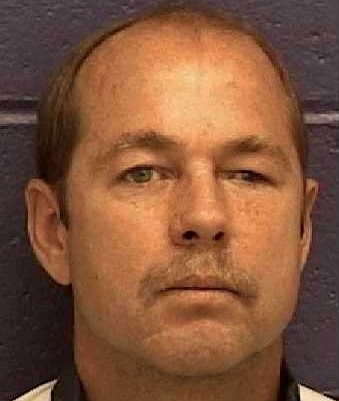
William Lamar Todd
Murderer Brian Kevin Rosenfeld
Murderer · USA · 1985
Brian Kevin Rosenfeld Brian Kevin Rosenfeld was sentenced to three concurrent l…
23 victims
Brian Kevin Rosenfeld
Murderer · USA · 1985
Brian Kevin Rosenfeld Brian Kevin Rosenfeld was sentenced to three concurrent l…
23 victims
 Yahweh ben Yahweh
Murderer · USA · 1980
Yahweh ben Yahweh was born and legally named Hulon Mitchell Jr. (October 27, 19…
23 victims
Yahweh ben Yahweh
Murderer · USA · 1980
Yahweh ben Yahweh was born and legally named Hulon Mitchell Jr. (October 27, 19…
23 victims
 Russell Ellwood
Murderer · USA · 1991
Russell Ellwood was a former taxi driver. Authorities suspected him of killing…
20 victims
Russell Ellwood
Murderer · USA · 1991
Russell Ellwood was a former taxi driver. Authorities suspected him of killing…
20 victims
 Robert Martines Perez
Murderer · USA · 1994
Name: Robert Martines Perez · Other name used in proceedings: Robert Martinez P…
15 victims
Robert Martines Perez
Murderer · USA · 1994
Name: Robert Martines Perez · Other name used in proceedings: Robert Martinez P…
15 victims
 Özgür Dengiz
Murderer · Turkey · 1997
Özgür Dengiz (born 1980) was a Turkish serial killer and cannibal. He was nickn…
3 victims
Özgür Dengiz
Murderer · Turkey · 1997
Özgür Dengiz (born 1980) was a Turkish serial killer and cannibal. He was nickn…
3 victims
 Roy Willard Blankenship
Murderer · USA · 1978
Roy Willard Blankenship was a white male born in 1955. He was incarcerated in G…
1 victim
Roy Willard Blankenship
Murderer · USA · 1978
Roy Willard Blankenship was a white male born in 1955. He was incarcerated in G…
1 victim
 Julius Ricardo Young
Murderer · USA · 1993
Julius Ricardo Young was executed by lethal injection in Oklahoma on January 14…
2 victims
Julius Ricardo Young
Murderer · USA · 1993
Julius Ricardo Young was executed by lethal injection in Oklahoma on January 14…
2 victims
 Anna Zwanziger
Murderer · Germany · 1808
Anna Margaretha Zwanziger was executed by a sword in Nuremberg on September 17,…
3 victims
Anna Zwanziger
Murderer · Germany · 1808
Anna Margaretha Zwanziger was executed by a sword in Nuremberg on September 17,…
3 victims
 Jessie Campbell
Murderer · USA · 2000
Jessie Campbell was sentenced to death on August 16, 2007. Jessie Campbell shot…
2 victims
Jessie Campbell
Murderer · USA · 2000
Jessie Campbell was sentenced to death on August 16, 2007. Jessie Campbell shot…
2 victims
- Gender
- male
- Country
- USA
- Location
- Harris County, Georgia, USA
- Date of birth
- 1956
- Age at first offence
- 32
- Characteristics
- armed robbery, alcohol, drug addict
- Victim profile
- Randy Churchwell, 33
- Method of murder
- Hitting with a hammer
- Date(s) of murder
- July 12, 1988
- Years active
- 1988
- Date of arrest
- 15 days after
- Status
-
Sentenced to death
Sentenced to death on May 15, 1989
Case details
William Lamar Todd was convicted by a jury in Harris County of murder and armed robbery. He was sentenced to death for the murder.
Todd’s only prior conviction was for simple possession of marijuana in Florida.
The trial court was the Harris Superior Court. The presiding judge was Judge McCombs.
Timeline
- July 12, 1988 — After the victim failed to appear for work, police were called to his home; the victim lay on the kitchen floor and had been bludgeoned to death.
- May 1, 1989 — The trial began.
- May 6, 1989 — The trial concluded.
- May 15, 1989 — Todd was sentenced to death.
- February 20, 1991 — A motion for new trial was filed and denied after hearing.
- March 25, 1991 — The case was docketed in this court.
- June 5, 1991 — The case was argued orally on June 5, 1991.
- November 27, 1991 — Decided.
- December 18, 1991 — Reconsideration denied.
The offence
On July 12, 1988, a co-worker found the body of Randy Churchwell, 33, at his home. Churchwell had been hit at least 12 times with a hammer.
Police found evidence near the body indicating someone had attempted, unsuccessfully, to clean the blood from all over the kitchen. A blood-soaked towel and bedspread were found near the body.
Churchwell’s car and many items from his home were missing.
Investigation
After the victim failed to appear for work, police were called to his home. The victim lay on the kitchen floor, and he had been bludgeoned to death.
Todd gave several statements to police. In his first statement, Todd denied knowing the victim. In a second statement, Todd admitted knowing him but denied killing him. In a third statement, Todd admitted killing the victim after a struggle. After it was pointed out to him that there were no signs of a struggle, Todd gave a fourth statement.
In his fourth statement, Todd said that he and his female companion intended to wait until the victim (with whom Todd was living) was asleep, tie him up, and take his car. Todd’s companion was tired of waiting in her hiding place (an old bus) and told Todd to hurry or she would leave.
Todd got a hammer, entered the victim’s kitchen, and hit him in the head until he “laid down,” and Todd “seen all that stuff coming out of his head.” (The autopsist testified that the victim had been hit in the head at least 12 times.)
Todd and his companion then took various of the victim’s possessions from his house, took his car, and drove off.
Todd and his companion later sold stolen items in Georgia and then drove to Birmingham, Alabama, where they sold more of the victim’s possessions and discussed trading the victim’s car for cocaine.
Todd got into an argument with one of the men with whom they were staying, hit him on the head with a hammer, shot him, and took his wallet.
Todd and his companion drove to Galveston, sold more of the victim’s possessions, got into more arguments, and were finally arrested.
The evidence supports the conviction for murder and armed robbery.
Arrest
Todd was arrested in Texas two weeks after Randy Churchwell was found. Todd and his female companion were still in possession of the victim’s car when they were arrested in Texas.
Notes in the case proceedings stated that the defendant was arrested on July 27, 1988, in Galveston, Texas.
Trial
Charges and conviction
Prosecutor closing arguments and motions for mistrial
Todd complained of the prosecutor’s closing arguments at the guilt and sentencing phases.
Todd objected to only one of the three portions of the prosecutor’s guilt-phase closing argument about which he complained. The court addressed two portions not objected to at trial and found no harm sufficient to overcome procedural default, even assuming the arguments were objectionable.
In the third instance, the prosecutor pointed out that the state had to take its witnesses as it found them and that this was a “dope-related homicide.” Todd objected that the prosecutor misstated the evidence. The characterization as “dope-related” was found to be eminently reasonable. The denial of Todd’s motion for mistrial was not error.
For the sentencing-phase closing argument, Todd objected to only one of the three portions. The court found no sufficient prejudice to overcome procedural default for the portions not objected to. The court also addressed the one objection, in which the prosecutor analogized Todd’s testimony about his refusal to shoot the man who may have killed Todd’s sister to a scene from a well-known movie where a murder suspect refused to kill a fly that had landed on his face so that his accusers might think he was “so harmless he wouldn’t even hurt a fly.”
The court did not agree that this argument introduced facts not in evidence and found the trial court did not err by denying the defendant’s motion for mistrial.
Todd contended the trial court erred by denying three motions for mistrial during the state’s cross-examination of him at the sentencing phase.
After the victim’s mother left the courtroom sobbing after Todd graphically described hitting the victim in the head and watching the blood “squirt[ ] out,” Todd moved for a mistrial. The court found the state’s cross-examination was not improper and that the trial court instructed the jury to disregard the incident. The court found no abuse of discretion in denying the motion for mistrial.
The second motion followed cross-examination that included:
- “. . . I realize this is your first capital case as a D.A.; but I am not a murder[er] and I don't just go around hitting and killing people.”
- “Q. Are you keeping score of my capital cases?”
- “A. I remember when you were elected. I think I was still in . . . jail here when you took the position as D.A. . . .”
- “Q. I believe I've been around and have been here with a lot more folks like you --”
- “A. As D.A.? Like me? Like me?”
- “Q. No, I'll withdraw that. I've not run across one like you.”
The defense objected “to the comparisons” and moved for a mistrial. The court did not explicitly rule and directed the parties to “get on with it.” The court concluded the prosecutor should not have compared the defendant to others in his experience, but any error was harmless, and the implicit denial of a mistrial was not an abuse of discretion.
- The third motion for mistrial occurred after redirect examination in which Todd claimed never to have been convicted of anything other than a traffic violation before being convicted of murder and armed robbery. On re-cross about a narcotics charge in Florida, Todd admitted having been arrested for possession of marijuana and paying a “misdemeanor fine.” The court found Todd’s testimony was not excludable merely because the state did not provide a certified copy, and the trial court did not err by overruling the objection and denying the motion for mistrial.
Todd contended improper “victim-impact” evidence and argument was presented. Booth v. Maryland was found to have been overruled, and Payne v. Tennessee was found applicable. The court found no merit to the enumeration of error.
Todd contended there was no improper curtailment of the death-qualification voir dire. The trial court’s rulings on death-qualification determinations of prospective jurors were found within the deference due the trial judge.
Todd argued jurors Duck and Feronne should have been excused. Feronne was not challenged and the court found no error by failing to excuse her sua sponte. Duck testified:
- “two weeks earlier, probably one day at lunch . . . when I first got my summons that I was on the jury . . . [I said] it was going to conflict with something we had at work and he heard me say it and he said, "Oh, I'm on that one too," and that was it. . . . I don't remember anything else.”
Feronne testified:
- “I knew I had jury duty but I thought it was for local criminal cases or whatever and a conversation came up that it had to do with a murder case . . . that took place last year and the person fled and they apprehended the suspect in Texas, I believe, something like that, and that's about all, really. Nothing about who did what or which, you know.”
The court found the minimal nature of the discussion and found the testimony did not support perjury or cause for excuse.
Todd argued prospective juror Duncan should have been excused for cause because she read the paper after being instructed not to. Duncan testified:
- “she saw the headline and that it was "hard not to glance at it," and that although she did not read the article "because we're not supposed to go into all that, but I guess I'm human, I just skimmed it." She also testified, "I don't think you can believe what you read in the newspaper."”
The court found no error in denying the motion to excuse Duncan for cause.
Todd also sought to excuse for cause a driver’s license examiner employed by the Department of Public Safety. The court found that the automatic excusal rule did not apply because the juror was not a full-time police officer, and the trial court did not err by concluding from the juror’s answers that he could be fair and impartial.
Pretrial statement and admissibility issues
The court found that a 24-page transcript of Todd’s pretrial statement originally furnished to him contained inaccuracies that were corrected in a supplemental transcript furnished during trial, but the statement was sufficiently complete to satisfy the requirements of OCGA 17-7-210.
Todd moved to exclude evidence of “similar crimes” committed by Todd in Birmingham. The state responded that events in Birmingham were part of a continuous criminal enterprise. The court agreed that the crimes complained of were not independent crimes.
The court found no error in admission of allegedly gruesome photographs, and no error in admission of the hammer used in the Birmingham assault.
The court also found no error in allowing the state to offer in evidence a piece of the victim’s skull that the state contended was relevant to prove “the size and character of the weapon used,” where the murder weapon was not recovered.
Todd argued he was entitled to jury instructions on lesser offenses of voluntary manslaughter and theft by taking; the court found he was not entitled.
Todd argued that the trial court should provide independent psychiatric assistance because of his mental condition; the court found no error because Todd failed to make a preliminary showing that his mental condition would be a significant factor at trial.
Jury findings and statutory aggravating circumstance
The court found no error in instructions concerning the statutory aggravating circumstance under OCGA 17-10-30 (b) (2). For purposes of that statutory circumstance, armed robbery was treated as a capital felony.
The jury found that the offense of murder was outrageously or wantonly vile, horrible and inhuman in that it involved depravity of mind and aggravated battery under OCGA 17-10-30 (b) (7). The evidence supported this finding.
The court found the death sentence was not imposed as a result of passion, prejudice, or other arbitrary factor. The court also found the death sentence was neither excessive nor disproportionate to penalties imposed in similar cases, and the similar cases listed in the Appendix supported the imposition of a death sentence in this case.
Sentencing
Todd was sentenced to death for the murder. The sentence followed the jury’s findings including that the murder involved depravity of mind and aggravated battery.
Appeals
Todd appealed to the Supreme Court of Georgia (listed as “TODD v. THE STATE. S91P0845. ( 261 Ga. 766 ) ( 410 SE2d 725 ) (1991) ”), and the decision was issued November 27, 1991 with reconsideration denied December 18, 1991.
Grounds raised
Todd’s enumerations of error included complaints about prosecutor closing arguments at the guilt and sentencing phases, denial of motions for mistrial, alleged improper victim-impact evidence, alleged curtailment of death-qualification voir dire, issues about completion of the pretrial statement, admission of similar crimes evidence, admission of photographs and the hammer, admission of a piece of the victim’s skull, denial of lesser-offense instructions, denial of independent psychiatric assistance, jury instructions on statutory aggravating circumstance, and ineffective assistance of counsel.
The Supreme Court of Georgia addressed each enumeration and denied relief.
Ineffective assistance of counsel
Todd contended he was denied effective assistance of counsel at trial. The two attorneys who represented him at trial were relieved after trial, and a new attorney was appointed to represent Todd on his motion for new trial and on appeal.
At the motion for new trial hearing, after hearing evidence, the trial court found against Todd’s claim of ineffectiveness.
The court also declined to remand on the issue of the effectiveness of post-conviction counsel, declining the invitation to conduct further hearing. The court stated the trial court had investigated sufficiently and found post-conviction counsel competent after hearing from Todd and his counsel about qualifications, experience, and preparation.
The court also addressed Todd’s supplemental contention that the trial judge should have recused herself from the hearing on the motion for new trial. Todd contended an assistant district attorney during Todd’s trial was employed as a judicial law clerk during the pendency of his motion for new trial. The court found no grounds for recusal and no basis for remand.
Outcome
The evidence supported the conviction for murder and armed robbery. Todd received a sentence of death, and the appellate court did not find that the death sentence was imposed as the result of passion, prejudice, or other arbitrary factor. The appellate court found the sentence was neither excessive nor disproportionate to penalties in similar cases.
Other details
Parties and counsel
In the appeal, the appellee was represented by Douglas C. Pullen, District Attorney; Edward F. Berry, Peter B. Hoffman, Assistant District Attorneys; Michael J. Bowers, Attorney General; Susan V. Boleyn, Senior Assistant Attorney General; and Robert D. McCullers, Staff Attorney.
Todd was represented by David L. Roberts.
Justice Benham’s dissent (as stated)
APPENDIX. BENHAM, Justice, dissenting.
Benham stated:
- “Because I am convinced that the argument of the prosecuting attorney was so flagrantly improper as to demand a new trial for appellant, I must dissent.”
Benham’s dissent included:
- A criticism that during the sentencing phase argument the district attorney told the jury:
- “we know he's been examined by a psychologist [and that] [w]e have no evidence of that [mental instability]. So you would have to assume that there is no mental pathology that led to this . . . attack.”
Benham characterized this remark as impermissible because it stated facts not in evidence and as a deliberate misstatement of fact.
- A criticism of references to religion, Christianity, and the Christian Bible during the prosecutor’s argument and quoted multiple statements attributed to a U.S. District Court for the Northern District of Georgia and other courts. The dissent included the quoted observations:
- “It is well settled that religion may not play a role in the sentencing process. [Cits.] . . . The jury which sentenced [appellant] had a duty to apply the law of the State of Georgia as given by the trial judge, not its own interpretation of the law or its own interpretation of precepts of the Bible, in determining whether [appellant] should live or die. . . . To the average juror, Webster's Dictionary may be no more than a reference book, . . . but the Bible is an authoritative religious document and is different not just in degree, although this difference is pronounced, but in kind. . . . As the United States Supreme Court stated in Godfrey v. Georgia, 446 U. S. 420, 428, [(100 SC 1759, 64 LE2d 398) (1980)]: "If a State wishes to authorize capital punishment, it has a constitutional responsibility to tailor and apply its law in a manner that avoids the arbitrary and capricious infliction of the death penalty. It must channel the sentencer's discretion by 'clear and objective standards' that provide 'specific and detailed' guidance, 'and that make rationally reviewable the process for imposing a sentence of death.' " As the Supreme Court further stated: "A capital sentencing scheme must, in short, provide a 'meaningful basis for distinguishing the few cases in which the penalty is imposed from the many in which it is not.' "[Cit.] Georgia's death penalty statute lays out specific guidelines for separating "the many" from "the few." [Cit.] The Bible, however, in some places explicitly rejects the drawing of distinctions in murder cases: 'Whoso sheddeth man's blood, by man shall his blood be shed: for in the image of God made he man." [Cits.] Whereas the Bible commands that "thine eye shall not pity; but life shall go for life, eye for eye, tooth for tooth, hand for hand, foot for foot," [cit.] it is the law in this Circuit that arguments which disparage mercy as a valid sentencing consideration "strike at the most important component of a capital jury's discretion favoring capital defendants." [Cits.] Especially where, as here, such arguments come from a source which "would likely carry weight with laymen and influence their decision," [cit.] the effect may be highly prejudicial to the defendant, and the confidence in the reliability of the jury's decision which must guide imposition of the death penalty may be undermined. [Jones v. Kemp, 706 FSupp. 1534, 1559 (N.D. Ga. 1989).]”
The dissent also quoted a portion attributed to the prosecutor:
- “Old Testament Retribution.”
Additional Bible quotations and descriptions in the dissent included:
- “Blessed are the merciful for they shall obtain mercy,”
- “He who sheddeth the blood of man, by man shall his blood be shed,”
- “Christians are a bunch of wimps that will not enforce the laws of the Bible because Jesus came to forgive us of our sins,”
- and quotations attributed to Bible verses:
- “Whoso sheddeth man's blood, by man shall his blood be shed: for in the image of God made he man.”
- “thine eye shall not pity; but life shall go for life, eye for eye, tooth for tooth, hand for hand, foot for foot.”
- A criticism based on Caldwell v. Mississippi and alleged indirect references to future pardon:
- Benham stated that the prosecuting attorney made a reference to the possibility of a future pardon for appellant and argued that this should not be done.
Benham also stated:
- “During argument to the jury, defense counsel did not object to the three instances of improper argument I have discussed above.”
- “Consequently, I would consider the argument, find the allowance of the argument to be constitutional error, and vacate the death sentence and remand with direction to conduct a new sentencing hearing.”
Benham ended with:
- “Given those considerations, I must respectfully dissent from the majority's affirmance of the sentence in this case.”
Notes in the decision (as stated)
The decision included numbered notes. They stated, among other procedural details:
- The defendant was arrested on July 27, 1988, in Galveston, Texas; the trial began on May 1, 1989, and concluded on May 6, 1989; a motion for new trial was filed and denied after hearing on February 20, 1991; the case was docketed in this court March 25, 1991, and argued orally on June 5, 1991.
- The decision observed that when a defendant offers mitigation evidence of post-arrest church attendance and activities, the prosecutor could raise questions about the genuineness of “jail-house” religious conversion.
- The decision stated that, contrary to Benham’s dissent, the prosecutor’s argument that “We know he's been examined by a psychologist” was factually supported by the defendant’s own testimony and was neither a misstatement of the evidence nor a statement of facts not in evidence.
- The decision included an additional remark about the strong presumption that trial counsel performed effectively and how failure to object affected appellate review.
- “DECIDED NOVEMBER 27, 1991 -- RECONSIDERATION DENIED DECEMBER 18, 1991.”
Spotted an error, or have more information about this case?