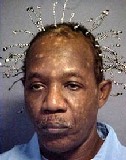
Julius Ricardo Young
Murderer Brian Kevin Rosenfeld
Murderer · USA · 1985
Brian Kevin Rosenfeld Brian Kevin Rosenfeld was sentenced to three concurrent l…
23 victims
Brian Kevin Rosenfeld
Murderer · USA · 1985
Brian Kevin Rosenfeld Brian Kevin Rosenfeld was sentenced to three concurrent l…
23 victims
 Russell Ellwood
Murderer · USA · 1991
Russell Ellwood was a former taxi driver. Authorities suspected him of killing…
20 victims
Russell Ellwood
Murderer · USA · 1991
Russell Ellwood was a former taxi driver. Authorities suspected him of killing…
20 victims
 Robert Martines Perez
Murderer · USA · 1994
Name: Robert Martines Perez · Other name used in proceedings: Robert Martinez P…
15 victims
Robert Martines Perez
Murderer · USA · 1994
Name: Robert Martines Perez · Other name used in proceedings: Robert Martinez P…
15 victims
 Billy Frank Vickers
Murderer · USA · 1993
Billy Frank Vickers Vickers was executed by lethal injection in Texas on Januar…
14 victims
Billy Frank Vickers
Murderer · USA · 1993
Billy Frank Vickers Vickers was executed by lethal injection in Texas on Januar…
14 victims
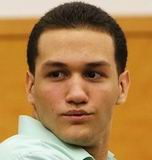 John Katehis
Homicide · USA · 2009
John Katehis was a 16-year-old and was tried for the fatal stabbing of radio jo…
1 victim
John Katehis
Homicide · USA · 2009
John Katehis was a 16-year-old and was tried for the fatal stabbing of radio jo…
1 victim
 Steen Christensen
Murderer · Finland · 1997
Steen Viktor Christensen (born 1964) was a Danish criminal. He was sentenced in…
2 victims
Steen Christensen
Murderer · Finland · 1997
Steen Viktor Christensen (born 1964) was a Danish criminal. He was sentenced in…
2 victims
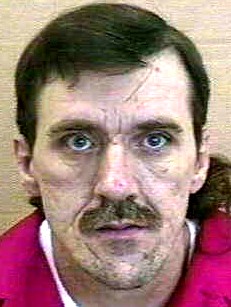 John Hardy Rose
Murderer · USA · 1991
John Hardy Rose was convicted of capital murder for the murder of Patricia Stew…
1 victim
John Hardy Rose
Murderer · USA · 1991
John Hardy Rose was convicted of capital murder for the murder of Patricia Stew…
1 victim
 Anthony Barbaro
Homicide · USA · 1974
December 30, 1974 — Anthony F. Barbaro left his house with his mother's car, we…
3 victims
Anthony Barbaro
Homicide · USA · 1974
December 30, 1974 — Anthony F. Barbaro left his house with his mother's car, we…
3 victims
 Robert Donald Atworth
Murderer · USA · 1995
Robert Donald Atworth was executed by lethal injection in Texas on December 14,…
1 victim
Robert Donald Atworth
Murderer · USA · 1995
Robert Donald Atworth was executed by lethal injection in Texas on December 14,…
1 victim
 Nanon Williams
Homicide · USA · 1992
Nanon Williams was sentenced to death in Texas for the 1992 shooting death of A…
1 victim
Nanon Williams
Homicide · USA · 1992
Nanon Williams was sentenced to death in Texas for the 1992 shooting death of A…
1 victim
- Gender
- male
- Country
- USA
- Location
- Tulsa County, Oklahoma, USA
- Date of birth
- February 17, 1949
- Age at first offence
- 44
- Characteristics
- revenge, alcohol, drug addict, abuse
- Victim profile
- Joyland Morgan, 20 ( his ex-girlfriend's daughter) and her son Kewan, 6
- Method of murder
- Beating with a baseball bat
- Date(s) of murder
- October 1, 1993
- Years active
- 1993
- Date of arrest
- —
- Status
-
Executed
Executed by lethal injection in Oklahoma on January 14, 2010
Case record: Julius Ricardo Young
Outcome
Julius Ricardo Young was executed by lethal injection in Oklahoma on January 14, 2010.
Young proclaimed his innocence before the lethal injection began. He was pronounced dead at 6:27 p.m. at the Oklahoma State Penitentiary in McAlester. The lethal drugs began to flow at 6:21 p.m., and Young took a few last gasps of air before falling silent.
Young’s mother, Alene Young, watched the execution from an adjacent viewing room and was described as sobbing. A prison guard told her she had to remain seated behind the glass.
Young’s final statement included denials that he was at the scene of the 1993 killings and that he had taken the lives of Joyland Morgan and her son Kewan. He also said that “My attorney failed me. It’s a tragedy.” He told his family, “I love you all.” Young also told the Oklahoma Pardon and Parole Board during a clemency hearing in December: “I cannot confess to something I did not do.”
A state panel previously rejected Young’s final plea to spare his life, voting 4-1 to deny clemency for Young. The panel rejected Young’s request despite his claim that he was innocent and after he had exhausted all of his appeals. Young was scheduled to be executed on January 14.
Sixteen members of the Morgans’ family and friends witnessed the execution, including Joyland’s brother, Deon Morgan. Deon Morgan described the life his family wanted for Kewan, who was 6 years old when he was killed. Deon Morgan said, “He didn’t get to grow up,” and described missing experiences including “riding a bicycle, driving cars, swimming” and “a family pet.”
Young requested a final meal of sirloin steak, a baked potato, onion rings, a tossed salad, and a Coke.
Background
Julius Ricardo Young was convicted in Oklahoma state court of murdering his girlfriend’s daughter and her 6-year-old son.
The murders occurred in 1993 in the victims’ Tulsa apartment.
Young was also characterized in proceedings as having a history that included alcohol use and as an inmate who had taught other inmates to read. Young’s attorney described him as an ideal inmate who had never been cited for misconduct.
Young’s mother, Alene Young, supported clemency and said she believed her son was innocent and that his trial was not fair.
Joyland Morgan’s mother, Joyslon Morgan Roland, told the Tulsa World that the execution would bring closure and that “Once this is over, I will never bring this up anymore.” Roland said she supported the state’s carrying out the execution, and that it ensured Young would never be released from prison. Roland also said, “That was my only daughter and her only son.”
Joyland Morgan’s father, Willie Walker, described taking issue with Young’s final words and said Young should have asked for forgiveness instead of denying the murders.
Alene Young said she believed her son was innocent and that he was an ordained minister who once pastored a church.
The offence
Young was convicted of the first degree murders of Joyland Morgan and her young son, Kewan Morgan.
Joyland Morgan was 20 years old. Kewan Morgan was 6 years old at the time of the killings.
The bodies were found in separate rooms of their apartment in the 100 block of East 16th Street. The murders occurred on October 1, 1993.
Prosecutors stated that Young was upset that Joyland Morgan’s mother had recently ended their relationship. Prosecutors said Young broke into the family’s apartment and beat Joyland Morgan and Kewan with a baseball bat.
During trial, evidence indicated that Young broke into the family’s home and beat the woman and child with a blunt instrument. The murder weapon was never found.
Joyland Morgan’s wounds included defensive wounds to her hands and arms and at least thirteen blows to her face and head. Those blows broke her jaw, tore open her scalp, and fractured her skull. She was found slumped against a living room wall.
Kewan Morgan died in his bed and sustained massive head fractures caused by two separate blows.
Every night before going to bed, Joyland Morgan secured her front door with two locks and a security chain. The intruder opened both locks with a key and pushed through the security chain, breaking it. A piece of the broken chain was missing from the apartment.
No eye-witnesses were found. However, a downstairs neighbor was awakened at 3:40 a.m. by a single loud bump from Morgan’s apartment.
Joyslon Edwards testified she saw a baseball bat in Young’s trunk the night before the murders, but that it was gone the next day. Edwards also testified Young always drove her to work, and that on the day of the murders he arrived at 4:15 a.m., earlier than usual. Edwards asked Young for change so she could use vending machines at work, and later saw a piece of security chain in Young’s pocket similar to the one installed on her daughter’s door.
Later that day when Edwards learned of the murders, she reported the evidence to police.
Young lived with his mother at the time. Police obtained a warrant to search the mother’s home.
Police recovered shoes described by Edwards that bore a visible spot of blood. Young accompanied police during the search. Young volunteered that the drop was fish blood. DNA testing revealed the drop was human blood consistent with that of Joyland and Kewan Morgan.
Police also recovered a freshly laundered shirt that tested positive for blood when exposed to luminal.
Investigation
Police conducted a warranted search of Young’s residence, recovering evidence including shoes with a visible spot of blood and a freshly laundered shirt that tested positive for blood when exposed to luminal.
Young accompanied the police during the search and said the blood drop was fish blood.
DNA testing revealed the blood was human blood consistent with Joyland and Kewan Morgan.
Trial
Young was tried by jury in Tulsa County District Court in Case No. CF-94-937.
Following the first-stage proceedings, the jury found Young guilty of two counts of first degree murder and one count of first degree burglary.
The state district court conducted sentencing proceedings on September 28 and October 4, 1995. Young’s lead counsel asked to sentence Young to life imprisonment without the possibility of parole and stated mitigation witnesses “had been advised without [his] permission, [his] request or [his] recommendation not to appear,” and that Young had determined not to take the stand in his own defense. Young addressed the state district court and asserted his factual innocence of the crimes.
During the second-stage proceedings, the prosecution presented victim impact testimony from a relative of the two victims. Young elected not to testify and did not present mitigation witnesses. His counsel entered into a stipulation read to the jury that Young was “42 years of age and ... ha[d] been a life-long resident of Tulsa,” had family and relatives who loved him, had been a minister in a church for 11 years, and was a veteran who had served in the U.S. Army and was honorably discharged.
At the conclusion of the second-stage proceedings, the jury found the existence of three aggravating circumstances and set Young’s punishment at death for the two murder convictions. For the burglary conviction, the jury fixed Young’s punishment at fifty years’ imprisonment.
Presiding Judge Clifford Hopper sentenced Young in accordance with the jury’s recommendations.
Jury selection and legal issues on appeal
On direct appeal, the Oklahoma Court of Criminal Appeals discussed voir dire and juror dismissal issues. Young argued the trial court erred by failing to dismiss Veniremen Hill and Wnuck for cause. The appellate court found error in failing to remove those two veniremen for cause, but concluded counsel cured the error by peremptory challenge and that Young did not meet his burden to prove prejudice.
The appellate court addressed challenges including validity of the search warrant, admission of PCR-based DNA evidence, instructions on first degree burglary, waiver of mitigation evidence (via stipulation), and victim impact evidence.
The appellate court also addressed a lack of notice of an aggravating circumstance as it related to Count II, resulting in striking an aggravator from Count II and reweighing aggravating and mitigating evidence for that count.
The appellate court struck the “heinous, atrocious or cruel” aggravating circumstance from Count II due to lack of notice. It also struck the “continuing threat” aggravating circumstance from both counts due to insufficient evidence, leaving the death sentences supported by the remaining valid aggravating circumstances.
The appellate court affirmed the Judgment and Sentence. It also stated that the death sentence was reviewed under the Oklahoma Legislature’s mandatory sentence review framework and concluded the sentences were not the product of passion, prejudice, or other arbitrary factor.
Quotes from the final statements and clemency proceedings
Young told the Oklahoma Pardon and Parole Board during clemency proceedings:
“I cannot confess to something I did not do.”
Young made the following statements as he lay on a gurney awaiting the effects of the lethal injection:
“I am an innocent man. This is a miscarriage of justice,”
“I didn’t take the lives of Joyland Morgan and her son Kewan.”
“My attorney failed me. It’s a tragedy. I’m an innocent man. To my family, I love you.”
Sentencing
The jury set punishment at death for each of the murders and fifty years imprisonment for the burglary. Presiding Judge Clifford Hopper sentenced Young in accordance with this recommendation.
The appellate review resulted in the striking of certain aggravating circumstances and a reweighing of aggravating and mitigating evidence by the Oklahoma Court of Criminal Appeals. The court concluded the death penalty remained supported beyond a reasonable doubt for both counts and affirmed the Judgment and Sentence.
Appeals
Young appealed his convictions and sentences.
On direct appeal, the Oklahoma Court of Criminal Appeals discussed issues including:
- failure to excuse Veniremen Hill and Wnuck for cause,
- validity of the search warrant and alleged misleading statements,
- admissibility of PCR-based DNA evidence,
- jury instructions on first degree burglary,
- issues arising in the second stage of trial including waiver of mitigation evidence via stipulation and challenges to victim impact evidence,
- lack of notice of the “heinous, atrocious or cruel” aggravating circumstance as to Count II,
- sufficiency and constitutionality challenges to the “continuing threat” aggravating circumstance,
- reweighing of remaining valid aggravating factors and mitigating evidence,
- mandatory sentence review and a determination that the death sentences were not imposed under impermissible conditions.
The court affirmed.
Young sought clemency. The Oklahoma Pardon and Parole Board denied clemency, voting 4-1.
Young’s appeals were exhausted.
Other details
Young was described as having been convicted of two counts of first degree murder and one count of first degree burglary and sentenced to death for the murders and fifty years’ imprisonment for burglary.
Young’s attorney stated prosecutors used outdated blood testing to link Young to the killings and said the blood evidence was later destroyed when a freezer in the Tulsa Police Department’s evidence room malfunctioned, precluding further testing.
Young’s attorney, Steve Presson, said Young had been an ideal inmate who had never been cited for misconduct and had taught other inmates to read.
Prosecutors argued the evidence against Young was strong and noted that the jury’s verdict had been upheld by various appellate courts.
Assistant Attorney General Seth Branham made the statement: “I would submit to you, this is not the flimsy circumstantial case they would have you believe.”
Morgan’s mother, Joyslon Morgan Roland, told the board that Young often became angry when he drank. Roland said: “Julius had some mean streaks in him,” and “I told him I was going to break off the relationship because it was coming between me and my kids.”
In addition to the named victims, witnesses and family members mentioned in the proceedings included Deon Morgan, Alene Young, Willie Walker, Joyslon Edwards, Willie Walker, and Detective Griggs, who testified about statements made by Alene Young during trial-related proceedings.
Young’s final meal request included sirloin steak, a baked potato, onion rings, a tossed salad, and a Coke.

Spotted an error, or have more information about this case?