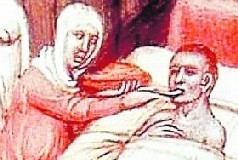
Anna Zwanziger
Murderer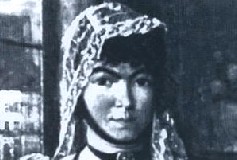 Sophie Charlotte Elisabeth Ursinus
Murderer · Germany · 1798
Sophie Charlotte Elisabeth Ursinus Sophie Charlotte Elisabeth Ursinus was sente…
3 victims
Sophie Charlotte Elisabeth Ursinus
Murderer · Germany · 1798
Sophie Charlotte Elisabeth Ursinus Sophie Charlotte Elisabeth Ursinus was sente…
3 victims
 Sabine Hilschenz
Murderer · Germany · 1988
Sabine Hilschenz was a German woman convicted of infanticide involving eight of…
9 victims
Sabine Hilschenz
Murderer · Germany · 1988
Sabine Hilschenz was a German woman convicted of infanticide involving eight of…
9 victims
 Sabine Radmacher
Murderer · Germany · 2010
Sabine Radmacher Sabine Radmacher was fatally shot by special police units the…
3 victims
Sabine Radmacher
Murderer · Germany · 2010
Sabine Radmacher Sabine Radmacher was fatally shot by special police units the…
3 victims
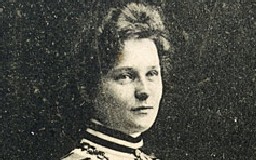 Grete Beier
Murderer · Germany · 1907
Marie Margarethe (Grete) Beier was executed by guillotine on July 23, 1908. She…
1 victim
Grete Beier
Murderer · Germany · 1907
Marie Margarethe (Grete) Beier was executed by guillotine on July 23, 1908. She…
1 victim
 Joseph Paul Franklin
Serial killer · USA · 1977
Joseph Paul Franklin (April 13, 1950 – November 20, 2013) was an American seria…
15 victims
Joseph Paul Franklin
Serial killer · USA · 1977
Joseph Paul Franklin (April 13, 1950 – November 20, 2013) was an American seria…
15 victims
 Linda & Charlotte Mulhall
Murderers · Ireland · 2005
Linda Mulhall — sister of Charlotte Mulhall; defendant; sentenced to a 15-year…
1 victim
Linda & Charlotte Mulhall
Murderers · Ireland · 2005
Linda Mulhall — sister of Charlotte Mulhall; defendant; sentenced to a 15-year…
1 victim
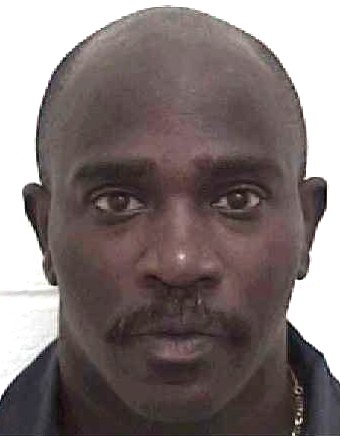 Keith Leroy Tharpe
Murderer · USA · 1990
Keith Leroy Tharpe, 39, was sentenced to death in January 1991 in Jones County…
1 victim
Keith Leroy Tharpe
Murderer · USA · 1990
Keith Leroy Tharpe, 39, was sentenced to death in January 1991 in Jones County…
1 victim
 Nicholas Ingram
Murderer · USA · 1983
Nicholas Lee Ingram was convicted of the June 3, 1983 malice murder of J.C. Saw…
1 victim
Nicholas Ingram
Murderer · USA · 1983
Nicholas Lee Ingram was convicted of the June 3, 1983 malice murder of J.C. Saw…
1 victim
- Gender
- female
- Country
- Germany
- Location
- Bavaria, Germany
- Date of birth
- August 7, 1760
- Age at first offence
- 48
- Characteristics
- poisoner, abuse
- Victim profile
- Her employers
- Method of murder
- Poisoning (arsenic)
- Date(s) of murder
- 1808 - 1809
- Years active
- 1808–1809
- Date of arrest
- October 16, 1809
- Status
-
Executed
Executed by a sword in Nuremberg on September 17, 1811
Case record: Anna Zwanziger
Identity
Anna Margaretha Zwanziger was executed by a sword in Nuremberg on September 17, 1811. She was also known as Anna Zwanzinger and as Nannette Schonleben. She was born Anna Schonleben in August 1760.
Employment and alleged scheme
From 1801 until 1811, Zwanziger was employed as a housekeeper at the home of several judges in Bavaria. She used arsenic, which she referred to to as “her truest friend”. She poisoned her employers with arsenic and then nursed them back to health to gain their favour.
The offence (poisonings and deaths)
Zwanziger poisoned three people and attempted to poison several others. She killed four people, including a baby. Four others survived.
One narrative described her working as a housekeeper for Glaser in Kasendorf in March 1808, after Glaser, aged fifty, had for several years been living apart from his wife. Zwanziger undertook to bring about a reconciliation between Glaser and his wife, and she wrote letters to the wife. She engaged friends on both sides and sent money to a Roman Catholic priest requesting that he would say a mass for the success of her enterprise. After the wife was persuaded to reunite with Glaser, she became ill and died on the 26th of August, exactly four weeks after her arrival at Kasendorf.
After the death of Glaser’s wife, Zwanziger transferred to the service of a gentleman called Grohmann who resided at Sanspareil. Grohmann was described as a fine young man, only twenty-eight years of age, with frequent fits of gout. He later made advances to a lady who accepted his proposals and made arrangements for his marriage. At the point when the marriage was about to be solemnized, Grohmann became suddenly ill, and he died. In another account, Grohmann was said to have been afflicted in spring 1809 with diarrhoea, vomiting, and severe abdominal pain, and he died on May 8, 1809. Grohmann’s death was put down to natural causes due to his long-term health issues.
Zwanziger later entered the service of a lady named Gebhard, who was pregnant and needed help during confinement. A baby was born on May 13, 1809 and the mother and daughter were described as well. Three days later, Frau Gebhard became extremely unwell, began vomiting profusely, had severe loose bowel motions, became completely bed-ridden, and died on May 20, 1809. In one account, Frau Gebhard’s last words were: “Merciful Heaven! You have given me poison” to Anna. In another narrative, after the child was born, the lady was seized with vomitings and after enduring much pain she died.
In the account that included an exhumation, Zwanziger was accused of poisoning additional people including guests and servants after being dismissed. On August 25, 1809, Justice Gebhard dined with two guests, Mr Beck and Mr Alberti. After dinner, the two guests were both stricken with a similar illness, and a messenger who had stayed for a glass of wine also suffered from the gastro illness. A porter named Johnny Krause stopped for a glass of port and only had a small sip; he noticed a white sediment and did not drink any more from the snifter. Others in the household also became sick. A kitchen maid, Barbara Waldmann, became ill after a cup of coffee made by Anna. It was said that nobody had seen Anna put poison in any vessels, and that it remained conjecture.
Another narrative described events around a party assembled at Mr. Gebhard’s to play at bowls on the 1st of September, 1809, where the whole company became ill after drinking beer that Nannette had brought from the cellar. Mr. Gebhard consented to part with her afterward, gave her excellent testimonials, and behaved in a liberal manner.
On September 3, 1809, Anna decided to do last-minute chores before leaving her employment. She took the salt-box from the kitchen cellar and filled it with salt from the barrel in Gebhard’s room. Barbara the kitchen maid saw Anna do this. Zwanziger also gave Barbara and another maid a cup of coffee, and the five-month old Gebhard baby some milk and a cookie; all of it was laced with poison. After she left, the three were said to have become ill. The household was said to have known for sure that Anna was responsible.
A kitchen maid called Barbara remembered the salt barrel, and it was said that the police were called and the salt was tested, containing a high amount of arsenic. In one account, it also said that after Anna’s escape, she filled every salt shaker and sugar container in the household with generous doses of arsenic.
In the trial account, it stated that on September 1, 1809, Gebhard dismissed Anna from his service after the guests were ill. Another narrative stated that on October 18, 1809 Anna was arrested after she had sent several letters to the Gebhard household extolling her love for the dead baby and saying she was willing to forget the wrongs she had suffered and was ready to resume her duties.
Investigation and evidence
After the illness following the poisonings, the police were called. The salt was tested and contained a high amount of arsenic. When Anna was arrested, two more packets of arsenic were found in her possession.
Investigators began investigating other deaths of her employers. In one account, Frau Glaser’s body was exhumed and arsenic was found in her body. In another narrative, it also said that the bodies of the persons she had murdered were disinterred and presented ample evidence of her guilt.
Arrest and confession
Zwanziger was arrested shortly after the salt was tested and arsenic was found. On October 18, 1809 she was also described as being arrested after sending letters to the Gebhard household.
She confessed to the crimes. One quoted confession was: “Yes, I killed them all and would have killed more if I had the chance.” Another phrasing included: “Yes, I killed them all and would have killed more if I had the chance.” She referred to arsenic as her “truest friend”.
Trial
Her trial commenced on the 16th April, 1810. She first denied everything. When poison was found in the stomachs of her victims, she confessed to having twice administered arsenic to the deceased Frau Glaser. After making this avowal, she fell into violent convulsions and had to be removed from the court.
During the interval between her trial and execution, she wrote a sketch of her own biography. It stated that at that period she was about fifty years of age.
Sentencing and execution
Zwanziger was judged guilty of murder and sentenced to death. She was executed by a sword in Nuremberg on September 17, 1811. Before she was beheaded, she said it was probably a good thing she was to be executed, as she did not think she would be able to stop.
In one narrative, it also stated that before being executed, she told her executers: “It is perhaps better for the community that I should die, as it would be impossible for me to give up the practice of poisoning people.” The narrative further stated that she took a great liking to the advocate that defended her, and requested that, if it were permitted, she might be allowed to visit him from the other world.
The narrative concluded that she died without repentance and took leave of the sheriff and executioner on the scaffold with a courteous bow as if she were retiring from a morning visit.
Other details
Zwanziger had a life history described across the accounts as beginning with her being an orphan and moving between different family members by 1765. At age 10 she was sponsored by a wealthy guardian and received a decent education. At age 15 she was married to a drunken 30 year old lawyer called Zwanziger, arranged by her guardian. They had two children together and the marriage was described as far from happy.
She was described as becoming a prostitute at one point to support the family due to her husband’s inability to work because of his alcoholism. A later account described that when they did finally divorce, they remarried the next day.
In 1796 Zwanziger died, leaving a 33 year old Anna to look after the two children alone. She attempted to open her own store by failed. She fell back into prostitution but fell pregnant; it stated that the baby was sent for adoption by died at an orphanage.
The biographical account also included details of her early writings, including verbatim statements from her sketch of biography:
“I cannot describe what I feel; there is a struggle within my heart that I am unable to account for! can it be a forewarning of evil?”
It also included quoted lines tied to the reconciliation and her biography:
“The widow’s hand Has wove the hand.”
“to bring luck to those she left behind.”
“Merciful Heaven! You have given me poison” to Anna.
Additional verbatim lines from the biography included:
“My first book,”
“The Sorrows of Werter.”
“Pamela and ” Emilia Galotte.”
It also included statements about opening a vein and suicide attempts:
“still im hause ;”
“she feared her husband as the child fears the rod.”
“My life’s so sad that I must end it,”
And it included the confession already quoted:
“Yes, I killed them all and would have killed more if I had the chance.”
“It is perhaps better for the community that I should die, as it would be impossible for me to give up the practice of poisoning people.”
One narrative described a letter sent to Mr. Gebhard by the accused while she was travelling, expressing conviction that the infant would be unhappy without her, and that he would be under the necessity of recalling her. It also described her being driven from house to house because people objected to receive her under their roof.
A further account stated that she was the widow of a notary whose name was Zwanziger, but that she had dropped this appellation and assumed another name.
The case narratives also included quoted descriptions and statements attributed to others about her appearance and demeanour, including the phrasing:
“ugly, stunted, without attraction of face, figure, speech... this misshapen woman whom some people likened to a toad,”
Finally, a publication listing at the end of one account included:
- World Famous Gaslight Murders: Colin and Damon Wilson, Magpie books
- Michael Newton - An Encyclopedia of Modern Serial Killers - Hunting Humans
- Catherine Crowe, Light and Darkness: or, The Mysteries of Life (1850, London: Henry Colburn, pp. 64-85)

Spotted an error, or have more information about this case?