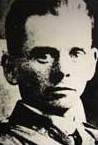
Francis Percy Toplis
Murderer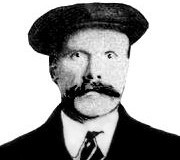 Albert Burrows
Murderer · United Kingdom · 1920
Albert Burrows (also named Albert Edward Burrows): married farm labourer who to…
4 victims
Albert Burrows
Murderer · United Kingdom · 1920
Albert Burrows (also named Albert Edward Burrows): married farm labourer who to…
4 victims
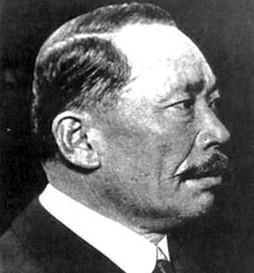 Lock Ah Tam
Murderer · United Kingdom · 1925
Lock Ah Tam was 54 when he killed his wife and two daughters. He had been a suc…
3 victims
Lock Ah Tam
Murderer · United Kingdom · 1925
Lock Ah Tam was 54 when he killed his wife and two daughters. He had been a suc…
3 victims
 Andrea Matteucci
Serial killer · Italy · 1980
Andrea Matteucci (also known as “Mostro di Aosta”) was an Italian serial killer…
4 victims
Andrea Matteucci
Serial killer · Italy · 1980
Andrea Matteucci (also known as “Mostro di Aosta”) was an Italian serial killer…
4 victims
 Lydia Sherman
Murderer · USA · 1864
Lydia Sherman was also known as “The Derby Poisoner.” She was born in 1824 in B…
10 victims
Lydia Sherman
Murderer · USA · 1864
Lydia Sherman was also known as “The Derby Poisoner.” She was born in 1824 in B…
10 victims
 Adrian Bayley
Murderer · Australia · 2012
Adrian Ernest Bayley was convicted for the rape and murder of Jill Meagher. · S…
1 victim
Adrian Bayley
Murderer · Australia · 2012
Adrian Ernest Bayley was convicted for the rape and murder of Jill Meagher. · S…
1 victim
 Cesar Armando Librado Legorreta
Serial killer · Mexico · 2011
Cesar Armando Librado Legorreta was a Mexican serial offender who worked as a c…
6 victims
Cesar Armando Librado Legorreta
Serial killer · Mexico · 2011
Cesar Armando Librado Legorreta was a Mexican serial offender who worked as a c…
6 victims
 Eric Alan Stoneman
Homicide · USA · 2005
Eric Alan Stoneman was the 14-year-old defendant who was sentenced in December…
1 victim
Eric Alan Stoneman
Homicide · USA · 2005
Eric Alan Stoneman was the 14-year-old defendant who was sentenced in December…
1 victim
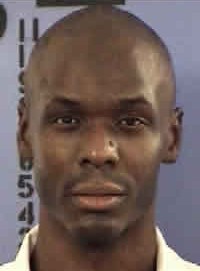 Howard Milton Belcher
Murderer · 2002
Howard Milton Belcher was 26 years old when he was formally charged in the deat…
4 victims
Howard Milton Belcher
Murderer · 2002
Howard Milton Belcher was 26 years old when he was formally charged in the deat…
4 victims
- Gender
- male
- Country
- United Kingdom
- Location
- Andover, Hampshire, England, United Kingdom
- Date of birth
- August 22, 1896
- Age at first offence
- 24
- Characteristics
- robbery
- Victim profile
- Sidney George Spicer (taxicab driver)
- Method of murder
- Shooting
- Date(s) of murder
- April 25, 1920
- Years active
- 1920
- Date of arrest
- —
- Status
-
Died in custody
Killed during a shoot-out with the police on June 6, 1920
Overview
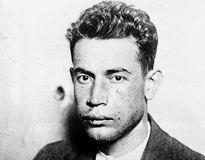
Francis Percy Toplis (August 22, 1896 – June 6, 1920) was a British criminal and imposter during World War I. He is sometimes claimed to have taken part in the Etaples Mutiny as "The Monocled Mutineer" during the war, but some researchers disputed this claim.
Background
Francis Percy Toplis was born in Chesterfield, Derbyshire, and was sometimes described as born at Sanforth Street, Chesterfield. His parents were Herbert Toplis and Rejoice Elizabeth Toplis (née Webster). His family life was not easy, and his father had a succession of poorly paid jobs.
Toplis was raised by his grandparents because his parents were unable to support him. His grandparents were unable to raise him and, after a court decision, he was released to his aunt Annie Webster. Toplis kept out of trouble until he left school in 1910 aged 13.
Employment and Crime
In March 1908 aged 11, Mansfield Petty Sessions sentenced Toplis to six strokes of the birch for acquiring two suits of clothes using false pretences. His failure to appear again when summoned six months later led his grandfather to plead: "his grandmother can not do with him any longer as he is out of her control". His parents also seemed to disown him, and he went to live with his aunt Annie Webster at Colliery Row, Blackwell.
After leaving school in 1909, Toplis became a blacksmith at Blackwell Colliery. He was dismissed after being found drinking in the Blackwell Arms when he should have been on night shift.
In April 1912, Lincoln Assizes imposed two years hard labour for the attempted rape of a 15 year old girl. He returned to England and, in 1911, was sentenced to ten days imprisonment in Dumfries for the non-payment of two train tickets.
He was released in 1914.
First World War
In 1915, the year after the outbreak of the First World War, Toplis volunteered to enlist in the Royal Army Medical Corps (RAMC) and served as a stretcher bearer. His first active duty was at Loos. His unit was shipped to the landings of Gallipoli, and when they returned, Toplis was hospitalized for dysentery.
Afterwards he briefly worked in a munitions factory. His unit was later posted to fronts in Salonika and Egypt, and Toplis was sent back when he contracted malaria.
In September 1917, his unit was shipped to Bombay for some months, and then returned to Britain. In August 1918, Toplis’s father died. Soon after, he deserted from Blackpool.
Toplis was sentenced for two years in prison for fraud in Nottingham Assizes in November 1918.
When he was released in 1920, he joined Royal Army Service Corps and was stationed in Bulford. He was selling rationed fuel on the black market, forging false papers to gain access to other soldiers' salaries, and he wore a colonel's uniform when he visited women in town. He often used a gold monocle as part of his disguise.
The offence: Andover murder and subsequent flight
On Saturday 24 April 1920, around 9.45 pm, Sidney George Spicer, a taxi driver, was shot dead on Thruxton Down near Andover. At about 11pm, Toplis was seen in Bulford Camp alone in the car immediately prior to deserting again, and he was wanted for murder.
An inquest into George Spicer’s death took place in a barn on Thruxton Down. At the inquest, the jury returned a verdict of "wilful murder" by Percy Toplis and guaranteed his execution when caught. The inquest also declared a man guilty of murder in his absence. Toplis spent the next couple of weeks in London posing as an officer. Police activity and continued press coverage led him to seek isolation in the north east of Scotland.
Toplis fled to Monmouth in Wales and eventually to Tomintoul, Scotland.
On June 1, a farmer near Tomintoul saw smoke in a lone gatekeeper’s bothy. The farmer alerted Police Constable George Greig. Together they found Toplis sitting by a fire. Toplis fired his pistol, wounding them both, and fled on a bicycle.
Toplis abandoned the bicycle at Aberdeen, and travelled south by rail, arriving in Carlisle on Saturday June 5 in the afternoon. He was seen seeking refreshment from the Army occupying the Castle.
Investigation and pursuit in Cumberland and beyond
On June 6, in Cumberland, PC72 Alfred Isaac Fulton of the Cumberland and Westmorland Constabulary questioned a man in "partial military dress" sitting by the side of the Carlisle to Penrith road at Low Hesket. Fulton returned to his station, checked police circulars, and went back to find Toplis changing into civilian clothes in a wood further down the road.
Realising why Fulton had returned, Toplis drew a revolver and menacingly identified himself. Fulton managed to withdraw safely, changed into civilian clothes, and rode south on his motorcycle to report the matter to his superiors at Penrith the Police Station, which was also Force Headquarters.
Inspector William Ritchie and Sergeant Robert Lewis Bertram were issued with .45 Webley Mark VI revolvers and six rounds of ammunition. They were ordered to disguise uniform and accompany PC Fulton in a chauffeur-driven car borrowed from the Crown Hotel.
They were joined en route by the chief constable’s civilian son, Norman de Courcy-Parry, Jnr., on his 1,000cc motorcycle. Parry was armed illegally with a Belgian automatic pistol which he had brought back as an 'unofficial souvenir' from the war.
The group passed Toplis walking south toward Plumpton and tried to arrest him near Romanway. De Courcy-Parry was the first to return, feigning break-down ahead of Toplis. He noted one hand gripping the butt of a gun concealed in a coat pocket as he drew alongside, and he conveyed that information to the car as it returned some minutes later.
Further down the road, the officers took cover behind farm buildings at Romanway. Inspector Ritchie challenged Toplis, who began to run south, turning to shoot at the pursuing police. The police fired three shots in return, and one of the bullets hit Toplis’ chest killing him.
Trial, verdicts, and sentencing
A jury returned a verdict of "wilful murder" by Percy Toplis at the inquest into George Spicer’s death. The inquest guaranteed Toplis’s execution when caught.
No trial is described in the material.
Death and burial
After the exchange of fire, Toplis was killed and died from a revolver-bullet fired during the exchange.
Toplis was buried in Penrith’s Beacon Edge Cemetery at 9am on Wednesday 9 June by the Penrith Board of Guardians, a charitable organisation responsible for such matters. The Rev R H law, Vicar of Christ Church, insisted that Toplis was entitled to a full Christian burial, stating: "This man was violently removed from this life before he could be judged on earth". The only witnesses were the grave-digger, one Board of Guardians representative, two senior police officers, and the Rev R H law.
An inquest held on June 8 could not establish who had shot the fatal bullet, but the case was ruled justifiable homicide. At the inquest in Penrith Town Hall on Tuesday 8 June, 1920, the Coroner, Colonel Frederick William Halton, told the jury: " Where an arrest is resisted with such force that it was necessary in self-defence to kill, it becomes justifiable homicide" and they had to determine whether or not the police had acted correctly. Within three minutes they returned the verdict: "Toplis was justifiably killed by a revolver-bullet fired by a police officer in the execution of his duty" and recommended that all three officers should be honoured for their courageous action.
Who shot Toplis
The material described debate over who fired the fatal shot. Norman de Courcy-Parry was often held to have been responsible, but the official archive was described as providing little support for that theory. It was also suggested that Bertram might have been more likely than others due to proximity and experience.
Aftermath
Toplis’s belongings, including his monocle, were handed to Penrith Museum. To offset the cost of his pauper’s burial, his belongings were given to the Penrith Board of Guardians, and their Relieving Officer, Councillor Johnstone, who was also a member of the Penrith Urban District Council Historical Committee, considered they should be given to Penrith Museum rather than sold.
Related history: The "Monocled Mutineer"
In 1978, William Alison and John Fairley published a book, The Monocled Mutineer, depicting Percy Toplis as an active participant of the Etaples Mutiny. A 1986 BBC series of the same name was based on this book.
The material described that official records showed Toplis’s regiment was en route to India during the Etaples mutiny, and it said it was very difficult to prove Toplis himself was with his regiment at the time. It also stated that Toplis had a habit of not being present with his regiment and his comings and goings could not be accurately detailed.
A soldier who witnessed the Etaples incident at first hand noted: 'Never once did I see or hear any reference to Toplis'. The material also included another comment from that witness: 'he was in the Air Force whose depot was at le Havre over 40 miles away' and presented this as a possible cause of confusion involving three men called Percy Toplis from the Midlands.
It further described that Alan Bleasdale adapted the book 'The Monocled Mutineer' for television in 1986, and that the cast Percy Toplis once more as hero of the riot which broke out among British troops in September 1917 near Etaples in France. A researcher was said to have later distanced himself from the BBC production alleging 'serious inaccuracies'. The service record was described as indicating Toplis was nowhere near France at the time of the incident but aboard the 'Orantes' en route from Devonport to India.
The material reproduced a dedication for The Monocled Mutineer: "Dedicated to the men who successfully defied the worst brutalities of an old style militarism, which, if it had been allowed to persist, could well have meant Britain and her Allies losing the First World War, thereby drastically altering the course of world history."
It also described the first British inquest in modern times that declared a man guilty of murder in his absence, and it referenced the political crisis fuelled by the broadcast and accusations of left-wing bias at the BBC.
Spotted an error, or have more information about this case?