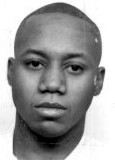
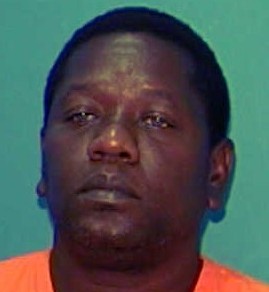
Willie Tyrone Trottie
Murderer Brian Kevin Rosenfeld
Murderer · USA · 1985
Brian Kevin Rosenfeld Brian Kevin Rosenfeld was sentenced to three concurrent l…
23 victims
Brian Kevin Rosenfeld
Murderer · USA · 1985
Brian Kevin Rosenfeld Brian Kevin Rosenfeld was sentenced to three concurrent l…
23 victims
 Russell Ellwood
Murderer · USA · 1991
Russell Ellwood was a former taxi driver. Authorities suspected him of killing…
20 victims
Russell Ellwood
Murderer · USA · 1991
Russell Ellwood was a former taxi driver. Authorities suspected him of killing…
20 victims
 Robert Martines Perez
Murderer · USA · 1994
Name: Robert Martines Perez · Other name used in proceedings: Robert Martinez P…
15 victims
Robert Martines Perez
Murderer · USA · 1994
Name: Robert Martines Perez · Other name used in proceedings: Robert Martinez P…
15 victims
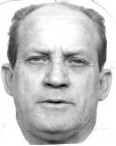 Billy Frank Vickers
Murderer · USA · 1993
Billy Frank Vickers Vickers was executed by lethal injection in Texas on Januar…
14 victims
Billy Frank Vickers
Murderer · USA · 1993
Billy Frank Vickers Vickers was executed by lethal injection in Texas on Januar…
14 victims
 Stephen Stanko
Murderer · USA · 2005
Stephen Stanko was born in 1968. He had previously been incarcerated for Assaul…
2 victims
Stephen Stanko
Murderer · USA · 2005
Stephen Stanko was born in 1968. He had previously been incarcerated for Assaul…
2 victims
 Ronald Glenn West
Murderer · Canada · 1970
Ronald Glenn West was a Toronto police officer and served as a traffic cop at T…
2 victims
Ronald Glenn West
Murderer · Canada · 1970
Ronald Glenn West was a Toronto police officer and served as a traffic cop at T…
2 victims
 Mary Nance Hanson
Murderer · USA · 2010
Mary Nance Hanson was accused of fatally shooting her former daughter-in-law. ·…
1 victim
Mary Nance Hanson
Murderer · USA · 2010
Mary Nance Hanson was accused of fatally shooting her former daughter-in-law. ·…
1 victim
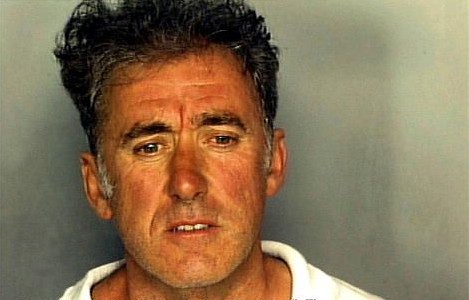 Francisco Arce Montes
Murderer · France · 1996
Francisco Arce Montes was a psychologically troubled loner who drifted around E…
1 victim
Francisco Arce Montes
Murderer · France · 1996
Francisco Arce Montes was a psychologically troubled loner who drifted around E…
1 victim
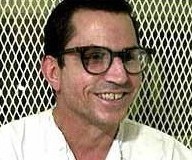 Johnny Paul Penry
Murderer · USA · 1979
Johnny Paul Penry (born May 5, 1956) was a Texas Death Row convict. He was sent…
1 victim
Johnny Paul Penry
Murderer · USA · 1979
Johnny Paul Penry (born May 5, 1956) was a Texas Death Row convict. He was sent…
1 victim
 Zdenek Hrbac
Murderer · Germany · 2007
Zdenek Hrbac Zdenek Hrbac was sentenced to life in prison on December 15, 2007.…
1 victim
Zdenek Hrbac
Murderer · Germany · 2007
Zdenek Hrbac Zdenek Hrbac was sentenced to life in prison on December 15, 2007.…
1 victim
- Gender
- male
- Country
- USA
- Location
- Harris County, Texas, USA
- Date of birth
- September 8, 1969
- Age at first offence
- 24
- Characteristics
- shooting rampage, domestic violence, drug addict
- Victim profile
- His former girlfriend Barbara Nell Canada, 24, and her brother, Titus C. Canada, 29
- Method of murder
- Shooting
- Date(s) of murder
- May 3, 1993
- Years active
- 1993
- Date of arrest
- Same day
- Status
-
Executed
Sentenced to death on December 15, 1993; executed by lethal injection (pentobarbital) at 6:35 p.m. on 10 September 2014
Parties and personal details
Willie Tyrone Trottie was a Black male. He had black hair, was 5' 5", and weighed 147 lb with brown eyes. He was 24 at the time the case was received.
Timeline
- 12-15-1993 — Case received (age 24).
- 01/22/2001 — Date of offense listed.
- September 1990 — Trottie received deferred adjudication after being convicted of theft; he was sentenced to 5 years in prison.
- September 20, 1995 — Texas Court of Criminal Appeals affirmed Trottie’s conviction and sentence.
- Aug. 18, 1997 — Trottie filed a state application for a writ of habeas corpus in the trial court.
- July 10, 2008 — Trial court submitted findings of fact and conclusions of law recommending denial of relief.
- Feb. 11, 2009 — Court of Criminal Appeals adopted the trial court’s findings and conclusions and denied habeas relief.
- March 4, 2010 — Trottie filed a federal habeas petition in the U.S. District Court for the Southern District of Texas, Houston Division.
- Sept. 30, 2011 — Federal district court denied Trottie’s petition and denied permission to appeal.
- June 14, 2013 — Fifth Circuit denied Trottie’s request for permission to appeal.
- Nov. 13, 2013 — Trottie filed a petition for writ of certiorari in the U.S. Supreme Court.
- March 24, 2014 — U.S. Supreme Court denied certiorari review.
- Sept. 2, 2014 — District court denied Trottie’s Rule 60(b) motion for relief from the denial of his federal habeas petition.
- 10 September 2014 — Trottie was executed by lethal injection; he was declared dead at 6:35 p.m.
Background
Trottie was described as a deliveryman and had no prior prison record. He had been recommended for expulsion by Jesse Doyle, a teacher and principal at Bolton High School in Alexandria, Louisiana, in March 1987. That summer, Trottie stole $3000 of band equipment and other items from the school. Trottie entered a guilty plea to a reduced charge, and punishment was assessed at six months of probation.
The State also presented evidence of Trottie’s prior convictions in Harris County. In December 1988, Trottie was arrested at a grocery store for carrying a loaded .38 revolver. Trottie pleaded guilty to the misdemeanor offense of carrying a weapon and was sentenced to 90 days in jail, probated for one year. In July 1990, a Texas Department of Public Safety trooper stopped Trottie for speeding and observed a loaded .45 caliber revolver under Trottie’s car seat. Trottie pleaded guilty to the misdemeanor offense of carrying a weapon and was sentenced to 20 days in jail. In September 1990, the service manager at a Houston car dealership where Trottie worked discovered that Trottie had a stolen car on dealership property. Trottie told the manager that he intended to have the engine removed from the stolen car and placed in a similar car. Police arrested Trottie in the dealership, and Trottie pleaded guilty to the felony offense of theft by receiving. Punishment was assessed at five years deferred adjudication probation.
Lynn Clark served as Trottie’s probation officer from Sept. 24, 1990, until Feb. 25, 1993, when Trottie quit reporting. Clark described Trottie as a hard worker and good probationer, but Clark said Trottie was very upset over the breakup with Barbara and implied that he might kill her. Clark took the unusual step of calling Barbara and advising her to obtain a protective order. Clark also testified that Trottie told her he was involved in a March 1990 shooting where he wounded an individual after that individual fired at him.
In October 1992, Trottie and a cousin went to Barbara’s house to visit Trottie’s child. Trottie told Barbara that he just wanted to talk to her, but then he grabbed Barbara by the neck, threw her on the couch, and choked her. After he was forced to leave the house, Trottie shot out the tires on Barbara’s car. Frederick Rusk testified that Trottie once pulled a gun on him in front of Barbara’s house. Rusk said he heard Trottie was handling his daughter in a rough manner and wanted to talk to him about it. Rusk followed Barbara and Trottie to Barbara’s grandmother’s house. When Rusk got there, Trottie stepped out of a car and fired at him, but the shot did not hit Rusk or his car. Rusk decided not to press charges against Trottie.
The offence
Trottie was convicted in the murders of Barbara Nell Canada, 24, and her brother Titus C. Canada, 29. Barbara and Titus C. Canada were victims of a shooting rampage that also left her mother and sister wounded.
Trottie and Barbara Canada met and began dating in about 1989. They moved in together and had a child. In September 1992, the couple separated and Barbara moved in with her family. Trottie’s behavior toward Barbara became increasingly violent after the 1992 separation.
State witnesses testified that Trottie warned Barbara that he would kill her if she did not return to him and repeated the threat several times in the months after she moved out. Barbara’s close friend testified that Trottie called Barbara “constantly” at home and at work, begging her to come back to him. Trottie hit Barbara, bumped Barbara’s car with his own while it was traveling at sixty to sixty-five miles per hour, and once kidnapped her, releasing her only after she promised to reunite with him.
Barbara obtained a protective order against Trottie in March 1993. State witnesses testified that Trottie telephoned Barbara in April and told her that she had until May 1, 1993 to return to him, or else he would kill her. On May 3, 1993, Trottie called Barbara again and told her that “he wasn't going to wait around anymore” and again threatened to kill her. One witness testified that Trottie also threatened Barbara’s brother Titus Canada because, according to Trottie, he had gotten “in the way.”
Trottie arrived at the Canada residence at approximately 11 p.m. on the night of May 3, 1993, armed with a semiautomatic 9mm pistol. At the time, there were five children under the age of seven in the house, along with numerous other family members. Trottie opened fire immediately, wounding Barbara’s mother, sister, and brother. Titus Canada fired back with a .380 caliber pistol and shot Trottie numerous times. Trottie, though wounded, cornered Barbara in a bedroom and, while she lay on the ground, shot her eleven times, saying “Bitch, I told you I was going to kill you.” Trottie then returned to the area where Barbara’s brother was lying wounded and, in the view of at least two small children, fired two shots into the back of Barbara’s brother’s head, killing him.
Trottie left the Canada home and was arrested a short time later in the emergency room of a nearby hospital. He was arrested after driving himself to the hospital in Barbara Canada’s car.
During the penalty phase, the State presented evidence of prior conduct, including that in 1988 Trottie pled guilty in Louisiana to theft of property valued at less than $100. In July 1990, he was arrested in Texas for unlawfully carrying a weapon and pled guilty to that crime. In September 1990, Trottie was convicted of theft in Texas and placed on probation. He violated a condition of the probation in February 1993. In October 1992, Trottie shot out the tires on Barbara Canada’s car.
Investigation and arrest
Trottie drove himself to a hospital and police arrested him after he arrived in the emergency room of a nearby hospital.
Trial
Trottie was indicted in the 262nd Judicial District Court of Harris County on May 3, 1993 for the capital offense of murdering Barbara and Titus Canada during the same criminal transaction. After Trottie pleaded not guilty, a jury found him guilty of the capital offense.
A separate punishment hearing resulted in the court assessing Trottie’s punishment at death.
In the penalty phase, Trottie presented testimony from his mother and sister about his childhood, including abandonment and neglect and that he was eventually placed in foster care. Trottie also presented testimony about his work history, efforts through volunteer programs, good disciplinary record while incarcerated, positive testimony from his probation officer, and expert testimony regarding his abandonment and mental health issues.
Sentencing
After the punishment hearing, the trial court assessed Trottie’s punishment at death.
Appeals
The Texas Court of Criminal Appeals affirmed Trottie’s conviction and sentence in an unpublished opinion on Sept. 20, 1995.
Trottie filed a state application for a writ of habeas corpus in the trial court on Aug. 18, 1997. On July 10, 2008, the trial court submitted findings of fact and conclusions of law recommending denial of relief. On Feb. 11, 2009, the Court of Criminal Appeals adopted the trial court’s findings and conclusions and denied Trottie habeas relief.
Trottie filed a federal habeas petition on March 4, 2010. On Sept. 30, 2011, the federal district court denied his petition and denied permission to appeal.
Trottie sought permission to appeal to the U.S. Court of Appeals for the Fifth Circuit. On June 14, 2013, the Fifth Circuit denied his request.
On Nov. 13, 2013, Trottie filed a petition for writ of certiorari in the U.S. Supreme Court. The Supreme Court denied certiorari review on March 24, 2014.
Trottie also filed a petition for writ of habeas corpus in November 1993 and asserted eight allegations in his application challenging the validity of his conviction and resulting sentence. The trial court did not hold an evidentiary hearing, and the court denied relief after adopting the State’s amended proposed findings of fact and conclusions of law, with exceptions to findings numbered 65, 66, and 67.
Trottie v. Stephens, No. 4:09–CV–00435 (5th Cir. 2014), involved Trottie’s request for a certificate of appealability after a Rule 60(b) motion was denied by the district court on Sept. 2, 2014. The Fifth Circuit denied the certificate of appealability.
Outcome
Willie Tyrone Trottie was scheduled for execution after 6 p.m. on Sept. 10, 2014 pursuant to a court order by the 262nd Judicial District Court of Harris County.
Trottie was executed by lethal injection of pentobarbital. He was declared dead at 6:35 p.m. on Sept. 10, 2014. The lethal injection began at 6:13 p.m., and he died 22 minutes after the injection began.
Trottie offered apologies to the victims’ family and made statements including:
“I hope this brings you some closure. Stay strong. I am going home to be with the Lord.”
“Find it in your hearts to forgive me. I'm sorry,”
“Jesus take me home.”
Relatives of the victims issued a statement saying they were “glad to see justice finally served all these years later. It is time for our family to end this chapter and move on.”
Trottie also made statements described as his last words:
“I love you all. I'm sorry.”
“I'm going home, going to be with the Lord.”
Aftermath
Trottie’s execution occurred after the U.S. Supreme Court rejected his last-ditch appeals and after his Rule 60(b) motion was denied. He was described as the eighth Texas killer put to death that year.
The statement of the victims’ relatives said they were glad to see justice served and intended to end the chapter and move on.
Spotted an error, or have more information about this case?