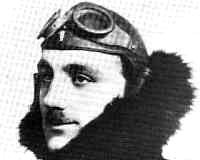
Ronald True
Murderer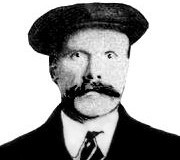 Albert Burrows
Murderer · United Kingdom · 1920
Albert Burrows (also named Albert Edward Burrows): married farm labourer who to…
4 victims
Albert Burrows
Murderer · United Kingdom · 1920
Albert Burrows (also named Albert Edward Burrows): married farm labourer who to…
4 victims
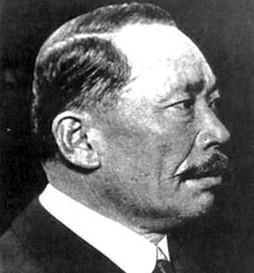 Lock Ah Tam
Murderer · United Kingdom · 1925
Lock Ah Tam was 54 when he killed his wife and two daughters. He had been a suc…
3 victims
Lock Ah Tam
Murderer · United Kingdom · 1925
Lock Ah Tam was 54 when he killed his wife and two daughters. He had been a suc…
3 victims
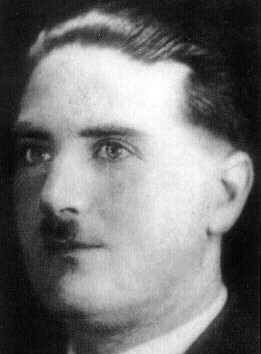 Alfred Arthur Rouse
Murderer · United Kingdom · 1930
Alfred Arthur Rouse (6 April 1894–10 March 1931) was a British murderer. It was…
1 victim
Alfred Arthur Rouse
Murderer · United Kingdom · 1930
Alfred Arthur Rouse (6 April 1894–10 March 1931) was a British murderer. It was…
1 victim
 Mary Agnes Leider
Murderer · USA · 2012
Mary Agnes Leider was 25 years old, from Saint Xavier, on the Crow Indian Reser…
1 victim
Mary Agnes Leider
Murderer · USA · 2012
Mary Agnes Leider was 25 years old, from Saint Xavier, on the Crow Indian Reser…
1 victim
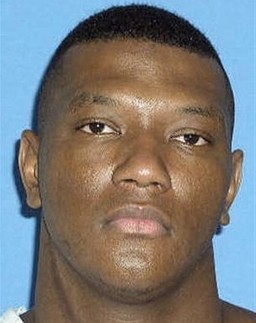 Ronald Ray Howard
Murderer · USA · 1992
Ronald Ray Howard faced execution in Texas for the murder of Department of Publ…
1 victim
Ronald Ray Howard
Murderer · USA · 1992
Ronald Ray Howard faced execution in Texas for the murder of Department of Publ…
1 victim
 Clifton Charles Russell
Murderer · USA · 1979
Clifton Charles Russell was sentenced to death in April 1980 for the murder of…
1 victim
Clifton Charles Russell
Murderer · USA · 1979
Clifton Charles Russell was sentenced to death in April 1980 for the murder of…
1 victim
 Lulonda Flett
Mass murderer · Canada · 2011
Lulonda Flett (accused; sentenced to five life sentences) · Evelyn Laforte (mot…
5 victims
Lulonda Flett
Mass murderer · Canada · 2011
Lulonda Flett (accused; sentenced to five life sentences) · Evelyn Laforte (mot…
5 victims
 Michelle Hall
Murderer · USA · 2008
Michelle Hall was a Coweta County woman. Her husband was John Britt Hall. The c…
1 victim
Michelle Hall
Murderer · USA · 2008
Michelle Hall was a Coweta County woman. Her husband was John Britt Hall. The c…
1 victim
 William Richard Stevens
Murderer · USA · 1977
William Richard Stevens offered to pay Corey Milliken to murder Stevens’s wife,…
3 victims
William Richard Stevens
Murderer · USA · 1977
William Richard Stevens offered to pay Corey Milliken to murder Stevens’s wife,…
3 victims
- Gender
- male
- Country
- United Kingdom
- Location
- London, England, United Kingdom
- Date of birth
- 1891
- Age at first offence
- 31
- Characteristics
- abduction
- Victim profile
- Olive Young, 25 (also known as Gertrude Yates), a prostitute
- Method of murder
- Asphyxiation (a dressing gown cord was tied around her neck and a towel had been stuffed down her throat)
- Date(s) of murder
- March 6, 1922
- Years active
- 1922
- Date of arrest
- Same day
- Status
-
Died in custody
Sentenced to death; reprieved by the Home Secretary and committed to Broadmoor Hospital for the Criminally Insane; died in 1951
Case overview
Ronald True was sentenced to death for the murder of 25-year-old Olive Young, a prostitute whose real name was Mrs Gertrude Yates. Her naked body was found by her cleaner in the bathroom. She had been asphyxiated; a dressing gown cord was tied around her neck and a towel had been stuffed down her throat.
At his trial, his defence was one of insanity. The jury found him guilty and he was sentenced to death. His appeal was dismissed, but a re-examination was ordered and three medical experts declared him to be insane. He was reprieved and removed to Broadmoor Hospital for the Criminally Insane, where he later died in 1951.
The case raised issues relating to the legal defence of insanity.
Timeline
- 1 May 1922 — The trial of Ronald True opened at the Old Bailey.
- 5 March 1922 — Late at night, Ronald True turned up unannounced at 13a Finborough Road.
- 1951 — Ronald True died at Broadmoor Hospital.
The offence
Olive Young was a 25-year-old prostitute who worked under the name Olive Young; her real name was Mrs Gertrude Yates. Her business address was a basement flat at 13 Finborough Road, Earls Court.
Her cleaner found her naked body in the bathroom. The body showed signs of asphyxiation. A dressing gown cord was tied around her neck, and a towel had been stuffed down her throat.
The killing occurred in the flat at 13 Finborough Road. Most of her jewellery and trinkets were missing. Money including a pile of shillings to feed the gas meter, and a half-crown and some pennies to pay the milkman, had been stolen. True was also said to have stolen some money.
Investigation and arrest
True failed to take elementary precautions against detection and was arrested a few days after the murder. He was arrested while watching a music hall show in a box at the Hammersmith Palace in King Street.
Trial
Ronald True was tried for murder at the Old Bailey in May 1922. The trial opened on Monday 1 May 1922 and lasted five days.
True’s defence was insanity. In court, Sir Richard Muir for the prosecution argued that under the M'Naghten Rules True “knew what he was doing and knew that it was wrong” and was therefore legally responsible.
Sir Richard Muir for the prosecution argued that under the M'Naghten Rules he “knew what he was doing and knew that it was wrong” and that he was therefore legally responsible.
Four days after the trial began, the jury decided True was guilty and he was sentenced to death.
Sentencing and post-trial review
His appeal was dismissed. A re-examination of True was ordered, and three medical experts declared that he was insane.
The Home Secretary reprieved True from his death sentence and committed him to Broadmoor Hospital for the Criminally Insane. The reprieve occurred amidst political controversy.
The Home Secretary, Edward Shortt, defended his decision successfully in Parliament.
Legal context discussed in connection with the case
The controversy was heightened by a concurrent case, Henry Jacoby, an eighteen-year-old working-class pantry boy who had murdered a 65-year-old titled lady, Lady White, and was hanged.
A parliamentary committee examined the law relating to insanity, but left the M'Naghten Rules of 1843 unchanged. The M'Naghten Rules stated that every accused person is presumed sane until the contrary is proved to the jury’s satisfaction, and that it must be shown that the accused must be “labouring under such a defect of reason from disease of the mind as to not to know the nature and quality of his act, or, if he did know it, that he did not know that what he was doing was wrong.”
“labouring under such a defect of reason from disease of the mind as to not to know the nature and quality of his act, or, if he did know it, that he did not know that what he was doing was wrong.”
Other related events and commentary included in the record
The record described a massive public outcry after True’s reprieve, with the popular perception that there was one law for the middle class True and another for the working class killer of a titled lady. It also described the scandal as being exacerbated by the fact that Jacoby was “undoubtedly an immature simpleton.”
The record also included a statement attributed to the hangman, John Ellis, saying:
“I saw t'poor lad the day before his death. He was nobbut a child. It was t'most harrowing sight I ever saw in my life. And I had to kill him the next day.”
Confinement and death
True was confined to Broadmoor Hospital for the Criminally Insane. During his incarceration, he worked actively in the hospital’s drama activities.
While he was in Broadmoor, the record stated that he worked alongside Richard Prince, the conductor of the hospital band, who was described as the killer of actor William Terriss at the Adelphi Theatre Stage Door in 1897. The record also described that a play on the True and Prince cases, Lullabies of Broadmoor, was performed in January 2004 at the Finborough Theatre.
Ronald True died at Broadmoor Hospital in 1951, aged 60.
Victim details
The victim was Olive Young, real name Mrs Gertrude Yates, aged 25. She was described as a prostitute.
Other details
Ronald True was described as an English murderer. He was born in Manchester in 1891 and was educated at Bedford School.
He was described as having joined the Royal Flying Corps in 1915 and being discharged after his increasingly eccentric behaviour, combined with addiction to morphia, led to his discharge in 1916.
The record stated that he visited the United States in 1917, where he married Frances Roberts and had a child.
It also described that his family made him an allowance, and that his behaviour became increasingly eccentric. The record further stated that he became convinced that he had a doppelgänger who was his mortal enemy, and that he abandoned his wife and child. The record added that he lived on his allowance and on various petty frauds and thefts.
The record described Olive Young’s household arrangements as including a daily maid, Emily Steel, who also lived in Finborough Road, and it described the flat being furnished with multiple items and decorations.
The record included a sequence of earlier contact between True and Olive Young, stating that True first spent the night with Olive on Saturday, 18 February 1922, and that she discovered five pounds missing from her handbag after his departure and decided she wanted nothing more to do with him. It then stated that during the next twelve days, True made many attempts to arrange another meeting with Olive, but she avoided his calls and phone calls.
It also stated that True’s trial opened Monday 1 May 1922 and that the jury decided guilt and sentenced him to death four days later.
The record listed references, including:
- Donald Carswell (ed), Trial of Ronald True, William Hodge and Co., 1950 (ISBN 0852790163)
- Harry Hodge, Famous Trials II, Penguin, 1948 (ISBN 0140006346)
Spotted an error, or have more information about this case?