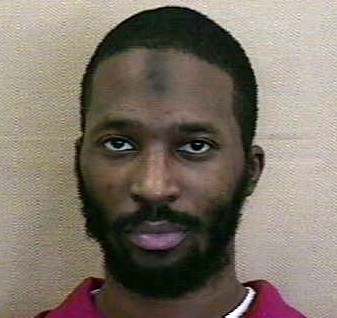
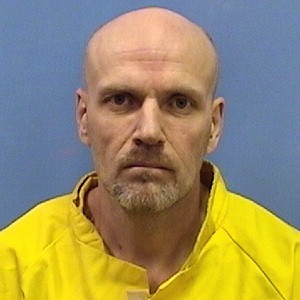
Russell William Tucker
Murderer Brian Kevin Rosenfeld
Murderer · USA · 1985
Brian Kevin Rosenfeld Brian Kevin Rosenfeld was sentenced to three concurrent l…
23 victims
Brian Kevin Rosenfeld
Murderer · USA · 1985
Brian Kevin Rosenfeld Brian Kevin Rosenfeld was sentenced to three concurrent l…
23 victims
 Russell Ellwood
Murderer · USA · 1991
Russell Ellwood was a former taxi driver. Authorities suspected him of killing…
20 victims
Russell Ellwood
Murderer · USA · 1991
Russell Ellwood was a former taxi driver. Authorities suspected him of killing…
20 victims
 Robert Martines Perez
Murderer · USA · 1994
Name: Robert Martines Perez · Other name used in proceedings: Robert Martinez P…
15 victims
Robert Martines Perez
Murderer · USA · 1994
Name: Robert Martines Perez · Other name used in proceedings: Robert Martinez P…
15 victims
 Billy Frank Vickers
Murderer · USA · 1993
Billy Frank Vickers Vickers was executed by lethal injection in Texas on Januar…
14 victims
Billy Frank Vickers
Murderer · USA · 1993
Billy Frank Vickers Vickers was executed by lethal injection in Texas on Januar…
14 victims
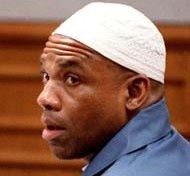 Leo Alexander Jones
Murderer · USA · 1981
Leo Alexander Jones (April 13, 1950 – March 24, 1998) was sentenced to death an…
1 victim
Leo Alexander Jones
Murderer · USA · 1981
Leo Alexander Jones (April 13, 1950 – March 24, 1998) was sentenced to death an…
1 victim
 Stacey Newkirk-Smalls
Murderer · USA · 2012
Stacey Newkirk-Smalls was a Tacony mother accused in the May 2012 murders of he…
2 victims
Stacey Newkirk-Smalls
Murderer · USA · 2012
Stacey Newkirk-Smalls was a Tacony mother accused in the May 2012 murders of he…
2 victims
 Melvin Turner
Murderer · USA · 1979
Melvin Turner was a parolee who got a job at the airport. Turner and Teague Ham…
2 victims
Melvin Turner
Murderer · USA · 1979
Melvin Turner was a parolee who got a job at the airport. Turner and Teague Ham…
2 victims
 Peter Odighizuwa
Murderer · USA · 2002
Peter Odighizuwa was a 43-year-old Nigerian former student at the Appalachian S…
3 victims
Peter Odighizuwa
Murderer · USA · 2002
Peter Odighizuwa was a 43-year-old Nigerian former student at the Appalachian S…
3 victims
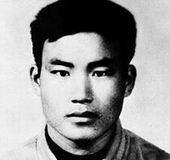 Woo Bun-Kon
Spree killer · South Korea · 1982
Woo Bun-Kon carried out a spree killing in Sang-Namdo, South Korea, and killed…
57 victims
Woo Bun-Kon
Spree killer · South Korea · 1982
Woo Bun-Kon carried out a spree killing in Sang-Namdo, South Korea, and killed…
57 victims
 Roy Willard Blankenship
Murderer · USA · 1978
Roy Willard Blankenship was a white male born in 1955. He was incarcerated in G…
1 victim
Roy Willard Blankenship
Murderer · USA · 1978
Roy Willard Blankenship was a white male born in 1955. He was incarcerated in G…
1 victim
- Gender
- male
- Country
- USA
- Location
- Forsyth County, North Carolina, USA
- Date of birth
- 1962
- Age at first offence
- 32
- Characteristics
- armed robbery, rape?
- Victim profile
- Richard Wall ( cab driver ) / Maurice Travone Williams (security guard)
- Method of murder
- Shooting
- Date(s) of murder
- November 9/December 8, 1994
- Years active
- 1994
- Date of arrest
- December 8, 1994
- Status
-
Sentenced to death
Sentenced to death on February 21, 1996; execution date set for Dec. 7 (tentatively scheduled for 2 a.m. at Central Prison); North Carolina Supreme Court stay of execution issued on 11/28/2000
Case record: Russell William Tucker
Background
Russell William Tucker was convicted of first-degree murder on the theory of premeditation and deliberation and under the felony murder rule.
After the capital sentencing proceeding on the murder charge, the State dismissed two assault charges.
The offence
At approximately 10:00 p.m. on 8 December 1994, Russell William Tucker walked out of the Super K-Mart Center on University Parkway in Winston-Salem, North Carolina, wearing a coat and a pair of boots for which he had not paid. He was followed by Assistant Loss Control Manager William Maki. Travis Church, a K-Mart employee, and Maurice Travone Williams, a security guard, followed shortly behind Maki.
Maki asked Tucker for a receipt. Maki testified that Tucker responded, "Come on, I've got something for you." Tucker then removed a Lorcin .380-caliber semiautomatic pistol from his knapsack with his right hand and fired at Maki’s face from a distance of approximately six feet. Maki was not struck but received gunpowder burns on his face.
Williams and Church began running back toward the store. Tucker switched the gun from his right hand to his left hand. Tucker then shot and killed Williams with one shot that penetrated his aorta and both lungs. Five to ten seconds elapsed between Tucker’s attempt to shoot Maki and the second shot at Williams.
Tucker ran approximately four hundred feet to an area in the parking lot of the Super K-Mart Center. When he was approached by a police vehicle, Tucker turned and fired five shots into the vehicle. Winston-Salem Police Officer S.E. Spencer was operating the marked police vehicle and Winston-Salem Police Officer H.M. Bryant was a passenger. Spencer and Bryant were struck.
The time between the shooting of Williams and the shooting of Spencer and Bryant was described as being between forty-five seconds and a couple of minutes. Tucker fled up an embankment and into some woods.
Tucker was apprehended by police officers forty-five minutes to one hour later.
Other offences and related sentences
In addition to the death sentence, Tucker was serving sentences for second-degree murder and armed robbery in the Nov. 9, 1994 shooting death of Winston-Salem cab driver Richard Wall.
Investigation
Spencer and Winston-Salem Police Officer H.M. Bryant were shot during the incident involving the Super K-Mart Center.
Tucker’s apprehension occurred forty-five minutes to one hour after he fled into some woods.
Trial
Charges, indictment, and verdict
On 31 July 1995, Tucker was indicted for the first-degree murder of Maurice Travone Williams, assault with a deadly weapon with intent to kill inflicting serious injury to S.E. Spencer, and assault with a deadly weapon with intent to kill inflicting serious injury to H.M. Bryant, all occurring on 8 December 1994.
Tucker was tried capitally. The jury returned a verdict finding him guilty of first-degree murder on the theory of premeditation and deliberation and under the felony murder rule.
A capital sentencing proceeding was held pursuant to N.C.G.S. § 15A-2000. The jury recommended that Tucker be sentenced to death.
Court rulings and issues on appeal
The North Carolina Supreme Court’s opinion addressed multiple assignments of error and concluded that Tucker received a fair trial free from prejudicial error.
Jury view of the police vehicle
Tucker argued that the trial court abused its discretion by allowing the jury to view the police vehicle he shot during the incident. He argued the jury view was cumulative because the State published pictures of the vehicle to the jury and several witnesses testified about the shots fired into the vehicle.
The trial court considered arguments and evidence presented by both the State and Tucker before allowing the jury view. The State argued the jury view was necessary to rebut Tucker’s claim that he fired the pistol while in a panicked, confused, and disoriented state. The State contended the jury’s seeing the vehicle was an important means of proving that Tucker intended to kill when he fired toward it. The State further argued the jury view would not be cumulative because the jury did not have a picture of a bullet lodged in the vehicle’s steering column near the driver’s chest.
After considering the arguments, the trial court stated, "The court is of the view that the police vehicle view would be helpful to an understanding of this matter by the jurors."
The court also ruled the evidence was relevant under N.C. R. Evid. 401 and that its probative value outweighed any danger of unfair prejudice under N.C. R. Evid. 403.
The Supreme Court concluded the trial court’s decision to allow the jury view was well within its discretion and overruled this assignment of error.
Capacity to proceed to trial
Tucker argued the trial court erred in finding he had the capacity to proceed to trial. The Supreme Court described the test for capacity: whether the defendant at the time of trial had "the capacity to comprehend his position, to understand the nature and object of the proceedings against him, to conduct his defense in a rational manner, and to cooperate with his counsel to the end that any available defense may be interposed."
After Tucker raised the issue, he was examined pursuant to court order at Dorothea Dix Hospital from 10-18 August 1995. His attending physician, Dr. Nicole Wolfe, a forensic psychiatrist, prepared a discharge summary when Tucker was released, diagnosing him as having antisocial personality disorder; she also thought he was malingering.
On 11 August 1995 Wolfe referred Tucker to Edwin D. Munt, a staff psychologist at Dorothea Dix. Munt found Tucker did not appear psychotic and appeared to be malingering his mental illness and attempting to fake psychosis.
Dr. Sam Manoogian, an expert in clinical psychology, examined Tucker on four occasions between 18 November 1995 and 7 December 1995. Manoogian opined that Tucker was not competent to stand trial but possible that he was malingering. Manoogian recommended a month-long course of medication and observation.
During a pretrial motions hearing, Tucker was so disruptive with outbursts of a religious nature that he had to be physically restrained.
Wolfe testified that Tucker was competent to stand trial and was malingering, including specific testimony that Tucker understood the court action, understood the proceedings and his role in them, and could assist with his defense. Her opinion was based on the eight-day examination at Dorothea Dix, review of jail records, review of the transcript from a hearing on 17 November 1995, review of psychological information from MMPI and Rorschach tests, her observations of Tucker on 7 December 1995 (the date the capacity hearing began), and her interview with Tucker.
The Supreme Court concluded there was sufficient competent evidence supporting the trial court’s finding that Tucker had the capacity to proceed to trial and overruled the assignment of error.
Felony murder “continuous transaction”
Tucker argued the trial court erred by not dismissing the charge of first-degree murder brought under the felony murder theory. He contended the sequence of events connecting the killing of Williams with the assaults on Maki and Officers Spencer and Bryant was not sufficiently related to be considered a "continuous transaction."
The Supreme Court described the felony murder statute as providing that "[a] murder . . . which shall be committed in the perpetration or attempted perpetration of any . . . felony committed or attempted with the use of a deadly weapon shall be deemed to be murder in the first degree." It described State v. Hutchins’s continuous transaction requirement and also cited State v. Roseborough regarding temporal order.
The Supreme Court concluded ample evidence supported the trial court’s finding of a continuous chain of events linking the killing of Williams with the other assaults, found the denial of Tucker’s motion to dismiss proper, and overruled the assignment of error.
Motion for mistrial after question about a previous crime
Tucker argued the trial court committed reversible error by denying his motion for a mistrial after the State inquired into a previous crime.
On cross-examination, Tucker admitted to having fired the gun used in this case several times before and admitted to having pled guilty to second-degree murder in another case. The State then asked: "You fired the gun in that other case, didn't you?" Defense counsel objected before Tucker could answer. The trial court sustained the objection. The court excused the jury, and Tucker moved for a mistrial.
The trial court reviewed the law with counsel. At one point, the court overruled Tucker’s objection and denied his motion for a mistrial, but later the prosecutor stated, "The State will live with the court['s] sustaining objection to the last question the State asked and will not pursue that line of inquiry."
When the jury returned, the court stated, "The objection to the last question is sustained."
The Supreme Court described the issue as whether the question was so prejudicial that the trial court should have granted a mistrial, including discussion of N.C.G.S. § 15A-1061 and the discretion standard, and concluded Tucker never answered the question and that the objection was sustained in the jury’s presence. Tucker had specifically requested that curative instructions not be given. The Supreme Court concluded the trial court was within its discretion and overruled this assignment of error.
Motion in limine and renewal of motion
Tucker argued the trial court committed reversible error when it denied his renewal of his motion in limine.
The Supreme Court described that, according to the State, on 5 February 1996, the day before jury selection began, Maki informed the State that he recalled hearing Tucker say, "Come here, I've got something for you," immediately prior to shooting at Maki and then fatally shooting Williams. The State claimed it informed defense counsel of Maki’s recollection within half an hour of learning of it.
Tucker moved in limine to exclude Maki’s testimony regarding this recollection due to its prejudicial nature and the late notice. The trial court ruled the statement was relevant under N.C. R. Evid. 401, that its probative value outweighed any prejudice under N.C. R. Evid. 403, and that the State had supplemented responses and complied with discovery requirements. The court denied the motion.
At trial, Maki testified that he first told law enforcement officers of his recollection on 7 December 1995. Tucker asked the court to reconsider its ruling. After hearing from both parties outside the jury’s presence, the court adhered to its prior ruling. Maki testified again about timing and said he first reported it to the State on 5 February 1996 and had gotten confused during earlier testimony.
The Supreme Court noted Tucker did not argue the State failed to comply with discovery rules and instead argued that good faith should not relieve the State of responsibility to find facts with reasonable diligence. The Supreme Court cited the standard that selection of sanctions for discovery issues rests in the trial court’s discretion and concluded Tucker failed to show abuse of discretion. It overruled the assignment of error.
Sentencing
After finding aggravating circumstances, the jury recommended a sentence of death, and the trial court sentenced Tucker accordingly.
Pursuant to N.C.G.S. § 15A-2000(e)(3), the jury found twice that "[t]he defendant had been previously convicted of a felony involving the use or threat of violence to the person." One finding was based on a previous conviction for second-degree murder, and the other was based on a previous conviction for felony armed robbery.
Pursuant to N.C.G.S. § 15A-2000(e)(6), the jury found that "[t]he capital felony was committed for pecuniary gain."
Pursuant to N.C.G.S. § 15A-2000(e)(11), the jury found that "[t]he murder for which the defendant stands convicted was part of a course of conduct in which the defendant engaged and which included the commission by the defendant of other crimes of violence against another person or persons."
The Supreme Court concluded the record supported the jury’s findings and found no indication the death sentence was imposed under the influence of passion, prejudice, or any other arbitrary factor. It also conducted proportionality review and concluded the sentence of death was not disproportionate.
Appeals
On 11/28/2000, the North Carolina Supreme Court issued a stay of execution.
The Supreme Court considered the appeal of right pursuant to N.C.G.S. § 7A-27(a) from the judgment imposing a sentence of death entered on 21 February 1996 in Superior Court, Forsyth County, upon a jury verdict finding Tucker guilty of first-degree murder.
The Supreme Court noted that Tucker’s motion to bypass the Court of Appeals as to additional judgments was allowed on 25 February 1997. The Supreme Court heard the case on 10 September 1997.
The Supreme Court concluded: "NO ERROR."
Other details
Russell William Tucker was convicted in Forsyth County Superior Court and was on death row.
At least two other named victims were involved in the events described: Maurice Travone Williams and Richard Wall, and police officers S.E. Spencer and H.M. Bryant were also shot during the incident described.
Central Prison was identified as the location for the execution date set for Dec. 7, tentatively scheduled for 2 a.m.
Spotted an error, or have more information about this case?