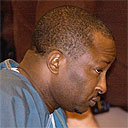
Peter Odighizuwa
Murderer Robert Martines Perez
Murderer · USA · 1994
Name: Robert Martines Perez · Other name used in proceedings: Robert Martinez P…
15 victims
Robert Martines Perez
Murderer · USA · 1994
Name: Robert Martines Perez · Other name used in proceedings: Robert Martinez P…
15 victims
 Billy Frank Vickers
Murderer · USA · 1993
Billy Frank Vickers Vickers was executed by lethal injection in Texas on Januar…
14 victims
Billy Frank Vickers
Murderer · USA · 1993
Billy Frank Vickers Vickers was executed by lethal injection in Texas on Januar…
14 victims
 Calvin Eugene King
Murderer · USA · 1994
Calvin Eugene King · Feb. 25, 1994 — Calvin King and Leonard Johnson, Danyell W…
1 victim
Calvin Eugene King
Murderer · USA · 1994
Calvin Eugene King · Feb. 25, 1994 — Calvin King and Leonard Johnson, Danyell W…
1 victim
 Jermaine Marlow Wright
Murderer · USA · 1991
Jermaine Marlow Wright was born on 10/11/1972. He was Black and male. Jermaine…
1 victim
Jermaine Marlow Wright
Murderer · USA · 1991
Jermaine Marlow Wright was born on 10/11/1972. He was Black and male. Jermaine…
1 victim
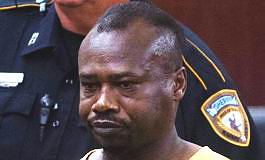 David Conley
Mass murderer · USA · 2015
David Ray Conley III was the main suspect in a mass shooting in northern Harris…
8 victims
David Conley
Mass murderer · USA · 2015
David Ray Conley III was the main suspect in a mass shooting in northern Harris…
8 victims
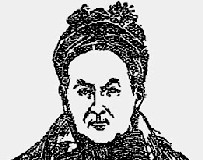 Annie Walters
Murderer · United Kingdom · 1900
Annie Walters (1869 - 3 February 1903) was a British serial killer known as a “…
Annie Walters
Murderer · United Kingdom · 1900
Annie Walters (1869 - 3 February 1903) was a British serial killer known as a “…
- Gender
- male
- Country
- USA
- Location
- Grundy, Virginia, USA
- Date of birth
- 1959
- Age at first offence
- 43
- Characteristics
- school shooting, mentally ill
- Victim profile
- L. Anthony Sutin, 42 (dean) , Thomas Blackwell, 41 ( professor) and Angela Denise Dales, 33 (student)
- Method of murder
- Shooting (.380 ACP semi-automatic handgun)
- Date(s) of murder
- January 16, 2002
- Years active
- 2002
- Date of arrest
- Same day
- Status
-
Life imprisonment
Received three life sentences and an additional 28 years without the possibility of parole on 2005
Case record: Peter Odighizuwa
Background
Peter Odighizuwa was a 43-year-old Nigerian former student at the Appalachian School of Law. He arrived on the campus on the day of the shooting.
Numerous reports stated that Odighizuwa had flunked out of school or had been suspended. Jeremy Davis, a former dean and professor of law at the school, later said that Odighizuwa had withdrawn voluntarily due to poor academic performance.
Odighizuwa discussed his academic problems with professor Dale Rubin, and he reportedly told Rubin to pray for him.
Odighizuwa later approached Dean Anthony Sutin and Professor Thomas Blackwell, and opened fire with a .380 ACP semi-automatic handgun.
The offence
On January 16, 2002, the Appalachian School of Law shooting occurred at the Appalachian School of Law in Grundy, Virginia, United States.
Three people were killed and three others were wounded when a disgruntled former student opened fire in the school with a handgun. The three killed were Professor Thomas Blackwell, Dean Anthony Sutin, and student Angela Denise Dales, age 33.
The three people wounded were identified as Tracy Bridges, Mikael Gross, and Ted Besen as students who subdued Odighizuwa, while wounded victims included Rebecca Brown, Martha Short, and Stacey Bean, along with other injured women described in the emergency response.
Shooting within the school
Professor Gail Kintzer was in her second-floor office about 1:15 p.m. when she heard the first shot. She described hearing:
“I heard a pop, which made me stop, and a second pop, which I knew was a gunshot,” she said.
Kintzer said someone opened her door and two secretaries rushed in. She stated that:
“He’s got a gun; he’s got a gun,” the women screamed.
Kintzer tried to call for help, and emergency numbers were busy due to calls from others who had heard the shots. Professor Wes Shinn, whose office was next to Blackwell’s, had opened his door long enough to see Lewis and Horn standing horrified in the hallway, then ducked back into his office and slammed the door. Shinn said his assumption was:
“My assumption was that he was going to go from office to office,” he said.
Shinn heard two more shots that seemed to come from farther down the hall and found Blackwell still sitting behind his desk. Shinn checked for a pulse and found none. Blackwell’s telephone was off the hook.
At the time he was shot, Blackwell was on the phone with Charlotte Varney, the secretary of his church. Varney said:
“I asked him what was going on, but he didn’t come back on the line,” she said.
Varney described hearing a sound as if someone had blown up a paper bag and then hearing muffled voices and footsteps. She later said:
“I didn’t think it was a real gun at first,” he said.
A half-hour passed before Varney learned the truth.
Two powder burns indicating point-blank range were described by a county coroner for both victims who were shot.
Sutin was shot in the neck and also was shot a third time in the side. Two powder burns could be seen on Sutin’s bloodstained white dress shirt.
Lounge confrontation and victims
Arun Rattan, a first-year student, returned from lunch with Stacey Bean and her boyfriend, James Davis. About 20 students were in the Lions Lounge. Rattan saw Odighizuwa standing next to him after Odighizuwa came down the stairs led to Sutin’s office. Rattan said:
“I looked at him, and he just nodded his head at me,” Rattan said.
Rattan said he noticed Odighizuwa had a gun only after he walked past:
Rattan said Odighizuwa walked up to the couch where students Angela Dales, Rebecca Brown and Madeline Short were sitting and opened fire:
“Run! Run!” panicked students yelled.
Students fled, and Rattan ran out a side door and behind the library.
Rose Hurley, director of career services, was in her first-floor office adjacent to the lounge talking to two students when she heard the shots. One of the students, Peter Tsahiridis, got up, closed the office door and locked it. Hurley’s office contained three people trying to figure out what to do when commotion in the lounge stopped and they ventured out.
In the doorway of the career services office lay Dales, with blood pouring from her neck. Tsahiridis tried to help. Short lay nearby, with a bullet entering her back and ripping through her abdomen and liver. Bean was down, bleeding from the chest, and Brown, despite being shot in the abdomen, ran to the library.
Aftermath: apprehension and immediate response
Students subdued the shooter
When Odighizuwa exited the building where the shooting took place, he was approached by two students with personal firearms and one unarmed student.
Two versions of the events were described.
Version attributed to Bridges
Tracy Bridges and Mikael Gross ran to fetch personal firearms at the first sound of gunfire. Gross, a police officer with the Grifton Police Department in his home state of North Carolina, retrieved a 9 mm pistol and body armor. Bridges, a county sheriff’s deputy from Asheville, N.C., pulled his .357 Magnum pistol from beneath the driver’s seat of his Chevy Tahoe.
Bridges and Gross approached Odighizuwa from different angles, with Bridges yelling at Odighizuwa to drop his gun. The shooting account stated that Odighizuwa then dropped his firearm and was subdued by several other unarmed students, including Ted Besen and Todd Ross.
Version attributed to Besen
According to Besen, before Odighizuwa saw Bridges and Gross with their weapons, Odighizuwa set down his gun and raised his arms like he was mocking people. Besen then charged, got into a scuffle with Odighizuwa, and knocked him to the ground. Bridges and Gross then arrived with their guns once Odighizuwa was tackled.
Gross went back to his vehicle and retrieved handcuffs to detain Odighizuwa until police could arrive.
The account stated that two empty eight round magazines designed for Odighizuwa’s handgun were recovered. Most sources stated that when Odighizuwa dropped the gun the magazine was empty, although some reports suggested the gun still held three rounds of ammunition.
Odighizuwa was described as yelling something unintelligible to students, and he was also described as muttering. Besen was described as telling Odighizuwa to get onto the ground.
Odighizuwa, while handcuffed, lay outside the building while people rushed into the lounge to help the wounded. A Buchanan County sheriff’s deputy showed up and put the suspect into his car.
Emergency treatment and transport
Melissa McCall-Burton, a former emergency room nurse, returned from a nearby Subway for her 1:30 p.m. class when she learned what happened. She ran into the lounge with her medical bag and saw Dales in the doorway of the career services office.
McCall-Burton described performing cardiopulmonary resuscitation when Dales went into cardiac arrest. The arrival of Dr. Jack Briggs, nurse practitioner Susan Looney and registered nurse Carol Breeding was described, and Briggs had received an announcement over the speaker system. The announcement included:
“Dr. Briggs, pick up the phone, stat!”
Briggs knew a state police helicopter was waiting at Buchanan General Hospital to take one of his patients to Wellmont Holston Valley Medical Center in Kingsport, Tenn., and he called for it to be held.
It was stated that the women needed to go to the hospital immediately due to delayed ambulance response. Students volunteered their own vehicles.
Stephanie Mutter backed her Toyota 4-Runner to the lobby doors. Short was put inside on a table that had just hours earlier held coffee and snacks at the student-faculty gathering. Students Daniel Boyd and Rob Sievers, president of the student bar association, jumped into Mutter’s vehicle with Short and made sure Short did not fall out of the open back door. Mutter said:
“We were just glad she was talking,” Mutter said.
Mutter pulled up to Buchanan General Hospital. Emergency room nurses rushed to aid. Dales arrived and died shortly after reaching the hospital.
Brown, Short and Bean were taken away in two state police helicopters.
The account stated that Dales was loaded into a hearse arranged by the Buchanan County Sheriff’s Office calling the Grundy Funeral Home. Funeral director T.C. Mullins sent four men with a hearse, and it was described that they were not sure whether they were going for a patient or a corpse. Dales was described as still alive when loaded, then dying shortly after reaching the hospital.
Mutter said:
“I wish we’d gotten Angela first,” Mutter thought when she heard the woman had died.
Timeline
- January 16, 2002 — The Appalachian School of Law shooting occurred at the Appalachian School of Law in Grundy, Virginia; three people were killed and three others were wounded.
- 2002 — Odighizuwa was found to be incompetent to stand trial and was referred for psychiatric treatment.
- 2005 — After three years of treatment and monitoring, Odighizuwa was found mentally competent and pleaded guilty to the murders to avoid the death penalty.
- 2005 — Odighizuwa received three life sentences and an additional 28 years without the possibility of parole.
Investigation and charges
By the next morning after the shooting, Odighizuwa had been charged with three counts of capital murder and three counts of attempted capital murder.
Prosecutors had said they would seek a death sentence.
Trial
Odighizuwa was initially found to be incompetent to stand trial and was referred for psychiatric treatment. After three years of treatment and monitoring, in 2005, he was found mentally competent.
Odighizuwa pleaded guilty to the murders to avoid the death penalty.
Sentencing
Odighizuwa received three life sentences and an additional 28 years without the possibility of parole on 2005.
Appeals and outcome
No appeal outcome was described. The case outcome in the provided material was the guilty plea and sentence imposed.
Other details
Statements from witnesses and participants
The account described Odighizuwa as known on campus simply as “Peter O” because most people could not pronounce his last name. It also described him as speaking with a heavy accent that made him hard to understand.
During the apprehension outside the building, Odighizuwa was described as muttering:
“I had to do it. I didn’t know what else to do. I had nowhere else to go.”
Victim names mentioned
The shooting victims included Angela Denise Dales, age 33; Professor Thomas Blackwell; Dean Anthony Sutin; Rebecca Brown; Martha Short; Stacey Bean; and additional injured persons described as four injured women during emergency response, with Dales, Short, Bean and Brown receiving care.
Civil litigation claims and comments
In lawsuits totaling $23 million, former students Stacey Beans, Rebecca Brown and Martha Short, and the family of slain student Angela Dales alleged that officials at the Appalachian School of Law could have prevented the January 16, 2002, attack.
The allegations stated that school officials were well aware Odighizuwa had a history of outbursts and spousal abuse, and should have realized he was a threat to the student body.
The allegations also stated that Odighizuwa was allowed to re-enroll after he flunked out for the first time, and that he should not have been kept around because he was black.
Plaintiffs’ attorney Emmitt Yeary said:
“You have a mad dog, you take it out of the population,” Yeary said.
“You don’t let that mad dog continue to walk the hallways.”
Law school attorney Daniel Caldwell said there was no truth to the students’ claim that Odighizuwa was kept around because he was black and said:
“The law school did not know that Odighizuwa was carrying a weapon and was preparing to take it out and shoot people,” he said.
“The school shouldn’t be held responsible for what he considers a random crime.”
Law enforcement investigation discussion
Short said that prosecutors rarely spoke with victims after the shooting, and she described a call about a week before Odighizuwa pleaded guilty:
“You have these feelings and nobody’s telling you 'This is what happened,”' Beans told The Associated Press.
“It makes you feel like even more of a victim.”
Short said Tolliver spoke to victims rarely, and that about a week before the guilty plea Tolliver called them and said she was not going to pursue the death penalty as promised at memorial services after the shooting.
The account quoted Tolliver as stating that she met with the victims regularly, and that a witness director met with them 16 times, and Tolliver said nobody else objected to the plea deal.
Tolliver said she agreed to the plea agreement after defense lawyers offered it a second time. She said she worried that Odighizuwa, described as a paranoid schizophrenic and previously deemed not competent to stand trial, might be able to prove that he was insane at the time of the shooting.
Tolliver said:
“I felt, of course, that Peter needed to be punished for this horrendous crime that he committed,” Tolliver said.
“But I also felt an obligation to do what I could to ensure that he was locked up for the rest of this life.”
Tolliver was described as shocked to hear about the victims’ problems with her investigation.
Other contextual comments included in the material
The material included discussion of gun control implications and media coverage, including comments attributed to John Lott, Patricia Gregory, Aaron Zelman, and Kent Markus about how the event was covered and the manner in which Odighizuwa was apprehended.
It also included narrative about Odighizuwa writing a six-page letter to Buchanan County Judge Patrick Johnson asking for new lawyers and claiming his current ones were part of a government conspiracy, and that the letter reflected concerns about untreated serious long-standing mental illness and included concerns about “my race, ethnicity and national origin” and that negative publicity made a fair trial impossible, along with a claim that the lawyers refused to subpoena records from the FBI and CIA that would show those agencies targeted him for investigation.
Spotted an error, or have more information about this case?