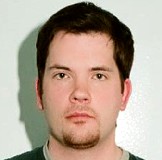
Mark Twitchell
Murderer James Roszko
Murderer · Canada · 2005
James Roszko was a Canadian man operating a hydroponic marijuana grow-op in Roc…
4 victims
James Roszko
Murderer · Canada · 2005
James Roszko was a Canadian man operating a hydroponic marijuana grow-op in Roc…
4 victims
 Derek Jensen
Murderer · Canada · 2011
Derek Jensen was the ex-boyfriend of Tabitha Stepple. Jensen had encountered St…
3 victims
Derek Jensen
Murderer · Canada · 2011
Derek Jensen was the ex-boyfriend of Tabitha Stepple. Jensen had encountered St…
3 victims
 Douglas Donald Moore
Murderer · Canada · 2003
Douglas Donald Moore died of an apparent suicide in a cell at the Maplehurst De…
3 victims
Douglas Donald Moore
Murderer · Canada · 2003
Douglas Donald Moore died of an apparent suicide in a cell at the Maplehurst De…
3 victims
 Jeremy Steinke
Murderer · Canada · 2006
Jeremy Allan Steinke was sentenced to three life sentences on December 15, 2008…
3 victims
Jeremy Steinke
Murderer · Canada · 2006
Jeremy Allan Steinke was sentenced to three life sentences on December 15, 2008…
3 victims
 Shawn Lamb
Murderer · Canada · 2011
Shawn Cameron Lamb was 54 at sentencing. He was described as a chronic drug add…
3 victims
Shawn Lamb
Murderer · Canada · 2011
Shawn Cameron Lamb was 54 at sentencing. He was described as a chronic drug add…
3 victims
 Travis Baumgartner
Murderer · Canada · 2012
Sentenced to life in prison with no chance of parole for 40 years on September…
3 victims
Travis Baumgartner
Murderer · Canada · 2012
Sentenced to life in prison with no chance of parole for 40 years on September…
3 victims
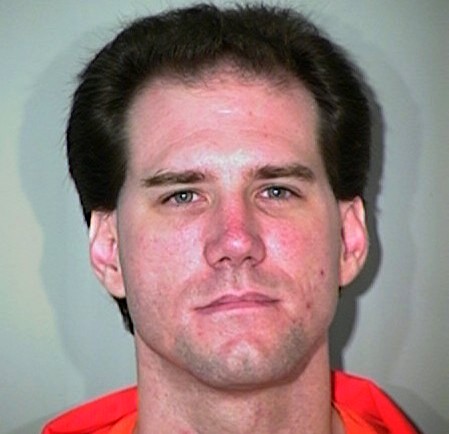 Richard Harley Greenway
Murderer · USA · 1988
27 March 1988 — Greenway and Christopher Lincoln burglarized the Tucson home of…
2 victims
Richard Harley Greenway
Murderer · USA · 1988
27 March 1988 — Greenway and Christopher Lincoln burglarized the Tucson home of…
2 victims
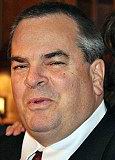 Albert Peterson
Murderer · USA · 2012
Albert Peterson shot dead his wife and two sons hours after going to church bec…
3 victims
Albert Peterson
Murderer · USA · 2012
Albert Peterson shot dead his wife and two sons hours after going to church bec…
3 victims
 Lan Anh Le
Murderer · USA · 2010
Lan Anh Le was a 22-year-old woman at sentencing. She was 20 at the time of the…
1 victim
Lan Anh Le
Murderer · USA · 2010
Lan Anh Le was a 22-year-old woman at sentencing. She was 20 at the time of the…
1 victim
 Brittany Holberg
Murderer · USA · 1996
Brittany Holberg robbed and murdered an 80-year-old white male in his home. The…
1 victim
Brittany Holberg
Murderer · USA · 1996
Brittany Holberg robbed and murdered an 80-year-old white male in his home. The…
1 victim
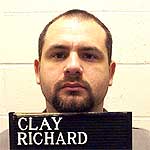 Richard Clay
Murderer · USA · 1994
Richard D. Clay’s close friend, Charles Sanders, had an affair with Stacy Marti…
1 victim
Richard Clay
Murderer · USA · 1994
Richard D. Clay’s close friend, Charles Sanders, had an affair with Stacy Marti…
1 victim
- Gender
- male
- Country
- Canada
- Location
- Edmonton, Alberta, Canada
- Date of birth
- July 4, 1979
- Age at first offence
- 29
- Characteristics
- dismemberment, history of mental illness
- Victim profile
- John Brian "Johnny" Altinger, 38
- Method of murder
- St abbing with knife
- Date(s) of murder
- October 10, 2008
- Years active
- 2008
- Date of arrest
- October 31, 2008
- Status
-
Life imprisonment
Sentenced to life in prison with no chance of parole for 25 years on April 12, 2011
Case record: Mark Twitchell
Timeline
- April 12, 2011 — Mark Twitchell was sentenced to life in prison with no chance of parole for 25 years.
- June 17, 2011 — An attempted murder charge against Mark Twitchell was stayed in the Court of Queen’s Bench of Alberta.
- September 2008 — Mark Twitchell shot a short horror film at a garage he rented in the south end of Edmonton.
- October 10, 2008 — Johnny Altinger was killed at a southside garage.
- Fall 2008 — Mark Twitchell was an aspiring filmmaker.
- Almost three years before June 17, 2011 — The attempted attack on Gilles Tetreault was alleged to have occurred.
Background
Mark Andrew Twitchell was born on July 4, 1979, in Edmonton, Alberta. He was a Canadian. He was an aspiring filmmaker in the fall of 2008. In September 2008, he shot a short horror film at a garage he rented in the south end of Edmonton.
Twitchell was convicted of first degree murder in the death of John Brian “Johnny” Altinger. His trial attracted substantial media attention because Twitchell was inspired by the character Dexter Morgan, from the Dexter television series, a forensic bloodstain pattern analyst for the fictional Miami Metro Police Department who moonlights as a serial killer.
The offence
Johnny Altinger was 38 years old. He worked at an oilfield equipment manufacturer at the time of his disappearance.
Altinger told his friends that he was meeting a woman he had met on the online dating website plentyoffish.com. Several of Altinger’s friends became concerned after they received strange emails from Altinger explaining that he had met a woman who was taking him on a long vacation to Costa Rica.
Twitchell used an internet dating service to lure Altinger to a rented garage on the pretext of a date or possible sexual encounter. Once at the garage, Twitchell hit Altinger on the head with a pipe, stabbed him to death using a hunting knife, dismembered his body, and disposed of his remains down a city sewer.
Twitchell also lured Gilles Tetreault. Gilles Tetreault testified that he was lured off the website plentyoffish.com expecting a date with a woman, only to be attacked by a man in a mask with a stun baton when he arrived at a garage rented by Twitchell.
Investigation
An investigation was launched by the Edmonton Police Service after Altinger disappeared.
After growing more and more suspicious, several of Altinger’s friends broke into his condo and found his passport, dirty dishes, and no indication anything had been packed. Altinger’s boss received a resignation letter by email, but never got a response to the request for a forwarding address for Altinger’s final paycheck.
Arrest
No arrest details were stated.
Trial
Twitchell’s first degree murder trial included extensive media attention.
Evidence: “SKConfessions”
The key piece of evidence presented by the Crown was a document entitled “SKConfessions”. “SK” stood for Serial Killer. The document was recovered from Twitchell’s laptop despite being deleted.
The document began with the passage:
"This story is based on true events. The names and events were altered slightly to protect the guilty. This is the story of my progression into becoming a serial killer."
The document described in detail the author’s extensive planning, a failed first attempt, and a successful second attempt at murdering a man by luring him to his garage using fake online dating profiles.
During the trial, Twitchell admitted authoring the document and admitted killing Altinger. He contended that he acted in self defense and that much of the document was a fictionalization of the events. He claimed that the mindset of the author, which portrayed the killing as deliberate and intentional, was sensationalized in an attempt to make a more compelling novel.
Admissions and defence position
Twitchell admitted he lured Altinger to the garage. He also admitted he lured another stranger a week earlier, but he said he did it as a prank to encourage them to help hype a slasher-movie project.
Twitchell testified that Gilles Tetreault managed to fight back and flee the garage, as described in the document.
Twitchell testified that Altinger got angry when he learned of the prank and attacked him. In self defence, Twitchell said he knifed him in the heart, then panicked and cut up the body and dumped it down a sewer. He was not asked by either Crown or defence to affirm or refute specific aspects of the actual dismemberment.
Publication ban and excluded evidence from the jury
Some description in the document was considered too inflammatory to be presented to the jury. The Crown, defence, and judge decided it was too inflammatory to be presented to the jury. A publication ban applied to at least some passages until the jury was sequestered Tuesday afternoon to reach a verdict.
The jury did not hear certain evidence described in the document, even though it was considered as disturbing as facts heard by the jury. The document included a passage about cutting off the head off his victim and playing with it like a hand puppet:
"I grabbed his jaw with my gloved hand and moved it while making a funny voice to make it look like it was talking, and chuckled to myself at the total silliness of it all,"
The Crown suggested the document described real events in Twitchell’s life surrounding the death of Altinger, despite names and places being fictionalized.
Among other information not shown to the jury were the author’s thoughts on organized religion and on murdering human beings. The document included these lines:
"Religion, he wrote, is for suckers. "There are no deities or religious undertones in my life at all," he wrote. "I have no place for them and I find the whole concept of religion detestable. It's all a big, corrupt power grab designed to take advantage of simple-minded common folk.""
The document included:
"He talked about cutting open the torso of the victim and watching the organs slowly collapse. "If I had a sense of smell this might be disgusting for me. But I only find it fascinating.""
The document included the author’s views about killing:
"Most people fantasize and it only ever stays a fantasy. They don't have the disposition or the stomach to go all the way with their dark urges. But I do."
It included:
"I do not have any reservations about disposing of the negative people in this world who deserve a one-way ticket to the afterlife, if such a thing exits."
It included the author’s description of a desired target:
"He said one person he really wanted to dispatch was an ex-boss. The man, he wrote, was "a twisted old fart who hated life and everything in it. I owed it to the world to remove him from its glorious surface and would take my chance when I was ready.""
The document also included a self-diagnosis. The document stated:
"I had found out through introspection and discussions with therapists that I am in fact a psychopath in almost every clinically defined sense,"
Justice Terry Clackson ruled the jury should not hear the self-diagnosis because the terminology was emotionally loaded and because Twitchell, if he was writing it as the truth, would not be in a position to properly diagnose himself. Twitchell was also not asked by either Crown or defence to affirm or refute specific aspects of the actual dismemberment, and he did not take issue in court with what was written about the dismemberment in the document.
Jury and media coverage
During the three-week trial, the jury heard that Twitchell was a married father and an aspiring filmmaker with a fascination with Star Wars, weapons, and the TV serial killer Dexter Morgan. The court heard Twitchell juggled the life of being a young dad with having a girlfriend on the side and a female American online pal with whom he shared dark secrets.
Before the criminal trial, Crown prosecutors and the defence sought vast publication bans and sealing orders over the police evidence, preventing the media from reporting details until the jury would hear it during the future trial. The media fought the application, but the judge agreed to both a sealing order and publication ban. The judge stated:
"there is a real risk that pre-trial publicity will undermine the accused's constitutionally protected right to a fair trial."
A jury pool was polled through a “challenge for cause” procedure to determine whether a potential juror had been influenced by extensive media coverage prior to the publication bans taking effect. After the bans were lifted, a substantial media presence attended and reported on the trial, including American television programs Dateline NBC and CBS 48 Hours Mystery.
A forthcoming true crime book was in the works by journalist and author Steve Lillebuen.
Verdict and sentence
A jury convicted Twitchell of first degree murder for the killing of Altinger. Twitchell was handed a life sentence on April 12 after the jury convicted him of the Oct. 10, 2008, killing of Altinger.
Sentencing
Twitchell received a life sentence on April 12, 2011. He had no chance of parole for 25 years.
Appeals
After his first degree murder conviction, Twitchell used the extensive media coverage of his case as grounds for an appeal. He sent a hand-written notice of appeal that was filed Monday (as described in reporting dated May 10, 2011). In the notice of appeal, he wrote:
"The media attention surrounding my case was so extensive, so blatant and so overtly sensationalized that it is unreasonable to expect any unsequestered jury to have remained uninfluenced by it, regardless of (the) judge's instructions in the charge,"
Twitchell also stated:
"sufficient evidence was presented to raise reasonable doubt on all required bases,"
He suggested his defence lawyer did not properly address key points on state of mind and credibility. He argued his “advanced knowledge” of computers and “significant differences” between himself and a document found buried in the deleted files of his laptop called SKconfessions undermined the implication that he would use one to “carry out a crime” and “destroys” the suggestion he deleted SKconfessions to “hide or erase evidence” or thought it “unrecoverable.”
He also claimed that “the significant differences in the philosophical world view and individual search for meaning” between himself and SKconfessions was not discussed.
Twitchell also alleged that Crown prosecutors improperly used evidence, including his lying to his girlfriend, his wife and police, to take away his credibility. He stated:
"This led the jury to make an inappropriate and skewed character judgement, concluding I'm a lifetime liar,"
He concluded:
"The Crown's theory leans on too many fallacies of logic and contradictions in reasoning to make any sense," he concludes. "This must be corrected."
The result of his appeal had not yet been decided.
Outcome
Twitchell remained convicted of first degree murder in the death of John Brian “Johnny” Altinger.
Aftermath
Tetreault’s attempted murder charge was addressed separately from the first degree murder conviction. A conviction of attempted murder would not add to the life sentence Twitchell had already received.
A true crime book was in the works by Steve Lillebuen.
Other details
The document “SKConfessions” began with the passage:
Twitchell said SK stood for his writing hero Stephen King but also meant “serial killer.”
Twitchell claimed SKconfessions was a work of fiction based loosely on the events of his life. He said the first person document described his progression into becoming a serial killer.
Twitchell testified that he lured Altinger and another stranger to the garage. He said his intention was a prank to encourage help with hype for a slasher-movie project, but he testified that Altinger attacked him when he learned of the prank. In self defence, Twitchell said he knifed Altinger in the heart, then cut up the body and dumped it down a sewer.

Spotted an error, or have more information about this case?