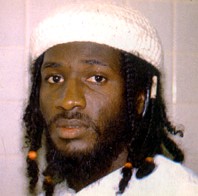
Gary Tyler
Homicide Edward Charles Allaway
Homicide · USA · 1976
Edward Charles Allaway Edward Charles Allaway was found not guilty by reason of…
7 victims
Edward Charles Allaway
Homicide · USA · 1976
Edward Charles Allaway Edward Charles Allaway was found not guilty by reason of…
7 victims
 Anthony Barbaro
Homicide · USA · 1974
December 30, 1974 — Anthony F. Barbaro left his house with his mother's car, we…
3 victims
Anthony Barbaro
Homicide · USA · 1974
December 30, 1974 — Anthony F. Barbaro left his house with his mother's car, we…
3 victims
 Charles Cullen
Serial killer · USA · 1984
Charles Cullen (born February 22, 1960) was a former nurse and the most prolifi…
45 victims
Charles Cullen
Serial killer · USA · 1984
Charles Cullen (born February 22, 1960) was a former nurse and the most prolifi…
45 victims
 Gerald Wayne Bivins
Murderer · USA · 1991
Gerald Wayne Bivins · January 16, 1991 — Bivins and two other men committed mul…
1 victim
Gerald Wayne Bivins
Murderer · USA · 1991
Gerald Wayne Bivins · January 16, 1991 — Bivins and two other men committed mul…
1 victim
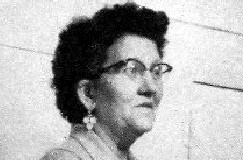 Rhonda Bell Martin
Serial killer · USA · 1937
Rhonda Bell Martin was an American serial killer known for poisoning multiple f…
6 victims
Rhonda Bell Martin
Serial killer · USA · 1937
Rhonda Bell Martin was an American serial killer known for poisoning multiple f…
6 victims
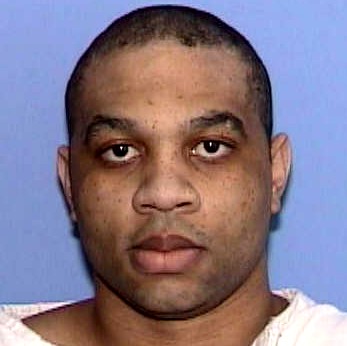 Tilon Lashon Carter
Murderer · USA · 2004
Tilon Lashon Carter was convicted in November 2006 of capital murder under Tex.…
1 victim
Tilon Lashon Carter
Murderer · USA · 2004
Tilon Lashon Carter was convicted in November 2006 of capital murder under Tex.…
1 victim
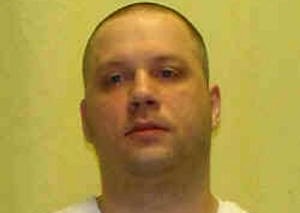 Tyrone Noling
Murderer · USA · 1990
Tyrone Noling was sentenced to death for the murders of Bearnhardt Hartig and C…
2 victims
Tyrone Noling
Murderer · USA · 1990
Tyrone Noling was sentenced to death for the murders of Bearnhardt Hartig and C…
2 victims
- Gender
- male
- Country
- USA
- Location
- Destrehan, Louisiana, USA
- Date of birth
- J uly 1958
- Age at first offence
- 16
- Characteristics
- juvenile (16), the bodies were never found
- Victim profile
- Timothy Weber, 13
- Method of murder
- Shooting
- Date(s) of murder
- October 7, 1974
- Years active
- 1974
- Date of arrest
- —
- Status
-
Sentenced to death
Resentenced to life in prison after death sentence in November 1975 by electrocution; subsequent resentencing left him serving at Louisiana State Penitentiary, Angola, LA.
Case record: Gary Tyler
Background
Gary Tyler was a Black juvenile who was arrested and tried after racial disturbances during school integration in Louisiana.
Tyler was 16 at the time of the incident for which he was later convicted. He was born July 1958 and became the subject of extensive public controversy and campaign efforts. Human-rights organisations argued that the legal process was flawed with racism, and Amnesty International described him as a “political prisoner”.
Tyler was incarcerated at the Louisiana State Penitentiary in Angola, LA, following his resentencing to life in prison.
The offence
In October 1974, racial fighting erupted involving Black students being bussed into Destrehan High School as part of a desegregation program. Students at Destrehan High were sent home earlier than usual as a result of clashes between Black and white students.
A mob of 200 whites throwing stones and bottles attacked the bus carrying Black students as it attempted to leave. A shot rang out while Timothy Weber was standing near the buses with his mother. Weber fell wounded and died a few hours later in hospital.
A man standing next to Weber was slightly scratched in the arm, allegedly by the same bullet. Gary Tyler was one of the Black students on the bus from which the shot was allegedly fired. Tyler was not on his regular bus; he had got into it as the situation became increasingly dangerous. There were some 65 students on the bus, well over its normal capacity.
Investigation
After the attack, the police called by the school principal ordered the bus to park around the corner. All students were ordered to get off the bus and male students were thoroughly searched immediately; girl students were searched later at the police station.
The bus was searched on two different occasions for over three hours by approximately seven policemen and no gun was found. The bus was then taken to the police station along with the students.
Gary Tyler was taken in a police car after being charged with disturbing the peace. At the police station the students were questioned and released.
Nathalie Blanks later testified that she saw Tyler fire the gun and indicated to the police the exact place where she had been seating. After Blanks’ testimony, the police “found” a .45 automatic gun stuffed inside the seat, through a long, clearly visible tear in the seat. The seat had been previously searched, shaken and turned upside down several times and nothing had been found.
The .45 automatic gun was described as having been stolen from a police firing range used by the officers of the sheriff’s department and investigating officers. The gun later disappeared. No fingerprints were found on the gun. The gun was not tested to see if it had been recently fired, and it was not tested to determine if the bullet that killed Weber could have been fired from the gun.
Tyler’s gloves were confiscated and sent to the Southeastern Louisiana Regional Criminalistics Laboratory for testing. They were reportedly misplaced for several weeks before the head of the lab, Herman Parrish, claimed he tested them and found gunpowder residue on them. The forensic account described that no independent testing was done because all the alleged residue was used up by Parrish, and that Parrish later resigned in 1976 after being accused of lying about test results in another case.
The bullet that police claimed killed Weber was not tested to see if it ever passed through a human body.
Arrest
Tyler was arrested by deputy Nelson Coleman. Coleman was described as one of the few Black sheriff’s deputies in St. Charles Parish, and Tyler was charged with “disturbing the peace” after he complained about police harassment of a fellow Black student. When asked at trial whose peace Tyler had disturbed, Coleman replied: “Mine.”
Police reportedly beat Tyler at the police station in an effort to force him to confess to the shooting, and Tyler refused.
Trial
Tyler was charged with first degree murder, a capital crime. The first degree murder charge meant that the case had to be tried in adult criminal court rather than juvenile court. A lesser charge such as second-degree murder would have been tried in juvenile court given Tyler’s young age.
Tyler was tried by an all-white jury. Members of the black community were deliberately excluded from the jury.
The prosecution relied mainly on the testimony of one girl student, Nathalie Blanks. Blanks later recanted her testimony. Several other students who testified against Tyler later recanted as well, stating they had been coerced by police to make statements identifying Tyler as the shooter.
Gary Tyler was represented by a white lawyer described as specializing in civil cases. The lawyer had spent about one hour with Tyler during the year prior to trial, did not interview witnesses, did not present expert witnesses, and did not conduct tests on physical evidence offered by the state.
The trial judge was Judge Ruche Marino. The account described Marino as consistently biased in favor of the prosecution. It further described Marino as instructing the jury that they could presume Gary guilty before deliberations. The jury deliberated three hours and found Tyler guilty of first-degree murder in November 1975, after a trial that lasted five days.
Under Louisiana law at the time, first-degree murder carried an automatic death sentence. Tyler’s date of execution was set for May 1, 1976. At seventeen, Tyler was described as the youngest person on death row in the United States.
Sentencing
Gary Tyler was convicted and sentenced to death on 14 November 1975.
Tyler’s death sentence was later commuted to life imprisonment without eligibility for parole, probation, or suspension of sentence for a period of 20 years.
Appeals
A Louisiana Supreme Court decision annulled Tyler’s death sentence following a United States Supreme Court ruling in 1976 that declared Louisiana’s death penalty unconstitutional, while affirming Tyler’s conviction for first degree murder.
In January 1977, the Supreme Court of Louisiana annulled the death sentence imposed on Tyler as a result of this ruling and affirmed his conviction for first degree murder. The death sentence was commuted to life imprisonment without eligibility for parole, probation or suspension of sentence for a period of 20 years.
A new appeal resulted in a ruling by the US Court of Appeals, Fifth Circuit, in June 1980. The court held that “Tyler was convicted on the basis of an unconstitutional charge” and that his trial had been “fundamentally unfair.” The decision related to trial judge instructions to the jury, including instructions that the defendant “intended the natural and probable consequences of his act”, described as meaning to kill or inflict great bodily harm on more than one person.
The Fifth Circuit stated:
“the threshold issue for this court is whether the [judge’s instruction] given here so infected the trial as to render it fundamentally unfair. We conclude that it did.”
The Fifth Circuit vacated Tyler’s conviction and ordered a retrial, citing the defense lawyer’s failure to object as serious enough to create a miscarriage of justice.
The state appealed and, on 27 April 1981, the US Court of Appeals, Fifth Circuit reversed its previous decision. It did not dispute that the judge’s charge to the jury was unconstitutional and reiterated that the trial had been “fundamentally unfair,” but reversed the order for a new trial.
The US Supreme Court subsequently declined to hear the case on appeal.
It was later described that in 1981 an appeal court decided that Tyler was “denied a fundamentally fair trial,” but declined to order a retrial.
Outcome
Tyler’s death sentence was commuted, and he was resentenced to life in prison.
Tyler remained incarcerated at the Louisiana State Penitentiary in Angola, LA.
Aftermath
Pardon and parole-related petitions
In 1989, Tyler petitioned the Louisiana Board of Pardons (LBP). The LBP voted 3-2 to recommend to then governor Charles Roemer that Tyler’s sentence be reduced to 60 years. The recommendation would have made Tyler eligible for parole after serving a third of the sentence, 20 years. Roemer rejected the recommendation.
In 1991, Tyler petitioned the board for clemency. The LBP voted unanimously to recommend that Roemer reduce Tyler’s sentence to 50 years and restore a benefit for good behavior, making Tyler immediately eligible for parole. Roemer denied the request shortly before leaving office.
In October 1989, the LBP heard testimony for several hours but postponed acting to allow time for the state Attorney General’s office to answer questions raised about key evidence used at Tyler’s trial.
On 14 December 1989, the LBP voted 3-2 to recommend that then Governor Charles Roemer reduce Tyler’s sentence from life imprisonment without parole for 20 years to a 60 year prison sentence.
On 24 January 1990, Governor Roemer rejected the LBP recommendation.
A clemency application was filed on 27 February 1991 requesting clemency on grounds described as innocence and trial unfairness, including that Tyler was denied the presumption of innocence and that courts refused to take action due to an error made by his trial attorney. The application also stated that the trial attorney was unable to remember why he made the error.
On 4 December 1991, the LBP unanimously recommended reducing Tyler’s sentence to 50 years and restoring a benefit for reduction for good behaviour, making him immediately eligible for parole.
On 13 January 1992, shortly before leaving office, Governor Roemer denied clemency to Gary Tyler. Roemer denied without giving reasons and refused to talk to the press about it.
Roemer’s denial meant Governor Edwin Edwards could not consider Tyler’s case for one year, and rules of the LBP stated that after a petition was denied a prisoner could not reapply until a year later. The process to complete would take around a year.
It was stated that Tyler applied again for a pardon to the Louisiana Board of Pardons as his third attempt, with a hearing likely to take place in late January 1995. The board’s recommendation would go to Governor Edwin Edwards for final decision. Governor Edwards’ term of office was described as ending in March 1995.
The account described that Tyler’s original sentence included eligibility for parole after serving 20 years, but that Louisiana was contesting this issue and denying that he would be automatically eligible for parole in November 1995, when he would have served 20 years in prison. His attorneys were described as pursuing litigation on this issue.
Statements and quotes in connection with the case
Mary Howell, described as Tyler’s longtime attorney, declared:
“This case is just permeated with racism all the way through it,” declared Mary Howell, Gary’s longtime attorney, “from the initial event all the way up to the pardon process.”
Gary Tyler, asserting his innocence, stated:
“I emphatically and unequivocally maintain my innocence as I did in 1974 and hope that one day justice will eventually prevail in this matter.”
Juanita Tyler, described as Gary Tyler’s mother, said:
“I just wish for the day he could be home. It’s been so long.”
Terry Tyler said:
“They were on the attack, man. It was panic.”
Mary Howell also declared:
“It is a shocking thing there is someone in prison in this country for whom the courts have said, 'Your trial was fundamentally unfair, you've been denied the presumption of innocence, but we won't give you a fair trial because your lawyer can't remember why he didn't object,'”
Cultural references
UB40 included the song “Tyler” on their 1980 debut album, Signing Off. It was stated that the live version on UB40 Live (1983) was introduced by Ali Campbell including Tyler’s first name.
Ali Campbell remarked in an interview in August 2007 that the next UB40 album will be named Gary Tyler.
The lyrics provided included:
“Tyler is guilty the white judge has said so What right do we have to say it's not so Tyler is guilty the white judge has said so What right do we have to say it's not so
Testify under pressure, a racist jury Government lawyers its all for show With rows of white faces False accusations He's framed up for murder They won't let him go (Chorus)”
Additional personal and incidental details
Gary Tyler’s family included his mother Juanita Tyler and his brother Terry Tyler. The account also included his sister Ella in Los Angeles, where it described that he lived with his sister at age twelve after leaving Louisiana.
It was stated that Tyler was arrested twice for burglary, with one burglary described as one he said he was guilty of and another he said he did not do, and that he spent seven months in a juvenile institution.
It was also stated that Tyler was considered something of a radical; intelligent and outspoken, and someone who demanded respect from persons in authority.
The account described that in 1970 the Tyler family moved to St. Rose, about twenty miles upriver from New Orleans, and that Destrehan was five miles further north.
Other details
Hearing and opposition described around the case
Governor Kathleen Blanco refused to pardon Gary Tyler.
It was stated that Amnesty International renewed its call to Louisiana’s governor to pardon Tyler and that Governor Edwards was the governor to whom recommendations would go for final decision.
The account stated that the Louisiana jury was all-white and that the US Court of Appeals, Fifth Circuit, decided in 1981 that Tyler was “denied a fundamentally fair trial,” but declined to order a retrial.
It was stated that all witnesses against Tyler had recanted and said their families were threatened by the police, and some claimed they were told what to say by prosecutors.
It was described that a gun was found during the subsequent search of the bus but that that gun had disappeared and was described as having been stolen from the firing range used by the officers of the sheriff’s department.
It was described that the bus driver continually insisted that he believes the shot was fired from out of the bus, and that he observed the search of the bus and insisted that the gun was not found on it.
The account described that witnesses and testimony included a deputy sheriff named Nelson Coleman and references to Destrehan Deputy Sheriff V.J. St. Pierre and another witness Patricia Files, and stated that some quotations appeared from those individuals.
Timeline
- 14 November 1975 — Gary Tyler was convicted and sentenced to death.
- May 1, 1976 — Tyler’s execution date was set for this date.
- 1976 — The United States Supreme Court ruled Louisiana’s death penalty unconstitutional.
- January 1977 — The Supreme Court of Louisiana annulled Tyler’s death sentence and affirmed his conviction.
- June 1980 — The US Court of Appeals, Fifth Circuit vacated Tyler’s conviction and ordered a retrial, holding the trial judge’s instructions were unconstitutional and that the trial was “fundamentally unfair.”
- 27 April 1981 — The US Court of Appeals, Fifth Circuit reversed its order for a new trial while reiterating that the judge’s charge to the jury was unconstitutional and the trial was “fundamentally unfair.”
- 1989 — Tyler petitioned the Louisiana Board of Pardons.
- 14 December 1989 — The LBP voted 3-2 to recommend Governor Charles Roemer reduce Tyler’s sentence to 60 years.
- 24 January 1990 — Governor Charles Roemer rejected the LBP recommendation.
- May 1991 — Tyler passed exams to obtain a secondary education certificate (General Education Diploma, GED).
- 27 February 1991 — Tyler filed a new application for a full pardon requesting clemency.
- 4 December 1991 — The LBP unanimously recommended reducing Tyler’s sentence to 50 years and restoring eligibility benefits for good behavior.
- 13 January 1992 — Governor Charles Roemer denied clemency.
- August 2007 — Ali Campbell remarked in an interview that the next UB40 album will be named Gary Tyler.
- Late January 1995 — A hearing before the LBP was described as likely to take place.
- March 1995 — Governor Edwin Edwards’ term of office was described as ending.

Spotted an error, or have more information about this case?