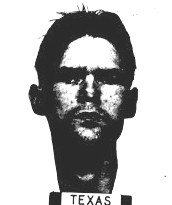
John Russell Thompson
Murderer Ervil LeBaron
Murderer · USA · 1972
Ervil Morrell LeBaron (1925 to August 16, 1981) was the leader of a polygamous…
35 victims
Ervil LeBaron
Murderer · USA · 1972
Ervil Morrell LeBaron (1925 to August 16, 1981) was the leader of a polygamous…
35 victims
 Brian Kevin Rosenfeld
Murderer · USA · 1985
Brian Kevin Rosenfeld Brian Kevin Rosenfeld was sentenced to three concurrent l…
23 victims
Brian Kevin Rosenfeld
Murderer · USA · 1985
Brian Kevin Rosenfeld Brian Kevin Rosenfeld was sentenced to three concurrent l…
23 victims
 Marvin Gray
Murderer · USA · 1975
Marvin Gray was convicted killer who claimed responsibility for 23 slayings and…
23 victims
Marvin Gray
Murderer · USA · 1975
Marvin Gray was convicted killer who claimed responsibility for 23 slayings and…
23 victims
 Yahweh ben Yahweh
Murderer · USA · 1980
Yahweh ben Yahweh was born and legally named Hulon Mitchell Jr. (October 27, 19…
23 victims
Yahweh ben Yahweh
Murderer · USA · 1980
Yahweh ben Yahweh was born and legally named Hulon Mitchell Jr. (October 27, 19…
23 victims
 Robert Mark Edwards
Murderer · USA · 1986
Robert Mark Edwards was born on 6/14/61, 6/15/60, 6/14/58, or 6/15/61, with FBI…
2 victims
Robert Mark Edwards
Murderer · USA · 1986
Robert Mark Edwards was born on 6/14/61, 6/15/60, 6/14/58, or 6/15/61, with FBI…
2 victims
 Thomas Grant Ervin
Murderer · USA · 1967
Thomas Grant Ervin was convicted of two counts of first-degree murder and one c…
3 victims
Thomas Grant Ervin
Murderer · USA · 1967
Thomas Grant Ervin was convicted of two counts of first-degree murder and one c…
3 victims
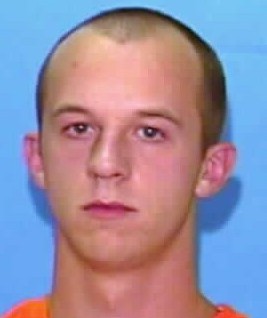 Joshua David Nelson
Murderer · USA · 1995
Joshua David Nelson was convicted in Lee County, Florida, for offenses connecte…
1 victim
Joshua David Nelson
Murderer · USA · 1995
Joshua David Nelson was convicted in Lee County, Florida, for offenses connecte…
1 victim
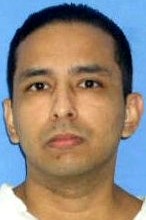 John Joe Amador
Murderer · USA · 1994
John Joe Amador was executed in Texas by lethal injection on August 29, 2007. ·…
1 victim
John Joe Amador
Murderer · USA · 1994
John Joe Amador was executed in Texas by lethal injection on August 29, 2007. ·…
1 victim
 Jules-Alexandre Ughetto
Mass murderer · France · 1928
Paris, 17th September. A woodcutter made a plea at the trial of two lads. He sa…
5 victims
Jules-Alexandre Ughetto
Mass murderer · France · 1928
Paris, 17th September. A woodcutter made a plea at the trial of two lads. He sa…
5 victims
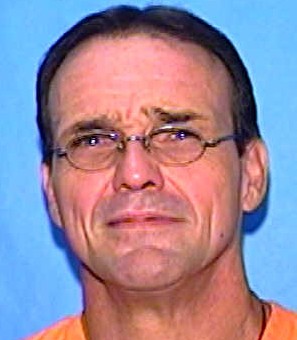 Michael Gordon Reynolds
Murderer · USA · 1998
Michael Gordon Reynolds had a prior dispute with Danny Ray Privett over a trail…
3 victims
Michael Gordon Reynolds
Murderer · USA · 1998
Michael Gordon Reynolds had a prior dispute with Danny Ray Privett over a trail…
3 victims
- Gender
- male
- Country
- USA
- Location
- Bexar County, Texas, USA
- Date of birth
- January 27, 1955
- Age at first offence
- 22
- Characteristics
- drug addict, drugs, armed robbery
- Victim profile
- Mary Kneupper, 70 (store owner)
- Method of murder
- Shooting ( .45 caliber pistol)
- Date(s) of murder
- May 15, 1977
- Years active
- 1977
- Date of arrest
- —
- Status
-
Executed
Executed by lethal injection in Texas on July 8, 1987
Case record: John Russell Thompson
Timeline
- July 3, 1987 — United States Court of Appeals, Fifth Circuit decided John Russell THOMPSON v. James A. LYNAUGH, Interim Director, Texas Department of Corrections (No. 87-5523).
- July 7, 1987 — John Russell Thompson spent his last day on death row.
- July 8, 1987 — John Russell Thompson was executed by means of lethal injection; at 12:04 am he was strapped to the gurney in the death chamber and at 12:20 am he was pronounced dead.
Background
John Russell Thompson was a 32 year-old former laborer living in San Antonio. He was a known methamphetamine user and alcoholic. Around the time of the murder, his family thought he had quit abusing drugs.
Thompson had an extensive criminal record prior to his murder conviction. He had been arrested for theft, auto theft, robbery, unlawful carrying of a weapon, burglary, and possession of paraphernalia. He served two years of a six-year prison term for burglary and theft.
Thompson was prisoner #610 and was on Texas’ Death Row.
The offence
On the night of the murder, Thompson constructed an elaborate plan to rob a local savings and loan for money to buy narcotics. With the help of accomplices Esther Cervantes, Christie Sparks, and Fernando Guerrero, Thompson thought his plan was foolproof. When they arrived at the savings and loan, the office was closed. Their backup plan was to go to rob an apartment complex office, but that office was closed too.
Desperate for drug money, Cervantes, Sparks, and Thompson drove to the Pioneer Store and Lock facility on Interstate 35 and Loop 410 in San Antonio, TX. Thompson went into the office while the manager, Mary Kneupper, struggled to surrender the cash to Thompson. After a shot in the neck with a .45 caliber pistol, Thompson fled the scene without the cash.
Mary Kneupper, 70, died of a gunshot wound to the neck.
In the federal appellate account, Thompson, Fernando Guerrero, and Guerrero’s friend Christie Sparks Moore met at another friend’s house in San Antonio, Texas, where Thompson initiated a discussion about committing an armed robbery. Guerrero agreed, and Thompson and Guerrero attempted to secure a gun. Their efforts were unsuccessful, and Guerrero enlisted Moore’s aid in secretly obtaining, from the home of Moore’s stepfather, a .45-caliber automatic pistol that belonged to her stepfather. Thompson had familiarity with firearms. Thompson manipulated the weapon, which had three safety mechanisms, to be certain he knew how to operate it. Guerrero also manipulated the weapon, and either Guerrero or Thompson disengaged the safety devices. The gun was placed under Guerrero’s seat in the car.
The three then picked up a friend of Thompson, Esther Cervantes, who supplied a bandana and a pair of sunglasses to be used as a disguise. Thompson drove the group around looking for a place to rob. After inspecting several other places, which appeared not to be opportune targets, Thompson drove by the office of a place of business called Pioneer Stor & Lok. Thompson said to the group in his car that he saw a woman inside counting money. Thompson drove onto Loop 410, where he encountered a pedestrian. A police officer stopped Thompson and gave him a ticket for obstructing traffic. Thompson returned to Pioneer Stor and Lok with his three companions. Leaving them in the car, he donned the disguise, took the murder weapon, got out of the car, and went into the office.
Moore, who was hiding with Cervantes in the back seat, testified at trial that she heard "a large bang" and Thompson then emerged from the office. Moore testified that Thompson got in the car and they drove away. Thompson told the group he hadn’t taken any money because there was none, and that the woman in the office (Mary Kneupper) had laughed at him when he first entered the office and pointed the pistol at her. When she later fled the office area through a doorway, he jumped over the office counter and attempted to pull her back into the office area to stop her flight. Thompson said that the pistol had discharged accidentally and that he did not think he had wounded her. Moore also testified that when Thompson later learned from the media that Mrs. Kneupper had died, he cried and said repeatedly that he had shot her accidentally.
The autopsy revealed a wound made by a bullet that entered the left side of her neck, severed her spine, and exited the right side of her head in front of her ear. The doctor testified that the wound was caused by a large caliber bullet fired from a distance of less than two feet, perhaps as little as a few inches. A firearms examiner testified the victim was shot from a distance of three to six inches.
Ronald Ash testified that the day after the death he spoke with Thompson and Guerrero regarding the robbery-murder that occurred the previous day. Thompson told him that "they had tried to make a score and killed an old lady," and Thompson did not say it was accidental.
Investigation and arrest
A neighbor heard the shot and called the police. Thompson was named as a suspect and arrested later in Plano, TX for robbery.
Trial
Thompson was convicted in the guilt phase of the trial and the jury returned a guilty verdict. During the sentencing phase, the trial began after the jury returned its guilty verdict. Evidence was adduced that Thompson had been convicted of felony theft in November 1972 and successfully terminated a sentence of three years on probation. He had been convicted of felony burglary of a habitation and felony theft in 1974 and was sentenced to five-to-six years and two-to-six years imprisonment, respectively. When arrested for burglary, he had been in possession of a .22-caliber pistol and several boxes of ammunition.
Four days before the Pioneer episode, police recovered a loaded and fully operational .32 automatic pistol from a car that Thompson was driving.
The state introduced other evidence of Thompson’s criminal propensities.
There was no evidence that Thompson had previously been convicted of robbery or that he had personally fired a weapon in the course of an offense. Moore testified that while she had known Thompson for only four months, she had gotten to know him very well and had never seen him do a violent act. Moore did not believe that Thompson deliberately killed Mrs. Kneupper or that he was a cold-hearted person who could walk into the office, kill Mrs. Kneupper, and walk out. Moore, Thompson, and Guerrero had all agreed before the attempted robbery that the pistol would be used only to scare the victim, and Thompson assured Moore that he intended to use the pistol only in this manner.
Plea bargaining history
Before the second trial, Thompson had previously been tried and convicted. The conviction was reversed by the Texas Court of Criminal Appeals on September 23, 1981.
After remand and the reversal, Gordon Armstrong, the felony chief of the District Attorney’s office, offered Thompson’s counsel, Nick Rothe, a plea bargain of a life sentence if Thompson would plead guilty. Thompson did not accept the offer at that time, and Armstrong did not withdraw it. Thompson was reindicted on January 13, 1982, and the case was assigned for trial in February.
Ed Springer, an assistant district attorney assigned to try Thompson, wanted to know if a plea bargain was possible and urged Rothe to talk with Thompson about such a deal, stating it would require approval by his superiors. Springer testified he wanted to know whether a bargain could be struck as soon as possible so he would have enough time to prepare for trial. Rothe suggested Thompson would plead guilty in exchange for a sentence of thirty years, and the state did not accept it. Rothe later suggested fifty years, and the state did not accept it.
At a later hearing in state court on Thompson’s application for habeas corpus, Rothe testified that Springer had on several occasions "made an offer of a life sentence," but the evidence warranted the conclusion reached by the Texas court that Springer himself did not make any offer. The appellate account states that Springer solicited an offer from Rothe and indicated he would not oppose a life sentence in exchange for a guilty plea. In the two weeks before trial, Springer tried to locate transcripts and exhibits from Thompson’s first trial, locate witnesses, and decide who should testify. On the Thursday preceding the start of the second trial (scheduled to and did begin the following Monday), Rothe told Springer that Thompson would plead guilty in exchange for a promise of a life sentence. Springer conveyed the offer to his superiors, who rejected it and stated that the prosecution’s offer of a life sentence had been withdrawn.
The case went to trial as scheduled, and Thompson was convicted in the guilt phase.
Motion to bar the death penalty
Before the trial, Thompson filed a motion to bar the death penalty, averring that the manner in which the prosecution elected to seek the death penalty was arbitrary and capricious and consequently violated the Fifth, Eighth and Fourteenth Amendments to the Constitution. A hearing was held pursuant to this motion on the same day it was filed.
Sentencing
After the jury responded "Yes" to the sentencing interrogatories, the court sentenced Thompson to be executed. The execution sentence was imposed after the jury’s "Yes" responses in the sentencing phase.
Appeals and habeas corpus
Direct appeal
The conviction was affirmed on direct appeal.
State habeas corpus
Thompson filed an application for a writ of habeas corpus in state court, and a hearing was held. The hearing included testimony and proof that Thompson had signed a confession that had been suppressed at both trials because it was induced by promises of leniency by the state.
Thompson also showed that after Fernando Guerrero had been arrested, he initially refused to give a statement. A detective showed him Thompson’s confession, which implicated him, and Guerrero agreed to and gave a statement. Guerrero did not testify in either of Thompson’s trials, and his statement was not adduced.
Rothe testified that before the first trial, San Antonio Police Officer Maurice Rose had falsely promised Thompson that if he confessed, his mother would not have to go through the agony of a capital murder trial and his possibly being executed.
Rothe also testified that later an employee of the District Attorney’s office asked Rothe if Thompson would discuss an art theft from a local institute, because theft detectives were interested in recovering masterpieces and believed Thompson might know something about the theft. Rothe agreed to the discussion, and it became clear to Rothe that if Thompson could clear up the matter, there would be some "slack" offered to him. Thompson could provide no information.
Moore testified that after she was arrested, she refused to discuss the case with police and refused to give a statement. While under arrest she spoke with her father, who told her she was just as responsible as anyone and should cooperate in any way possible. Her father made her feel very guilty, but she was still afraid to give a statement. One or two days later, police showed her statements made by Thompson and Guerrero and told her it would benefit her to make a statement. She gave a written statement to relate her side and to exonerate Esther Cervantes.
Before Thompson’s second trial, Moore was tried and convicted for aggravated robbery, and served her sentence. Moore testified at Thompson’s second trial.
Federal habeas corpus decision
In John Russell THOMPSON, Petitioner-Appellant, v. James A. LYNAUGH, Interim Director, Texas Department of Corrections, Respondent-Appellee, the United States Court of Appeals for the Fifth Circuit affirmed the district court judgment denying habeas corpus relief and denied a stay of execution.
The appellate decision described the issues Thompson raised in ten respects, including alleged insufficiency of evidence to show he intended to kill a person whom he shot during the course of armed robbery. The court found the evidence sufficient to satisfy constitutional requirements and held that Thompson’s federal constitutional rights were not violated in any of the other respects complained of.
The appellate decision addressed issues, including:
- whether the evidence was sufficient to support the conviction, including whether Thompson deliberately caused the victim’s death with the reasonable expectation that death would result;
- whether the Texas capital sentencing statute narrowed the class of persons eligible for death, including discussion of special issues and whether deliberateness duplicated an element of guilt phase;
- whether the trial court’s failure to define "deliberately" and "reasonable doubt" sua sponte rendered the trial unfair;
- whether a Sandstrom v. Montana claim arose from a prosecutor’s voir dire comments about intent to kill arising from use of a deadly weapon;
- whether admission of uncorroborated accomplice testimony on extraneous offenses deprived Thompson of a fundamentally fair trial;
- whether the trial court erred by failing sua sponte to instruct the jury that it could not consider the law of parties in the punishment phase, with review barred due to procedural default;
- whether due process was violated by use of evidence derived from a police officer’s false promise of leniency, with discussion of procedural default and causation;
- whether the state was barred from seeking death because it had previously offered a life sentence plea bargain.
The appellate court described a voir dire issue: during the prosecutor’s voir dire he incorrectly advised jurors that they could presume intent to kill from the fact that the defendant used a pistol; the trial court instructed the jury on intent and explained that if it believed the shooting was the result of an accidental discharge while Thompson was reaching or grabbing for the deceased, it must acquit him. The appellate decision stated that the only presumption mentioned in the court’s charge was the presumption that the defendant is presumed innocent until guilt is established beyond reasonable doubt, and found no Sandstrom error in the charge.
The appellate court also addressed the claim about withdrawing a plea bargain offer of life imprisonment. It stated that the record reflected Thompson did not accept the earlier offer, he counteroffered thirty and then fifty or sixty years, and a few days before trial he offered to plead guilty in exchange for life imprisonment. The prosecutor informed him the offer had been withdrawn and his offer was rejected. The appellate court stated that no plea bargain was reached because there was no mutual assent at any time.
Outcome
On July 8, 1987, John Russell Thompson was executed by means of lethal injection for the murder of Mary Kneupper of San Antonio, TX.
The execution was carried out at Texas’ Death Row. On July 7, 1987, Thompson spent his last day on death row. He spent the early morning hours with the prison chaplain after coffee and biscuits with peanut butter. Late that morning he visited with his parents John and Etta Thompson, his brother James Thompson, and his sister and brother-in-law Joetta and Robert Thorpe. Late that afternoon, upon arrival in Huntsville, he spent the rest of the day with his attorneys and the chaplain.
At 12:04 am on July 8, Thompson was strapped to the gurney in the death chamber. At 12:20 am, he was pronounced dead.
Other details
Statements and quotes included
Attorney General Jim Mattox said on behalf of executed inmate John Russell Thompson: “He wanted his last words to be with God and not anybody here,” and also described Thompson’s “spiritual conversation” with God.
Judge Peter Michael Curry said: “Thompson was the only capital murder defendant he had tried who was ‘genuinely remorseful.’”
A juror said regarding why the offer of a life sentence was not accepted: “We couldn’t be assured that he would be walking the streets in twenty years, ready to do this again,”
Moore testified: "a large bang"
Ronald Ash testified Thompson said: “they had tried to make a score and killed an old lady,”
Rothe testified regarding offers made by Springer, saying Springer had on several occasions "made an offer of a life sentence,"
Rothe described an expectation of leniency as “slack” offered to him.
Mary Kneupper
Mary Kneupper was the manager at the Pioneer Stor and Lock facility and was 70 years old.
The autopsy findings described the bullet wound as entering the left side of her neck, severing her spine, and exiting the right side of her head in front of her ear. The doctor and firearms examiner provided distance estimates within the range described.
Related legal citations included in the case record
The federal appellate decision included Thompson v. State, 691 S.W.2d 627 (Tex.Cr.App.1984) (en banc) and discussed governing Texas provisions and other U.S. Supreme Court precedents, including Furman v. Georgia and Sandstrom v. Montana and Harrison v. United States.

Spotted an error, or have more information about this case?