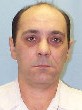
Michael Eugene Thompson
Murderer Brian Kevin Rosenfeld
Murderer · USA · 1985
Brian Kevin Rosenfeld Brian Kevin Rosenfeld was sentenced to three concurrent l…
23 victims
Brian Kevin Rosenfeld
Murderer · USA · 1985
Brian Kevin Rosenfeld Brian Kevin Rosenfeld was sentenced to three concurrent l…
23 victims
 Marvin Gray
Murderer · USA · 1975
Marvin Gray was convicted killer who claimed responsibility for 23 slayings and…
23 victims
Marvin Gray
Murderer · USA · 1975
Marvin Gray was convicted killer who claimed responsibility for 23 slayings and…
23 victims
 Yahweh ben Yahweh
Murderer · USA · 1980
Yahweh ben Yahweh was born and legally named Hulon Mitchell Jr. (October 27, 19…
23 victims
Yahweh ben Yahweh
Murderer · USA · 1980
Yahweh ben Yahweh was born and legally named Hulon Mitchell Jr. (October 27, 19…
23 victims
 Russell Ellwood
Murderer · USA · 1991
Russell Ellwood was a former taxi driver. Authorities suspected him of killing…
20 victims
Russell Ellwood
Murderer · USA · 1991
Russell Ellwood was a former taxi driver. Authorities suspected him of killing…
20 victims
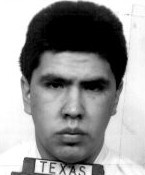 Oswaldo Soriano
Homicide · USA · 1992
Oswaldo Soriano Oswaldo Soriano was sentenced to death on May 6, 1994. His deat…
1 victim
Oswaldo Soriano
Homicide · USA · 1992
Oswaldo Soriano Oswaldo Soriano was sentenced to death on May 6, 1994. His deat…
1 victim
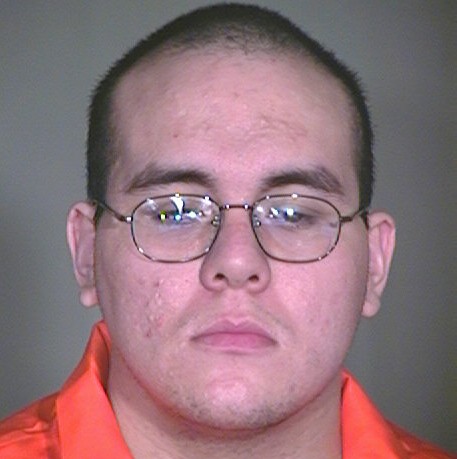 Ruben Garza
Murderer · USA · 1999
December 1, 1999 — Ruben Garza entered the Franco/Rush residence and shot Ellen…
2 victims
Ruben Garza
Murderer · USA · 1999
December 1, 1999 — Ruben Garza entered the Franco/Rush residence and shot Ellen…
2 victims
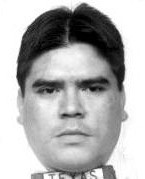 Jose Alfredo Rivera
Murderer · USA · 1993
Jose Alfredo Rivera was sentenced to death on June 2, 1994. His direct appeal r…
1 victim
Jose Alfredo Rivera
Murderer · USA · 1993
Jose Alfredo Rivera was sentenced to death on June 2, 1994. His direct appeal r…
1 victim
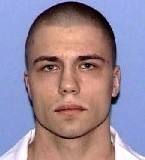 Clinton Lee Young
Murderer · USA
Clinton Lee Young (born July 19, 1983) was convicted of murdering two men in No…
2001 victims
Clinton Lee Young
Murderer · USA
Clinton Lee Young (born July 19, 1983) was convicted of murdering two men in No…
2001 victims
- Gender
- male
- Country
- USA
- Location
- Etowah County, Alabama, USA
- Date of birth
- J une 30, 1959
- Age at first offence
- 25
- Characteristics
- kidnapping, robbery
- Victim profile
- Maisie Carlene Gray, 57 (convenience store clerk)
- Method of murder
- Shooting ( .22 caliber pistol)
- Date(s) of murder
- December 10, 1984
- Years active
- 1984
- Date of arrest
- January 5, 1985
- Status
-
Executed
Executed by lethal injection in Alabama on March 13, 2003
Case overview
Michael Eugene Thompson was convicted of capital murder arising from the robbery and kidnapping of Maisie Carlene Gray, age 57, at an Attalla convenience store. Thompson was sentenced to death and was executed by lethal injection in Alabama on March 13, 2003.
Timeline
- December 10, 1984 — Maisie Carlene Gray worked alone at the Attalla convenience store about three weeks; Thompson robbed the store, forced her to empty the cash register, forced her at gunpoint into the trunk of his car, drove around for some time, forced her into a well, and shot into the well several times until he ran out of ammunition; Thompson then drove to his girlfriend’s home, picked up more bullets, returned, and fired seven or eight more shots into the well to make sure Gray was dead.
- January 5, 1985 — Law enforcement received a call from Gary Franklin, Shirley Franklin’s husband, reporting that he knew where the victim of the Majik Mart robbery was and who had taken her; Shirley Franklin told officers that Thompson had killed Gray and where the victim’s body was located; police found the body at the well, obtained a statement from Shirley Franklin, and arrested Thompson the same day.
- May 10, 1985 — A jury convicted Thompson of capital murder; the jury unanimously recommended the death penalty; the trial judge imposed the death sentence.
- March 13, 2003 — Thompson was executed by lethal injection in Alabama.
The offence
The victim and location
Maisie Carlene Gray, age 57, worked alone at the Attalla convenience store about three weeks when she was robbed on December 10, 1984. The robbery involved the Majik Mart convenience store in Attalla. The shooting occurred at a well where Gray was forced.
Robbery and kidnapping
Thompson carried a .22 caliber pistol and forced Gray to empty the cash register. Thompson then forced Gray at gunpoint into the trunk of his car. After driving around for some time, Thompson took Gray to a well and forced her into it.
Shooting and return for more ammunition
Thompson shot into the well several times until he ran out of ammunition. Thompson then drove to his girlfriend’s home, picked up more bullets, returned to the well, and fired seven or eight more shots into the well to make sure Gray was dead. While Thompson returned, his girlfriend Shirley Franklin held a homemade torch.
Disposal of the pistol
After the killing, Thompson took the pistol that he and Shirley had cleaned and threw it into another well.
Investigation and arrest
Call leading to arrest
On January 5, 1985, Gary Franklin called law enforcement reporting he knew where the victim was and who had taken her. Officers arrived at Gary Franklin’s home, and Shirley Franklin told them that Thompson had killed Gray and where the victim’s body was located.
Physical discovery and statements
Police found the body at the well and obtained a statement from Shirley Franklin. Thompson was arrested the same day.
Miranda waiver and confessions
At the time of arrest, Thompson refused to sign a waiver of his Miranda rights. On the following day, after a visit from Shirley Franklin, he signed a waiver of his rights and gave a taped confession admitting the robbery, kidnaping (kidnapping), and murder. Two days later, Thompson was re-interrogated and again admitted his guilt and gave a similar account of the crime.
Trial
Charges and conviction
Thompson was convicted of capital murder in violation of Section 13A-5-40(a)(1) and (2) of the Code of Alabama (1975). The Alabama courts affirmed the conviction.
Defence and testimony at trial
At trial, Thompson testified that police had coerced him to confess and that Franklin killed the clerk. He also testified that after he robbed and abducted Gray he was panicked and drunk and told Gray to get in the trunk of the car, drove to Franklin’s home, told Franklin what had happened, and then drove to the well. Thompson testified that when he refused to shoot Gray after Franklin’s insistence, Franklin took the gun and shot into the well.
In earlier confessions, Thompson had admitted that after robbing and abducting Gray he placed her in the well and fired shots into it before returning home to obtain more bullets, and that he then returned and fired additional shots into the well with Shirley. The appeal record also describes Thompson’s version of events as limited participation in the murder while asserting Franklin shot Gray.
Evidence about Shirley Franklin
Shirley Franklin gave police a statement and later testified in court that it was Thompson who shot Gray in the well. Franklin admitted she accompanied Thompson back to the crime scene and held a torch for light while Thompson shot additional bullets into the well to make sure Gray was dead.
Appellate issues relating to trial
Thompson argued that investigators forced him into confessing by promising not to prosecute his girlfriend for capital murder if he talked, and also argued ineffective assistance of counsel, including that his lawyers assumed Thompson was guilty.
Sentencing
After a separate sentencing hearing, the trial judge followed the jury’s recommendation and sentenced Thompson to death. The jury recommended a death sentence unanimously.
Last meal and execution conduct (from sentencing-era aftermath)
Thompson’s last meal consisted of fried catfish, potato logs, cole slaw, hush puppies, salad and water. Thompson made no final statement, but mouthed the words “I love you” to a friend, Mary Ann Gardner.
Appeals
Direct appeal
Thompson v. State, 503 So.2d 871 (Ala. Crim. App. 1986) (Direct Appeal). Ex parte Thompson, 503 So.2d 887 (Ala. 1987). Thompson v. State, 581 So.2d 1216 (Ala. Crim. App. 1991) (Post Conviction).
Federal habeas
Thompson v. Haley, ___ F.3rd ___ (11th Cir. 2001) (Habeas).
Claims raised on federal habeas
Thompson sought reversal of the district court’s denial of federal habeas relief based on two claims: (1) that his conviction and sentence were based upon a confession unlawfully obtained and admitted at trial in violation of Fifth and Fourteenth Amendment rights; and (2) that he was deprived of his Sixth Amendment right to effective assistance of counsel at both the guilt and penalty phases of trial.
Court discussion and resolution of federal habeas claims
The federal appellate court addressed Thompson’s argument that his confession was coerced by state law enforcement’s alleged false representation that Shirley Franklin would face the electric chair if he did not confess. The appellate court concluded that Thompson’s version of events, even if true, would not make the statement involuntary and therefore denied relief on the confession claim.
The federal appellate court also addressed Thompson’s claims of ineffective assistance of counsel, applying the Strickland v. Washington two-prong test. The court rejected the ineffective assistance arguments pertaining to both the guilt/innocence phase and the penalty phase, concluding Thompson had not shown a reasonable probability of a different outcome.
Jury and counsel closing-argument issue
The federal appellate court considered claims that counsel’s guilt/innocence closing argument distanced themselves from Thompson and dehumanized him. The appellate court quoted counsel’s closing argument language about the “foreign and strange and alien atmosphere and environment” and that most of the county’s population did not live as “alien” to “morality,” and the discussion about Thompson living outside “acceptable modes or normal behavior.” The appellate court concluded that Thompson had not shown a reasonable probability that counsel’s performance affected the verdict of guilt of capital murder or the jury’s recommendation of death.
Outcome
Thompson’s conviction and the sentence of death were affirmed. Thompson was executed by lethal injection in Alabama on March 13, 2003.
Aftermath
Family statements and execution reporting
Evelyn Elliott, Gray’s daughter, said she was disappointed that Thompson showed no remorse toward her or her two brothers who watched him die. Elliott stated: “He did not look in our direction or offer any apology,” and added: “It was horrible ... but if anyone deserved to die, it was him.”
James Rodgers said he saw no reason to take pity on Thompson, describing him as the man put to death for abducting Rodgers’ mother from the convenience store and shooting her to death. Rodgers said: “I don't feel sorry for him,” and that it was his actions that brought “all this about.” Rodgers also said his mother had a chance for no pain.
Rodgers’ sister, Evelyn Elliott, stated: “He died a very painless death. I wish my mother had a chance to feel no pain.”
Clemency proceedings described around the execution
Thompson’s attorneys skipped a clemency hearing with Gov. Bob Riley after Riley made comments over the weekend indicating the execution should take place. The Alabama Supreme Court denied a request for a stay and an order that a clemency hearing be provided before an impartial person.
Execution procedure details
Thompson’s execution procedure was delayed because doctors could not find a vein where they could insert the IV into his arm. The procedure began at 6:37 p.m. and he was pronounced dead at 7 p.m. When asked about last words, Thompson replied “No, sir.”
Visitors
Thompson met with about 15 visitors Thursday, including his mother, three brothers and a spiritual adviser. None of Thompson’s family attended the execution.
Roles and participants mentioned
- Mary Ann Gardner asked Gov. Bob Riley to grant clemency to Thompson.
- ClarkProsecutor.org and ProDeathPenalty.com appear in the provided material as part of execution-related text; they did not add independent legal outcomes beyond the described execution.
- Brian Corbett was described as a prisons spokesman for the Alabama Department of Corrections.
Other details
Final message to a friend
Thompson mouthed “I love you” to a friend, Mary Ann Gardner.
Thompson’s statements in post-conviction and habeas filings (as included)
Thompson wrote a letter describing his view that the confession was involuntary and that his counsel presented insufficient mitigation and strategy. The letter asserted that he invoked his constitutional rights, was interrogated for over twenty-four hours, and claimed his girlfriend was framed and was not under arrest. It also described claims about a federal district court’s verbal ruling that the confession was involuntary.
The letter included the following quotation from Scripture: “Remember them that are in bonds. as though bound with them; and them which suffer adversity, as being yourselves also in the body.” (Hebrews 13:3)
Thompson’s appellate letter and mailing details included “Michael Thompson Z-454” and “5-21 100 Warrior Lane Bessemer, Alabama 35023 - 7299.”
Mention of Thompson’s background and mitigation evidence (from habeas hearing record)
At the state habeas hearing, Thompson introduced evidence that his father beat his mother and children, that Thompson witnessed his grandfather shoot his father in the shoulder in an attempt to protect Thompson’s mother, and that Thompson began using drugs and drinking more after his father was killed when Thompson was seventeen. His mother testified that Thompson helped a homeless man and had a period when he tried to “live right” and was going to church, and that she believed he would become a preacher.
Thompson’s uncle Alford Lett testified that Thompson had a “rough ... childhood, all the way through” because of his father’s drinking and physical abuse, and that his father provided Thompson with liquor since the age of 10 or 12, and that Lett employed Thompson in his sheetrocking business and believed Thompson was a good worker who would walk away from trouble rather than fight.
Thompson’s sister-in-law Leona Thompson described him as kind, said he babysat for her son when the son was three months old and took her and her son to dinner, and testified she was present during trial and would have testified but was never contacted.
Reverend Jerry Fleming testified that Thompson attended church meetings regularly from March through July of 1984, was “on fire for God,” and was deeply concerned about his mother’s spiritual well-being. Fleming also testified that after Thompson stopped attending church in July, he learned Thompson was looking for another job because he could not resist peer pressure at his job.
Dr. Beidleman, a clinical psychologist hired by Thompson’s collateral counsel, opined that Thompson began abusing alcohol to escape violence in his home before age 10 and used other drugs at age 14, and that Thompson became involved with Shirley Franklin at age 25 and became dependent on her because she bought him drugs and alcohol. The letter record also described Thompson as feeling he was a coward for not avenging his father’s death.
Names and roles appearing in habeas proceedings
- Detective A.G. Lang was described as the interrogating detective at the Jackson-Denno hearing.
- Sheriff McDowell was described as arriving and providing a waiver of rights form.
- Jackson-Denno hearing and referenced Miranda waiver issues were discussed in the habeas decision.
- DUBINA, BARKETT and MARCUS were named as Circuit Judges in the Eleventh Circuit decision.
Spotted an error, or have more information about this case?