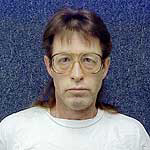
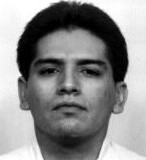
Thomas Grant Ervin
Murderer Ervil LeBaron
Murderer · USA · 1972
Ervil Morrell LeBaron (1925 to August 16, 1981) was the leader of a polygamous…
35 victims
Ervil LeBaron
Murderer · USA · 1972
Ervil Morrell LeBaron (1925 to August 16, 1981) was the leader of a polygamous…
35 victims
 Marvin Gray
Murderer · USA · 1975
Marvin Gray was convicted killer who claimed responsibility for 23 slayings and…
23 victims
Marvin Gray
Murderer · USA · 1975
Marvin Gray was convicted killer who claimed responsibility for 23 slayings and…
23 victims
 Charles Manson
Murderer · USA · 1969
Charles Milles Manson (born November 12, 1934) was an American criminal and mus…
9 victims
Charles Manson
Murderer · USA · 1969
Charles Milles Manson (born November 12, 1934) was an American criminal and mus…
9 victims
 John Errol Ferguson
Murderer · USA · 1977
John Errol Ferguson was sentenced to death and was executed by lethal injection…
8 victims
John Errol Ferguson
Murderer · USA · 1977
John Errol Ferguson was sentenced to death and was executed by lethal injection…
8 victims
 Robert Reldan
Murderer · USA · 1974
Name: Robert Reldan Robert Reldan was sentenced to life in prison on two counts…
8 victims
Robert Reldan
Murderer · USA · 1974
Name: Robert Reldan Robert Reldan was sentenced to life in prison on two counts…
8 victims
 Robert Earl Carter
Mass murderer · USA · 1992
Aug. 18, 1992 — Firefighters responded to a house fire in Somerville, Texas; th…
6 victims
Robert Earl Carter
Mass murderer · USA · 1992
Aug. 18, 1992 — Firefighters responded to a house fire in Somerville, Texas; th…
6 victims
 Alton Waye
Murderer · USA · 1977
Alton Waye was convicted of raping and killing Lavergne B. Marshall, a 61-year-…
1 victim
Alton Waye
Murderer · USA · 1977
Alton Waye was convicted of raping and killing Lavergne B. Marshall, a 61-year-…
1 victim
 Bandali Debs
Murderer · Australia · 1997
Bandali Michael Debs (born 18 July 1953) was an Australian murderer. Debs was f…
3 victims
Bandali Debs
Murderer · Australia · 1997
Bandali Michael Debs (born 18 July 1953) was an Australian murderer. Debs was f…
3 victims
 Richard L. Odom
Homicide/Murderer · USA · 1978
May 4, 1978 — Richard L. Odom killed Mary Rebecca Roberts in Pearl, Mississippi…
2 victims
Richard L. Odom
Homicide/Murderer · USA · 1978
May 4, 1978 — Richard L. Odom killed Mary Rebecca Roberts in Pearl, Mississippi…
2 victims
 Michael King
Murderer · USA · 2008
Michael King abducted Denise Amber Lee in the U.S. state of Florida on January…
1 victim
Michael King
Murderer · USA · 2008
Michael King abducted Denise Amber Lee in the U.S. state of Florida on January…
1 victim
- Gender
- male
- Country
- USA
- Location
- Cole County, Missouri, USA
- Date of birth
- January 21, 1951
- Age at first offence
- 16
- Characteristics
- robbery
- Victim profile
- Male taxicab driver / Mildred Hodges, 75, and her son, Richard, 49
- Method of murder
- St abbing with knife / Suffocation with plastic bags
- Date(s) of murder
- 1967 / 1988
- Years active
- 1967–1988
- Date of arrest
- January 1989
- Status
-
Executed
Executed by lethal injection in Missouri on March 28, 2001
Case details
Thomas Grant Ervin was convicted of two counts of first-degree murder and one count of first-degree robbery in connection with the killings of Richard Hodges and Mildred Hodges at their home in Jefferson City, Missouri.
Timeline
- December 15, 1988 — Thomas Ervin and his accomplice Bert L. Hunter forced their way into the home of Richard Hodges in Jefferson City because they believed Hodges kept large amounts of cash in a file cabinet in his home.
- December 19, 1988 — The body of Richard Hodges was discovered in a ditch near Jefferson City, Missouri; he had been duct-taped and suffocated to death.
- January 14, 1989 — The Hodgeses’ Lincoln Continental was discovered burning in the parking lot of a motel in Paducah, Kentucky.
- February 1 — Ervin came to the Jefferson City police station at the request of the police; he told officers he did not know the Hodgeses and denied being on the road where the Hodgeses lived, and he agreed to show credit card receipts at his home.
- February 17, 1989 — Police executed a search warrant at Ervin’s home and seized a roll of duct tape, credit card receipts, telephone bills, and a newspaper.
- February 22, 1989 — Police brought Bert Hunter back from Florida on a parole violation.
- February 23, 1989 — Police questioned Hunter about the Hodgeses’ murders; Hunter denied that he or Ervin was involved.
- March 7, 1989 — Hunter repeated his denials and asked about a $10,000 reward offered by the Hodgeses’ estate.
- March 15, 1989 — Hunter told officers he would tell them about the murders if certain probation conditions were met; Hunter then confessed that he and Ervin killed the Hodgeses in a plot to get money.
- March 28, 1989 — Ervin was charged by indictment with two counts of first degree murder and one count of first degree robbery.
- May 26, 1989 — On a motion of a change of venue, the case was transferred from Cole to Callaway County.
- January 17, 1990 — Ervin’s trial began in Callaway County.
- January 19, 1990 — The jury found Ervin guilty of two counts of murder first degree and robbery first degree; the jury assessed punishment at death for the two murders.
- March 5, 1990 — Ervin was sentenced to death on each count of murder and to a consecutive term of life for the robbery conviction.
- March 12, 1990 — Ervin filed a notice of appeal.
- July 11, 1990 — Ervin filed a motion for post conviction relief in the Callaway County Circuit Court.
- April 29, 1991 — The Circuit Court denied post conviction relief.
- July 21, 1992 — The Missouri Supreme Court confirmed Ervin’s convictions and sentences and the denial of post conviction relief.
- February 22, 1993 — The U.S. Supreme Court denied certiorari review.
- March 12, 1993 — Ervin filed a petition for writ of habeas corpus in the U.S. District Court for the Western District of Missouri.
- October 30, 1996 — The U.S. District Court denied the petition for writ of habeas corpus.
- October 18, 1999 — The U.S. Eighth Court of Appeals affirmed the denial of relief.
- June 26, 2000 — The U.S. Supreme Court declined certiorari review.
- September 20, 2000 — The State requested an execution date from the Missouri Supreme Court.
- February 27, 2001 — The Missouri Supreme Court set March 28, 2001 as Ervin’s execution date.
- March 28, 2001 — Tomas Ervin was executed by lethal injection at the Potosi Correctional Center.
Background
Ervin was a Missouri death row inmate for his role in the 1988 murders of Mildred Hodges and Richard Hodges in Jefferson City, Missouri.
Ervin and his accomplice Bert L. Hunter had met while in prison. Ervin and Hunter had been previously convicted of murder; in Ervin’s case, that prior murder conviction involved the 1967 slaying of a cab driver in Buchanan County. Ervin and Hunter had later worked full time for the state Department of Revenue in the early 1980s after parole, and they later lost their jobs. The prosecution asserted that both abused cocaine and began traveling across the south committing robberies before returning to Jefferson City.
The offence
On the afternoon of December 15, 1988, Thomas Ervin and Bert L. Hunter went to the home of Richard Hodges in Jefferson City, Missouri because they believed Hodges kept large amounts of cash in a file cabinet in his home.
Hunter had a pistol in his pocket and knocked on the Hodges’ door. Mildred Hodges, Richard’s mother, answered. Hunter pulled a stocking mask down over his face and displayed the pistol. He entered the house and grabbed Mrs. Hodges by the hand. Mrs. Hodges became excited and cried out for her son. Richard Hodges came into the room and asked the assailants to leave his mother alone because she was in frail health. As Richard attempted to calm his mother, Hunter told Richard to bind her hands and feet with duct tape. Mrs. Hodges was taken to a bedroom and left sitting on a bed.
Ervin took Richard into the living room and made him lie on the floor. Ervin and Hunter began taping Richard’s hands; Hunter searched the house for money and other valuables. During this time, Hunter heard a noise from the bedroom and found Mrs. Hodges standing in front of her dresser. Hunter bound her with duct tape and left her lying on the hallway floor near the bedroom.
Hunter returned to the living room where Ervin was taping Richard’s hands, feet, and mouth. When Richard complained that he could not breathe, Ervin responded, "That's the general idea." Plastic bags were placed over the heads of both victims. Hunter admitted that after the plastic bags were placed on the victims’ heads, he held Richard’s nose to suffocate him.
Hunter also testified that, after the plastic bags were placed over the victims’ heads, they suffocated both victims; he held Richard’s nose to suffocate him. Ervin told Hunter that he thought Mrs. Hodges was dead. Hunter checked Mrs. Hodges and determined that she had no pulse. Ervin and Hunter then finished looking through the house and left.
After the crime, the two men separated and traveled between Florida and Jefferson City. At one point, they stayed in Paducah, Kentucky for one night, where they left the Hodges’ car. About a month later, Ervin was arrested for the murders. Hunter later confessed and implicated Ervin.
Investigation
The body of Richard Hodges was discovered in a ditch near Jefferson City, Missouri. Duct tape had bound Richard’s hands and covered his nose and mouth, and he was suffocated to death. On the same day, police obtained a warrant to search the Jefferson City home where Richard lived and operated a real estate business with his mother, Mildred Hodges. Officers found Mildred wrapped in garbage bags on the living room floor.
In the course of the search, police found a note pad beneath a remote control in the bedroom across the hall from the Hodgeses’ office. On the pad’s top sheet, someone had written a license plate number. An officer tore off the top sheet and placed it in a box with other papers.
In the garage, police discovered the Hodgeses’ Lincoln Continental was missing and there were bloodstains on the floor near the vacant parking spot. The police found no identifiable fingerprints other than those of the victims and an investigating officer.
That night, the Hodgeses’ Lincoln was discovered burning in the parking lot of a Paducah motel. A week later, the Hodgeses’ credit cards were found near a dumpster behind a supermarket in Jefferson City. Officers later released the home to the Hodgeses’ estate.
During a final sweep, officers found the note pad with the indentation of a license number made when someone wrote on the sheet above the section that officers had already removed. For the first time, police called in the license number and learned it belonged to an automobile registered to local resident Ervin.
Police decided to question Ervin and developed a list of associates that included Bert Hunter, a man from Florida. At the request of the police, Ervin came to the Jefferson City police station on February 1, told officers he did not know the Hodgeses, and denied being on the road where the Hodgeses lived. Officers followed Ervin to his home, entered after his agreement to show them credit card receipts, and saw stacks of receipts on the kitchen table. Over Ervin’s shoulder, an officer saw a Florida license number on a gas receipt dated December 21, and police later learned it belonged to Hunter’s car.
On February 17, police executed a search warrant at Ervin’s home and seized a roll of duct tape, credit card receipts, telephone bills, and a newspaper. The newspaper contained an article about the Hodgeses’ murders, with highlighting on text stating the cause of Mildred’s death might have been a heart attack. One credit card receipt showed Ervin had paid for medical treatment for Hunter in Jefferson City on December 12, 1988.
Telephone records showed that on the day before the Hodgeses’ car was set on fire in Paducah, Ervin had called Hunter in Florida from Malden, Missouri, a town about one hundred miles from Paducah.
On February 22, police brought Hunter back from Florida on a parole violation. Police questioned Hunter about the murders on the following day; Hunter denied that he or Ervin was involved. On March 7, Hunter repeated his denials and asked about a $10,000 reward offered by the Hodgeses’ estate after police told Hunter the offer had been revoked.
On March 15, Hunter told officers he would tell them about the murders under certain conditions. He then confessed that he and Ervin killed the Hodgeses in a plot to get money. After police obtained a video camera, Hunter refused to put his confession on videotape. When Hunter later pleaded guilty, the plea was videotaped, and Hunter admitted he and another man killed the Hodgeses and gave a detailed account of the murders but refused to say who the man was and specifically denied that the man was Ervin.
During Ervin’s trial, Hunter explained how he and Ervin murdered Richard and Mildred.
Arrest
Ervin was arrested for the murders after Hunter confessed and implicated Ervin. Ervin was charged by indictment on March 28, 1989 with two counts of first degree murder and one count of first degree robbery.
Trial
Ervin’s trial began in Callaway County on January 17, 1990.
The jury found Ervin guilty of two counts of murder first degree and robbery first degree on January 19, 1990. The jury assessed punishment at death for the two murders.
In the course of events during the trial, Hunter was the key witness. The trial court sentenced Ervin on March 5, 1990 to death on each count of murder and to a consecutive term of life for the robbery conviction.
Ervin did not testify. The defense suggested Hunter’s accomplice was someone other than Ervin and attempted to cast suspicion on Patrick Connell, an occasional associate of Hunter and Ervin. The defense pointed to discovery of an unidentified hair in one of the garbage bags put around the bodies. Connell’s hair was referred to in testimony as blond, while the hair found in the bag was dark. The defense also proposed that Hunter changed his story to implicate Ervin due to anger at a supposed betrayal.
The defense argued that Hunter was at least a key potential source of alternative explanations and that Hunter had made statements exonerating Ervin during his guilty plea and on other occasions.
Verbatim statements
Ervin made the following statement during the killing when Richard complained he could not breathe:
- "That's the general idea."
Sentencing
Acting on the jury’s recommendation, the trial court sentenced Ervin to death on each murder count. The trial court also imposed a consecutive term of life for the robbery conviction on March 5, 1990.
In March 1990, the trial court imposed the jury’s recommended death sentences.
Appeals
Ervin pursued direct appeal and postconviction relief.
- Ervin filed a notice of appeal on March 12, 1990.
- On July 11, 1990, Ervin filed a motion for post conviction relief in the Callaway County Circuit Court.
- On April 29, 1991, the Circuit Court denied post conviction relief.
- On July 21, 1992, the Missouri Supreme Court confirmed Ervin’s convictions and sentences and the denial of post conviction relief.
The U.S. Supreme Court denied certiorari review on February 22, 1993.
Ervin then filed a petition for writ of habeas corpus in the U.S. District Court for the Western District of Missouri on March 12, 1993; the district court denied relief on October 30, 1996 and certified four issues for appeal. The U.S. Eighth Circuit affirmed denial of relief on October 18, 1999.
The U.S. Supreme Court declined certiorari review on June 26, 2000. The State requested an execution date on September 20, 2000, and the Missouri Supreme Court set March 28, 2001.
Outcome
Ervin was executed in Missouri on March 28, 2001.
Aftermath
Execution and last statements
At Ervin’s execution, he died at 12:04 a.m. on March 28, 2001, about three minutes after the first of three lethal drugs was administered.
Ervin’s last statement, according to corrections officials, was:
"When the courts of this nation refuse to afford a condemned prisoner the opportunity to prove that he is actually innocent of the crimes for which he stands condemned, the capital punishment system is broken," Ervin said. "The courts refused me that opportunity and so tonight, as it has done at least twice in the past, the state of Missouri executes an innocent man."
Clemency and legal challenge status at execution
Ervin’s execution proceeded after his clemency request was not granted; Gov. Bob Holden decided not to grant clemency less than 3 hours before Ervin’s scheduled execution. The U.S. Supreme Court also refused to halt the execution.
Gov. Holden made the following statement in a statement read to reporters by Dora Schriro:
"I have examined the history of the judicial proceedings and the request for a stay that have been placed before me. I find nothing to justify setting aside the result of the judicial proceedings," Holden said in a statement read to reporters by Dora Schriro, the state's Corrections director. "The state, on behalf of its citizens, has the right to impose the death penalty for the crime of capital murder. Our courts and the Department (of Corrections) have met their responsibilities under the law . . . . "I reaffirm my solemn oath to uphold the law. It is the duty of my office to do so, on behalf of the people of Missouri."
Seven people, including three reporters and two law enforcement officers who helped investigate the Hodges murders, witnessed the execution. No one from the Hodges family attended. Ervin’s only requested man present was identified as his “spiritual adviser,” dressed in priest’s clothes.
Ervin’s final meal included a sirloin steak, butterfly shrimp, corn, French fried potatoes, a roll, coffee, and a chocolate shake.
Legal citations and case identifiers
- State v. Ervin, 835 SW2d 905 (Mo. 1992).
- Ervin v. Delo, 194 F3d 908 (8th Cir. 1999).
- State of Missouri v. Tomas G. Ervin, 835 S.W.2d 905 (Mo. banc 1992).
- U.S. Court of Appeals for the Eighth Circuit docket number: No. 97-1435.
- The appeal was submitted June 14, 1999 and filed October 18, 1999, involving an appeal from the United States District Court for the Western District of Missouri.
- The federal habeas petition challenged Ervin’s first-degree murder and robbery convictions under 28 U.S.C. 2254.
- The U.S. Supreme Court denial of certiorari review was referenced as Ervin v. Missouri, 507 U.S. 954 (1993).
- Hunter’s federal habeas was referenced: Hunter v. Bowersox, 172 F.3d 1016, 1018 (8th Cir. 1999).
Other details
Participants and victims
- Accomplice: Bert L. Hunter.
- Victims: Mildred Hodges (age 75 at the time of her death) and Richard Hodges (age 49 at the time of his death).
Motives and robbery aspects
The plan involved robbery for financial gain and included forcing victims to withdraw or locate money. The offenders believed Hodges kept cash in a file cabinet in his home. After the killing, Ervin and Hunter stole Richard’s wallet and Mildred’s purse and also took other items from the house, including jewelry and furs, Scotch whiskey, and $16 in cash.
Evidence described at trial and during appeals
The appellate court described circumstantial evidence including:
- A note pad with Ervin’s license plate number in the Hodges home.
- Handwriting testimony that Richard had probably written the number.
- A marked-up newspaper clipping in Ervin’s house with highlighting about the uncertain cause of Mildred’s death.
- Credit card receipts showing Ervin had paid for Hunter’s medical treatment on December 12, 1988 and showing he was with Hunter in his car on December 21 when they bought gasoline.
- Testimony that Ervin was with Hunter when Hunter gave Tepo a bag of jewelry in Florida after the murders.
- Testimony regarding the location of Ervin’s home relative to where the Hodgeses’ credit cards were found.
Disputed issues raised in federal habeas
Ervin’s habeas petition raised multiple issues, including:
- An ineffective assistance claim related to counsel’s decision not to play a videotape of Hunter’s guilty plea to impeach Hunter.
- A due process claim related to denial of a motion to strike venireman Crane for cause, leading Ervin to use a peremptory challenge.
- Challenges to admission of certain evidence during trial, including evidence related to a shotgun.
- A claim that depression prevented him from assisting postconviction counsel and justified an evidentiary hearing on cause for procedural default.
Spotted an error, or have more information about this case?