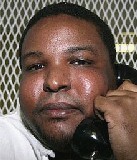
Robert Lee Thompson
Murderer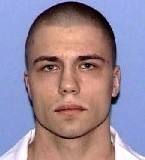 Clinton Lee Young
Murderer · USA
Clinton Lee Young (born July 19, 1983) was convicted of murdering two men in No…
2001 victims
Clinton Lee Young
Murderer · USA
Clinton Lee Young (born July 19, 1983) was convicted of murdering two men in No…
2001 victims
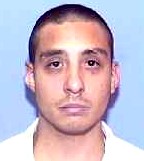 Ivan Abner Cantu
Murderer · USA
Name: Ivan Abner Cantu · TDCJ number: 999399 · Date of birth: 06/14/1973 · Age…
2000 victims
Ivan Abner Cantu
Murderer · USA
Name: Ivan Abner Cantu · TDCJ number: 999399 · Date of birth: 06/14/1973 · Age…
2000 victims
 Michael John Yowell
Murderer · USA
Name: Michael John Yowell · TDCJ number: 999334 · Date of birth: 01/25/1970 · P…
1998 victims
Michael John Yowell
Murderer · USA
Name: Michael John Yowell · TDCJ number: 999334 · Date of birth: 01/25/1970 · P…
1998 victims
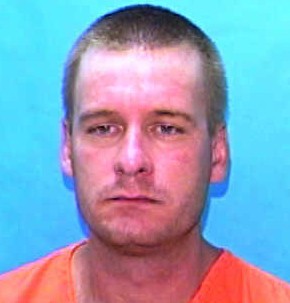 Michael Duane Zack
Murderer · USA
Michael Duane Zack was convicted and sentenced to death for the 06/13/96 murder…
1996 victims
Michael Duane Zack
Murderer · USA
Michael Duane Zack was convicted and sentenced to death for the 06/13/96 murder…
1996 victims
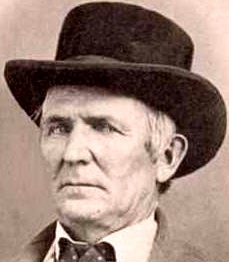 John Doyle Lee
Murderer · USA · 1857
Name: John Doyle Lee Lifespan: September 12, 1812 - March 23, 1877 Legal outcom…
120 victims
John Doyle Lee
Murderer · USA · 1857
Name: John Doyle Lee Lifespan: September 12, 1812 - March 23, 1877 Legal outcom…
120 victims
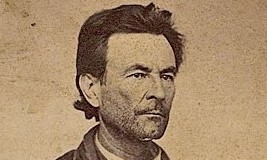 Champ Ferguson
Murderer · USA · 1861
Champ Ferguson was born November 29, 1821 in Clinton County, Kentucky, near the…
100 victims
Champ Ferguson
Murderer · USA · 1861
Champ Ferguson was born November 29, 1821 in Clinton County, Kentucky, near the…
100 victims
 Edwin Debrow
Homicide · USA · 1991
Edwin Debrow Jr. was convicted in 1992, at age 12, of a fatal shooting during a…
1 victim
Edwin Debrow
Homicide · USA · 1991
Edwin Debrow Jr. was convicted in 1992, at age 12, of a fatal shooting during a…
1 victim
 Futoshi Matsunaga
Serial killer · Jap an · 1996
Futoshi Matsunaga ( 松永 太 , Matsunaga Futoshi , born April 28, 1961) was a Japan…
7 victims
Futoshi Matsunaga
Serial killer · Jap an · 1996
Futoshi Matsunaga ( 松永 太 , Matsunaga Futoshi , born April 28, 1961) was a Japan…
7 victims
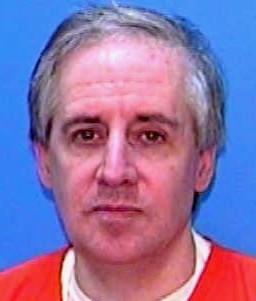 Richard Lynch
Murderer · USA · 1999
Name: Richard Lynch · Date of birth: 06/19/53 · Case citation: Florida Supreme…
2 victims
Richard Lynch
Murderer · USA · 1999
Name: Richard Lynch · Date of birth: 06/19/53 · Case citation: Florida Supreme…
2 victims
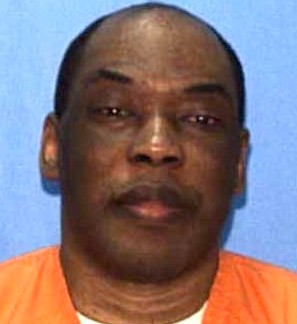 Sonny Boy Oats
Murderer · USA · 1979
Name: Sonny Boy Oats, Jr. DOB: 05/25/57 Case identifiers: DC# 051769, Fifth Jud…
2 victims
Sonny Boy Oats
Murderer · USA · 1979
Name: Sonny Boy Oats, Jr. DOB: 05/25/57 Case identifiers: DC# 051769, Fifth Jud…
2 victims
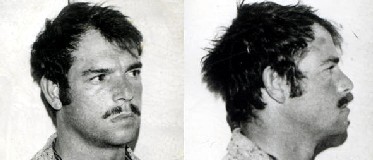 Manuel Delgado Villegas
Serial killer · Spain / Italy / France · 1964
Manuel Delgado Villegas, also known as El Arropiero, was born in Seville, Spain…
48 victims
Manuel Delgado Villegas
Serial killer · Spain / Italy / France · 1964
Manuel Delgado Villegas, also known as El Arropiero, was born in Seville, Spain…
48 victims
- Gender
- male
- Country
- USA
- Location
- Harris County, Texas, USA
- Date of birth
- April 1, 1975
- Characteristics
- armed robbery, robbery
- Victim profile
- Men (convenience store clerks)
- Method of murder
- Shooting (.25 caliber semiautomatic pistol)
- Date(s) of murder
- 1 996
- Years active
- —
- Date of arrest
- —
- Status
-
Executed
Executed by lethal injection in Texas on November 19, 2009
Timeline
- December 5, 1996 — Robert Lee Thompson and Sammy Butler entered a 7-Evenings food store in Houston armed with a .25 caliber semiautomatic pistol and a .38 caliber revolver; Thompson shot store clerk Mubarakali Meredia and shot at Meredia’s cousin, Mansor Bhai Rahim Mohammed, who was killed after Butler fired two shots at Rahim.
- April 2, 1997 — A Harris County grand jury indicted Thompson for capital murder for the robbery and killing of Mansoor Bhai Rahim Mohammed.
- March 25, 1998 — A jury found Thompson guilty of capital murder.
- April 1, 1998 — Following a separate punishment hearing, the jury answered “Yes” to the first special sentencing issue (future dangerousness), answered “Yes” to the second special issue (that Thompson caused the death, intended to kill, or anticipated a human life would be taken), answered “No” to the third special issue (mitigating circumstances warranting life), and the trial court assessed punishment at death.
- December 15, 2003 — The U.S. Supreme Court denied Thompson’s petition for the writ of certiorari.
- July 13, 2000 — Thompson filed a state application for writ of habeas corpus in the trial court while direct appeal was still pending.
- January 25, 2005 — The trial court entered findings of fact and conclusions of law recommending Thompson’s application be denied.
- November 9, 2005 — The Texas Court of Criminal Appeals rejected claims and denied the application.
- October 20, 2006 — Thompson filed a federal habeas petition in a U.S. district court.
- November 29, 2007 — The district court dismissed Thompson’s petition with prejudice and denied a certificate of appealability (COA).
- December 10, 2007 — Thompson filed a motion to alter or amend the judgment.
- December 21, 2007 — The district court denied the motion.
- August 19, 2008 — The United States Court of Appeals for the Fifth Circuit denied Thompson a COA.
- March 23, 2009 — The U.S. Supreme Court denied Thompson’s petition for certiorari.
- June 16, 2009 — Thompson filed a subsequent state habeas application in the trial court.
- September 16, 2009 — The Texas Court of Criminal Appeals dismissed the subsequent application with a written order.
- November 19, 2009 — Thompson was scheduled for execution after 6 p.m.; he was executed by lethal injection in Texas at 6:19 p.m.
The offence
On December 5, 1996, Robert Lee Thompson, armed with a .25 caliber semiautomatic, and Sammy Butler, armed with a .38 caliber revolver, entered a 7-Evenings food store in Houston.
Threats and shootings inside the store
Thompson pointed his pistol at store clerk Mubarakali Meredia, who was at the counter, and told him to open the cash register and hand over all of the money. Thompson shot Meredia in the abdomen when he did not move quickly enough.
Thompson also shot at Meredia’s cousin, Mansor Bhai Rahim Mohammed, who worked at the shop and began running toward the rear of the store. At Butler’s trial, the State offered evidence that Butler also shot at Rahim and threatened several other customers.
Thompson then shot Meredia three more times as he lay on the floor. Thompson ordered Meredia to get up and get the money for him. Meredia complied.
Thompson put his pistol to Meredia’s neck and pulled the trigger, but nothing happened because Thompson had run out of bullets. Thompson hit Meredia on the head with the butt of his gun and struck him with the cash register drawer. Meredia survived.
Escape and fatal shots
Thompson took the money and ran out of the store while Butler grabbed a stack of lottery tickets and followed behind him. Thompson jumped into the driver’s seat of their car, while Butler got into the passenger’s seat, rolled down his window, and fired two shots at Rahim, who had run to the front door. One bullet hit Rahim in the chest, and he died. Meredia survived.
Thompson’s taped confession and statements described in the proceedings
After his arrest, Thompson told detectives he went on a two-month crime spree in 1996 and confessed to two other robbery-murders within 24 hours of Rahim’s killing, stating he had fired the fatal shots in those cases.
In a taped statement to the police admitted at trial, Thompson professed a “philosophy” behind killing foreign convenience store owners and described his actions and reasoning in part as follows (verbatim, with sic et passim as included in the proceedings):
[W]hen I found out that my girlfriend she was pregnant, you know, a lot of pressures come on me. So, I began to talk to God ... and a lot of things that we have done, you know, I don't want people to think that I'm crazy. I don't want you to look at me and say that he got a mental problem ‘cause don't nobody know God's heart on how it is. Don't nobody know what God puts on a man heart. Only that man and God knows that he comes together with, you know. So, it's just like I wasn't going out to just rob people for money and to hurt them. It wasn't that; it was I was looking at my people how we can be here all our lives. We can't get a job unless somebody help us out. We can't get it on our own selves. Or, you never hear about our people in the news talking about positive black people too much, unless, it is, unless you're a singer or you in sports and stuff like that. You never hear the positive things.... You know, you never hear the positive things about vice-presidents, or, or like, like in big major companies you never hear black people getting credit for. And it's funny how other people can come from other countries, come to this country, the government give them money to start off, give ‘em money, enough money to send their children to schools, where we got children here, we got people here, you know, that, that want opportunities to go to school, want to have start, you know, money to start off a small business, you know, stuff like that. You can't get that kind of stuff being as an African American because if people say you can, you can't ‘cause I'd have tried it. My credit, before my credit, you know, just ever got messed up, I tried to get a grant. You know, I'd had, never had no bad credit, never had no loans to go to school and stuff like that. You know, opportunities just like that never came to me. And, so you know, I look at it, they [Japanese, Chinese, Vietnamese, and Middle Eastern people] come to our country. They come in our communities. They spend our money .... ‘cause, you know, they come over here, they not giving back to our communities that you're taking from. And when we come to your stores, ah they, we go in their stores, they watch us, they, they always following us thinking we gonna steal ‘cause we black. You know it's the point that you can't feel comfortable when you spending your own money. You know, and you going in their store ‘cause you can't help but go to their store ‘cause it's in our community. But when you have black-owned stores and stuff like that, you never get ‘em in our community ‘cause it's never that opportunity for black people to have their own stores.... So, it wasn't that I was robbing them for their money-it was just a point, how can you come in our neighborhoods and do us like that and think we not God's people.... The only image that you get from a black person on the news is, is robbing, killing, and stuff like that. That's all you see. But in God's heart and in God's eye, who's to say that's wrong? Who's to say that God put you in a store, to own that store, and you made promises to Him and by you disobedient to him that he won't punish you for it ‘cause He will. Regardless if it's gonna be me, using me, it's gonna be somebody that you gonna get punished for. And in your heart, you know you being punished.... You know you just been judged.... [ Sic et passim ].
Thompson also described portions of the events and Butler’s shooting in his confession during questioning with investigators; the proceedings included the following excerpts (verbatim with the question and answer format as presented):
Q [Investigator Waters]: Okay. And, then you run outside and get in the car, and you are driving and Sammy is in the passenger side? A [The appellant]: Yes. Q [Waters]: And he-he shoots at the store, or is somebody coming up to the door? A: Well, he shoots-And, the man [Mohammed] was coming up and going back. He just shot basically at the window just to make the man go run back in the store as we get away. * * * Q [Sergeant Swaim]: Do you know how times-how many times Sammy shot at this guy? Was it once or twice, or? A: Well, he just, you know, he shot. * * * Q [Waters]: He shot once inside the store and once outside. A: No, he just kept on shooting. He unloaded and I unloaded. Q [Swaim]: Okay, you weren't-you weren't like counting the shots? A: No. Q [Swaim]: But, he-he was shooting at this guy? A: Yeah. Q [Swaim]: So you think this guy is coming out to try to see where y'all went, get a license plate number, or something like that? A: Yeah. Q [Swaim]: Sammy shot him....
Trial
Indictment and conviction
On April 2, 1997, a Harris County grand jury indicted Thompson for capital murder for the robbery and killing of Mansoor Bhai Rahim Mohammed.
A jury found Thompson guilty of capital murder on March 25, 1998. The conviction was affirmed by the Texas Court of Criminal Appeals.
Punishment phase findings
After a separate punishment hearing on April 1, 1998, the jury answered “Yes” to the first special sentencing issue (future dangerousness). The jury answered “Yes” to the second special issue, finding that Thompson caused the death, intended to kill, or anticipated that a human life would be taken. The jury answered “No” to the third special issue about mitigating circumstances warranting a sentence of life imprisonment. The trial court assessed Thompson’s punishment at death.
Claims addressed on direct appeal (Texas Court of Criminal Appeals opinion)
The Texas Court of Criminal Appeals affirmed the conviction and addressed multiple points of error, including issues about preserved objections to Officer Milton F. Waters’s testimony about Thompson’s “philosophy of life,” a juror comment “poor little black boy” during the punishment phase, ineffective assistance of counsel claims, and whether the trial court lessened the State’s burden of proof on special issues.
Juror comment and racial bias inquiry
During the punishment phase, a character witness, Tommy Collier, testified regarding Thompson’s church activity, life worth sparing, and Collier’s disagreement with Thompson’s “philosophy of life.” After Collier left the stand, a juror allegedly remarked “poor little black boy.” Collier testified outside the jury’s presence that the male juror made the statement but could not identify the juror. The trial court refused defense counsel’s request to question each male juror individually about the statement and whether they harbored racial prejudice.
In the opinion, the Court of Criminal Appeals concluded that voir dire was the time to uncover potential prejudice or bias and that defense counsel did not diligently question jurors about racial bias during voir dire.
Counsel conduct during jury selection
The opinion included an exchange about excusing a prospective juror (verbatim as presented):
[State]: I'll agree to let this lady go so she can go to school if they want to agree. [Defense counsel]: I guess we have to agree. [State]: I'm sorry. [Defense counsel]: That's fine Terrance. We agree. [The Court]: Do you agree with that, Mr. Thompson? [The appellant]: Yes, sir.
The opinion also included a voir dire exchange involving Juror Honc (verbatim as presented):
[Prosecutor]: Good Morning, Mister-is it Honc? [Honc]: That's correct. Q: It's Honc. How are you doing? A: Just fine. Q: Again, my name is Terrance Windham. I'm real pleased to meet you, sir. You met Mr. Greenlee [defense counsel] and Connie [defense counsel] and Casey [prosecutor] yesterday. They're out right now, but they'll be back in.
Lesser-included offense instructions and ineffective assistance
In addressing ineffective assistance, the opinion discussed the trial court’s charge and whether counsel was ineffective in failing to request a charge on lesser-included murder or felony murder.
The opinion described Thompson’s taped confession and the events as related to the aggravated robbery and shooting of Mubarakali Meredia and shots at Mansor Bhai Rahim Mohammed.
The Texas Court of Criminal Appeals rejected the challenges and affirmed the judgment.
Sentencing
Thompson received a death sentence following the jury’s answers to the special issues and the trial court’s assessment of punishment at death.
Appeals and post-conviction proceedings
Direct appeal and Supreme Court review
The Texas Court of Criminal Appeals affirmed Thompson’s conviction and sentence. The U.S. Supreme Court denied Thompson’s petition for the writ of certiorari on December 15, 2003.
State habeas corpus and subsequent state application
Thompson filed a state application for writ of habeas corpus in the trial court on July 13, 2000 while direct appeal was still pending. On January 25, 2005, the trial court entered findings of fact and conclusions of law recommending denial. The Texas Court of Criminal Appeals ordered further briefing on two allegations related to an accomplice’s conviction for a lesser included offense. On November 9, 2005, the Court of Criminal Appeals rejected the briefed claims and denied the application.
Thompson filed a subsequent state habeas application in the trial court on June 16, 2009. The Texas Court of Criminal Appeals dismissed the application with a written order on September 16, 2009. The record described that Thompson had not filed a petition for certiorari from the dismissal of the subsequent state habeas application.
Federal habeas corpus and certificate of appealability
Thompson filed a federal habeas petition in a U.S. district court on October 20, 2006. The district court dismissed the petition with prejudice and denied a certificate of appealability (COA) on November 29, 2007.
On December 10, 2007, Thompson filed a motion to alter or amend the judgment, which the district court denied on December 21, 2007. The U.S. Court of Appeals for the Fifth Circuit denied Thompson a COA on August 19, 2008.
The U.S. Supreme Court denied Thompson’s petition for certiorari on March 23, 2009.
Fifth Circuit COA denial described in the record
In Thompson v. Quarterman, the Court of Appeals denied a COA, concluding that reasonable jurists could not debate the district court’s rulings. The proceedings also described that COA was denied after denial of COA by the district court.
Summary of habeas issues discussed in the record
The habeas proceedings described claims including factual innocence of capital murder and ineffective assistance of counsel for failing to request felony-murder, as well as other procedural and evidentiary issues.
Outcome
Execution scheduling and clemency
Media information described that Robert Lee Thompson was scheduled to be executed after 6 p.m. on November 19, 2009.
A Texas Board of Pardons and Paroles recommendation was described as voting 5-2 to recommend commuting Thompson’s death sentence to life. Gov. Rick Perry rejected the recommendation.
In a statement included in the proceedings, Perry said:
“After reviewing all of the facts in the case of Robert Lee Thompson, who had a murderous history and participated in the killing of Mansoor Bhai Rahim Mohammed, I have decided to uphold the jury’s capital murder conviction and capital punishment for this heinous crime,” Perry said in a written statement. “There is no reason to set aside the capital murder conviction handed down by a Texas jury and upheld by numerous state and federal courts.”
Statements during execution
Thompson invoked Allah, thanked friends and his mother for their love and support, and urged his mother, who sobbed as she watched through a window, saying:
“Smile, be happy, don’t cry.”
Thompson said he had not meant any harm to his victims’ families, none of whom was present. He also stated:
“I know Allah will forgive me,” he said. “Allah is the forgiver.”
During a last statement described as directed toward an empty chamber normally occupied by the victim’s family, Thompson said:
“I never meant any of your family to get hurt,” he said to an empty chamber normally occupied by the victim's family.
“I know Allah will forgive me.”
Thompson’s mother, Audrey Champs, stamped her feet and sobbed:
“Oh God, oh God, oh God”.
Time of death
The lethal injection was started, and Thompson was pronounced dead at 6:19 p.m., nine minutes after he was injected with the lethal drugs.
Other details
Co-defendant
Samuel Lee Butler was convicted of three counts of capital murder plus one conviction for aggravated robbery and was sentenced to life in prison.
The record also described that Butler’s trial resulted in a guilty verdict on a lesser-included offense of felony-murder, with Butler sentenced to life in prison.
Additional procedural descriptions included in the record
The record described that Thompson filed motions and applications including a state application for writ of habeas corpus, a federal habeas petition, a motion to alter or amend judgment, and subsequent state habeas application.
The record also included discussion of alleged trial errors and ineffective assistance claims, including allegations related to juror bias, jury voir dire procedures, special issue instructions, and ineffective assistance relating to lesser-included offense instructions and evidence presented during guilt-innocence and punishment phases.
Victims and surviving clerk
The fatal victim was Mansor Bhai Rahim Mohammed. Mubarakali Meredia was shot and attacked during the robbery but survived.

Spotted an error, or have more information about this case?