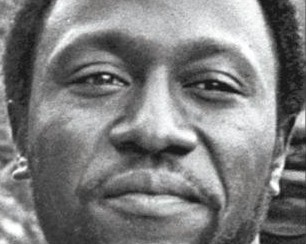
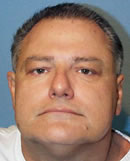
Richard Townes
Murderer Brian Kevin Rosenfeld
Murderer · USA · 1985
Brian Kevin Rosenfeld Brian Kevin Rosenfeld was sentenced to three concurrent l…
23 victims
Brian Kevin Rosenfeld
Murderer · USA · 1985
Brian Kevin Rosenfeld Brian Kevin Rosenfeld was sentenced to three concurrent l…
23 victims
 Marvin Gray
Murderer · USA · 1975
Marvin Gray was convicted killer who claimed responsibility for 23 slayings and…
23 victims
Marvin Gray
Murderer · USA · 1975
Marvin Gray was convicted killer who claimed responsibility for 23 slayings and…
23 victims
 Yahweh ben Yahweh
Murderer · USA · 1980
Yahweh ben Yahweh was born and legally named Hulon Mitchell Jr. (October 27, 19…
23 victims
Yahweh ben Yahweh
Murderer · USA · 1980
Yahweh ben Yahweh was born and legally named Hulon Mitchell Jr. (October 27, 19…
23 victims
 Russell Ellwood
Murderer · USA · 1991
Russell Ellwood was a former taxi driver. Authorities suspected him of killing…
20 victims
Russell Ellwood
Murderer · USA · 1991
Russell Ellwood was a former taxi driver. Authorities suspected him of killing…
20 victims
 Carolyn King
Murderer · USA · 1993
Carolyn King was convicted along with Bradley Martin of the 1993 murder of 74-y…
2 victims
Carolyn King
Murderer · USA · 1993
Carolyn King was convicted along with Bradley Martin of the 1993 murder of 74-y…
2 victims
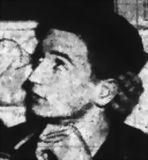 Clifford Fortner
Homicide · USA · 1959
Clifford Fortner was a 15-year-old boy from the neighborhood. Lorna Lax was a 1…
1 victim
Clifford Fortner
Homicide · USA · 1959
Clifford Fortner was a 15-year-old boy from the neighborhood. Lorna Lax was a 1…
1 victim
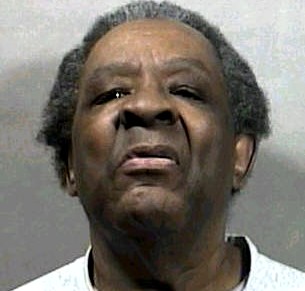 Leroy Snyder
Serial killer · USA · 1969
Leroy Snyder was a 38-year-old junkyard laborer. He was charged with the murder…
7 victims
Leroy Snyder
Serial killer · USA · 1969
Leroy Snyder was a 38-year-old junkyard laborer. He was charged with the murder…
7 victims
 Lyndsey Fiddler
Homicide · USA · 2010
Lyndsey Fiddler (also named Lyndsey Dawn Fiddler), 27, was the mother of Maggie…
1 victim
Lyndsey Fiddler
Homicide · USA · 2010
Lyndsey Fiddler (also named Lyndsey Dawn Fiddler), 27, was the mother of Maggie…
1 victim
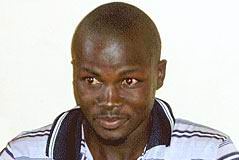 Sidney Enoch
Murderer · Uganda · 2011
Sidney Nsubuga Enoch (male prostitute) was the accused. · David Kato Kisule (c.…
1 victim
Sidney Enoch
Murderer · Uganda · 2011
Sidney Nsubuga Enoch (male prostitute) was the accused. · David Kato Kisule (c.…
1 victim
- Gender
- male
- Country
- USA
- Location
- Virginia Beach, Virginia, USA
- Date of birth
- 1951
- Age at first offence
- 34
- Characteristics
- robbery
- Victim profile
- Virginia Goebel (convenience store clerk)
- Method of murder
- Shooting ( .45 caliber handgun)
- Date(s) of murder
- April 14, 1985
- Years active
- 1985
- Date of arrest
- —
- Status
-
Executed
Executed by lethal injection in Virginia on January 23, 1996
Case overview
Richard Townes shot Virginia Goebel, a Virginia Beach convenience store clerk, in the head during an April 14, 1985 robbery. He got $186.13 from the cash register. Townes shot Goebel at point blank range with a .45 caliber weapon to prevent her from possibly identifying him later.
Townes had 29 prior felony convictions, including a 1976 incident in which he held a taxi driver at gunpoint for six hours in a hostage situation before shooting him four times in the back.
Victim and incident details
Virginia Goebel was a night shift cashier at a Virginia Beach convenience store.
Sometime during the early morning hours of April 14, 1985, Goebel was murdered. The last person other than her murderer to see Goebel alive was Dorothy Moore, a regular customer. Moore entered the store around 2:00 a.m. and noticed a man standing “in the back corner ... just watching.” After Goebel reassured Moore that everything was okay, Moore made her purchase and exited. As she drove away, she noticed the man watched her departure.
Just before 5:00 a.m., Goebel’s body, felled by a .45 caliber bullet, was discovered face down behind the counter in a pool of blood. The exact time of death could not be determined.
Evidence used at trial
Evidence implicating Townes primarily came from three sources.
Firearms evidence
A state firearms expert determined that an empty shell casing found next to Goebel’s body matched empty casings from a gun traceable to Townes.
Eyewitness identification
Dorothy Moore, delaying about a month before contacting police, positively identified Townes via photos and a line-up as the man she had seen in the convenience store on the night of Goebel’s murder.
Jail-cell admission
Inculpating evidence came from Townes’s cellmate at the Virginia Beach jail. The fellow prisoner reported that Townes admitted murdering Goebel.
Charges and convictions at trial
Townes was indicted and tried by the Commonwealth of Virginia for capital murder, as well as robbery and use of a firearm while committing robbery.
Trial and sentencing
Townes was initially represented by the Office of the Public Defender. When the public defender withdrew, the trial court appointed two other attorneys to represent Townes.
Townes moved to dismiss the court-appointed counsel and invoked his right to self-representation under Faretta v. California, 422 U.S. 806 (1975). The state trial court conducted an extensive and thorough Faretta inquiry to determine if Townes was competent to represent himself. The court reluctantly granted Townes’s request and allowed him to proceed pro se.
From April 22, 1986, through May 5, 1986, Townes represented himself at his trial to a jury in the Circuit Court, City of Virginia Beach.
On May 5, 1986, the jury returned a verdict of guilty on all counts. Later the same day, a separate sentencing hearing on the murder charge was conducted. The sentencing jury returned a verdict imposing the death penalty based on its finding beyond a reasonable doubt of “a probability that Townes would commit criminal acts of violence which would constitute a continuing serious threat to society”—a “future dangerousness” finding under the Virginia Code, Secs. 19.2-264.2 and -264.4(C).
On July 15, 1986, the trial judge confirmed the jury verdict and sentenced Townes to death.
Direct appeal and post-conviction litigation
Townes appealed to the Virginia Supreme Court, raising numerous claims. The Virginia Supreme Court upheld his conviction and sentence, and the Supreme Court of the United States denied certiorari.
Townes then sought post-conviction relief by a state habeas proceeding. His petition was dismissed by the trial court, his petition for appeal was refused by the Supreme Court of Virginia, and the Supreme Court of the United States again denied certiorari.
Federal habeas corpus proceeding (4th Circuit)
Townes brought an action for federal habeas corpus relief under 28 U.S.C. Sec. 2254, challenging on constitutional grounds both his conviction and his death sentence.
Principal claims raised
Townes’s principal claims concerned the sentencing phase and included:
Faretta inquiry and competence/ability to represent himself at sentencing
- He claimed the trial court erred by not conducting an inquiry, pursuant to Faretta v. California, to determine his competence to represent himself during the sentencing phase.
- He claimed that the trial court failed to conduct a separate Faretta inquiry after his conviction and before sentencing, including because he suffered an evident loss of capacity for self-representation following return of the jury’s guilty verdict.
- He claimed that the trial court failed to conduct a competency hearing prior to the sentencing phase despite his alleged loss of legal competency following the guilty verdict.
Due process instruction regarding parole ineligibility
- He claimed the trial court violated due process by refusing to instruct the jury of his ineligibility for parole if sentenced to life imprisonment.
Other conviction challenges
Townes also challenged his conviction based on claims of:
- unduly suggestive identification procedures;
- denial of counsel at a critical stage of the prosecution, specifically a post-arrest “lineup”;
- Brady violations by withholding of exculpatory evidence; and
- a plethora of unsupported claims of trial court error.
District court and appeal disposition
A magistrate judge considered all claims, conducted an evidentiary hearing on the incompetency to stand trial at sentencing claim, and allowed discovery related to Townes’s Brady claim. The magistrate judge recommended dismissal of all claims on procedural default, Teague “new rule,” and merits grounds. The district court adopted those recommendations and dismissed the petition.
On appeal, the judgment of the district court was affirmed.
Timeline
- April 14, 1985 — Virginia Goebel was murdered during a robbery at a Virginia Beach convenience store.
- 1985 — Townes was indicted and tried for capital murder, robbery, and use of a firearm while committing robbery.
- April 22, 1986 — Townes began representing himself pro se at trial.
- May 5, 1986 — The jury returned guilty verdicts on all counts; sentencing hearing on the murder charge was held the same day.
- July 15, 1986 — The trial judge confirmed the death verdict and sentenced Townes to death.
- 1987 — Townes v. Commonwealth, 234 Va. 307, 362 S.E.2d 650 (1987), upheld conviction and sentence; certiorari was denied by the U.S. Supreme Court.
- 1988 — Townes v. Virginia, 485 U.S. 971 (1988), certiorari was denied.
- 1991 — Townes v. Sielaff (March 20, 1991) refusal of appeal; Townes v. Murray, 502 U.S. 912 (1991), certiorari denied.
- 1993 — Post-conviction habeas-related matters included a magistrate judge’s report and recommendation dated February 22, 1993.
- Jan. 17, 1996 — District court denied Townes’s petition for a writ of habeas corpus in a civil action described as Townes v. Angelone, Civil Action No. 96-42-2.
- Jan. 23, 1996 — The relevant appellate decisions were submitted/decided, and Townes was executed by lethal injection in Virginia on January 23, 1996.
Analysis of sentencing claims in the federal appeal
Faretta and competency-related claims
The federal court rejected Townes’s challenge to the pre-trial Faretta inquiry because it had been raised before and rejected by the Virginia Supreme Court on direct appeal. The Virginia Supreme Court found the trial court conducted a fully adequate Faretta inquiry and specifically “impressed upon Townes the necessity and desirability of representation by trained counsel, especially where 'a person ... is charged with an offense for which the penalty could be death.' ” The federal court agreed the trial court conducted a full and fair colloquy emphasizing the risk of being sentenced to death.
The federal court treated Townes’s claims for renewed Faretta inquiry and a competency hearing before sentencing as procedurally defaulted because they were never raised in state courts and were not fairly presented with the substance of the federal habeas claim. The court found Townes made no attempt to satisfy the “cause and prejudice” exception.
Townes argued for a “fundamental miscarriage of justice” exception, but the federal court stated that such relief required showing actual innocence of the death penalty. The court found Townes did not carry this burden and dismissed the claims as procedurally defaulted.
Simmons parole-ineligibility instruction claim
At sentencing, the Commonwealth requested death based on future dangerousness. When jury deliberations were underway, the jury asked about parole eligibility requirements in a life sentence. The forewoman and trial judge had the following colloquy:
Forewoman: There seems to be some question as to parole eligibility requirements in a life sentence.
Court: The question relating to parole eligibility is not a matter appropriate for consideration by the jury. You must base your verdict on the matters that are before you and the ranges of sentence that are set forth in the Court's instruction. I regret that I can't give you any more answer than that.
After excusing the jury, the court asked whether either party had “any objection to the response given by the Court to the jury's question?” Townes answered, “No.”
The federal court concluded that Simmons, v. South Carolina, did not require the relief Townes sought under the circumstances presented because the holding was understood as narrower and because the jury’s question was answered by a nonresponsive answer that did not violate the due process right recognized in Simmons where the defendant did not attempt to bring the fact of parole ineligibility before the jury. As a result, the court affirmed dismissal without reaching some additional issues raised by the parties regarding Teague or procedural default on the Simmons-type claim.
Evidentiary and Brady-related claims
Identification procedure claim involving Dorothy Moore
The federal court described Moore’s identification process. It addressed Townes’s argument that the lineup was unreasonably suggestive because Townes was the only constant between the photo array and the live lineup. The state did not dispute that none of the four other men was the “other” person Moore picked from the photo array.
The federal court held there was no abuse of discretion in denying this claim because there was no flat prohibition on making the same individual be the one constant, Moore had favorable conditions of light and proximity, and the lineup itself was not unconstitutional.
The federal court also included detailed facts about Moore’s observations and identification timing as recounted from the Supreme Court of Virginia’s opinion. Dorothy Moore learned of the murder mid-morning of April 14, but she did not contact the police for four weeks. On May 29, a detective showed her photographs of six men. She picked two of the men, including Townes, as suspects and told the officer she “could better [make an identification] in a lineup.” On June 5, she attended a live lineup including Townes and four other men, and she made a positive identification of Townes as the man she had seen.
The federal court stated that Townes asserted that the state’s conduct was condemned by Foster v. California. The federal court held the Commonwealth could distinguish Foster and that under the totality of the circumstances test of Manson v. Brathwaite, Moore’s identification was reliable and admissible.
Identification by Herman F. Christenbury and Sixth Amendment issue
The federal court described Herman F. Christenbury’s identification. Christenbury said that on April 10, 1985, a few days before the Goebel murder, Townes called at Christenbury’s home in response to an ad Christenbury had placed in a local paper for the sale of a Star brand .45 caliber automatic handgun. Christenbury stated that Townes bought the gun in cash.
Although the actual murder weapon was never recovered, the federal court noted there was apparently no dispute that this type of gun was the kind that killed Goebel. Christenbury later identified Townes at a lineup where Townes did not have counsel present. The trial court suppressed the lineup identification due to absence of counsel, but it allowed Christenbury to identify Townes in court because the in-court identification was derived from a source sufficiently independent of the uncounseled lineup.
The federal court agreed the in-court identification was constitutionally admissible. It reasoned that Christenbury’s contact with the defendant was clear and precise, and that Christenbury’s testimony describing a kitchen conversation for at least ten minutes provided an independent basis. The federal court stated it was for the jury to determine credibility.
Brady / discovery-related claims
Townes alleged violations to obtain material and exculpatory evidence in a timely and adequate fashion under Brady v. State of Maryland. He focused particularly on the prosecution’s alleged failure to turn over credit card receipts from the convenience store, which pertained to the persons in the store on the night of the murder.
The Supreme Court of Virginia found that Townes was given information concerning the credit card purchases well in advance of the first day of trial. The federal court noted that as for further post-conviction discovery, the magistrate judge and district court found Townes could not establish “good cause” under Rule 6(a) of the Rules Governing Section 2254 Cases in the United States District Courts before discovery requests are granted. The federal court found no abuse of discretion.
Magistrate judge impartiality claim
Townes argued that, although the magistrate judge initially appeared to take his habeas petition seriously, the magistrate judge’s attitude became “callous” toward Townes and his counsel based only on events outside the record.
The district judge found “[t]here is no evidence that the Magistrate Judge's opinion was affected by anything other than the merits of the case.” The federal court found no reason to disturb that ruling.
Other appellate decision mentioned in the record (execution scheduled)
The record also included a separate Fourth Circuit per curiam decision concerning Townes’s impending execution. It stated that Richard Townes was sentenced to death and scheduled to be executed that night at 9:00 p.m. for his 1986 murder of Virginia Goebel.
That per curiam decision described an appeal from an order of the district court dated January 17, 1996 denying a petition for a writ of habeas corpus. It described a challenge to a separate 1976 robbery conviction that was presented to the jury at Townes’s murder trial as evidence of future dangerousness.
It stated that the 1976 robbery conviction had been entered pursuant to a guilty plea and no direct appeal was taken. It also noted that numerous collateral challenges to the 1976 conviction had been catalogued in a magistrate judge’s report and recommendation dated February 22, 1993.
The Fourth Circuit affirmed the district court’s judgment and concluded that the points raised on appeal had no merit, for the reasons given by the district court in the January 17, 1996 opinion.
People and identifiers mentioned
- Richard Townes — defendant; death sentence imposed for murder of Virginia Goebel.
- Virginia Goebel — victim; night shift cashier at a Virginia Beach convenience store.
- Dorothy Moore — witness and identification source; regular customer.
- Dorothy Moore’s interactions included observation of a man “in the back corner ... just watching” and later identifications.
- Herman F. Christenbury — witness who described selling a .45 caliber automatic handgun to Townes and later identified Townes.
- State firearms expert — determined the shell casing matched traceable casings.
- Townes’s cellmate at the Virginia Beach jail — reported Townes admitted murdering Goebel.
- Magistrate judge — conducted proceedings in federal habeas and addressed discovery and hearing matters.
- District judge — adopted the magistrate judge’s recommendations and dismissed the habeas petition.
- Forewoman of the sentencing jury — asked the parole eligibility question.
- Trial judge at sentencing — responded to the jury’s parole eligibility question.
- Appellate judges listed in the federal opinion included NIEMEYER and LUTTIG, with PHILLIPS as Senior Circuit Judge; LUTTIG also wrote a concurring opinion in part in the major case described.
Aftermath
Richard Townes was executed by lethal injection in Virginia on January 23, 1996.
Spotted an error, or have more information about this case?