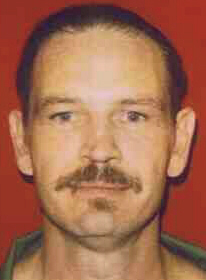
James Neil Tucker
Murderer Brian Kevin Rosenfeld
Murderer · USA · 1985
Brian Kevin Rosenfeld Brian Kevin Rosenfeld was sentenced to three concurrent l…
23 victims
Brian Kevin Rosenfeld
Murderer · USA · 1985
Brian Kevin Rosenfeld Brian Kevin Rosenfeld was sentenced to three concurrent l…
23 victims
 Russell Ellwood
Murderer · USA · 1991
Russell Ellwood was a former taxi driver. Authorities suspected him of killing…
20 victims
Russell Ellwood
Murderer · USA · 1991
Russell Ellwood was a former taxi driver. Authorities suspected him of killing…
20 victims
 Robert Martines Perez
Murderer · USA · 1994
Name: Robert Martines Perez · Other name used in proceedings: Robert Martinez P…
15 victims
Robert Martines Perez
Murderer · USA · 1994
Name: Robert Martines Perez · Other name used in proceedings: Robert Martinez P…
15 victims
 Billy Frank Vickers
Murderer · USA · 1993
Billy Frank Vickers Vickers was executed by lethal injection in Texas on Januar…
14 victims
Billy Frank Vickers
Murderer · USA · 1993
Billy Frank Vickers Vickers was executed by lethal injection in Texas on Januar…
14 victims
 Oba Chandler
Murderer · USA · 1989
Oba Chandler was convicted in 1994 of killing Joan Rogers and her two daughters…
3 victims
Oba Chandler
Murderer · USA · 1989
Oba Chandler was convicted in 1994 of killing Joan Rogers and her two daughters…
3 victims
 David Hyde
Murderer · USA · 1991
David Hyde was convicted in connection with the murders of John Lee and Ginger…
2 victims
David Hyde
Murderer · USA · 1991
David Hyde was convicted in connection with the murders of John Lee and Ginger…
2 victims
 Daniel Matthew Carter
Homicide · USA · 2002
July 16, 2002 — Jack Carter bled to death after a violent struggle with Daniel…
1 victim
Daniel Matthew Carter
Homicide · USA · 2002
July 16, 2002 — Jack Carter bled to death after a violent struggle with Daniel…
1 victim
- Gender
- male
- Country
- USA
- Location
- Calhoun County, South Carolina, USA
- Date of birth
- January 12, 1957
- Age at first offence
- 35
- Characteristics
- rape, abuse, escape, drug addict, armed robbery
- Victim profile
- Rosa Lee "Dolly" Oakley, 54 / Shannon Mellon, 21
- Method of murder
- Shooting
- Date(s) of murder
- June -July 1992
- Years active
- 1992
- Date of arrest
- J uly 12, 1992
- Status
-
Executed
Executed by electrocution in South Carolina on May 28, 2004
Case record: James Neil Tucker
Background
James Neil Tucker was imprisoned and later sentenced to death in South Carolina for the murders of Rosa Lee “Dolly” Oakley and Shannon Mellon. During the period after his convictions, he was treated as a death-penalty inmate scheduled for electrocution in South Carolina.
Tucker had a history of incarceration in Utah for rape. He had been sent to an adult prison at 17 for raping an 8-year-old girl and an 83-year-old woman in Utah. He escaped three times from prison while serving that sentence from 1974 to 1991. Tucker was later sent to death row and, before execution, had attempted to escape from death row by threatening a guard with a safety razor blade melted into a toothbrush; he was recaptured minutes later.
Tucker also had psychiatric diagnoses referenced in reporting: psychiatrists diagnosed him as having a strong anti-social disorder, and he was described in connection with an anti-social personality disorder. A lawyer for Tucker in the Mellon case described that Tucker was raped by an older prisoner while he was in a psychiatric ward as a young teen, and that Tucker’s stepfather abused him.
In connection with prison-time citations described in the record material, Tucker was cited 13 times for violations in Utah’s prison system during Tucker’s various prison terms in Utah from 1974 to 1991. These violations included being out of bounds and escape. During that period, Tucker learned to drive and obtained a pilot’s license. He was cited on Oct. 17, 1978 for having two shanks (knives), a file and a piece of Plexiglas in possession. On Dec. 16, 1982 he was cited for using drugs or intoxicants he had somehow obtained while in prison. The last entry on Tucker’s prison record indicated that on June 26, 1991, he was found in possession of contraband while still incarcerated.
Tucker was born on Jan. 12, 1957. In reported physical details tied to the corrections listings, he was 5' 10" tall, weighed 180 lbs, had a medium build, brown hair, blue eyes, and a fair complexion. He was identified as Caucasian.
The offence
Oakley murder (Sumter County)
On June 25, 1992, Rosa Lee “Dolly” Oakley (“Victim”) was in her yard when Tucker pulled his car into her driveway. He talked to Oakley long enough to make sure she was alone, then pulled out a gun and forced her into the house and her bedroom.
Tucker prepared to tape Oakley up when Joe Black rang the doorbell. Black and James Howard were outside in the car looking for Oakley’s husband. After Black and Oakley went out into the driveway, Oakley began screaming, “Don’t leave me, he’s going to kill me,” holding on to Black’s arm as he sat in Howard’s car. Howard panicked and left.
Tucker pulled Oakley away from the retreating car, dragged her back into the house, took fourteen dollars from her purse, and shot her twice in the head at close range. Tucker testified that he shot her the first time when she tried to grab the gun. As he was leaving, he shot her again to “put her out of her misery.”
In Tucker’s confession statements as recounted, Tucker stated he shot Oakley again before he left because he thought she was suffering and that he “put her out of her misery.” Tucker also testified that he robbed Oakley because he needed money to help his pregnant wife.
The trial record as described also included that Tucker’s convictions and death sentence for the Oakley murder were affirmed on direct appeal.
Christian Fellowship Church break-in and Kenneth Parker mobile home break-in (during flight)
On June 26-27, 1992, Tucker broke into the Christian Fellowship Church. He also broke into Kenneth Parker’s mobile home between June 27-29, 1992. Tucker then hitched rides under trucks until he got to Calhoun County, where he killed another person while attempting to get a car and money to escape police looking for him on the Oakley murder.
The Oakley direct appeal material also described that Tucker broke into Christian Fellowship Church and that Tucker was found guilty of third-degree burglary for that break-in.
Mellon murder (Calhoun County)
Tucker broke into Shannon Mellon’s house in the early morning hours of July 2, 1992. Armed with a gun, Tucker taped Mellon’s wrists and ankles behind her back and left her on her bed while he searched for things to steal. Tucker then reentered Shannon’s bedroom and shot her once in the head. While packing Mellon’s clean clothes to take with him, Mellon regained consciousness, sat up, and said she could not see. Tucker shot Mellon a second time in the head. He continued packing and when he heard Mellon’s labored breathing, he shot her a third time in the head.
Tucker then wrapped Shannon’s body in a sheet and dragged it into the woods behind the house. Mellon’s body was discovered a week later.
Tucker stole Mellon’s car and drove to Spartanburg where he stayed with a friend for several days. Tucker was apprehended in Maggie Valley, North Carolina, on July 10, 1992.
The Mellon direct appeal material described that Tucker was running from police who were looking for him for the murder of Rosalee Oakley in Sumter County, and that Tucker was convicted and sentenced to death for Rosalee’s murder in December 1994. It further described that his trial for the present offences was held from November 29 to December 7, 1993.
Investigation
After the Oakley murder, within hours police were looking for Tucker, and for the next few days he laid low in the Sumter area. He twice slipped through police sweeps in areas where he was hiding. By hiding out in delivery trucks as they made their rounds, even once clutching the undercarriage of an 18-wheeler, he made his way to St. Matthews and Webb Carroll’s Training Center. During this flight, Tucker stole a station wagon from a St. Matthews funeral home, and the vehicle was abandoned after Tucker got it stuck in a wooded area.
Tucker made his way to a cottage off Belleville Road owned by the training center. Two vehicles were in the yard: a Chevrolet Blazer and a Ford Mustang.
Tucker’s plans were described as failing when Tucker encountered the man in the home, who walked out and drove away in the Blazer. A screen door was described as the only obstacle remaining between the murderer and Mellon. Tucker cut his way through the screen and bound a sleeping Mellon with masking tape. Tucker helped himself to a glass of milk in Mellon’s refrigerator and stated that he decided he was going to kill Mellon and leave her body in the woods. Tucker shot Mellon in the back of the head. When Mellon later regained consciousness and said she could not see, Tucker shot her again in the head. Tucker then packed some of Mellon’s jeans he found in the cottage and prepared to leave; Tucker heard Mellon’s breathing and shot her again, described as the third shot.
Following Tucker’s confession and apprehension, on the day following his arrest, while at the Haywood County Sheriff’s Department in Waynesville, North Carolina, Tucker gave a 48-page confession to a South Carolina Law Enforcement Division agent identified as Perry Herod and to Sumter County Sheriff’s Department Detective identified as Glenn Harrell.
Arrest
In connection with his apprehension, a police officer questioned him and Tucker went for the officer’s service weapon. Tucker was then taken into custody and provided the detailed confession described above.
Trial
Oakley trial and convictions
Tucker’s convictions for the Oakley residence actions included murder, kidnapping, armed robbery, possession of a weapon during a crime, first degree burglary (two counts), third degree burglary, and larceny. He was sentenced to death for the murder.
In the Sumter County prosecution described on appeal, the Supreme Court consolidated Tucker’s direct appeal with mandatory review provisions of S.C. Code Ann. § 16-3-25(C) (1985). The Supreme Court affirmed Tucker’s convictions and death sentence.
The Supreme Court held that burglary charges were properly joined with murder charges; pretrial publicity did not require a change of venue; photographs of the crime scene were admissible; the solicitor’s improper closing argument did not require a new trial; Tucker was not entitled to a jury instruction on the included offense of involuntary manslaughter; solicitor’s statements to media during trial did not require a change of venue; Tucker’s prior convictions of rape and escape were admissible at the sentencing phase; Tucker was not prejudiced by evidence regarding security posted in the courtroom during trial; any error in submitting an aggravating circumstance that two or more persons were murdered by Tucker by one act was harmless; and the death sentence was not disproportionate to that imposed in similar cases.
Mellon trial and convictions
After reversal of the murder defendant’s death sentence, the Circuit Court, Calhoun County, again imposed the death sentence, and the Supreme Court later affirmed the sentence after a resentencing appeal. The Mellon direct appeal described Tucker broke into Shannon Mellon’s house, bound her wrists and ankles behind her back, shot her three times in the head, and dragged her body into the woods.
In Tucker’s Mellon direct appeal following resentencing, the Supreme Court addressed that no Batson violation occurred; a prospective juror who was a Jehovah’s Witness minister was properly excused for cause; Tucker’s testimony from his prior trial was not hearsay; and submission of kidnapping as an aggravating circumstance was proper. The Supreme Court also reviewed the proportionality of the sentence and affirmed.
Sentencing
Tucker was sentenced to death for each murder.
In the Mellon case direct appeal after resentencing, the Supreme Court affirmed the resentencing death sentence after proportionality review pursuant to S.C. Code Ann. § 16-3-25 (1985). In an earlier direct appeal related to the Mellon sentence, the Supreme Court affirmed Tucker’s convictions, reversed his sentence, and remanded for resentencing because the trial judge refused to give a parole ineligibility charge and precluded him from arguing parole ineligibility to the jury when parole eligibility should not be considered by the jury.
Appeals
Tucker’s direct appeals included:
- State v. Tucker, 478 S.E.2d 260 (S.C. 1996) (Oakley Murder Direct Appeal): the Supreme Court affirmed convictions and death sentence.
- State v. Tucker, 464 S.E.2d 105 (S.C. 1995) (Mellon Murder Direct Appeal): the Supreme Court affirmed convictions, reversed sentence, and remanded for resentencing.
- State v. Tucker, 512 S.E.2d 99 (S.C. 1999) (Mellon Murder Direct Appeal after Resentencing): the Supreme Court affirmed the resentenced death sentence.
Additional procedural details in the material described that Tucker withdrew a potential final appeal in connection with electrocution being cruel and unusual punishment and that his Mellon death-penalty appeal became moot on the scheduled execution date.
Outcome
Tucker was executed by electrocution in South Carolina on May 28, 2004.
In connection with the execution, Tucker’s final statement was read by his attorney, Teresa Norris of Columbia. The final statement was:
To everyone, I have thought of a million things to say, but they can all be summed up like this. To those I have harmed, my abject apologies and regrets. I am ashamed. To those who must remain and deal with this insane world, my condolences. But be of good cheer. Christ has overcome the world! I know that my redeemer lives. I am leaving this world with a cheerful attitude. Hallelujah.
During the execution process described, a brown hood was placed over Tucker’s head, an electrician checked the cord, and a breaker fell with a thump. The record material described Tucker’s body jerked upward, and current was shut off and later reapplied for about two minutes before he was pronounced dead at 6:11 p.m.
The material described that Tucker declined to choose lethal injection and therefore would be executed in the state’s default procedure of electrocution. It also described that witnesses including Oakley’s husband and Mellon’s father watched the execution but declined to talk to reporters.
A final meal described for Tucker was: Pizza, Mountain Dew and two bacon, lettuce and tomato sandwiches.
Other details
Appellant’s testimony and defense themes
The material described Tucker’s defense approach as that he shot Oakley after she tried to grab the gun and that he could not say whether he intentionally shot her or if it just happened; the defense was described as unsuccessful. In connection with Mellon, Tucker acknowledged taking responsibility for Mellon’s death in his confession statement: “I take the responsibility for her death.”
The material also described Tucker’s confession, including the statements:
“Don’t leave me, he’s going to kill me,”
and additional confession statements as recounted:
“I thought she was suffering,”
“So I put her out of her misery.”
and for Mellon:
“I had decided that I was going to kill this girl and leave her body in the woods,”
“And that would give me more time until they found that body. She was laying facing the wall with her back to the door. I shot her in the back of the head.”
and:
“I shot her again in the head.”
and:
“At this time, I had decided that I was going to kill this girl and leave her body in the woods,”
“When I zipped up the bag, I could hear her breathing - her breathing was real ragged like she couldn’t get air,”
“At that time, I shot her again - the third time and I don't know exactly - I think it was around her temple.”
and:
“I take the responsibility for her death.”
People named in connection with the offences and proceedings
- Joe Black and James Howard were described as outside in the car and seeking Oakley’s husband.
- Kenneth Parker was referenced in relation to the break-in at his mobile home.
- Shannon Mellon was the second murder victim.
- Rosa Lee “Dolly” Oakley was the first murder victim.
- Tucker’s attorney at execution was Teresa Norris of Columbia.
- A prosecutor in one description was named Walter Bailey.
- Tucker’s defense counsel named in connection with descriptions was Jay Jackson, and the co-counsel named was Lewis Lanier.
- An official described as Mark Plowden was quoted regarding Tucker “choosing not to choose.”
- An electrician and warden were referenced in connection with execution procedures.
Dates and deadlines mentioned
The material described Tucker had until May 14 to choose lethal injection as his form of execution and that the deadline passed without a request from him. It also described that his execution took place on May 28, 2004, and that he was scheduled for 6:11 p.m. at the time he was pronounced dead. It also described the execution scheduled time as 6 p.m. in some narrative material.
Prison and inmate data mentioned
The material included corrections-related identifiers: Inmate: TUCKER, JAMES NEIL; Inmate #: 00004875; SID#: SC00469256.
Spotted an error, or have more information about this case?