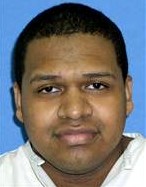
Carlton Akee Turner
Murderer Russell Ellwood
Murderer · USA · 1991
Russell Ellwood was a former taxi driver. Authorities suspected him of killing…
20 victims
Russell Ellwood
Murderer · USA · 1991
Russell Ellwood was a former taxi driver. Authorities suspected him of killing…
20 victims
 Robert Martines Perez
Murderer · USA · 1994
Name: Robert Martines Perez · Other name used in proceedings: Robert Martinez P…
15 victims
Robert Martines Perez
Murderer · USA · 1994
Name: Robert Martines Perez · Other name used in proceedings: Robert Martinez P…
15 victims
 Billy Frank Vickers
Murderer · USA · 1993
Billy Frank Vickers Vickers was executed by lethal injection in Texas on Januar…
14 victims
Billy Frank Vickers
Murderer · USA · 1993
Billy Frank Vickers Vickers was executed by lethal injection in Texas on Januar…
14 victims
 Brenda Spencer
Homicide · USA · 1979
Brenda Spencer was convicted after a school shooting at Grover Cleveland Elemen…
2 victims
Brenda Spencer
Homicide · USA · 1979
Brenda Spencer was convicted after a school shooting at Grover Cleveland Elemen…
2 victims
 Roland Cochrane
Murderer · USA · 1935
Roland H. Cochrane was an inmate identified in the case as Inmate 009880. · Def…
1 victim
Roland Cochrane
Murderer · USA · 1935
Roland H. Cochrane was an inmate identified in the case as Inmate 009880. · Def…
1 victim
 Ronald Lott
Murderer · USA · 1986
Ronald Clinton Lott was the petitioner-appellant in Lott v. Trammell before the…
2 victims
Ronald Lott
Murderer · USA · 1986
Ronald Clinton Lott was the petitioner-appellant in Lott v. Trammell before the…
2 victims
 Julian Carlton
Mass murderer · USA · 1914
Julian Carlton was a 30-year-old estate worker and an estate worker originally…
7 victims
Julian Carlton
Mass murderer · USA · 1914
Julian Carlton was a 30-year-old estate worker and an estate worker originally…
7 victims
 Robert William Fisher
Murderer · USA · 2001
Robert William Fisher remained at large. Robert William Fisher was born April 1…
3 victims
Robert William Fisher
Murderer · USA · 2001
Robert William Fisher remained at large. Robert William Fisher was born April 1…
3 victims
 Vincent Brothers
Mass murderer · USA · 2003
Vincent Brothers was born May 31, 1962. He was an American vice principal and f…
5 victims
Vincent Brothers
Mass murderer · USA · 2003
Vincent Brothers was born May 31, 1962. He was an American vice principal and f…
5 victims
- Gender
- male
- Country
- USA
- Location
- Dallas County, Texas, USA
- Date of birth
- J uly 4, 1979
- Age at first offence
- 19
- Characteristics
- robbery, rape, child molester
- Victim profile
- Carlton Sr. and Tonya Turner (h is adoptive parents)
- Method of murder
- Shooting
- Date(s) of murder
- August 8, 1998
- Years active
- 1998
- Date of arrest
- —
- Status
-
Executed
Executed by lethal injection in Texas on July 10, 2008
Case overview
Carlton Akee Turner was a Black male who was 19 years old on August 8, 1998 when he killed his adoptive parents. Each of the victims was shot several times in the head. Turner put their bodies in the garage at their home in Irving, Texas, and then took cash, jewelry, and forged a check on their personal account.
Neighbors became alarmed when they had not seen or heard from the couple in several days and observed Turner acting strangely and driving his parents’ cars, which they did not allow. Irving Police obtained a search warrant for the victims’ residence and discovered the victims deceased in the garage.
Turner testified at trial that he shot his father in self-defense; this theory was contradicted by his pre-trial statements in newspaper and television interviews that he had nothing to do with the murders. Turner offered no explanation at trial for killing his mother. He testified that he felt nothing when he killed his parents.
Victims
- Carlton Turner Sr. (43)
- Tonya Turner (40)
The offence
On August 8, 1998, in Irving, Texas, Turner fatally shot his adoptive parents in their home and put their bodies in the garage. Both victims died of gunshot wounds. Turner dragged their bodies through the house and dumped them in the garage.
After the murders, Turner went shopping with his parents’ cash and credit cards, buying new clothes and jewelry, and forged a check on their personal account. He continued to live in the family home for three days while his parents’ decomposed in the garage in the hot Texas summer. Evidence also showed that after the slayings he bought new clothes and jewelry, continued living in the family’s Irving home, dragged the bodies into the garage, then threw a party at the house for friends.
Investigation and arrest
The victims’ co-workers became alarmed when they had not seen or heard from the victims in several days. Neighbors called police after they had not seen the couple for several days and after observing Turner acting strangely and driving his parents’ cars, which they knew he was not allowed to do. Police were led to the bodies by a foul smell coming from the garage.
Turner was arrested at his home on outstanding warrants for traffic violations. He had marijuana on his person when arrested. Police found the parents’ bodies in the garage and found enough evidence to charge the son with their murders.
Prior criminal history and background
Turner had a prior out-of-state conviction for stealing a car and a prior conviction for aggravated robbery. He also had a juvenile incident for sexually assaulting a neighborhood boy when he was 14.
Turner claimed that a history of parental abuse largely explained his violent behavior. Neighbors believed that Turner killed his parents because they were being strict with him after he was convicted of a robbery charge and received three years’ probation.
Turner had a long history of violence and other inappropriate behavior. His parents were retired from the Air Force and moved to the Dallas area about a year before the killings. His father worked in sales and his mother worked at a department store.
Trial
A jury convicted Turner of capital murder. The trial court sentenced Turner to death pursuant to the jury’s answers to the special issues submitted at the punishment phase.
Turner testified at trial that he shot his father in self-defense. He testified that it made no difference to him whether he was given a life sentence in prison or sentenced to death, and the jury chose death. Turner testified that he felt nothing when he killed his parents and offered no explanation at trial for killing his mother.
At guilt/innocence, the jury was instructed on capital murder including a theory of murder in the course of a robbery. The trial court admitted evidence after killing his parents that Turner forged and cashed three checks from the victims’ checking account. The appellate court held that the trial court did not abuse its discretion to admit the evidence to prove the underlying robbery offense.
Jury selection and parole-related discussion
Turner’s appeal addressed prosecutor comments to veniremembers and eventual jurors during voir dire concerning parole and the parole law jury instruction.
During voir dire, the prosecution told Brown:
[PROSECUTION]: Finally, let's talk about parole for just a minute. Remember, I told you; I think the Judge has too, in a capital murder case with the guilty verdict, there is only two possible verdicts, either life or death, and now in the State of Texas if the person gets a life sentence for capital murder, the law says he has to serve forty calendar years before he becomes eligible for parole. That means, as the law is right now, and of course, parole laws are always subject to change, but as they are right now, that means you have got to serve forty calendar years, day for day; no hope of ever getting out at the end of that forty-year period; then you start becoming eligible for parole, but not before then. Now let me tell you the instruction that you get in this case as a juror. Judge Greene would instruct you if you find this man guilty of capital murder, that you are not to consider parole for any purpose, whatsoever. Just like the failure to testify, you just say, that doesn't matter to me. Why, because, see, parole is not for you to decide. It's a matter that is solely within the discretion of the Board of Pardons and Paroles, and the law is subject to change also. What a life sentence means today, well, it's been different in the past; it may be different in the future. For that reason, here is what I tell jurors: When you see a life sentence mentioned in this case, just take it to mean life. That is it, day for day, rest of his life. Just think of it that way. In this case, if you got an instruction not to consider parole, can you follow that instruction also?
The prosecution told Davidson:
[PROSECUTION]: Now, one other thing in this case, let's talk about parole for just a minute. I can tell you this: The Judge has told you there is only two possible sentences for capital murder. It's either a life sentence or a death sentence. In Texas, if a person is convicted of a capital murder and they receive a life sentence, that means they have to serve at least forty calendar years, day for day, before they become eligible for parole; so, they serve forty calendar years, and then, then they would, at least, become eligible for parole; not to say that they would be paroled, but that is the very first time that they could be considered for parole. And, of course, parole laws change from year to year; I mean, I have been down here, and I have seen them change dramatically, I think three or four times, you know, in my career; so, there is nothing to say they are going to stay the same next year or five years from now. If you are a Member of the Jury in this case, Ms. Davidson, you would be instructed by Judge Greene that you were not to consider parole in determining what verdict that you are going to reach on punishment. Okay. Again, it's just like the Defendant not testifying. You go back in there, you know; it would be improper, for instance, to be thinking, well, you know, if I give this man a life sentence, he'll serve forty years or life means forty years. Just forget about that. I tell jurors to do this. That if you see a life sentence in this case, just consider it to be just that, life, period, and forget about trying to guess when he's going to get out of the penitentiary because, see, parole is not up to you and me. It's up to the Board of Pardons and Paroles in Austin. They have got complete control of that. For us to be thinking about it, really, is meaningless; so, in this case, if you got that kind of instruction, could you agree that you would not consider parole during your deliberations? A. The time of parole? Q. Yes, ma'am.
The prosecution told Graver:
[PROSECUTION]: Here is another issue that sometimes comes up in a case such as this one, and it would be the issue of parole. In Texas, if an individual is convicted of capital murder, there is only two possible sentences. They are either going to get a life sentence or they get the death sentence. That is it. If a person is convicted of capital murder and receives a life sentence, that person will have to serve at least forty calendar years before he becomes eligible for parole. That means he's staying in there at least forty years. At the end of that forty year period, he may come up for parole. He may not, but he has got to do at least forty years. The law in this case would be this: If you are selected as a juror in this case and we got to the punishment phase, Judge Greene would instruct you that you are not to consider parole for any purpose, whatsoever. Don't be speculating or thinking on how quickly someone may be out on a life sentence because, you see, two things: Parole laws change. I have seen them change two or three times in my career, and they may change next year, five years, ten years from now; so, what is a life sentence today may not be the same five or ten years from now. Secondly, whether or not someone receives parole is not up to us. It's up to the Board of Pardons and Paroles in Austin. For that reason, jurors really don't have anything to do with that. In this case, if you were selected as a juror, could you assure me that you would not consider parole for any purpose? Don't be thinking about it. Wouldn't be speculating or thinking about how quickly someone may get out on a life sentence?
Turner challenged a portion of the jury instruction relating to parole eligibility, arguing it denied him a fair punishment hearing by instructing the jury it could not consider a life-sentenced appellant’s parole eligibility. The appellate court held that the charge did not inform the jury that it could not consider a life-sentenced appellant’s parole eligibility; it instructed the jury not to consider how long a life-sentenced appellant would serve after becoming eligible for parole, and it included an instruction that the jury was not to consider the possible action of the Board of Pardon and Paroles or of the Governor or how long a defendant would be required to serve, as such matters came within the exclusive jurisdiction of the Board.
Turner also appealed prosecutor closing argument that referenced him as a psychopath and a sociopath. Appellant complained of the following argument:
Reasonable belief, when we talk about this business on self-defense, means a belief that would be held by an ordinary and prudent person in the same circumstances as [appellant]. So, when [defense counsel] tells you to get in [appellant's] head, first of all, you have to say you have to be in a place of a reasonable person. Boom, right there, that out. He's a psychopath; he's a sociopath-
The appellate court held that this issue was procedurally defaulted due to mismatch between a trial objection and the appellate claim. It also held that the argument informed the jury that the law required it to consider appellant’s self-defense claim from the standpoint of an “ordinary and prudent person” and not from the standpoint of a “psychopath or a sociopath.”
Effective assistance and parole instructions
Turner argued ineffective assistance of counsel for failure to object to the prosecution’s voir dire comments about parole eligibility. The appellate court concluded that counsel was not ineffective for failing to object because, viewed in the context of the entire voir dire, the comments were not objectionable.
Other claims addressed on direct appeal
Turner’s direct appeal included multiple points of error:
- Points of error one through three were overruled.
- Point of error four was overruled.
- Points of error five through seven were overruled.
- Point of error eight was overruled.
- Point of error nine was overruled.
- Point of error ten was overruled.
- Points of error eleven and twelve were overruled.
- Points of error thirteen and fourteen were overruled.
The appellate court affirmed the judgment of the trial court.
Sentencing
The trial court assessed a sentence of death following a separate punishment hearing. The sentencing reflected the jury’s answers to the special issues submitted at the punishment phase.
Appeals and post-conviction proceedings
State procedural history
- Feb. 3, 1999 — A grand jury indicted Turner for capital murder.
- Jun. 29, 1999 — Judgment entered after a jury found Turner guilty of capital murder.
- Jun. 29, 1999 — Following a separate punishment hearing, the court assessed a sentence of death.
- Sep. 28, 2001 — Turner filed a state writ application in the trial court.
- Sep. 11, 2002 — Turner’s conviction and sentence were affirmed on direct appeal by the Texas Court of Criminal Appeals.
- Apr. 7, 2003 — The Supreme Court denied certiorari on a direct appeal.
- Sep. 29, 2004 — The Texas Court of Criminal Appeals denied Turner’s application for state habeas relief.
Federal procedural history
- May 25, 2005 — Turner filed a petition for writ of habeas corpus in the federal district court.
- Mar. 20, 2006 — The federal district court denied Turner’s habeas petition.
- Mar. 12, 2007 — The Fifth Circuit Court of Appeals denied Turner’s request for a certificate of appealability.
- Apr. 18, 2007 — The Fifth Circuit Court denied Turner’s motion for rehearing.
Supreme Court certiorari and execution date litigation
- Apr. 30, 2007 — The trial court signed the order setting Turner’s execution date for September 27, 2007.
- Jul. 16, 2007 — Turner petitioned the United States Supreme Court for certiorari review off federal habeas.
- Sep. 25, 2007 — The Supreme Court denied certiorari review off federal habeas.
- Sep. 27, 2007 — On the day of his execution, Turner filed a subsequent habeas petition in the Court of Criminal Appeals.
- Sep. 27, 2007 — Turner then requested stay of execution from the Supreme Court based on Baze v.Rees.
- Sep. 27, 2007 — At approximately 10 p.m. the night of Turner’s scheduled execution, the Supreme Court granted the stay.
- Dec. 24, 2007 — Turner filed a petition challenging his execution by means of lethal injection as cruel and unusual punishment.
- Apr. 21, 2008 — Turner’s certiorari petition challenging lethal injection was denied in the wake of the Court’s decision in Baze.
- May 7, 2008 — The trial court set a new execution date of July 10, 2008.
Claims addressed in habeas proceedings
In proceedings before the U.S. Court of Appeals for the Fifth Circuit, the court denied a certificate of appealability. The court held that:
- Turner failed to make a substantial showing that prosecutor’s statements to jurors during voir dire violated his rights under the due process clause of the Fifth Amendment.
- A certificate of appealability would not issue on grounds of ineffective assistance of counsel.
- Turner failed to make a substantial showing that the state trial court violated his right to due process by informing jurors in capital murder trial that they were not to consider the possibility of parole.
- Turner failed to make a substantial showing that jury instructions in capital murder trial were unconstitutionally vague, depriving him of a fair trial.
- A certificate of appealability would not issue on grounds of cumulative error. The certificate of appealability was denied.
Outcome
Carlton Akee Turner was convicted and sentenced to death for the August 1998 capital murders of his adoptive parents, Carlton Sr. and Tonya Turner, in Irving, Texas. His conviction and sentence were affirmed on direct appeal by the Texas Court of Criminal Appeals, and subsequent state and federal appeals were denied. Turner was executed by lethal injection in Texas on July 10, 2008.
Timeline
- **Feb.
- Jun. 29, 1999 — Turner was found guilty of capital murder; the court assessed a sentence of death after a punishment hearing.
- **Sep.
- **Sep.
- **Apr.
- **Sep.
- **Mar.
- **Mar.
- **Apr.
- Apr. 30, 2007 — The trial court signed an order setting Turner’s execution date for September 27, 2007.
- **Jul.
- **Sep.
- Sep. 27, 2007 — Turner filed a subsequent habeas petition in the Court of Criminal Appeals and requested a stay from the Supreme Court based on Baze v. Rees.
- Sep. 27, 2007 — The Supreme Court granted a stay of execution.
- **Dec.
- Apr. 21, 2008 — Turner’s certiorari petition challenging lethal injection was denied.
- July 10, 2008 — Turner was executed by lethal injection in Texas after receiving the injection seven minutes earlier and was pronounced dead at 6:16 p.m.
Execution and final statements
On July 10, 2008, Turner was executed by lethal injection at the Texas Department of Criminal Justice Walls Unit. The lethal injection was administered seven minutes earlier, and Turner was pronounced dead at 6:16 p.m.
Turner apologized directly to his uncle, Henry Kyle Johnson, the brother of his adoptive mother, Tonya Turner. No immediate family members of Turner’s adoptive father, Carlton Turner, were present.
Turner’s last statement included:
First of all, I’d like to tell my uncle Kyle that I’m sorry, and I’ve been sorry for the last 10 years. I wish you could accept my apology, but I know I can’t even ask for your forgiveness.
I take this penalty as a man, but this doesn’t solve anything. I’ve done what I could to help the rest of the family. I was wrong, but I am still your nephew no matter what you believe, and I love you.
In another final statement delivered to his uncle Kyle Johnson just before the drugs took effect, Turner said:
“I am still your nephew, no matter what you believe,” he said just before the drugs took effect.
After the execution, Johnson spoke to reporters and said he accepted Turner’s apology, and that it made it easier because Turner could have chosen not to say anything.
Other details
- Turner’s education was listed as 9 years.
- Turner’s occupation was laborer.
- Date of offence was 08/08/1998.
- County of offence was Dallas.
- Native county was Salt Lake, Utah.
- Race was Black; gender was male.
- Hair color was Black; eye color was Brown.
- Height was 05' 07"; weight was 184 lb.
- Co-defendants: None.
- Turner was adopted as an infant.
- Turner claimed that his violent behavior was largely explained by a history of parental abuse.
- Evidence showed that Turner continued to live in the family home for three days after the murders while his parents’ decomposed in the garage.
- After the murders, Turner threw a party at the house for friends.
- For his last meal he requested fried chicken, cheese and onion omelets, and chocolate cake.

Spotted an error, or have more information about this case?