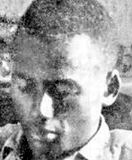
Julian Carlton
Mass murderer James & John McNamara
Mass murderer · USA · 1910
James B. (“J.B.”) McNamara · John J. (“J.J.”) McNamara · The brothers were Iris…
21 victims
James & John McNamara
Mass murderer · USA · 1910
James B. (“J.B.”) McNamara · John J. (“J.J.”) McNamara · The brothers were Iris…
21 victims
 George Hassell
Mass murderer · USA · 1916
George Jefferson Hassell (July 1888 – February 2, 1928) was born in Smithville,…
13 victims
George Hassell
Mass murderer · USA · 1916
George Jefferson Hassell (July 1888 – February 2, 1928) was born in Smithville,…
13 victims
 Henry Layer
Mass murderer · USA · 1920
Henry Layer Henry Layer was born Heinrich C. Layer on November 12, 1884 in Eige…
8 victims
Henry Layer
Mass murderer · USA · 1920
Henry Layer Henry Layer was born Heinrich C. Layer on November 12, 1884 in Eige…
8 victims
 William Zeigler
Mass murderer · USA
William Thomas Zeigler Jr. was prosecuted in Florida for the murders of four pe…
1975 victims
William Zeigler
Mass murderer · USA
William Thomas Zeigler Jr. was prosecuted in Florida for the murders of four pe…
1975 victims
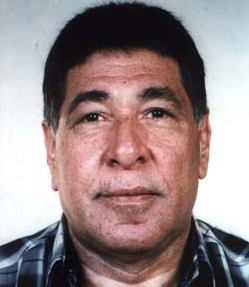 Gameel Al-Batouti
Mass murderer · USA · 1999
Gameel Al-Batouti (also rendered “Gamil ElBatouty” or “El Batouty” in U.S. offi…
216 victims
Gameel Al-Batouti
Mass murderer · USA · 1999
Gameel Al-Batouti (also rendered “Gamil ElBatouty” or “El Batouty” in U.S. offi…
216 victims
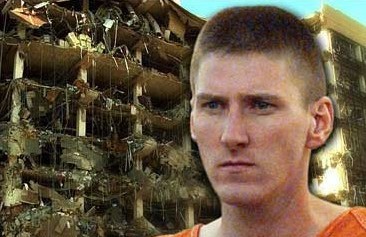 Timothy McVeigh
Mass murderer · USA · 1995
Timothy James McVeigh (April 23, 1968 – June 11, 2001) was a United States Army…
168 victims
Timothy McVeigh
Mass murderer · USA · 1995
Timothy James McVeigh (April 23, 1968 – June 11, 2001) was a United States Army…
168 victims
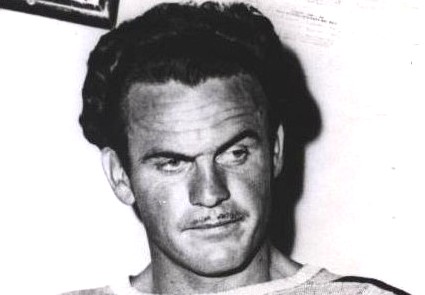 Gerald Albert Gallego
Murderer · USA · 1954
Gerald Albert Gallego was a cop-hating father of Gerald Armand Gallego. He murd…
2 victims
Gerald Albert Gallego
Murderer · USA · 1954
Gerald Albert Gallego was a cop-hating father of Gerald Armand Gallego. He murd…
2 victims
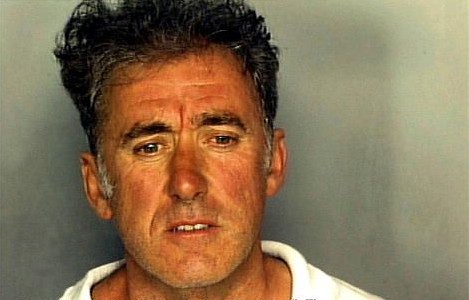 Francisco Arce Montes
Murderer · France · 1996
Francisco Arce Montes was a psychologically troubled loner who drifted around E…
1 victim
Francisco Arce Montes
Murderer · France · 1996
Francisco Arce Montes was a psychologically troubled loner who drifted around E…
1 victim
 Barry Lee Loukaitis
Homicide · USA · 1996
Barry Lee Loukaitis Barry Loukaitis was a convicted American murderer. He was b…
3 victims
Barry Lee Loukaitis
Homicide · USA · 1996
Barry Lee Loukaitis Barry Loukaitis was a convicted American murderer. He was b…
3 victims
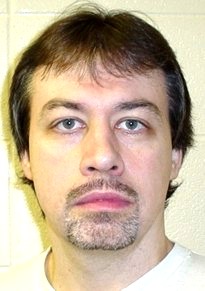 David Leon Woods
Murderer · USA · 1984
David Leon Woods was sentenced to death for the killing of Juan Placencia, a 77…
1 victim
David Leon Woods
Murderer · USA · 1984
David Leon Woods was sentenced to death for the killing of Juan Placencia, a 77…
1 victim
- Gender
- male
- Country
- USA
- Location
- Iowa County, Wisconsin, USA
- Date of birth
- 1884
- Age at first offence
- 30
- Characteristics
- arson, poisoner, abuser
- Victim profile
- Martha "Mamah" Borthwick (mistress of Frank Lloyd Wright) and her children, Martha, 9, and John, 12 / Ernest Weston, 13 (son of carpenter William Weston) / Emil Brodelle, 26 (Milwaukee draughtsman) / David Lindblom, 38 (handyman) / Thomas Brunker, 68 (Taliesin foreman)
- Method of murder
- Fire (gasoline) - Hitting with an axe
- Date(s) of murder
- September 15, 1914
- Years active
- 1914
- Date of arrest
- Same day
- Status
-
Died in custody
Died in jail from starvation seven weeks later, despite medical attention
Background
Julian Carlton was a 30-year-old estate worker and an estate worker originally from Barbados who worked at Taliesin, the hillside home of Frank Lloyd Wright.
Frank Lloyd Wright was born in 1867 in Wisconsin to a family of Welsh descent. He became America's most famous and influential architect and was a leading figure in world architecture until his death in 1959. He gave the name Taliesin—after the Welsh bard—to the house he built in 1911 near his childhood home in the valley where his mother's Lloyd Jones family, originally from Llandysul, had lived for generations. Taliesin was a showpiece of Wright's design principles.
Taliesin also became the focus of scandal because Wright built it as the home for himself and the woman for whom he had left his wife and six children, Martha “Mamah” Borthwick. Wright was away in Chicago at the time of the incident.
Martha “Mamah” Borthwick’s divorced husband was Edwin Cheney, and Cheney was described as the father of her two dead children.
The offence
On 15 September 1914, a major mass-murder incident occurred at Taliesin.
While Wright was away in Chicago, Carlton bolted the doors and windows of the dining room where Mamah Borthwick, her two children, and six other people were eating. He poured buckets of petrol under the doors and torched the building. He then used an axe to attack those who jumped out of the windows to escape the flames. Only two people survived.
Borthwick, and her children, Martha (nine) and John (12), died. The other victims were Ernest Weston (13), the son of carpenter William Weston; Milwaukee draughtsman Emil Brodelle (26); handyman David Lindblom (38); and Taliesin foreman Thomas Brunker (68).
A second account described the incident as occurring during lunch on August 15, 1914. It described Carlton as serving dinner before he asked Weston for some gas, ostensibly to clean a rug with. Carlton was permitted to retrieve the gasoline and doused the rugs and exterior of the building. The account stated that Carlton then set the gasoline alight, told his wife to run, and killed Mamah Borthwick and John with blows from his hatchet. It also stated that Carlton killed Martha as she tried to flee; she was described as the only family member not found sitting in a chair. It described members of the work crew suffering burns from the gasoline fire and listed the work crew as Thomas Brunker (foreman), David Lindblom (gardener), father and carpenter William Weston, his son Ernest Weston, draftsmen Herb Fritz and Emil Brodelle.
In that account, Herbert Fritz dove out of a window, breaking his arm. Weston made it out the same window and was knocked to the ground by two blows from the back of Carlton's hatchet. The account stated Carlton did not pursue him further, and killed Thomas Brunker with a blow to the skull. It described Brodelle and Ernest Weston as meeting a similar fate. It described David Lindblom as receiving a non-fatal wound to the back of his head but being badly burned. It stated that Lindblom and Weston managed to telephone for help from a farmhouse about a half mile down the road. It further stated Lindblom stayed at the farmhouse due to his injuries, and Weston returned to the fire and combated it with the house fire hose until he was forced to stop. It stated that in less than three hours Taliesin had burned to the ground.
Investigation
Ron McCrea said that on the day “all hell broke loose” at Taliesin when one of Wright’s servants unleashed an attack that claimed eight lives, including the attacker’s, left the world-famous architectural treasure in rubble, and devastated Wright, who was 47 years old. McCrea described the event as the biggest single incident of mass-murder in Wisconsin history.
Wright arrived home on the night of Aug. 15, with Edwin Cheney. Wright described the scene in his autobiography as “devastating scene of horror.”
Arrest and detention
The attacker was identified as 30-year-old Julian Carlton, an estate worker originally from Barbados.
After the attack, Carlton was quickly found hiding near the burned-out building. He had swallowed acid. He was nearly lynched on the spot, but the sheriff and posse pursued him with three carloads of men with guns and got him to the Dodgeville jail.
The account described a posse that was set up by Wright’s relative, the Unitarian preacher Jenkin Lloyd Jones, Iowa County Sheriff John T. Williams, and Sauk County Undersheriff George Peck.
Carlton made two court appearances but never stood trial. Another account described him as being found hiding inside the cold furnace after the fire, attempting to commit suicide by swallowing muriatic acid (household name for hydrochloric acid). That account stated he was almost lynched by the mob and was safely transferred to the county jail under the protection of the local sheriff. It described him as managing to starve himself to death over the next two months in jail.
Trial and sentencing
He died before he could be convicted.
Appeals
No appeal information was stated.
Outcome
Carlton died in jail from starvation seven weeks later, despite medical attention.
The two accounts diverged on timing and additional injuries to survivors:
- One account stated that only two people survived: Weston and Herbert Fritz, who survived and raised the alarm.
- Another account stated that David Lindblom later died from the severe burns he received, leaving William Weston and Herbert Fritz as the only survivors of the attack.
Both accounts stated that Carlton’s motive for the attack was never explained, and that there were various theories. Another account stated that Carlton never clarified the motive behind his actions.
Aftermath
Mamah Borthwick was buried in the cemetery of the nearby Unity Chapel, which Wright had helped design for Jenkin Lloyd Jones. Wright said: “I wanted to fill the grave myself.”
Ron McCrea said that shortly afterwards, Wright published an open letter in the local newspaper to thank the community for its support, defend Borthwick, and show he was not about to be driven out. Wright promised to rebuild Taliesin in her memory. Wright kept his word, rebuilt the house, and lived there until his death.
Ron McCrea said: “No evidence of a rational intention or motive, including a conspiracy, has ever come to light.” He was described as City Editor of the Capital Times and as partly Welsh descent. McCrea said he had been researching the Taliesin murders for several years and was working on a book intended to provide the first full modern account of the incident, in collaboration with Professor William Drennan of the University of Wisconsin.
Edwin Cheney came to the scene as quickly as he could from Chicago, running into and traveling with Ms. Borthwick’s ex-husband, and he came for the remains of his children.
Wright’s relative described as the Unitarian preacher Jenkin Lloyd Jones helped set up the posse.
The fire was described as destroying Taliesin’s residential wing and the fire took everything Wright had worked for over the prior five years. Wright was dismayed by the loss and took a period to regain his former will, but he continued his career and rebuild Taliesin, using it as his summer home for the next 50-odd years of his life.
Other details
Carlton was described as sleeping with a hatchet next to his bed in the days up to the event, and as hot-headed with incidents where he got into arguments with tenants. He once decried everyone in the household as “picking on him,” which put him continually on the defensive.
One account described differing reports on what caused his rampage: some claimed he had been given two weeks notice because Gertrude wanted to return to Chicago; others said there was a falling out between him and Ms. Borthwick leading to his dismissal.
The household staff included a couple from Barbados, Julian and Gertrude Carlton. Gertrude was described as the cook, while Julian filled a variety of roles including general handyman to butler.

Spotted an error, or have more information about this case?