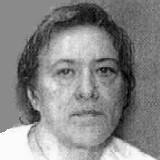
Suzanne Basso
Murderer Megan Huntsman
Murderer · USA · 1996
Megan Huntsman was 40 at sentencing. She was a mother of three children who wer…
6 victims
Megan Huntsman
Murderer · USA · 1996
Megan Huntsman was 40 at sentencing. She was a mother of three children who wer…
6 victims
 Angela Johnson
Murderer · USA · 1993
Angela Jane Johnson was convicted in federal court of aiding and abetting the m…
5 victims
Angela Johnson
Murderer · USA · 1993
Angela Jane Johnson was convicted in federal court of aiding and abetting the m…
5 victims
 Michele Kalina
Murderer · USA · 1996
Michele Kalina pleaded guilty to murder for one of five infants she initially w…
5 victims
Michele Kalina
Murderer · USA · 1996
Michele Kalina pleaded guilty to murder for one of five infants she initially w…
5 victims
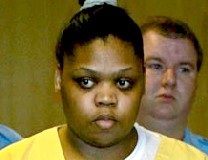 Tiffany Hall
Murderer · USA · 2006
Tiffany Hall was 24 when she was charged in September 2006. She later entered a…
5 victims
Tiffany Hall
Murderer · USA · 2006
Tiffany Hall was 24 when she was charged in September 2006. She later entered a…
5 victims
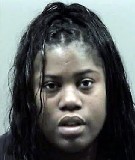 Banita Jacks
Murderer · USA · 2007
Banita Jacks was a Washington, DC resident convicted of murdering her four daug…
4 victims
Banita Jacks
Murderer · USA · 2007
Banita Jacks was a Washington, DC resident convicted of murdering her four daug…
4 victims
 Susan Eubanks
Murderer · USA · 1996
Susan Dianne Eubanks, also referred to as Susan Eubanks, was convicted by a jur…
4 victims
Susan Eubanks
Murderer · USA · 1996
Susan Dianne Eubanks, also referred to as Susan Eubanks, was convicted by a jur…
4 victims
 Wayne Cordell Mitchell
Murderer · USA · 1997
Wayne Cordell Mitchell Wayne Cordell Mitchell and Robin Little met and began da…
1 victim
Wayne Cordell Mitchell
Murderer · USA · 1997
Wayne Cordell Mitchell Wayne Cordell Mitchell and Robin Little met and began da…
1 victim
 Yang Jiaqin
Homicide · China · 2010
Yang Jiaqin carried a kitchen cleaver and attacked students and bystanders outs…
2 victims
Yang Jiaqin
Homicide · China · 2010
Yang Jiaqin carried a kitchen cleaver and attacked students and bystanders outs…
2 victims
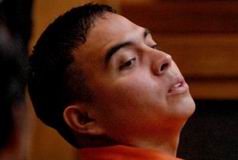 Ricardo Hernandez
Homicide · USA · 1998
Ricardo Hernandez, also known as “Ricky” and “El Boy,” was wanted by Brownsvill…
1 victim
Ricardo Hernandez
Homicide · USA · 1998
Ricardo Hernandez, also known as “Ricky” and “El Boy,” was wanted by Brownsvill…
1 victim
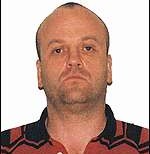 Allan Grimson
Serial killer · United Kingdom · 1986
December 1997 — Nicholas Wright met Allan Grimson, who had given him a telephon…
3 victims
Allan Grimson
Serial killer · United Kingdom · 1986
December 1997 — Nicholas Wright met Allan Grimson, who had given him a telephon…
3 victims
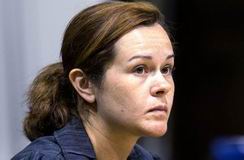 Amy Parmer
Murderer · USA · 2010
Amy Parmer was a 29-year-old woman from Hiawatha who was convicted in the death…
1 victim
Amy Parmer
Murderer · USA · 2010
Amy Parmer was a 29-year-old woman from Hiawatha who was convicted in the death…
1 victim
- Gender
- female
- Country
- USA
- Location
- Houston, Harris County, Texas, USA
- Date of birth
- May 15, 1954
- Age at first offence
- 44
- Characteristics
- kidnapping, torture, attempt to collect insurance money
- Victim profile
- Louis "Buddy" Musso, 59 (her mentally challenged lover)
- Method of murder
- Beating with belts, baseball bats, steel-toed boots, hands, and feet
- Date(s) of murder
- August 25, 1998
- Years active
- 1998
- Date of arrest
- —
- Status
-
Sentenced to death
Sentenced to death on September 1, 1999
Background
Suzanne Basso was a white female who was described as having grey hair and black eyes. She was listed as being 5' 02" tall and weighing 141. She was an office clerk, seamstress, and laborer. She had no prior prison record. Her native county was Albany, NY.
The offence
Suzanne Basso kidnapped and murdered Louis “Buddy” Musso, a 59-year-old retarded white male. Basso and co-defendants intentionally caused Musso’s death by beating him with belts, baseball bats, steel-toed boots, hands, and feet. Basso was described as the leader of the group and as encouraging the co-defendants to abuse the victim.
Basso had wooed Musso into leaving his family and friends in New Jersey and moving to Texas, under the guise that she would marry him. Musso was found in a ditch with injuries so severe that the body was unrecognizable.
The murder was committed for proceeds from an insurance policy on Musso, in which Basso was named the beneficiary, and for other assets in which Basso was named heir.
Co-defendants named in connection with the case included O’Malley, James; Ahrens, Greg; Ahrens, Bernice; Ahrens, Hope; Singleton, Terrance; and Ahrens, Craig.
Investigation
Musso met either Basso or her son, James “J.D.” O’Malley, at a church carnival in New Jersey in July 1997. Although Musso was mentally retarded, he lived independently, held a job at a local grocery store, and handled his own financial affairs.
In June 1998, Musso left New Jersey to live with Basso in Jacinto City, Texas. Shortly after Musso moved in with Basso, Al Becker, Musso’s Social Security representative payee and friend of 20 years, began having difficulty contacting Musso. Becker had numerous telephone conversations with Basso, but Basso eventually refused to let Becker talk to Musso. Becker sought assistance from various Texas state agencies but could not obtain information about Musso’s situation.
In July 1998, Basso unsuccessfully attempted to designate herself as representative payee of Musso’s Social Security benefits. Basso was named beneficiary on an application for life insurance on Musso, describing herself as Musso’s “wife to be.” After Musso’s death, police found certificates of insurance for policies in Musso’s name, including one that provided $65,000 in the event of Musso’s death as the result of a violent crime. Police also discovered a document titled Musso’s “Last Will and Testament,” which purported to leave Musso’s entire estate to Basso while “no one else [was] to get a cent.”
The Medical Examiner discovered a large number of injuries to Musso’s body and could not count the hundreds of bruises covering Musso from head to toe. There were contusions of different ages on Musso’s body, and the examiner opined they were inflicted over a period of five days leading up to Musso’s death. The palms of Musso’s hands and soles of his feet were bruised, and his back and buttocks had lash marks indicating he was whipped. He had a severely blackened eye resulting from a hinge fracture to his skull, probably caused by a blow to the back of his head. Musso sustained broken bones in his nose and ribs. He had burn marks on his back, possibly from cigarettes or a hot poker. Skin abrasions possibly attributable to contact with a cleaning solution or scrub brush were noted. The Medical Examiner concluded Musso died from a skull fracture caused by an unknown object which left a large X-shaped laceration in Musso’s scalp. Musso suffered 18 or 19 blows to the head.
Witnesses saw Musso with bruises and black eyes approximately one to two weeks before the murder. Basso told people that Musso was beaten up by some Mexicans.
The Medical Examiner’s description also included that Musso’s back appeared covered with cigarette burns, while bruises were found all over Musso’s body. His back and buttocks showed lash marks indicative of being whipped, and he had broken bones including a skull fracture and 14 broken ribs.
In a written statement to the police, Basso stated that her son and several friends beat and abused Musso for at least a full day before his death, and that she also beat Musso. She confessed to driving a car belonging to Bernice Ahrens with Musso’s body in the trunk to the site where J.D. O’Malley, Terrence Singleton, and Craig Ahrens dumped the body. Basso also admitted driving the car to a dumpster where the others disposed of additional incriminating evidence, including bloody clothes and rubber gloves. The police found these items as a result of O’Malley’s confession.
Hope Ahrens testified that in August 1998, Basso and O’Malley brought Musso to the apartment shared by the three Ahrenses and Singleton. Musso had two black eyes which he claimed he got when some Mexicans beat him up as he went for a walk. After arriving at the apartment, Basso ordered Musso to stay on a red and blue mat, sometimes with Musso on his hands and knees, and sometimes just on his knees. The mat was most of the time in a hallway in the apartment. Ahrens identified Musso’s shirt, which was bloody with a ripped collar and torn buttons when offered in evidence, though Ahrens testified it was buttoned and not bloody when Musso first arrived at the apartment.
Ahrens testified that during the weekend Basso and O’Malley began beating Musso. Basso slapped Musso, and O’Malley kicked him repeatedly while wearing boots. Musso asked O’Malley to stop. When O’Malley stopped, Basso asked him why he stopped, and O’Malley stated he was tired and wanted to remove his boots. Ahrens also testified that Basso hit Musso on the back with a baseball bat, hit him with a belt, and hit him with a vacuum cleaner, and jumped on him.
When Basso went to work, she instructed O’Malley to watch the others and ensure they did not leave the apartment or use the phone. O’Malley refused Musso’s requests to get off the mat. When Musso tried to get off the mat, O’Malley hit him. After Musso sustained injuries from the beating, O’Malley took Musso into the bathroom and bathed him with bleach, Comet and Pine Sol, using a wire brush to scrub Musso’s skin. At some point, Musso asked Basso to call an ambulance, but she refused. Ahrens testified Musso was moving very slowly and clearly in pain from the beatings.
On the evening before Musso’s body was found, Basso began an elaborate attempt to establish that Musso had run away. She made several phone calls to people, including Musso’s niece and local police, expressing concern about Musso’s whereabouts. Basso claimed Musso ran away with a “little Mexican lady” he met at a laundromat, and claimed to be worried about him. The appellant’s written statement later described her involvement in driving Musso’s body and disposing of evidence.
On the morning of August 28, 1999, Musso’s body was found dumped near a roadway in Galena Park. Because Musso’s clothes lacked any blood stains and his only shoe was on the wrong foot, investigators believed Musso’s body had been dressed after he died.
Arrest
No separate arrest section was supported by distinct facts in the provided material.
Trial
In June 1999, a Harris County grand jury indicted Basso for murdering Louis Musso during the course or kidnapping or attempting to kidnap him and for remuneration or the promise of remuneration in the form of insurance proceeds.
A Harris County jury found Basso guilty of capital murder. The jury found Basso guilty of capital murder for murdering Musso during the course or kidnapping or attempting to kidnap him, and for remuneration or the promise of remuneration in the form of insurance proceeds. After the jury recommended capital punishment, the court sentenced Basso to death. Judgment was entered Aug. 23, 1999.
Prior criminal history and character evidence presented at punishment
Basso had no prior convictions at trial. Both Basso’s daughter and son-in-law testified to verbal, physical, and sexual abuse of her son. Basso also encouraged her husband to abuse both her son and daughter. The punishment stage involved discussion of Basso’s criminal history including a forgery conviction and prior felony probation.
Medication of Basso during trial
Basso argued that she was involuntarily medicated while in jail during the guilt and punishment stages of her trial, that her attorneys received no notice, and that she was denied a fair trial as a result. She received daily doses of Zoloft and Trazadone while in jail. The record reflected no indication that taking these drugs was involuntary. Basso requested Ativan to alleviate her anxiety problems, and a state psychiatrist prescribed the Zoloft and Trazadone only after advising Basso of recommended treatment and receiving her consent. The issue was resolved as points of error one and two being overruled.
Denial of request for medical experts and related ex parte issue
Basso argued that the trial court denied her request for state-funded medical tests to determine the cause of her physical disabilities. She remained confined to a wheelchair, and evidence showed she was unable to walk. The State presented evidence that during medical treatment while in State custody she “feigned illness” and “cried wolf” such that doctors were unable to identify any specific disorder. The appellant underwent an electromyelogram (EMG) after trial, which showed some nerve damage. The defense wished to hire medical experts for additional tests, including biopsies on her muscle and nerve fibre in her legs, to establish legitimate ailments rather than malingerings or faking. The trial court denied the request, and point of error three was overruled.
Basso also claimed the trial court erred in denying an ex parte hearing on motions for expert assistance and funds for false confessions and mitigation issues. The trial court refused to hold an ex parte hearing. The court held the failure was harmless beyond a reasonable doubt and overruled point of error four.
Ineffective assistance of counsel claims
Basso raised claims that she was denied effective assistance of counsel because her attorneys failed to request appointed expert medical assistance. The claim was overruled, with points five and six being overruled.
She also alleged ineffective assistance of counsel in failing to request an accomplice-witness instruction in the jury charge. The court determined counsel’s failure constituted deficient performance, but held it was harmless and overruled point of error ten.
Basso alleged ineffective assistance for counsel’s failure to object to opinion testimony offered by Christina and Scott Hardy at the punishment stage. The court held it did not require Rule 702 expert qualification because it was opinion by lay witnesses under Rule 701, and overruled point of error nine.
She alleged ineffective assistance related to failure to request expert assistance on false confessions and mitigation issues, and those claims were addressed within the ruling on point of error four as well.
Brady and suppression-related motions; continuance; motions to reopen
Basso argued that the State failed to disclose exculpatory information (Brady material) and also argued trial court error in granting a continuance of only one day to allow investigation. She also alleged error in refusal to reopen the hearing on her motion to suppress evidence after learning of evidence. Points of error seven, eight, and thirteen were overruled.
Venue, indictment, and evidence rulings
Basso challenged denial of a change of venue in point of error twelve; the trial court’s decision was upheld and point twelve was overruled. She challenged denial of motions to quash the indictment in point of error eleven; point eleven was overruled.
Basso challenged denial of suppression of evidence seized from a dumpster resulting from O’Malley’s confession in point of error fourteen; point fourteen was overruled.
She challenged admission of Musso’s hearsay statement to Bruce Byerly in point of error fifteen; point of error fifteen was overruled.
Basso also challenged voir dire and competency hearing procedures in point of error sixteen; point sixteen was overruled. She challenged exclusion of testimony at a competency hearing in point of error seventeen; point seventeen was overruled. She challenged denial of a mistrial after a reference to her co-defendant’s confession in point of error eighteen; point eighteen was overruled.
Charge issues: cause of death, remuneration, party liability, mitigation burden
Basso challenged the jury charge in point of error nineteen regarding inclusion of “feet” as a deadly weapon used by someone other than O’Malley. Point of error nineteen was overruled.
She challenged remuneration-related portions of the charge in points of error twenty and twenty-one. The court rejected her argument and overruled points twenty and twenty-one.
Basso challenged the jury charge on guilt as a party in point of error twenty-two. The court overruled point twenty-two.
In point of error twenty-five, Basso argued the trial court erred in not assigning the State the burden of proof on the mitigation issue at punishment. The court rejected that argument and overruled point twenty-five.
Appeals
Direct appeal and affirmance
The Texas Court of Criminal Appeals rejected Basso’s direct appeal and affirmed her conviction and sentence. This direct appeal was decided on Jan. 15, 2003.
Federal proceedings
The U.S. Supreme Court denied Basso’s petition for a writ of certiorari on Oct. 6, 2003.
Basso filed an application for a state writ of habeas corpus with the Texas Court of Criminal Appeals, and on Sept. 20, 2006, the State’s high court denied Basso’s application for state habeas relief.
On Sept. 20, 2007, Basso attempted to appeal her conviction and sentence in the federal district court for the Southern District of Texas. The federal district court denied her petition for federal writ of habeas corpus on Jan. 26, 2009.
On Jan. 5, 2010, the U.S. Court of Appeals for the Fifth Circuit denied Basso’s request for certificate of appealability on her federal writ of habeas corpus.
On Oct. 4, 2010, the U.S. Supreme Court denied Basso’s petition for a writ of certiorari on federal habeas.
Competency and final-day appeal
The U.S. Supreme Court declined to hear her appeal, and the high court refused without comment to review the Harris County case. The denial enabled Harris County prosecutors to seek an execution date.
In the final sequence reported in the provided material, the execution proceeded after the Supreme Court rejected a last-day appeal from Basso’s attorney who argued she was not mentally competent. Lower federal courts and state courts also refused to halt punishment, upholding findings of a state judge that Basso had a history of fabricating stories about herself, seeking attention and manipulating psychological tests.
Sentencing
A jury recommended capital punishment, and the trial judge sentenced Basso to death.
Judgment was entered Aug. 23, 1999.
Outcome
Suzanne Basso was sentenced to death on September 1, 1999.
She was scheduled for execution pursuant to an order entered by the 232nd District Court in Harris County; the scheduled execution was after 6 p.m. on Feb. 5, 2014.
Basso died in Texas after a lethal injection execution on Feb. 5, 2014.
Before being put to death, Basso told a warden: "No sir," when asked to make a final statement. The material reported that she appeared to be holding back tears, then smiled at two friends watching through a window, mouthed a brief word to them, and nodded.
Her deep snoring began after the lethal dose of pentobarbital took effect and became less audible until it stopped. She was pronounced dead at 6:26 p.m. CST, 11 minutes after the drug was administered.
Other details
People named in connection with proceedings and investigation
- Louis “Buddy” Musso — victim; a 59-year-old retarded white male.
- Al Becker — Musso’s Social Security representative payee and friend of 20 years.
- James “J.D.” O’Malley — Basso’s son and co-defendant.
- Bernice Ahrens — co-defendant.
- Craig Ahrens — co-defendant.
- Hope Ahrens — co-defendant.
- Terrence Singleton — co-defendant.
- Christina Hardy — witness (Basso’s daughter).
- Scott Hardy — witness (Basso’s son-in-law).
- Jerome Brown — psychologist who evaluated Basso.
- Colleen Barnett — former Harris County assistant district attorney who prosecuted Basso.
- Winston Cochran Jr. — Basso’s attorney.
- Bruce Byerly — witness who encountered Musso in his driveway.
- Robert Pruett — police chief who testified.
- Floyd Sanson — former Galena Park police officer who spoke to the prosecuting attorney and expressed belief officers had committed perjury during O’Malley’s trial regarding the “deputization” issue.
- Additional investigator and FBI special agents were referenced in connection with Sanson’s allegations.
Specific quoted testimony or statements
Bruce Byerly testified:
- "Can I call the ambulance or a police for you" cause I figured he got beat up.
- Musso said: "No. If you call anybody she'll beat me up again."
Timeline
- July 1997 — Musso, aged 59, first met either Suzanne Basso or James “J.D.” O’Malley at a church carnival in New Jersey.
- June 1998 — Musso left New Jersey to live with Suzanne Basso in Jacinto City, Texas.
- July 1998 — Suzanne Basso unsuccessfully attempted to designate herself as Musso’s representative payee of his Social Security benefits.
- August 25, 1998 — Date of Offense was listed as 08/25/1998.
- August 26, 1998 — Basso and co-defendants kidnapped Musso and intentionally caused his death by beating him; this date was listed in the incident summary.
- Aug. 23, 1999 — Judgment was entered.
- Jan. 15, 2003 — The Texas Court of Criminal Appeals rejected Basso’s direct appeal and affirmed her conviction and sentence.
- Oct. 6, 2003 — The U.S. Supreme Court denied Basso’s petition for a writ of certiorari.
- Sept. 20, 2006 — The Texas Court of Criminal Appeals denied Basso’s application for state habeas relief.
- Sept. 20, 2007 — Basso attempted to appeal in federal district court for the Southern District of Texas.
- Jan. 26, 2009 — The federal district court denied her petition for federal writ of habeas corpus.
- Jan. 5, 2010 — The U.S. Court of Appeals for the Fifth Circuit denied Basso’s request for certificate of appealability.
- Oct. 4, 2010 — The U.S.
- Feb. 5, 2014 — Suzanne Basso was executed by lethal injection; she was pronounced dead at 6:26 p.m. CST.
Spotted an error, or have more information about this case?