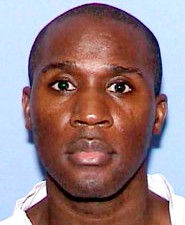
Alvin Moore
Murderer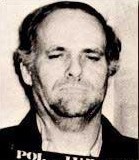 Ervil LeBaron
Murderer · USA · 1972
Ervil Morrell LeBaron (1925 to August 16, 1981) was the leader of a polygamous…
35 victims
Ervil LeBaron
Murderer · USA · 1972
Ervil Morrell LeBaron (1925 to August 16, 1981) was the leader of a polygamous…
35 victims
 Brian Kevin Rosenfeld
Murderer · USA · 1985
Brian Kevin Rosenfeld Brian Kevin Rosenfeld was sentenced to three concurrent l…
23 victims
Brian Kevin Rosenfeld
Murderer · USA · 1985
Brian Kevin Rosenfeld Brian Kevin Rosenfeld was sentenced to three concurrent l…
23 victims
 Marvin Gray
Murderer · USA · 1975
Marvin Gray was convicted killer who claimed responsibility for 23 slayings and…
23 victims
Marvin Gray
Murderer · USA · 1975
Marvin Gray was convicted killer who claimed responsibility for 23 slayings and…
23 victims
 Yahweh ben Yahweh
Murderer · USA · 1980
Yahweh ben Yahweh was born and legally named Hulon Mitchell Jr. (October 27, 19…
23 victims
Yahweh ben Yahweh
Murderer · USA · 1980
Yahweh ben Yahweh was born and legally named Hulon Mitchell Jr. (October 27, 19…
23 victims
 Sergey Gordeyev
Homicide · Russia · 2014
Sergey Gordeyev (also spelled as Sergei Gordeev; Russian: Сергей Гордеев) was a…
2 victims
Sergey Gordeyev
Homicide · Russia · 2014
Sergey Gordeyev (also spelled as Sergei Gordeev; Russian: Сергей Гордеев) was a…
2 victims
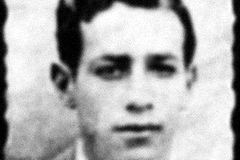 Juan Roa Sierra
Murderer · Colombia · 1948
Juan Roa Sierra was a Colombian who assassinated Liberal leader and presidentia…
1 victim
Juan Roa Sierra
Murderer · Colombia · 1948
Juan Roa Sierra was a Colombian who assassinated Liberal leader and presidentia…
1 victim
 Laurel Schlemmer
Murderer · Pennsylvania · 2014
Laurel Michelle Schlemmer was accused of drowning two young boys in a bathtub i…
2 victims
Laurel Schlemmer
Murderer · Pennsylvania · 2014
Laurel Michelle Schlemmer was accused of drowning two young boys in a bathtub i…
2 victims
 Terrie Robinson
Murderer · USA · 2011
Terrie Robinson was a 25-year-old woman who pleaded guilty to the murder of her…
1 victim
Terrie Robinson
Murderer · USA · 2011
Terrie Robinson was a 25-year-old woman who pleaded guilty to the murder of her…
1 victim
- Gender
- male
- Country
- USA
- Location
- Bossier City, Louisiana, USA
- Date of birth
- 1960
- Age at first offence
- 20
- Characteristics
- rape, robbery
- Victim profile
- Jo Ann Wilson, 23 ( former neighbor)
- Method of murder
- St abbing with knife
- Date(s) of murder
- July 9, 1980
- Years active
- 1980
- Date of arrest
- Same day
- Status
-
Executed
Executed by electrocution in Louisiana on June 8, 1987
Case record: Alvin Moore
Background
Alvin R. Moore, Jr. was a former neighbor and co-worker of Aaron Wilson at the Veteran’s Administration Hospital. Moore had socialized with the Wilsons. Moore’s father, Alvin Sr., a mechanic, hired Shreveport defense lawyer Stacey Freeman for $10,000 (equivalent to Alvin Moore Sr.’s take-home pay for a year).
Freeman had a reputation for rhetorical flourishes in court and for cutting deals out of court. Freeman died in a car wreck in 1990. Randall Fish, Freeman’s assistant at trial, later said both he and Freeman believed Moore was probably guilty, and that Freeman “didn’t handle it like a death penalty case should have been.” Fish said Freeman had “no real strategy.”
Moore’s criminal record included misdemeanor convictions for taking a swing at a store owner in a dispute over shoplifting and for hitting a janitor at school. In the penalty-phase evidentiary hearing discussed in later proceedings, counsel learned that Moore had struck a janitor in the head with a pipe wrench while in school, had been convicted of assaulting a store owner, had shot out the windows of a car with a shotgun, and had beaten and robbed a sixty-eight year old woman in a Veteran’s Administration Hospital parking lot.
The offence
On July 9, 1980, Moore stabbed Jo Ann Wilson to death at her home in Bossier City, Louisiana.
Moore picked up Arthur Lee Stewart, Jr. and Dennis Sloan in his automobile and the three rode around Shreveport, visiting, laughing and talking. Moore then said he wanted to go to Bossier City to “check on his old house.” Their purpose included going to the Wilson home after noticing that Aaron Wilson’s car was gone. Moore then went to the Wilsons’ house with the announced purpose of getting “some money.”
Sloan testified that Moore knocked on the door and Jo Ann Wilson answered it. Moore and Jo Ann Wilson talked briefly and Moore entered the house. Five minutes later, Sloan followed Moore to the door of the house. The door was slightly ajar and Sloan saw Moore and Jo Ann Wilson “making sex” on the floor of the living room. Sloan returned to Moore’s automobile to tell Stewart what was happening. Stewart and Sloan then entered the house.
Moore and a crying Mrs. Wilson went into the bedroom where baby Regina was also crying. Sloan described Jo Ann Wilson as “panicky” and “scared.” Sloan testified that Jo Ann Wilson said: “Take whatever you want, just get out of my house.” Sloan also testified that Mrs. Wilson asked Moore not to harm her or her child.
After being threatened, Mrs. Wilson gave Moore a box of Kennedy half dollars. Sloan took a white bucket with $18.80 in pennies from Wilson’s home and Stewart took some stereo components. Sloan and Stewart left the house and heard Jo Ann Wilson screaming behind them. Moore ran out of the house five minutes later carrying a knife in his hand.
Stewart testified that this was the same knife that Moore had had on the back seat of his car when the group drove to St. Charles Street. Moore told Stewart and Sloan: “I’m fixing to trip you all out ... I stabbed that bitch nine times.”
The three then drove to Church’s Fried Chicken and McDonald’s. Jo Ann Wilson managed to call the police emergency number.
Additional guilt-phase details included that Jo Ann Wilson received thirteen stab wounds and three other minor wounds. She was wounded on her shoulders, arms, chest, back, and in the pelvic and abdominal areas. Testimony also established that Mrs. Wilson had recent vaginal and rectal intercourse, probably within six to eight hours of the autopsy.
Police testimony described that Officer Bill Fields found blood all over the living room, found Mrs. Wilson lying on the bed in the bedroom, and described both rooms as in disarray. Officer Fields testified he asked who stabbed her and she responded “Elvin.” He asked her again to repeat it and she said “Elvin” again. He asked a third time and she repeated “Elvin.” Fields asked whether she knew the subject and she told him he “was a black guy that used to live down the street.” Fields described that it was obvious to him that Mrs. Wilson was dying, and she died approximately ten minutes after her dying declaration.
Moore testified in his defense that his intercourse with Jo Ann Wilson was voluntary, and that he had had voluntary intercourse with her on two previous occasions in May and June. Moore testified that in May, Mrs. Wilson had also given him some money. Moore testified that he did not take the Kennedy half dollars from Mrs. Wilson; rather, she had given them to him. Moore denied any knowledge of the stabbing.
At the trial, evidence also included scientific comparisons and physical evidence recovered from Moore’s vehicle and other areas. Blood flakes taken from Moore’s pants were identified as blood group O. Mrs. Wilson had blood group O; Sloan, Stewart, and Moore had blood group B. No blood was found on the clothing of either Stewart or Sloan. Foreign pubic hairs taken from Jo Ann Wilson’s vagina did not match those of Sloan, Stewart, or her husband, but matched the pubic hair characteristics of Moore. One hair on the bed sheet also matched all the characteristics of Alvin Moore’s pubic hair.
Investigation
Jo Ann Wilson’s call to the police emergency number resulted in dispatch to her home. An appellate summary described that the call was received by the Bossier City Police Department and a unit was dispatched. Officer Fields arrived at the house shortly afterward, knocked on the front door, and kicked in the door when Jo Ann Wilson said she was unable to open it. He found blood all over the living room and found Mrs. Wilson lying on the bed in the bedroom.
Police found that Mrs. Wilson was nude from the waist down and was bleeding from her vagina, chest, and arms. She was having difficulty breathing and told Officer Fields that she was dying.
An evidentiary detail later discussed in case-related material was that the pants can no longer be found, according to Bossier City police and local officials.
Arrest
Moore was arrested at 1:00 a.m. the next morning. Evidence described at trial included that the Wilsons’ stereo components and the white bucket and pennies were found in the trunk of Moore’s car.
Trial
Guilt phase
At the guilt phase of the trial, Dr. George McCormick, coroner of Bossier Parish and a forensic pathologist, testified that Jo Ann Wilson had received thirteen stab wounds and three other minor wounds.
Moore took the stand and contended that his intercourse with Jo Ann Wilson was voluntary. He denied killing her.
Sloan and Stewart testified for the state at trial. Stewart testified that he heard a woman scream in the house and that Moore came out with a knife in his hand.
Stewart testified that Moore told them: “I stabbed the bitch nine times.” Sloan and Stewart’s accounts also included that they took a stereo and jar of pennies while Moore was in the bedroom and that Moore later told them he had stabbed Wilson to death.
After Moore’s conviction, the all-white jury returned a guilty verdict in 40 minutes for first degree murder.
Penalty phase
During the penalty phase, both sides reintroduced all of the evidence submitted at the guilt phase. The jury found three aggravating circumstances:
- That Moore was engaged in the commission or attempted commission of aggravated rape, aggravated burglary, and armed robbery;
- That Moore knowingly created a risk of death or great bodily harm to more than one person;
- That the offense was committed in an especially heinous, atrocious, or cruel manner.
The jury recommended the death penalty.
Freeman called not a single witness during the penalty phase on Moore’s behalf. Freeman’s presentation during the penalty phase was described as 2 minutes and 15 seconds long, and he never asked the jury to spare Moore’s life.
Freeman’s closing argument included this statement:
“Ladies and gentlemen, it’s, of course, a little difficult for me to stand here feeling the way I do about this case, and now ask you to consider mitigating circumstances in the sentence.
There are some mitigating circumstances that you can consider, there are aggravating circumstances, you’ll be given lists of both of those by the Court that you’ll consider.
You’ve got to consider at this point whether to take a human life for what has happened, that you feel has been proved.
You’ve got to consider some mitigating circumstances such as the age of the offender, other things that will be given you.
Just based on these things, you’ve got to--you’ve got to come to some sort of conclusion.
As I say I find it hard, I don’t know at this point exactly how--what to say about it when I feel as strong as I do about the situation, to be standing here saying what I’m saying.
I hope that you do consider these circumstances, hope you consider them very seriously and think about for a moment what you have the potentiality of doing.
I hope you think about it now rather than a couple of weeks from now or tomorrow or the next day, because we’ll be thinking about this case for a long time after this.
And I hope that--but your time to think and make a rational judgment is now.
The mistake can be corrected, no doubt, but I ask you to give it your most serious consideration in the next short length of time, and determine that the death penalty would not be proper in this case.
Thank you.
Joint Exhibit 1C at 776-77.”
Sentencing
Moore was sentenced to die after the jury recommended the death penalty.
Later proceedings described that, in reviewing the jury’s finding that Moore created a risk of death or great bodily harm to baby Regina, the Louisiana Supreme Court found insufficient evidence to support that aggravating circumstance and thus the court had adjusted its analysis while leaving intact the support for the other aggravating circumstances.
Appeals
Louisiana Supreme Court
The Louisiana Supreme Court upheld Moore’s conviction and sentence in State v. Moore, 414 So.2d 340 (La.1982).
In that decision, the court found insufficient evidence to support the jury’s finding that Moore created a risk of death or great bodily harm to baby Regina.
Federal habeas corpus proceedings and appellate rulings
Supreme Court certiorari denial and execution scheduling
Moore petitioned for a writ of certiorari to the United States Supreme Court, and the Court stayed Moore’s execution pending disposition of his petition. On June 27, 1983, the Supreme Court denied Moore’s petition for a writ of certiorari and Moore was scheduled to be executed on August 11, 1983.
In later federal proceedings, it was described that Moore sought and was denied habeas relief in state district court and the Louisiana Supreme Court.
Fifth Circuit and related orders (standalone procedural summaries within the material)
Moore v. Maggio, 740 F.2d 308 (5th Cir.1984) was described as addressing a reversal of a district court grant of partial habeas relief and vacating the district court’s stay of execution. The district court had granted partial habeas relief and ordered a new penalty trial; the Fifth Circuit reversed the part granting relief and vacated the stay.
A later Fifth Circuit order in Moore v. Blackburn, 774 F.2d 97 (5th Cir.1985) and additional stay-related proceedings were described. The material also included:
- A July 1, 1986 reprieve until July 21, 1986 that stayed a July 10 execution date.
- A July 14, 1986 hearing after which the Louisiana Board of Pardons rejected Moore’s request for clemency.
- An execution rescheduled for August 22, 1986.
- A seventh stay granted “pending appeal to the United States Court of Appeals for the Fifth Circuit.”
- A United States Supreme Court stay pending disposition of a petition for a writ of certiorari on October 4, 1985, and the denial of the petition on June 9, 1986.
Merits discussion: ineffective assistance of counsel at penalty hearing
In Moore v. Maggio, 740 F.2d 308 (5th Cir.1984), the Fifth Circuit discussed the ineffective assistance claim during the penalty phase under Strickland v. Washington. It set out legal standards and applied them to the penalty hearing facts, including the circumstances of counsel’s mitigation investigation and the penalty-phase closing argument.
The Fifth Circuit’s discussion included the following quote from the Supreme Court in Strickland v. Washington:
“A convicted defendant’s claim that counsel’s assistance was so defective as to require reversal of a conviction or death sentence has two components. First, the defendant must show that counsel’s performance was deficient. This requires showing that counsel was not functioning as the ‘counsel’ guaranteed the defendant by the Sixth Amendment. Second, the defendant must show that the deficient performance prejudiced the defense. This requires showing that counsel’s errors were so serious as to deprive the defendant of a fair trial, a trial whose result is reliable. Unless a defendant makes both showings, it cannot be said that the conviction or death sentence resulted from a breakdown in the adversary process that renders the result unreliable.” 104 S.Ct. at 2064.
The Fifth Circuit also quoted:
“Judicial scrutiny of counsel’s performance must be highly deferential.” 104 S.Ct. at 2065.
And:
“Unless a defendant makes both showings, it cannot be said that the conviction or death sentence resulted from a breakdown in the adversary process that renders the result unreliable.” 104 S.Ct. at 2064.
It quoted:
And:
“indulge a strong presumption that counsel’s conduct falls within the wide range of reasonable professional assistance; that is, the defendant must overcome the presumption that, under the circumstances, the challenged action ‘might be considered sound trial strategy.’ ” 104 S.Ct. at 2066.
Denial of later certificate of probable cause and stay requests
Blackburn, 774 F.2d 97 (5th Cir.1985), and a subsequent order in another proceeding within the material, stated:
- “It is ORDERED that Moore’s application for a certificate of probable cause and his motion for a stay of execution are denied. The mandate shall issue forthwith.”
Outcome
Moore was executed by electrocution in Louisiana on June 8, 1987.
At the clemency hearing described, Howard Marsellus, chairman of the pardon board, said:
“We went back to deliberate,” he said. “I said that from the time the cops arrived on the scene, that boy was dead. I said, ‘I’m not voting to kill that boy.’”
Moore made no final statement to the public. His attorney said his last words to him were:
“They can kill my body, but not my soul.”
Aftermath
Freeman’s failure to explore certain evidence and witness-related decisions became part of later proceedings. Later recantations by Stewart and Sloan were described, including that at a 1986 clemency hearing they recanted in sworn affidavits, saying the victim was alive when they left and that they did not hear Moore say he stabbed her.
The material also described that a witness never interviewed by police told the Tribune that Moore’s car was parked near the Wilson house around dusk, supporting Moore’s claim that he was there before dark, and that Wilson’s call came at 9:35 p.m., about 40 minutes after dark. It also described that police files obtained through an open-records request contained information that Moore’s appellate attorney said never were given to him or the trial attorney, including a report about the husband saying he saw his wife alive at home at 9 p.m. The material stated that this information differed from the husband’s trial testimony and could have been used by defense attorneys.
A quoted statement from Bossier City Police Officer Bill Fields was:
“I asked her who stabbed her,” Fields testified. “She told me Elvin. I asked her again to repeat it and she said Elvin. I asked her a third time and she told me Elvin. I asked her if she knew the subject. She told me that he used to live down the street and he was black. She repeated that twice.”
A quoted statement from Nycum was:
“She was incoherent, spoke in a heavy Southern accent and said what sounded to me like 'elephant,'” Nycum said. “I never heard her say, 'Alvin did it' or 'Elvin did it.'”
A quoted statement from Nycum also said:
“I never heard her say, 'Alvin did it' or 'Elvin did it.'”
A quoted statement from Fields included:
“I know what I heard. I don’t want to know anything else.”
Moore’s execution date appeared elsewhere in the material as June 9, 1987, but the case status specified electrocution in Louisiana on June 8, 1987.
Spotted an error, or have more information about this case?