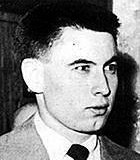
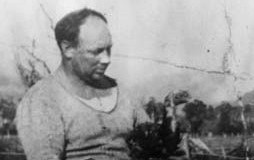
John Gilbert Graham
Mass murderer Francisco Paula Gonzales
Mass murderer · USA · 1964
Francisco Paula Gonzales was a passenger on Pacific Air Lines Flight 773. Gonza…
44 victims
Francisco Paula Gonzales
Mass murderer · USA · 1964
Francisco Paula Gonzales was a passenger on Pacific Air Lines Flight 773. Gonza…
44 victims
 Thomas Doty
Mass murderer · USA · 1962
Thomas G. Doty was a passenger on Continental Airlines Flight 11. He was a marr…
44 victims
Thomas Doty
Mass murderer · USA · 1962
Thomas G. Doty was a passenger on Continental Airlines Flight 11. He was a marr…
44 victims
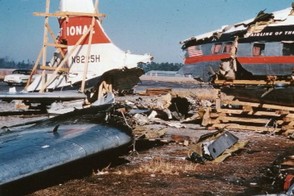 Julian Andrew Frank
Mass murderer · USA · 1960
6 January 1960 — National Airlines Flight 2511 exploded and crashed 1-1/2 miles…
33 victims
Julian Andrew Frank
Mass murderer · USA · 1960
6 January 1960 — National Airlines Flight 2511 exploded and crashed 1-1/2 miles…
33 victims
 Howard Unruh
Mass murderer · USA · 1949
Howard Barton Unruh (born January 21, 1921, Camden, N.J.) carried out a shootin…
13 victims
Howard Unruh
Mass murderer · USA · 1949
Howard Barton Unruh (born January 21, 1921, Camden, N.J.) carried out a shootin…
13 victims
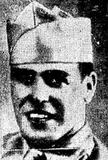 Clarence Bertucci
Mass murderer · USA · 1945
Clarence V. Bertucci was an American soldier, Private Clarence V. Bertucci, who…
9 victims
Clarence Bertucci
Mass murderer · USA · 1945
Clarence V. Bertucci was an American soldier, Private Clarence V. Bertucci, who…
9 victims
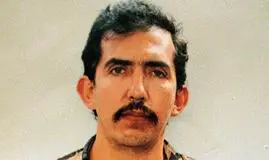 Luis Alfredo Garavito
Serial killer · Colombia/Ecuador · 1992
Luis Alfredo Garavito Cubillos, also known as "La Bestia" ("The Beast") or "Tri…
192 victims
Luis Alfredo Garavito
Serial killer · Colombia/Ecuador · 1992
Luis Alfredo Garavito Cubillos, also known as "La Bestia" ("The Beast") or "Tri…
192 victims
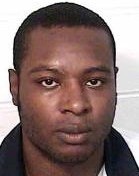 Alexander Williams
Homicide · USA · 1986
Alexander Williams was 17 years old at the time of the offense and was diagnose…
1 victim
Alexander Williams
Homicide · USA · 1986
Alexander Williams was 17 years old at the time of the offense and was diagnose…
1 victim
 Ronald Henry Marwood
Homicide · United Kingdom · 1958
Ronald Henry Marwood was a 25-year-old scaffolder. He was executed by hanging a…
1 victim
Ronald Henry Marwood
Homicide · United Kingdom · 1958
Ronald Henry Marwood was a 25-year-old scaffolder. He was executed by hanging a…
1 victim
- Gender
- male
- Country
- USA
- Location
- In the Air - Colorado, USA
- Date of birth
- January 23, 1932
- Age at first offence
- 23
- Characteristics
- parricide, attempted rape
- Victim profile
- 5 crew members and 39 passengers (including his mother, Mrs. Daisie Eldora King, 53)
- Method of murder
- A dynamite bomb
- Date(s) of murder
- November 1, 1955
- Years active
- 1955
- Date of arrest
- November 14, 1955
- Status
-
Executed
Executed by asphyxiation-gas in Colorado on January 11, 1957
Case record: John Gilbert Graham
Background
John “Jack” Gilbert Graham was born on January 23, 1932, at Denver, Colorado. His father was William Graham, who died when Graham was approximately three years of age. His natural mother was Daisie E. King.
Daisie E. King married John Earl King in 1941. From that time until 1948, they resided on a ranch near Toponas, Colorado. Most of the ranch was sold in 1948, and Daisie E. King and her stepfather maintained residence in Yampa, Colorado, until the death of John Earl King on October 16, 1954.
After John Earl King’s death from a heart disease, Daisie E. King and her daughter went to Goodland, Florida, where King owned and maintained a house on Marco Island. Daisie E. King remained there until February 1955, when she returned to Denver to assist Mrs. Jack Graham, who had given birth to her second baby.
Graham stated that, after his mother’s return to Denver, she resided at his home, 2650 West Mississippi Avenue, except for periods spent in Steamboat Springs and Yampa, Colorado, supervising business interests, and occasional trips out of the state. He stated that his mother purchased the residence at 2650 West Mississippi Avenue for him in December 1954 and considered it her home.
Graham stated that in the Spring of 1955 his mother purchased property, built, equipped, and opened a drive-in restaurant at 581 South Federal Boulevard, Denver, which he managed. Graham stated that the drive-in business in Denver was not a financial success, although he indicated it was successful when he could actually operate the business. He volunteered that in May 1955 unknown vandals caused considerable damage to the window glass at the drive-in. He also stated that in September 1955 an explosion and fire occurred at the drive-in during the early morning hours. He said the inspection of the drive-in showed that someone disconnected a gas line connection, allowing gas to flow into the room, accumulating until it reached a pilot light on a water heater, igniting the gas and causing the explosion. He stated that three dollars in small change was missing from the cash register and some of the furniture of the drive-in was maliciously broken. He said the total damage was approximately $1,200.
Graham volunteered that he had suffered misfortune connected with a new 1955 Chevrolet pickup that had stalled on a railroad track and had been hit by a train. He described the event as occurring in 1955.
On November 1, 1955, Graham was interviewed in the company of his half sister. The half sister stated that she had never at any time in recent years felt at ease with Graham. She said he was sullen, that she knew him to have “pent-up violence,” and that she did not like to be around him. She said he had related things which he thought funny but she considered violent and warped.
The half sister provided examples. She stated that when Graham resided with her and her husband in Alaska, he had been employed as a dragline operator for the CAA and had once told them that he had experienced difficulty loosening a bolt from equipment; he had then obtained some dynamite and “blew off the bolt.”
She further recalled that after the United Air Lines plane crash, Graham stated to her and his wife, Gloria, as if it were a joke:
“Can’t you just see those shotgun shells going off in the plane every which way and the pilots, passengers and `Grandma' jumping around.”
She stated she had for many years thought Graham was not mentally sound and that she had expressed this opinion to both her husband and another relative of Graham. She recalled that on at least two occasions in the past she had been the object of Graham’s violent temper. She said he had knocked her down and kneed her in the chest so severely that her ribs were injured. She also recalled that on another occasion he had threatened to hit her with a hammer and she escaped by locking herself in a room.
During the summer of 1955, the half sister stated that Graham awoke from sleeping and found his wife gone, and that he located his wife playing cards with his sister and his mother. She stated that, for no apparent reason, Graham became enraged and cuffed and backhanded his wife several times. She said Daisie King became extremely frightened, apparently afraid Graham might hit her.
Graham’s wife was Gloria. On November 11, 1955, Mrs. Gloria A. Graham advised that she had married Jack Graham in 1953 and resided with him since that time. They had two children, approximately twenty and nine months old. She advised that Daisie King resided with them at 2650 West Mississippi Avenue periodically from December 1954 until her death. She stated that King traveled a great deal and spent part of the summer of 1955 supervising her business at Steamboat Springs, Colorado.
Gloria Graham explained that she had described the luggage taken by Daisie King on her trip to Alaska, but she was unable to furnish any definite information about the contents. She said King was very particular about packing her bags or suitcases and did not allow anyone to assist her in packing. She said Graham had given his mother a present on November 1, 1955, before King left for the airport.
Gloria Graham believed the present consisted of a small set of tools such as drills, files, and cutting tools used for forming sea shells into art objects. She said Graham had talked earlier about obtaining such a tool set as a Christmas present for his mother. She said she had no knowledge of the details of the purchase, but recalled that on November 1, 1955, Graham brought a package into the house and carried it to the basement where King was packing her luggage. She recalled it was wrapped as a gift and measured approximately eighteen inches in length, fourteen inches in width, and three inches in depth. She thought the package contained the tool set, but did not know whether Graham actually gave it to King.
A neighbor of one of Graham’s relatives advised that she had heard that prior to Daisie King’s intended trip to Alaska, Graham was extremely interested in purchasing a tool kit he intended to give his mother as a Christmas present. She said Graham had searched the town of Denver and finally obtained the type of tool kit he wanted. She said she had heard Graham had gift-wrapped it in Christmas paper and placed it in his mother’s luggage before King boarded the plane.
The neighbor also stated that shortly after Daisie King left Denver aboard the plane, Graham became very ill and his face turned very white. She said Graham and his wife, Gloria, heard a statement that an airplane had crashed. She stated that Graham responded:
“That is it.”
She stated that since the crash, Graham had not eaten and had not been able to sleep, and he spent most of his time walking up and down inside and outside his home.
The offence
John Gilbert Graham placed a dynamite bomb aboard United Air Lines Flight 629 in his mother’s luggage. The flight was operating a Douglas DC-6B airliner identified as “Mainliner Denver,” registration N37559. The bombing occurred after Graham placed the bomb in Daisie King’s suitcase which was loaded aboard the aircraft.
All 44 people aboard were killed. The explosion occurred over Longmont, Colorado while the airplane was en route from Denver, Colorado to Portland, Oregon, with continuing service to Seattle, Washington. The crash occurred on November 1, 1955, and the flaming wreckage fell to earth over tracts of farmland and sugar beet fields near Longmont, Colorado.
Graham’s motive was characterized as an attempt to collect life insurance money. He placed the bomb in order to collect a $37,500 life insurance policy on his mother. Another narrative within the case materials described the motive as revenge for the way his mother had treated him as a small child, and noted that Graham had a grudge against his mother as a result of an unhappy childhood.
Investigation
Investigators determined that the aircraft began to disintegrate near the empennage (tail) and that the aft fuselage had been shattered by a force strong enough to cause extreme fragmentation. A smell of explosives was present on items from the No. 4 baggage compartment. Four pieces of sheet metal of an unusual grade were found, each covered in a gray soot. Testing showed contamination with chemicals known to be byproducts of a dynamite explosion.
The FBI performed background checks on passengers. Many had purchased life insurance at the airport just before boarding. One insuree was Daisie Eldora King, 53, a Denver businesswoman en route to Alaska to visit her daughter. When agents identified her handbag, they found newspaper clippings containing information about King’s son, John Gilbert Graham, who had been arrested on a forgery charge in Denver in 1951. Graham was described as the beneficiary of both her insurance policies and her will.
Agents also discovered that one of Mrs. King’s restaurants, the Crown-A Drive-In in Denver, had been badly damaged in an explosion. Graham had insured the restaurant and collected on the insurance after the blast.
Investigators searched Graham’s house and automobile and found wire and other bomb-making parts identical to those found in the wreckage. They also found an additional $40,000 in insurance policies, but the materials stated that Mrs. King had not signed those additional policies and therefore they were worthless.
Graham told agents that his mother packed her own suitcase. His wife Gloria revealed that Graham wrapped a “Christmas present” for his mother on the morning of the day of Mrs. King’s flight. Faced with evidence and discrepancies, on November 13, 1955, Graham confessed to placing the bomb in his mother’s suitcase.
In his confession, Graham said:
“I then wrapped about three or four feet of binding cord around the sack of dynamite to hold the dynamite sticks in place around the caps. The purpose of the two caps was in case one of the caps failed to function and ignite the dynamite ... I placed the suitcase in the trunk of my car with another smaller suitcase...which my mother had packed to take with her on the trip.”
The materials also described additional questioning and investigative actions. After an initial interview, Graham was released and sent home, after which he supplied information to investigators. On November 13, Graham was asked to return to Denver for an additional interview. At first, he repeated assertions that he did not buy the tools in question and stated that he merely intended to buy them. The materials stated he could not explain why his wife told investigators that he had bought the tools and placed them inside his mother’s luggage. He also could not explain evidence found at his home and the Longmont crash site. Late that afternoon, confronted with evidence, Graham admitted he caused the explosion on Flight 629.
In the described account of Graham’s admissions, he said he put together a bomb consisting of 25 sticks of commercial dynamite, two blaster caps, a timer with a maximum capability of 90 minutes, and a small battery. He said he wrapped the device “like a Christmas present” and placed it in his mother’s luggage just before she left the house for Stapleton. He said he set the timer for 90 minutes. He said he knew he had to hurry in order to get his mother on the plane and in flight before the time would expire. After he put his mother on the flight to Seattle, he went to the airport coffee shop, where he had coffee and munched on donuts. When he heard the news that a plane went down outside Longmont, he knew his bomb had worked. The materials additionally stated that Graham recounted how he killed people to cover up the murder of his own mother and that he assisted the FBI with details of purchases.
A supply-chain part of the investigation included identification of the hardware store clerk where Graham purchased dynamite several weeks before. The materials also stated that investigators located a Denver supply company where Graham was identified as having purchased on October 26, 1955, a sixty-minute “on-type” timing device, which he exchanged a few days later for a sixty-minute “off-type” timing device.
On November 19, 1955, a store manager at Kremmling, Colorado recalled selling twenty or twenty-five sticks of dynamite and two electric blasting caps to an individual during October 1955, and believed that Graham was identical to that purchaser. On November 21, 1955, the manager identified Graham from a line-up as being identical with the individual.
The Civil Aeronautics Board conducted technical and scene assessments and concluded that there were indications of sabotage. The materials described:
- fingerprint experts dispatched from Washington, D.C. arriving on November 2,
- the bodies being taken to Greeley, Colorado and placed in a temporary morgue set up in the National Guard Armory,
- remaining bodies being fingerprinted and identified through FBI files,
- a laboratory expert sent to the scene on November 2, collecting pieces of wreckage between November 2 and 7,
- findings including that the tail section had been cleanly severed from the rest of the plane as though cut with a knife,
- a systematic search involving a surveyor who plotted and marked a “base line,” and creation of a grid system using perpendicular lines at intervals of 1,000 feet.
On November 7, 1955, the Chief of Investigations of the Civil Aeronautics Board officially stated there were indications of sabotage and asked the FBI to institute a criminal investigation. The materials then described FBI activity beginning on November 8, with full-time assignments to correlate information from witnesses, trace cargo, mail and baggage, conduct background investigations, and search wreckage and recovered baggage.
The materials also recorded insurance-related investigative details:
- a number of passengers had purchased life insurance amounts in varying totals,
- later located policies included three on the life of Daisie E. King,
- a travel insurance policy on King’s life dated November 1, 1955, was found hidden in a small cedar chest in a bedroom at Graham’s home and designated Jack Graham as beneficiary.
Additionally, the materials described Graham’s prior record as reviewed by Denver County Probation Department records. Those records stated that Graham was employed as a payroll clerk at a manufacturing concern in Denver in March 1951, during which he stole blank checks and used a company check protector, filling out approximately forty-two for $100 each, forging the company owner’s name, and cashing the checks at various business in Denver. He received approximately $4,200 in cash and spent approximately $2,000 for a late-model convertible automobile and left Denver. His whereabouts were unknown until his arrest on September 11, 1951, at Lubbock, Texas, on a charge of “hauling whiskey in violation of Texas laws.” The materials stated that shots were fired into his car after a roadblock manned by local officers, and that a gun was found in his car. He was convicted of the forgery charge in State District Court at Denver, Colorado, on November 3, 1951; sentence was suspended and he was placed on probation for five years after serving a sentence of sixty days in county jail. It stated cash restitution of $2,500 had been made and that further restitution of $1,805.34 was required at $40 per month, with payments made between January 2, 1952, and November 3, 1955, reducing the outstanding balance to $105.34. The materials also stated Graham served in the U.S. Coast Guard from April 1948 to January 1949 and received an honorable discharge on the basis of minority, with a notation reflecting he was AWOL for sixty-three days. It stated he was last stationed at the Coast Guard installation at Groton, Connecticut, holding the rank of Motorman Third Class.
The materials stated Graham completed the ninth grade in public schools and later was granted a high school diploma upon passing entrance examinations at Denver University.
Arrest
On November 14, 1955, Jack Gilbert Graham was arrested and charged with 44 counts of murder.
On November 14, 1955, a complaint was filed before a U.S. Commissioner at Denver by a Special Agent of the FBI charging Jack Gilbert Graham with sabotage. Graham appeared before the United States Commissioner and was advised of the charges, afforded an opportunity to make bond recommended by the United States Attorney at $100,000, and was committed to the custody of the United States Marshal in lieu of bond.
On November 17, 1955, Graham was charged with murder in the State Court at Denver, Colorado, and held without bail for future hearings. He was charged with the murder of his mother, Mrs. Daisie E. King, age fifty-four.
Trial
After his confession, authorities used a state charge of murder against his mother rather than a federal airplane sabotage statute. The materials stated that on the day after Graham’s confession, the Colorado district attorney moved to prosecute Graham via premeditated murder committed against a single victim, his mother, Mrs. King, despite the number of victims killed on Flight 629.
Graham pleaded “innocent” and “innocent by reason of insanity, before, during and after the alleged commission of the crime.” The court accepted only “innocent” and “innocent by reason of insanity at the time of the alleged crime.” Graham was ordered to Colorado Psychopathic Hospital for examination by two defense and two court-appointed psychiatrists. The materials stated all four psychiatrists found him legally sane, and he was returned to the Denver County Jail. The materials stated he was described as a model prisoner.
An incident occurred in jail: after dinner on the evening of February 10, 1956, about 5:30 p.m., a Deputy Sheriff was attracted to Graham’s cell by sound of heavy breathing. Graham was slumped on the floor with socks twisted around his neck with a piece of rolled cardboard used to get added leverage. The guard loosened the garrote, a doctor was summoned, and sedatives were administered. Graham was placed in a strait jacket to subdue him through the night. The following day he was returned to the psychiatric ward at Colorado General Hospital strapped to a bed with four guards posted nearby, and the materials stated he then underwent 24-hour surveillance.
The materials included statements made by Graham to psychiatrists. He said his confession of the murder of people on the plane was true. He said he bought a timer and dynamite and fashioned a homemade bomb, assembled it, placed it into his mother’s old battered suitcase, and fastened the suitcase with extra webbing. He described leaving for the airport, dropping his mother and family off at the terminal door before taking the car to the parking lot, setting the timer on the bomb before removing the suitcase from the car, and taking the mother’s luggage to the weighing counter before it was placed on the plane. The materials recorded his remark to the doctors about number of people carried on the DC-6B and the inevitability of deaths, stating:
“realized that there were about fifty or sixty people carried on a DCB, but the number of people to be killed made no difference to me; it could have been a thousand. When their time comes, there is nothing they can do about it.”
The materials additionally stated Graham said it was a great relief to tell the doctor about it because he had been quite conscience stricken.
On February 24, 1956, the materials stated Graham dropped the insanity plea. The trial date was set for April 16, 1956.
The materials described media and camera coverage during the trial, including that Colorado had a ban on photography in state courts pursuant to Canon 35, and that the Supreme Court reversed its decision after public hearings. The judge ruled against live television coverage but permitted sound-on-film, press photography, and radio broadcasts. Graham’s attorneys requested that television cameras be banned from his trial, and the judges ruled to permit some and to ban others, while stating the judge could cut off cameras via remote control when necessary. The materials stated Graham was the only person who actually made the request during the trial.
The materials stated that 231 jurors were called, and that objections were largely based on fixed opinions about Graham’s guilt or innocence or opposition to capital punishment. The final jury was described as a cross section of American life.
At opening, the District Attorney told the jury the State would prove Graham had planned his mother’s murder “coldly, carefully, and deliberately.” The materials described evidence planned to include a piece of yellow wire matching wire used on electric dynamite caps found at Graham’s home, and testimony that Graham bought about twenty-five sticks of dynamite, a timer, a battery, and dynamite caps placed in his mother’s luggage. The prosecution also sought to show the explosion in cargo pit number four was caused by dynamite.
The trial included legal challenges. On the ninth day, a hearing occurred in Federal Court on a defense motion to eliminate FBI testimony and evidence. The defense contended FBI testimony was illegal, that Graham had not been advised of rights before signing confession, and that confession was obtained under duress. The defense also contended his home was searched and evidence obtained without consent. The Federal judge dismissed the motion based on testimony that Graham had been fully advised of rights and had not been mistreated and that he signed eight waivers of search.
Trial testimony included technical identification of dynamite explosion residue on airplane parts and battery-related identification. The materials described testimony that wire found in Graham’s shirt pocket was identical to wire from an electric dynamite cap.
Employment and purchases evidence included:
- an owner who testified Graham had offered to work for nominal wage in early October, “get more experience,” and was hired for one week,
- the owner’s testimony that on the final day of work Graham asked about timing devices and the ability to use with a battery and not exceed two hours, leading to instructions to go to an appliance store for a timer operated with a spring,
- a salesman who testified he sold Graham a sixty-minute timer in late October, with Graham representing himself as an employee of the Colorado-Texas Pump Company to purchase the timer,
- a credit manager who testified Graham could not pay a $50.00 deductible on his 1955 Chevrolet pickup truck repairs due to an accident and said his bank account was held jointly with his mother and was all tied up,
- testimony that Graham commented on how easy it would be to blow up an airplane and estimated that it would take about two gallons of nitroglycerin, and that he observed luggage handling at Stapleton Airport and that it would be easy for someone to place a bomb on an airplane.
The materials stated the prosecution rested on the afternoon of the 15th day after about eighty different witnesses and 174 exhibits. The defense rested after calling eight defense witnesses.
The materials stated that during the prosecution testimony Graham made statements to the press that when he took the stand he would refute testimony, tell the truth, and clear himself. It stated he refused to testify at all in his own behalf, and none of the eight defense witnesses rebutted testimony and evidence that he placed a dynamite bomb in his mother’s luggage.
On May 5, 1956, after deliberating for sixty-nine minutes, the jury found Graham guilty of murder in the first degree and recommended the penalty of death.
On May 15, 1956, the judge denied a motion for a new trial. The materials stated that Graham then took the stand and said he did not wish a new trial nor did he want his case reviewed by the State Supreme Court, and that his attorneys had filed the motion without his permission or consent.
Sentencing
The materials stated the judge sentenced Graham to be put to death during the week of August 26, 1956, the day, hour, and minute to be selected by the Warden of the Colorado State Penitentiary, Canon City, Colorado.
On August 8, 1956, the Colorado Supreme Court stayed the execution after two of Graham’s attorneys filed a formal record of appeal against his wishes.
On October 22, 1956, the Colorado Supreme Court confirmed the lower court decision and set the execution for the week ending January 12, 1957.
Graham was executed in the gas chamber at the Colorado State Penitentiary on Friday, January 11, 1957, and was pronounced dead at 8:08 p.m.
Before his execution, the materials recorded Graham saying:
“as far as feeling remorse for these people, I don't. I can't help it. Everybody pays their way and takes their chances. That's just the way it goes.”
Outcome
Graham was convicted of the murder of his mother, Mrs. Daisie E. King, and was executed by asphyxiation-gas.
Aftermath
The materials stated that after his initial interview, Graham was released and sent home. It also stated that he later assisted the FBI with plot details, including where and when he purchased the bomb parts.
The materials stated that Graham was reportedly inspired to commit the crime by hearing of a similar incident, the Albert Guay affair in Quebec in 1949.
The materials stated United still used the flight number 629 today on its Washington (National) - Chicago (O’Hare) route.
The materials stated the bombing of United Flight 629 was depicted in the opening segment of the 1959 movie The FBI Story, starring James Stewart and Vera Miles, and that actor Nick Adams portrayed Jack Graham.
The materials stated that Lenny Bruce’s 1958 routine “non Skeddo Flies Again” was based on the case. The routine included the following text:
“I talk about a John Graham. He blew up a plane with forty people and his mother and for that the States sent him to the Gas Chamber proving, actually, that the American people are losing their sense of humor... You just think about it, anybody who blows up a plane with forty people can't be all bad.”
The materials also stated that a book about the Graham case was published on the fiftieth anniversary of the bombing: Mainliner Denver: The Bombing of Flight 629 by Andrew J. Field (Johnson Books, 2005).
Other details
Flight details and crash chronology
United Air Lines Flight 629, registration N37559, was a Douglas DC-6B aircraft named “Mainliner Denver.” The flight originated at New York City’s La Guardia Airport and made a scheduled stop in Chicago before continuing to Denver’s Stapleton Airfield. At Denver there was a crew change. The captain who assumed command for the segments to Portland and Seattle, Lee Hall, was a World War II veteran.
The flight took off at 6:52 p.m. Mountain time on November 1, 1955. Eleven minutes later, Stapleton Airport tower controllers saw two bright lights north-northwest of the airport for thirty to forty-five seconds, and both fell to the ground at roughly the same speed. The controllers then saw a very bright flash originating at or near the ground, intense enough to illuminate the base of the clouds above the source. Controllers contacted aircraft in the area; all flights were accounted for except United Flight 629.
Numerous telephone calls came from farmers and residents near Longmont reporting loud explosions and fiery debris falling from the nighttime sky, described as the remains of Flight 629. Ground searchers found that all 44 people aboard the DC-6B died instantly. Debris was scattered across six square miles of Weld County, Colorado.
The materials included a statement by a control tower operator at Stapleton Airport that he observed the flash of light and the flare at exactly 7:03 p.m. Civil Aeronautics Board officials placed the location of the explosion at approximately eight miles east of Longmont, Colorado, and at a calculated altitude of 10,800 feet above sea level or 5,782 feet above the terrain.
The materials stated that the tail section had fallen about one and one-half miles from where the engines and nose section hit the ground, described as almost whole. The materials stated that wreckage from the middle section was widely scattered over and behind the intervening area.
Identification and recovery
Fingerprint experts dispatched by plane from Washington, D.C., arrived at the scene on November 2. Bodies were recovered and taken to Greeley and placed in a temporary morgue at the National Guard Armory. Nine of the bodies had been identified by relatives and friends or by personal effects and were removed from the armory. The remaining thirty-five bodies were fingerprinted, and twenty-one were positively identified with fingerprints contained in FBI files.
The materials stated that a husband and wife from Canada were identified using fingerprints from when they applied for U.S. naturalization in September 1954. It stated that crew members were identified with fingerprints forwarded to the FBI by United Air Lines officials; five passengers were identified with fingerprints taken during service in the Air Force, Army, and Navy; six were fingerprinted due to employment in defense plants during World War II; two were U.S. Government employees; and one victim had been fingerprinted in 1941 and requested fingerprints be placed in FBI files for personal identification.
The materials also stated that of fourteen victims printed and not identified by fingerprints, two were men and twelve were women, and all were subsequently identified by relatives or personal effects.
Scene examination and technical conclusions
A laboratory expert examined wreckage between November 2 and 7 and conducted visual examination and collected pieces of wreckage. A specific conclusion stated that the tail section of the plane had been cleanly severed from the rest of the plane as though cut with a knife.
The materials described construction of a full-size “mock-up” of the central section of the plane of wood and wire netting, wiring parts in their proper places, and stated that the chairman of the Structure Investigating Committee of the Civil Aeronautics Board and a Douglas Aircraft Corporation engineer agreed that an explosion occurred at station 718 in the rear cargo pit designated cargo pit number four. The materials stated this point was almost directly across from the cargo loading door. The materials stated stringers at this point had failed in outward bending and heavy fuselage skin fragments fit into the area were shattered into small pieces.
The materials described gray and black soot-like deposits noted on skin fragments near the circular area and similar deposits on the aft side of the central portion of the floor beam above the cargo pit, with none noted on the forward side.
Copies of waybills for all air freight shipments were obtained and matched to recovered shipments. The materials stated that nothing of an explosive or particularly inflammable nature was determined to have been included in air freight shipments on the plane. Cargo pit four was said to have contained baggage and cargo loaded other flights as well as cargo and baggage originated at Denver, and that on arrival at Denver, all cargo and freight in pit four had been removed to the forward cargo pit.
Five small fragments of sheet metal found at the scene were described as badly burned and scarred with gray soot-like deposits. One fragment bore the blue letters “HO.” The materials stated the “HO” fragment was eventually identified as a portion of metal side of a six-volt battery type determined to be used as the detonating device of the bomb. FBI Laboratory examination of wreckage pieces reported deposits consisting mainly of sodium carbonate, with nitrate and sulfur compounds present, consistent with the materials in available dynamite described in the materials as nitroglycerin with varying amounts of sodium nitrate and sulfur.
Insurance and luggage details
The materials stated that Mrs. King’s personal effects were recovered and included personal letters, newspaper clippings about her family, a personalized checkbook, $1,000 in traveler's checks, an address list, and two keys and a receipt for safety deposit boxes. It stated that one newspaper clipping reflected that her son Jack Gilbert Graham had been charged with forgery by the Denver County District Attorney and had been placed on a local “most wanted” list in 1951.
The materials stated that most of Mrs. King’s personal effects were found on or near her body, implying she carried them in personal handbags at the time of the crash rather than in her luggage. It stated that practically none of the contents of Mrs. King’s luggage was recovered and only small bits of suitcases believed to belong to her were found.
The materials stated that a complete check of insurance companies writing such policies could not be made immediately due to the holiday weekend, but later located policies included three on the life of Daisie E. King. It also stated that during the search of Jack Gilbert Graham’s home on November 13, 1955, a duplicate travel insurance policy on King’s life in the amount of $37,500 was found hidden in a small cedar chest in a bedroom. It stated that the original policy with designated beneficiary Jack G. Graham was later located and made available by the insuring company. It stated that two additional policies, each in the amount of $6,250, existed on King’s life with designated beneficiaries being her daughter and her one living sister.
Prior criminal history
The materials included Graham’s forgery conviction and probation as summarized in the investigation section: check passing and forging activities resulting in a sentence suspended, probation for five years, and conditions including restitution payments. The materials also included his arrest at Lubbock, Texas on a charge of “hauling whiskey in violation of Texas laws,” and that shots were fired into his car and a gun was found.
Court pleas and mental health evaluations
The materials stated Graham’s initial pleas were “innocent” and “innocent by reason of insanity, before, during and after the alleged commission of the crime.” The court accepted only “innocent” and “innocent by reason of insanity at the time of the alleged crime.” He was ordered to Colorado Psychopathic Hospital for examination by two defense and two court-appointed psychiatrists, and all found him legally sane.
On February 24, 1956, Graham dropped the insanity plea and the trial proceeded.
Spotted an error, or have more information about this case?