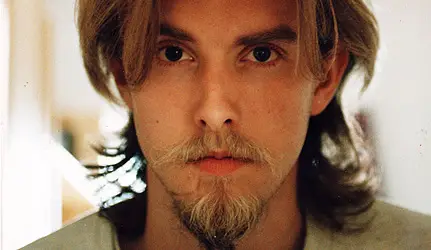
Varg Vikernes
Murderer Bârd Eithun
Murderer · Norway · 1992
Bård G. "Faust" Eithun was a Norwegian drummer. He was best known for his work…
1 victim
Bârd Eithun
Murderer · Norway · 1992
Bård G. "Faust" Eithun was a Norwegian drummer. He was best known for his work…
1 victim
 Fredrik Fasting Torgersen
Murderer · Norway · 1957
Fredrik Ludvig Fasting Torgersen was born October 1, 1934. He was a Norwegian c…
1 victim
Fredrik Fasting Torgersen
Murderer · Norway · 1957
Fredrik Ludvig Fasting Torgersen was born October 1, 1934. He was a Norwegian c…
1 victim
 Dr. Wouter Basson
Murderer · 1992
Wouter Basson (born July 6, 1950) was a South African cardiologist and the form…
230 victims
Dr. Wouter Basson
Murderer · 1992
Wouter Basson (born July 6, 1950) was a South African cardiologist and the form…
230 victims
 Ershad Sikder
Murderer · Bangladesh · 1990
Ershad Sikder was an influential political figure in the south-western city of…
30 victims
Ershad Sikder
Murderer · Bangladesh · 1990
Ershad Sikder was an influential political figure in the south-western city of…
30 victims
 Brian Kevin Rosenfeld
Murderer · USA · 1985
Brian Kevin Rosenfeld Brian Kevin Rosenfeld was sentenced to three concurrent l…
23 victims
Brian Kevin Rosenfeld
Murderer · USA · 1985
Brian Kevin Rosenfeld Brian Kevin Rosenfeld was sentenced to three concurrent l…
23 victims
 Russell Ellwood
Murderer · USA · 1991
Russell Ellwood was a former taxi driver. Authorities suspected him of killing…
20 victims
Russell Ellwood
Murderer · USA · 1991
Russell Ellwood was a former taxi driver. Authorities suspected him of killing…
20 victims
 Özgür Dengiz
Murderer · Turkey · 1997
Özgür Dengiz (born 1980) was a Turkish serial killer and cannibal. He was nickn…
3 victims
Özgür Dengiz
Murderer · Turkey · 1997
Özgür Dengiz (born 1980) was a Turkish serial killer and cannibal. He was nickn…
3 victims
 Shawn Patrick Lynch
Murderer · USA · 2001
Shawn Patrick Lynch was convicted and later sentenced to death. Shawn Patrick L…
1 victim
Shawn Patrick Lynch
Murderer · USA · 2001
Shawn Patrick Lynch was convicted and later sentenced to death. Shawn Patrick L…
1 victim
 Terrie Robinson
Murderer · USA · 2011
Terrie Robinson was a 25-year-old woman who pleaded guilty to the murder of her…
1 victim
Terrie Robinson
Murderer · USA · 2011
Terrie Robinson was a 25-year-old woman who pleaded guilty to the murder of her…
1 victim
 James Dyral Briley
Serial killer · USA · 1979
Name: James Dyral Briley James Dyral Briley was sentenced to death for capital…
11 victims
James Dyral Briley
Serial killer · USA · 1979
Name: James Dyral Briley James Dyral Briley was sentenced to death for capital…
11 victims
 Arthur Martin Boyd
Murderer · USA · 1982
Arthur Martin Boyd was executed by lethal injection in North Carolina on Octobe…
1 victim
Arthur Martin Boyd
Murderer · USA · 1982
Arthur Martin Boyd was executed by lethal injection in North Carolina on Octobe…
1 victim
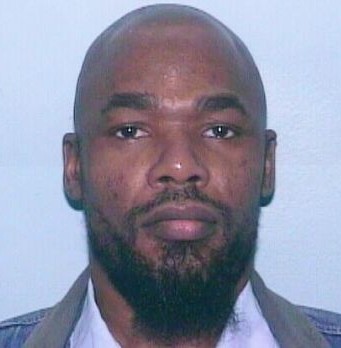 Gregory Clepper
Murderer · USA · 1996
1991 — The killings began. · April 24, 1996 — Patricia Scott was found in a tra…
1 victim
Gregory Clepper
Murderer · USA · 1996
1991 — The killings began. · April 24, 1996 — Patricia Scott was found in a tra…
1 victim
- Gender
- male
- Country
- Norway
- Location
- Oslo, Norway
- Date of birth
- February 11, 1973
- Age at first offence
- 20
- Characteristics
- arson
- Victim profile
- Øystein Aarseth aka 'Euronymous' (his Mayhem bandmate)
- Method of murder
- St abbing with knife
- Date(s) of murder
- August 10, 1993
- Years active
- 1993
- Date of arrest
- —
- Status
-
Released
Sentenced to 21 years' imprisonment on 1994, the maximum sentence in Norway; released on parole on May 22, 2009
Case record: Varg Vikernes
Background
Varg Vikernes (born 11 February 1973 near Bergen, Norway) was a Norwegian black metal musician and a former far-right political activist. He conceived the one-man music project Burzum, which quickly became popular within the early Norwegian black metal scene. In 1992 he joined the band Mayhem and adopted the stage name Count Grishnackh. Around this time he became affiliated with the Heathen Front and authored several underground writings on Germanic neopaganism.
During a period that included his childhood and adolescence, Vikernes moved for about a year to Baghdad, Iraq, because his “father was working for Saddam Hussein”, developing a computer program. Because there were no places available in the English school in Baghdad, he went to an Iraqi elementary school during this time. He said that he became “aware of racial matters”. Corporal punishment was not uncommon in the school, and on one occasion he had a “quarrel” with a teacher and called him “a monkey”. He said the teachers “didn't dare to hit me because I was white”.
His mother also recalled that they “spent a year in Iraq”, and that the other children in his class would get slapped by their teachers while he would not. She said that this created problems, but generally she “has no good explanation” of how Varg developed his views.
In the 2004 interview, Vikernes mentioned that “she is working in a large oil company”. He gave his father’s profession as “electronics engineer”, while his brother, who was “one and a half years older”, was a “graduate civil engineer”. In the Lords of Chaos interview, an incident from his childhood was recalled when he was about 6 years old: the family moved to Baghdad for about a year. Vikernes’ parents were divorced. His father was said to have left about 10 years earlier, which would have been 1985 when Vikernes was 12. At the time of the interview, Vikernes still had a positive relationship with his mother and had “very little contact” with his father.
There existed no biography of him (authorized or unauthorized). Some information was said to be gathered from interviews he had given (especially those printed in Lords of Chaos) and from articles on the web page. It was noted that both accounts were potentially tendentious, and it was stated that Michael Moynihan, one of the authors of Lords of Chaos, had been described as “quite active in the propaganda support network for Vikernes.” Burzum.org was described as not having been noted at all by secondary sources.
Early political and musical development
There was some evidence that Vikernes was involved with the skinhead scene in Bergen before becoming part of the black metal scene. Goodrick-Clarke introduced Burzum as the “musical vehicle” of the “ex-skinhead” Vikernes. According to the Encyclopedia of White Power, he first became involved with the extreme right as a National Socialist skinhead while he was an adolescent.
In an interview in Lords of Chaos, when asked whether he hung out with skinheads in Bergen, Vikernes replied: “There were no skinheads in Bergen.” He said he had short hair at that time and that he was into weapons, that he liked the Germans and hated the British and Americans.
Vikernes had been learning the guitar since he was 14. When he was about seventeen, he came into contact with members of the Bergen death metal band Old Funeral. He played guitar with them during 1990–1991 and performed on their Devoured Carcass EP.
In 1991, Vikernes began a solo musical project named Burzum and quickly became involved with the early Norwegian black metal scene. During 1992–1993, he recorded four albums as Burzum that played a key role in the development of black metal. He stated that for the recording of these early albums he used an old Westone guitar, bought in 1987 from an acquaintance. He used the cheapest bass guitar there was in the shop and borrowed drumsets from Old Funeral, Immortal, and “another musician living nearby”. For recording on Hvis lyset tar oss, he borrowed Hellhammer’s drumset, the same one Hellhammer used to record De Mysteriis Dom Sathanas by Mayhem. He used a Peavey amplifier, and for the recording of Filosofem he used the amplifier on his brother’s stereo and some old fuzz pedals.
For vocals, he said he would use whatever microphone the sound tech handed him. For Filosofem, he intentionally used the worst mic as a headset mic. On the track “Dungeons of Darkness” he used the large gong at Grieghallen for background noise, and Euronymous assisted him by beating his fists on it.
In 1992, Vikernes joined the black metal band Mayhem.
The offence
Arson of churches
On 6 June 1992, the Fantoft stave church, described as one of Norway’s architectural treasures dating from the 12th century, was burned to the ground via arson. By January 1993, arson attacks had occurred on at least seven other major stave churches, including one on Christmas Eve of 1992.
Vikernes was found guilty of several arson cases, but he was found not guilty of arson of the Fantoft Stave Church. The attempted arson of Storetveit Church in Bergen and the arson of Åsane Church in Bergen, Skjold Church in Vindafjord, and Holmenkollen Chapel in Oslo were listed. It was also stated that he was charged with the arson of the Fantoft stave church, although the jurors voted not guilty. The judges called this an error but did not overthrow the whole case.
Vikernes was rumored to have been motivated both by paganism and theistic Satanism, but he denied he was ever a Satanist. In an interview with Michael Moynihan, he made a statement about the church burnings:
I am not going to say that I burnt any churches. But let me put it this way: There was one person who started it. I was not found guilty of burning the Fantoft stave church, but anyway, that was what triggered the whole thing. That was the 6th of June and everyone linked it to Satanism ... What everyone overlooked was that on the 6th June, year 793, in Lindesfarne in Britain was the site of the first known Viking raid in history, with Vikings from Hordaland, which is my county ... They [the Christians] desecrated our graves, our burial mounds, so it's revenge. In fact, as recorded in the Anglo-Saxon Chronicle, the raid took place on either the 8th of January or the 8th of June 793.
He also wrote in Vargsmål:
For each devastated graveyard, one heathen grave is avenged, for each ten churches burnt to ashes, one heathen hof is avenged, for each ten priests or freemasons assassinated, one heathen is avenged.
When asked whether the church burnings were linked to Odinism or Ásatrú, he replied:
The point is that all these churches [i.e. church burnings] are linked to one person ... who was not Øystein obviously. All the church burnings, with the exception of Stavanger, because that was another group (who, by the way, have also turned into nationalistic pagans).
It was also stated that he asserted he did not take part in any church burnings during the trial and that he had been convicted solely based on testimony in each case, with no physical evidence described in the arson cases.
Murder of Øystein Aarseth
In late January 1993, Vikernes was interviewed by a journalist from Bergens Tidende. Vikernes had requested the interview to gain publicity for the black metal scene and for Aarseth’s record store Helvete. The interview led to a police investigation and Vikernes was put under arrest for a week. Aarseth decided to close his record store due to the negative attention.
On 10 August 1993, Vikernes and Snorre Ruch travelled from Bergen to Aarseth’s apartment in Oslo. Upon arrival, a confrontation began and ended when Vikernes fatally stabbed Aarseth. Aarseth’s body was found outside the apartment with twenty-three cut wounds: two to the head, five to the neck, and sixteen to the back.
The motive for the murder was described as completely unclear. The Encyclopedia of White Power mentioned that the murder had been “variously described as a power struggle between rival leaders of a satanic circle, a conflict over a girl's affection, or a dispute over a record contract”. Vikernes contended “that Aarseth planned to kill him and that he was striking first in self-defense”.
On his homepage, Vikernes elaborated that Aarseth had plotted to torture him to death and videotape the event, using a meeting about an unsigned contract as a pretext. Vikernes claimed that on the night of the murder, he intended to hand Aarseth the signed contract and “tell him to fuck off”, but that Aarseth attacked him first. He also defended that most of Aarseth’s cut wounds were caused by broken glass he had fallen on during the struggle.
After the slaying, Vikernes drove to a nearby lake to dispose of his bloodied clothes before returning to Bergen.
At the arrest of Vikernes, the police found 150kg explosives and 3,000 rounds of ammunition in his home. The Encyclopedia of White Power stated that these explosives were “intended to blow up Blitz House, the radical leftist and anarchist enclave in Oslo”, a plan that “was reportedly on the verge of execution” and only prevented by Vikernes’ arrest.
An article originally published in 1999 by Kevin Coogan pointed to Vikernes’ planned attack in the Blitz House as a possible motive for the murder. Coogan wrote:
LOC offers strong evidence that Vikernes, who came from a divorced family and was raised by his mother Lene Bore, was a fascist well before he became a metalhead.
Coogan also referenced intent to destroy “an Oslo-based punk anti-fascist squat called Blitz House”, and concluded:
Vikernes may have felt that he had no choice but to kill Euronymous before bombing Blitz House because 'the Communist' would almost certainly have opposed such an act.
The media speculated that Euronymous and Vikernes had conspired to blow up Nidaros Cathedral, which appeared on the cover of De Mysteriis Dom Sathanas. In a 2009 interview, Vikernes denied the allegation, stating:
I was getting [the explosives and ammunition] in order to defend Norway if we were attacked any time. During the Cold War, the United States and the Soviet Union could have decided to attack us. We have no reason to trust neither the government, the royal family or the military because of what happened last time we were attacked. We are left to ourselves
Investigation
Vikernes’ police involvement was linked to the Bergens Tidende interview in late January 1993, which led to a police investigation and his week-long arrest. In addition, at his arrest the police found explosives and ammunition at his home.
Arrest
Vikernes was put under arrest for a week after the late January 1993 Bergens Tidende interview. Later, when his identity was linked to him after an anonymous interview in the context of church-burning coverage, he was arrested only hours after the interview and one day before it was published, and he was released after a week in prison due to lack of proof.
Trial
Vikernes’ trial began on 2 May 1994. During the court case, the 22-year-old Snorre Ruch, who drove Vikernes to and from Øystein’s apartment and stood outside during the incident, was put on trial together with Vikernes and sentenced to 8 years’ imprisonment.
Vikernes was sentenced to 21 years’ imprisonment, described as the maximum sentence in Norway. He was found guilty of murdering Øystein Aarseth and the arson of four churches, with one of those arson counts involving Jørn Tunsberg of black metal band Hades Almighty.
A controversial display was described in which Vikernes smiled at the moment his verdict was read, and the image was widely reprinted in the news media.
Vikernes asserted that he did not take part in any church burnings. He described the trial proceedings as follows:
They presented one witness in each case who claimed I had burned this or that church, and that was it. "Guilty". Just like that. This process was repeated four times, and I was found guilty of kindling four churches, three of them having burned to the ground. There was not a single piece of physical evidence in any of these cases. I was convicted solely because of the testimony of one single person in each case.
Sentencing
Vikernes was sentenced to 21 years’ imprisonment on 1994, described as the maximum sentence in Norway.
Timeline
- 10 August 1993 — Vikernes and Snorre Ruch travelled from Bergen to Øystein Aarseth’s apartment in Oslo; a confrontation began and ended when Vikernes fatally stabbed Aarseth.
- 2 May 1994 — Vikernes’ trial began.
- 10 March 2009 — It was announced that Vikernes would be released on parole.
- 22 May 2009 — Vikernes confirmed that he was released.
- 24 May 2009 — Vikernes was released from prison on probation.
Outcome
Vikernes was sentenced to 21 years’ imprisonment on 1994. He was released on parole on 22 May 2009 and was described as being released on probation on 24 May 2009.
Aftermath
Parole and prison time
Having served almost 16 years of a 21-year prison sentence, it was announced on 10 March 2009 that he would be released on parole. Vikernes confirmed on 22 May 2009 that he was released, and it was stated on 24 May 2009 that he was released from prison on probation.
He had been eligible for parole in spring 2008 after serving 15 years, but his application was denied. A June 2008 newspaper article mentioned that Vikernes was married and had a daughter born in 1993 and a son born in 2007. In a 2004 interview, Vikernes said that he had a daughter (whom he had seen twice since 1993) and that he had “never been married”. In a 2008 interview he referred to his two children as well as an expected third child.
In October 2003, Vikernes failed to return to his low-security prison in Tønsberg, Norway after having been granted a short leave. He was found riding in a stolen Volvo car. It was reported that the car contained an unloaded AG3 automatic rifle, a handgun, numerous large knives, a gas mask, camouflage clothing, a laptop, a compass, a Global Positioning System, various maps, and a fake passport. It was thought that he came to be in possession of the equipment by means of a military barracks.
For this, thirteen months were added to his sentence, and he was then moved to a maximum-security prison in Trondheim. He was subsequently moved again to Tromsø Prison.
It was stated that when Vikernes was convicted, it had been possible to be released on parole after serving 12 years of a 21-year sentence. In 2002, before he became eligible, the Norwegian Parliament extended the parole eligibility to 14 years. In June 2006, after serving 12 years, he was denied parole by the Department of Criminal Justice for that reason. His lawyer John Christian Elden complained that the policy change was a form of retroactive legislation, and cited Article 97 of the Norwegian constitution prohibiting any law being given retroactive force.
In June 2008, he was denied parole again, although he was allowed to leave Tromsø Prison for short periods to visit his family. His full sentence was described as running for another seven years before March 2009 when parole was announced.
Prison music
During his time in prison, Vikernes recorded two albums: Dauði Baldrs and Hliðskjálf, composed of dark ambient songs. He was denied access to an electric guitar, bass guitar, or drums and instead used a synthesizer.
In 2000, he terminated his musical project because of what he perceived to be negative notoriety. He believed that his philosophy was constantly misinterpreted by an ignorant fan base too closely related to black metal and Satanism. Through his website, he indicated that he intended to continue Burzum upon release from prison, stating:
I will publish a few books, possibly using a pseudonym in order to stay anonymous, and perhaps a Burzum album or two, but that's it
Regarding the style of his next album, he stated on his website:
[A future album] will as far as I can tell sound much like the old albums, whether I like it or not, because I'm incapable of making music that doesn't sound rather 'Burzumic'
Other details
Heathen Front and political affiliation
It was described that, after conviction, Vikernes began identifying himself as a Nazi. The Encyclopedia of White Power described him as “busy promoting his Odinist and National Socialist philosophy from behind bars.” A July 2005 statement on his website titled “The Nazi Ghost” said he occasionally used the term “nazism” to describe his ideological foundation but no longer described himself as a ‘Nazi’. He stated:
The reason I have been drawn to and occasionally have expressed support for 'Nazism' is mainly because many of the Norwegian (and German) 'Nazis' embraced our Pagan religion as our blood-religion and they rejected Judeo-Christianity as Jewish heresy
He expressed a desire not to be associated with anti-Slavic sentiments and identified three things distinguishing him from the “nazis”:
unlike them I am not socialistic (not even on a national level), I am not materialistic and I believe in (the ancient Scandinavian) democracy.
In the late 90s he coined the term “odalism” to avoid confusion:
In it lies Paganism, traditional nationalism, racialism and environmentalism.
He contrasted it with “modern 'civilization'” which he equated with “capitalism, materialism, Judeo-Christianity, pollution, urbanization, race mixing, Americanization, socialism, globalization, et cetera”. He said odalism “is not a term tainted by history”, and contrasted it with Nazism:
The 'nazi ghost' has scared millions of Europeans from caring about their blood and homeland for sixty years now, and it is about time we banish this ghost and again start to think and care about the things that (whether we like it or not) are important to us.
He also embraced racism and eugenics (“race hygiene”), and stated that he was a racist but hated no-one and that “hatred is irrational”.
Several sources described that during his time in prison he became a central figure in the Neo-völkisch Heathen Front. It was stated that the Heathen Front started as a group in Norway, Norsk Hedensk Front, and grew into the international Allgermanische Heidnische Front. At the time of publication of certain works, he was considered to be the leader (and founder) of the Norwegian Heathen Front. Goodrick-Clarke described that he underlined “his role as chieftain of his Norwegian Heathen Front” with writing of Vargsmål.
A 2009 interview with Vikernes in the Norwegian newspaper Dagbladet was described as pointing out that he had been linked to neo-Nazi and racist groups during his time in prison. Vikernes replied:
I have never formed or been a member of such organizations. The only organization I am a member of is Riksmålsforbundet
In a 2004 interview on burzum.org, when asked about involvement in the Allgermanische Heidnische Front, Vikernes said it were Antifa groups who “repeatedly wrote” that the Norsk Hedensk Front was a Neo-Nazi group and that he was their leader, and he described these claims as “persecution”. He also said that “the Norwegian secret police claimed adamantly” he was the leader of the Heathen Front. He said he left the Heathen Front as a result and wanted to see what “the Antifa/Monitor morons and the secret police would do”. He said that he was not in practice a member since being in prison prevented participation and he had not “met half of them”. He said that if he wanted to write articles for their magazine, he could do that regardless of membership.
Religion and writings
Vikernes wrote lyrics for several songs by Darkthrone using themes from old Germanic folklore. In those lyrics, Satan was referenced as an aspect of the Germanic god Odin in the context of an “eye” described as a source of light (the sun). There were mentions of a “spear” and a “hall of battle”, described as masked references to Odin. It was stated that many inferred he was or was a Satanist, although he said he opposed Satanism as he considered it a reactionary form of Christianity.
Vikernes stated:
Christianity was created by some decadent and degenerated Romans as a tool of oppression, in the late Roman era, and it should be treated accordingly. It is like handcuffs to the mind and spirit and is nothing but destructive to mankind. In fact I don't really see Christianity as a religion. It is more like a spiritual plague, a mass psychosis, and it should first and foremost be treated as a problem to be solved by the medical science. Christianity is a diagnosis. It's like Islam and the other Asian religions, a HIV/AIDS of the spirit and mind.
He said he now embraced a “modern scientific worldview resting on a foundation made up of the Pagan values and ideals: loyalty, wisdom, courage, love, discipline, honesty, intelligence, beauty, responsibility, health and strength.” He drew a direct connection between race and intelligence and between intelligence and religion, denouncing theism as “mental enslavement” fit only for “inferior races”. He added:
If it is supposed to serve a purpose Paganism needs to be an ideology, not a religion
His works on personal worldview included Irminsûl and Germansk Mytologi og Verdensanskuelse (“Germanic Mythology and Worldview”).
In addition to Vargsmål, it was stated that Vargsmål became available on the internet for some time in 1996 but not in printed form. In 1997, a Norwegian publisher released a paperback edition financed by Vikernes’ mother, Lene Bore. He denounced the English translation of his book in an article on his website and stated:
Vargsmål was written in anger, while I was young and in isolation, and the book is marked by this
Influence of Vidkun Quisling and name usage
Vidkun Quisling, described as a Nazi collaborator minister-president of occupied Norway between 1942 and 1945 and involuntary originator of the term quisling-regime, was described as having developed an obscure esoteric doctrine labeled “Universism”. It was stated that an online article mentioned that the only “modest intellectual influence” he had with this doctrine was “on certain extreme strains of Norwegian black metal music”, and that this impression was given in Lords of Chaos.
It was stated that Moynihan & Søderlind wrote:
Vikernes has discovered his predecessor in Vidkun Quisling.
It was also stated that at one point Vikernes temporarily took the name ‘Kvisling’ and explained it in Vargsmål:
One of my foremothers was called Susanne Malene Qisling. She was born 06-02-1811 and dies [sic] 10-05-1891. Qisling means "that which stems from a division of kingly descendants"[...] In an interview available at he said, "They [the Norwegian government at the beginning of World War II] ran like chickens, leaving Norway, with absolutely NO authorities, and when Vidkun Quisling tried to bring order back, he was thanked with a bullet in his heart after the war."
It was stated that this was the only known instance of Vikernes mentioning Vidkun Quisling, besides Lords of Chaos, and that on Vikernes does not mention Vidkun Quisling at all.
The Lord of the Rings references
From an early age, Vikernes was said to have been fascinated with the fictional realm of Middle-earth by J. R. R. Tolkien. His stage name Grishnackh was said to have been taken from an orc in The Two Towers. The name Burzum was said to mean darkness and be taken from the Black Speech inscribed on the One Ring in The Lord of the Rings. The inscription was given in full: “Ash nazg durbatulúk, ash nazg gimbatul, ash nazg thrakatulûk agh burzum-ishi krimpatul”
Its English translation was given:
“One Ring to rule them all, One Ring to find them, One Ring to bring them all and in the Darkness bind them.”
Before settling for Burzum, the band was initially named Uruk-Hai. Vikernes interpreted The Lord of the Rings on his website, allegedly showing the connections to paganism in the books.
Publicity and media coverage
It was stated that Michael Moynihan wrote Lords of Chaos: The Bloody Rise of the Satanic Metal Underground with Didrik Søderlind, and that the book concerned events of the early black metal scene in Norway. It was also stated that many participants accused the book of mis-quotation and distortion of facts. An extensive review by Kevin Coogan was described, and it was stated that in Lords of Chaos Moynihan suggested that Vikernes was an avatar of a long-repressed Odinist archetype analogous to what Jung claimed for Nazi Germany in his 1936 essay on Wotan. Coogan wrote:
Moynihan suggests that Vikernes is an avatar of a long-repressed Odinist archetype analogous to what Jung claimed for Nazi Germany in his famous 1936 essay on Wotan.
Coogan also described the thesis as factually problematic:
LOC's musings about fascism and black metal largely hang on a thin evidential thread, Varg Vikemes.
Two different reviews of the book were described as allegedly written by Vikernes. One review was described as mildly critical and stated:
The book is pretty much objective
The other review included:
I dare say the vast majority of all the statements made in this book are either misinterpretations; taken out of context; misunderstandings; malicious lies made by enemies; a result of ignorance; extreme exaggerations; and/or third-hand information at best. This includes the statements attributed to me! . . . [The authors] have no insight into or even good knowledge about the subjects discussed and ... don't understand one bit what Black Metal was about on 1991 and 1992 ... they have managed to fill the heads of a generation of metal fans with lies. Satan rir media Torstein Grude created a Norwegian documentary entitled Satan rir media (Satan Rides the Media), to which Vikernes gave a more positive review.
The documentary focused on media coverage of church-burning cases and the black metal scene generally. It described that in the film Vikernes accused Finn Bjørn Tønder (a journalist who wrote for Bergens Tidende (BT)) of deliberately informing the police about his identity after an anonymous interview. It described that Vikernes was arrested only hours after the interview, one day before it was published, and was released after a week in prison due to lack of proof. It described Svein Erik Krogvoll (head of criminal investigations, Bergen Police District) evading a question whether Tønder preserved Vikernes’ anonymity by stating:
It was all OK and legal
It was stated that Satan rir media also claimed that BT gave Vikernes the name “Greven” (The Count). Vikernes described the name choice in Vargsmål:
The reason I chose this name was not to have a tough name. The word "count (greve)" comes from the Latin word "comtes" that means partner or companion. I am the true Germanic folk's "partner" and "companion" and with that I chose this title
The film was described as claiming that by emphasizing the Satanist angle, Norwegian news media created a mass following for Burzum and Vikernes in Norway and internationally.
Vikernes was described as a central character in the 2009 documentary film Until The Light Takes Us. He was interviewed in prison by American directors Aaron Aites and Audrey Ewell and explained, in detail, the circumstances around both the creation of black metal and the murder of Euronymous.
Alleged influence on other arsons
It was stated that Vikernes’ actions allegedly inspired Kalle Holm to burn Porvoo Cathedral in Finland. Novak Majstorovic, a 19-year-old guitarist of a metal band called Schwarzreich, was charged with arson and burglary in relation to the torching of a 100+-year-old United Church in Ascot Vale, Australia in August 2004. Majstorovic was convicted and sentenced to three years in Youth Detention. It was stated that in all media depictions of the event he was said to have been heavily influenced by Burzum, but that he stated on internet message boards that the influence did not stretch beyond superficial and that media overblown his statements to police. Majstorovic was released in August 2006. The church’s priest was stated to have made no effort to contact Majstorovic despite his promises to the media.
Kalle Holm, described as an 18-year-old Finn known to have played drums in several Finnish metal bands, was said to have said on his website that he was influenced by Burzum. Holm set fire to the Porvoo Cathedral in Finland in May 2006; the roof burned, but the ceiling, vaults and interiors survived undamaged. It was stated that the attorney’s claims that motives were related to “hatred towards Christianity” were overruled in court. Holm was sentenced to three years and two months of imprisonment without parole. The sentence was later doubled to six years and six months by the Court of Appeal.
The Winnipeg Sun reported that three people were convicted on 27 June 2006 of arson in a fire that destroyed the Minnedosa United Church in Minnedosa, Manitoba, Canada on 12 February 2006. It was stated that one was sentenced to three years in prison, the second to two years, and the third to two years less a day. All three were ordered to pay CAD $1.2 million in restitution. It was stated that justice officials said the church was set on fire on Vikernes’ birthday (11 February).

Spotted an error, or have more information about this case?