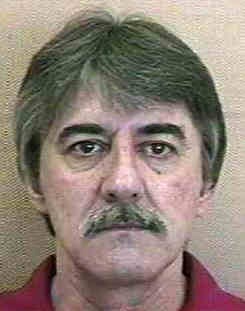
Arthur Martin Boyd
Murderer Ervil LeBaron
Murderer · USA · 1972
Ervil Morrell LeBaron (1925 to August 16, 1981) was the leader of a polygamous…
35 victims
Ervil LeBaron
Murderer · USA · 1972
Ervil Morrell LeBaron (1925 to August 16, 1981) was the leader of a polygamous…
35 victims
 Brian Kevin Rosenfeld
Murderer · USA · 1985
Brian Kevin Rosenfeld Brian Kevin Rosenfeld was sentenced to three concurrent l…
23 victims
Brian Kevin Rosenfeld
Murderer · USA · 1985
Brian Kevin Rosenfeld Brian Kevin Rosenfeld was sentenced to three concurrent l…
23 victims
 Marvin Gray
Murderer · USA · 1975
Marvin Gray was convicted killer who claimed responsibility for 23 slayings and…
23 victims
Marvin Gray
Murderer · USA · 1975
Marvin Gray was convicted killer who claimed responsibility for 23 slayings and…
23 victims
 Yahweh ben Yahweh
Murderer · USA · 1980
Yahweh ben Yahweh was born and legally named Hulon Mitchell Jr. (October 27, 19…
23 victims
Yahweh ben Yahweh
Murderer · USA · 1980
Yahweh ben Yahweh was born and legally named Hulon Mitchell Jr. (October 27, 19…
23 victims
 Russell Ellwood
Murderer · USA · 1991
Russell Ellwood was a former taxi driver. Authorities suspected him of killing…
20 victims
Russell Ellwood
Murderer · USA · 1991
Russell Ellwood was a former taxi driver. Authorities suspected him of killing…
20 victims
 Christopher Stevens
Murderer · USA · 1993
Christopher Stevens was on probation, and his probation was transferred to Clov…
1 victim
Christopher Stevens
Murderer · USA · 1993
Christopher Stevens was on probation, and his probation was transferred to Clov…
1 victim
 Stanley Neace
Mass murderer · USA · 2011
Stanley Neace, aged 47, killed his wife and five others in Breathitt County, Ke…
5 victims
Stanley Neace
Mass murderer · USA · 2011
Stanley Neace, aged 47, killed his wife and five others in Breathitt County, Ke…
5 victims
 Toni Jo Henry
Murderer · USA · 1940
Toni Jo Henry (January 3, 1916 - November 28, 1942) was also known as Annie Bea…
1 victim
Toni Jo Henry
Murderer · USA · 1940
Toni Jo Henry (January 3, 1916 - November 28, 1942) was also known as Annie Bea…
1 victim
 Joseph Lewis Clark
Murderer · USA · 1984
Joseph Lewis Clark was sentenced to death for the aggravated murder of David A.…
2 victims
Joseph Lewis Clark
Murderer · USA · 1984
Joseph Lewis Clark was sentenced to death for the aggravated murder of David A.…
2 victims
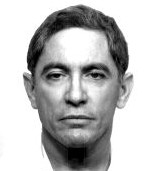 George Douglas Lott
Murderer · USA · 1992
George Douglas Lott · July 1, 1992 — George Lott stood up in a Tarrant County C…
2 victims
George Douglas Lott
Murderer · USA · 1992
George Douglas Lott · July 1, 1992 — George Lott stood up in a Tarrant County C…
2 victims
- Gender
- male
- Country
- USA
- Location
- Surry County, North Carolina, USA
- Date of birth
- December 3, 1945
- Age at first offence
- 37
- Characteristics
- rape
- Victim profile
- Wanda Philips Hartman (his former girlfriend)
- Method of murder
- St abbing with knife 37 times
- Date(s) of murder
- August 7, 1982
- Years active
- 1982
- Date of arrest
- —
- Status
-
Executed
Executed by lethal injection in North Carolina on October 21, 1999
Case overview
Arthur Martin Boyd was executed by lethal injection in North Carolina on October 21, 1999. He was convicted for the Aug. 7, 1982 stabbing death of Wanda Hartman outside a shopping mall in Mount Airy in Surry County. Hartman was stabbed 37 times in front of her young daughter and mother. He had unsuccessfully attempted a reconciliation with Hartman.
Timeline
- Aug. 7, 1982 — Arthur Boyd stabbed Wanda Hartman 37 times outside a shopping mall in Mount Airy in Surry County.
- Nov. 1978 — Arthur Boyd met Hartman while the two were employed by the same company.
- April 1982 — Hartman decided to move into her parents’ residence with her daughter.
- Friday, July 30, 1982 — Boyd attempted to visit Hartman in the front yard of her parents’ residence; Hartman’s father, Lawrence Phillips, instructed Boyd “to get off of [his] property and stay off of it.”
- Monday, August 2 — A warrant for Boyd’s arrest for trespassing was served on Boyd.
- Saturday, August 7 — Boyd called Hartman at 8:00 a.m. and talked to her for approximately two hours; later he drank and used drugs again, took a taxi to the mall, purchased a lock-blade knife, confronted Hartman and her mother, and stabbed Hartman.
- Approximately 2:00 p.m. (Saturday, August 7) — Hartman’s mother approached Boyd and Hartman and indicated that it was time to leave; Boyd attempted to prevent Hartman from leaving; Hartman told Boyd “that she had lived in hell for three months, that if he was going to kill her just go ahead and kill her and get it over with.”
- Approximately 2:18 a.m. (Oct. 21, 1999) — Boyd was pronounced dead.
- Oct. 21, 1999 — Boyd entered the execution chamber at 1:50 a.m.; lethal drugs were administered at 2:01 a.m.
- Oct. 21, 1999 — Boyd’s last words were “I love you, Laura.”
- Oct. 20, 1999 (6 p.m.) — Boyd moved to the death watch area.
- Oct. 21, 1999 — Execution was scheduled for 2 a.m. at Central Prison in Raleigh.
- April 9, 1999 — The North Carolina Supreme Court issued a stay halting the scheduled execution of Arthur Martin Boyd.
- March 22, 1983 — Boyd was convicted in Surry County Superior Court for the stabbing murder of Wanda Phillips Hartman at a curb in front of a bank at a Mt. Airy shopping center Aug. 7, 1982.
- April 15, 1985 — The United States Supreme Court denied the petition for writ of certiorari in Boyd v. North Carolina, 471 U.S. 1030.
- February 16, 1989 — Boyd filed a § 2254 petition in the district court.
- October 1996 — A magistrate judge recommended granting the State’s motion for summary judgment as to all claims.
- June 19, 1998 — The United States Court of Appeals for the Fourth Circuit decided the appeal.
- March 4, 1998 — The appeal was argued.
- Decided June 19, 1998 — The appeal was affirmed; Judge WILKINS wrote the opinion and Judge ERVIN joined; Judge MURNAGHAN wrote a concurring opinion.
- 2004 (not stated) — No additional appellate date is provided in the record text.
The offence
Arthur Boyd murdered his former girlfriend, 32-year-old Wanda Mae Phillips Hartman, outside a shopping mall in Mount Airy in Surry County. Hartman was stabbed 37 times.
Boyd and Hartman had lived together, but Hartman moved back into her parents’ home several months before the killing. On the morning of the murder, Boyd learned that Hartman planned to go to the Mayberry Mall in Mount Airy, North Carolina to shop and attend a church-sponsored car wash nearby.
Boyd bought a lock-blade knife from a store that sold knives. The owner testified:
“[A] lock-blade knife is a knife that once it's opened it is locked in an open position. It cannot come back against your hands or fingers or cut you in any way. It's locked in.”
Boyd and Hartman sat together on a curb outside the mall in close proximity to the car wash. Hartman’s mother later indicated that it was time to leave. When Boyd attempted to prevent Hartman from leaving, Hartman told Boyd:
“that she had lived in hell for three months, that if he was going to kill her just go ahead and kill her and get it over with.”
Boyd brandished the knife he had purchased and offered assurances that he meant Hartman no harm. Despite those assurances, Boyd began stabbing Hartman.
During the attack, Hartman screamed for help and her mother attempted to intervene by pulling Boyd away. Boyd threw the 76-year-old woman to the ground and resumed attacking Hartman. Boyd forced Hartman to the ground on her stomach and held her by her hair while stabbing her repeatedly. Numerous witnesses, including Hartman’s eight-year-old daughter, watched and were unable to stop the attack.
After stabbing Hartman 37 times, Boyd walked away. The murder weapon was recovered from where Boyd had thrown it under a nearby automobile. Emergency medical personnel arrived at approximately 2:20 p.m.
Hartman died of exsanguination while being transported to a hospital after sustaining wounds to her throat, chest, left thigh, and back. The record describes multiple internal injuries, including wounds puncturing Hartman’s right lung and left lung, one entering her stomach, and one penetrating her sternum, as well as defensive wounds to her hands and left arm.
Investigation
After the stabbing, Boyd was apprehended quickly as he hid between two parked vehicles. Emergency medical personnel arrived at approximately 2:20 p.m., and technicians described Hartman’s condition as requiring advanced life support treatment, explaining they were unable to transport her until they could control her bleeding. The record describes extreme difficulty breathing and severe pain, including that Hartman moaned and “rak[ed her hands] back and forth in the dirt” where she was lying.
“rak[ed her hands] back and forth in the dirt”
The examining pathologist later identified the various wounds described above.
Background and relationship history
Boyd and Hartman lived together for approximately three and one-half years. Hartman decided to move into her parents’ residence with her daughter in April 1982. Boyd persisted in attempting to reconcile with Hartman and unsuccessfully attempted to visit her after she moved.
On Friday, July 30, 1982, Boyd attempted to visit Hartman in the front yard of her parents’ residence. Hartman’s father, Lawrence Phillips, instructed Boyd:
“to get off of [his] property and stay off of it.”
Boyd threatened Hartman and made statements about future harm:
“I'll see you like a German submarine, when you are not expecting it.” “I'll meet you in heaven or hell one day.”
A warrant for Boyd’s arrest for trespassing was sought after Phillips’s encounter. The warrant was served on Boyd on Monday, August 2.
The record also describes Boyd’s history as including drug and alcohol abuse. It states that he spent the morning of the killing at a tavern, took a taxi to the mall, and bought a lock-blade knife. It further describes that he had a long criminal record with time in prison, on parole, or on probation from age 14, and it lists crimes including larceny, assault with intent to commit rape of a 14-year-old girl, driving under the influence, assault on an officer, and resisting arrest.
Approximately a week before the murder, Boyd threatened Hartman:
The record also states that Boyd moved to death watch area on Oct. 20, 1999 at 6 p.m. and that he was on death row since 1983.
Arrest and charges
Boyd was charged with first-degree murder. The jury convicted him of first-degree murder in violation of N.C. Gen.Stat. § 14-17 (1993).
Trial
Witness and jury findings at conviction
The record states that Boyd did not dispute that he inflicted the fatal wounds, given numerous witnesses to the murder.
Evidence and testimony at trial
Boyd presented testimony from two friends with whom he had been drinking on the morning of the murder and from the bartender who had declined to serve him alcohol to support an argument that he was intoxicated at the time of the murder.
At sentencing, Boyd testified concerning his relationship with Hartman, their break-up, and his attempts at reconciliation. He professed his love for Hartman:
“[It was the m]ost beautiful thing that's ever happened to me. It's the best thing that ever happened in my life. I loved her, more than anybody, I guess, could ever love anybody.”
Boyd also testified that when Hartman ended their relationship, he began to seek mental health assistance because he was having thoughts of killing people, including himself and Hartman. He described difficulties sleeping and heavy use of alcohol and illegal drugs. He also testified about emotional losses as a child, including that his father deserted their family when Boyd was very young and that his grandfather died when Boyd was five years old; Boyd’s mother corroborated those losses. Boyd called Dr. Jack Humphrey, a professor of criminology at the University of North Carolina.
Dr. Humphrey testified outside the presence of the jury about a study he had performed over a two-year period in conjunction with the North Carolina Department of Corrections. Dr. Humphrey described findings comparing prisoners convicted of homicide with those convicted of property offenses. He also described differences between offenders who killed strangers and those who killed family members or those close to them, stating that offenders whose victims were close tended to have experienced more loss.
Dr. Humphrey testified:
“Now, one thing here is a loss has been found to be associated with or precipitate or lead to suicide over and over and over. The more loss in someone's life, the more likely they are to become self-destructive. And it seems that killing a family member or killing a close friend is an act of self-destruction They are, after all, killing something that is part of them, very close to them, very important to their self. They are destroying them. So in the act of killing another person they are in fact destroying part of [themselves, committing] a self-destructive act.”
Dr. Humphrey stated:
“And what struck me [was] the consistency of Mr. Boyd's life with what we found to be true of homicide offenders in general.”
He further testified:
“It seems that people who are threatened with loss, and mainly these are losses of someone very close to them, wife, girlfriend, some close relationship, at that point that they are threatened with this loss they become depressed, very commonly depressed, and depression is in a sense anger turned toward yourself. Now, at that point people react either toward themselves totally or they will react outwardly and inwardly at the same time. Those people who destroy someone or something at that point will not destroy a stranger, will not indiscriminately kill. They don't constitute a threat to the public. They constitute a threat to that which they fear losing the most, the person closest to them. And it is that person that is unfortunately in harm's way. And having extended that aggression toward other people they are in fact aggressing toward themselves. They are destroying that which they fear losing the most.”
Exclusion of expert testimony
The State objected and the trial court sustained the objection. The jury later sentenced Boyd to death.
The jury found two aggravating factors: that the murder was especially heinous, atrocious, or cruel, and that Boyd previously had been convicted of a felony of violence.
The North Carolina Supreme Court affirmed the exclusion of Dr. Humphrey’s testimony as not error because the testimony was not mitigating (State v. Boyd, 311 N.C. 408, 319 S.E.2d 189, 197-99 (1984)).
Sentencing
Boyd was sentenced to death.
Appeals
United States Supreme Court
The United States Supreme Court denied certiorari on April 15, 1985 in Boyd v. North Carolina, 471 U.S. 1030.
Justice MARSHALL, with whom Justice BRENNAN joined, dissented from denial of certiorari. The dissent stated that Boyd was sentenced to death after a hearing in which “the judge prevented the jury from considering evidence that it might well have considered highly relevant” to motive and to the relationship of character and record to the offence, and that “The death sentence must thus be vacated” due to conflict with the Eighth Amendment principle that the sentencer must not be “precluded from considering, as a mitigating factor, any aspect of a defendant's character or record and any of the circumstances of the offense that the defendant proffers as a basis for a sentence less than death.”
The dissent quoted:
“that the sentencer . . . not be precluded from considering, as a mitigating factor, any aspect of a defendant's character or record and any of the circumstances of the offense that the defendant proffers as a basis for a sentence less than death.”
The dissent also included an extended discussion and quotes attributed to Dr. Humphrey and contained statements about the excluded testimony and motive theories, including references to the State’s theory that Boyd killed to ensure that no one else could have the victim.
United States Court of Appeals for the Fourth Circuit
Arthur Martin Boyd, Jr., petitioner-appellant, v. James B. French, Warden, Central Prison, Raleigh, North Carolina; Michael F. Easley, Attorney General of North Carolina, respondents-appellees.
- Argued March 4, 1998
- Decided June 19, 1998
- The court affirmed by published opinion.
- Judge WILKINS wrote the opinion, joined by Judge ERVIN.
- Judge MURNAGHAN wrote a concurring opinion.
The Fourth Circuit held that the district court denied Boyd’s habeas corpus petition. The district court had denied inter alia that the state trial court committed harmless error in failing to permit Boyd to present mitigating expert testimony at sentencing, and the Fourth Circuit affirmed finding no reversible error in Boyd’s arguments.
The record states Boyd raised five allegations of error:
- refusal to permit Dr. Humphrey to testify as mitigation,
- instructions on mitigating evidence requiring unanimity,
- prosecutor closing argument in sentencing violating due process,
- knowing use of perjured testimony,
- procedural default concerning his nolo contendere plea used to establish a prior violent felony.
Dr. Humphrey testimony and harmlessness
The Fourth Circuit concluded there was constitutional error in excluding relevant mitigating evidence but held it was harmless on the federal habeas review standard. It stated that the refusal to permit Dr. Humphrey to testify did not have a substantial or injurious effect in sentencing.
Jury instructions on mitigation
The Fourth Circuit held Boyd’s challenge to jury instructions lacked merit based on Noland v. French.
Prosecutor’s closing argument
The Fourth Circuit found the prosecutor’s arguments complained of were improper, noting the prosecutor should refrain from stating personal opinions and that religiously based arguments were “universally condemned,” but it concluded the closing argument did not deprive Boyd of a fair trial in view of overwhelming evidence and the judge’s instructions.
Knowing use of perjured testimony
The Fourth Circuit described testimony from multiple witnesses and officers that Boyd was not intoxicated prior to and immediately after the murder, and then described inconsistencies at the MAR hearing, including a colloquy in which Detective Armstrong responded:
“He didn't appear to me to be, no, sir.”
At the state MAR proceeding, during a colloquy, Boyd’s attorney asked Detective Armstrong about his opinion that Boyd was impaired:
“A. It would be appreciably.
Q. Appreciably means to you noticeably or clearly?
A. To me. It may have not been noticeable to someone else that didn't know him. But to me he had been, he was under the influence of something.”
The record describes Officer Perry’s response:
“In my opinion he was not under the influence. He did appear to have either been drinking or maybe have taken some drugs. He was somewhat glassy-eyed. But he was walking, he was not swaying or staggering. He, in my opinion, was not under the influence of--to an appreciable degree.”
The Fourth Circuit held it was not necessary to hold a federal evidentiary hearing because it concluded there was no reasonable likelihood that the testimony, if false, could have affected the jury’s judgment.
Procedural default and nolo contendere plea
The Fourth Circuit described that Boyd sought to argue his prior nolo contendere plea to a 1963 violent felony did not constitute a prior conviction under N.C. Gen.Stat. § 15A-2000(e)(3). The state court found the claim procedurally defaulted under N.C. Gen.Stat. § 15A-1419(a)(1) (1997), and the Fourth Circuit held § 15A-1419 was adequate and independent for procedural default.
Concurring opinion
Judge MURNAGHAN concurred in the result. He stated he found necessary and sufficient only the initial paragraph and the conclusion that Dr. Humphrey’s testimony was not erroneously excluded since it was not mitigating.
Outcome
The Fourth Circuit affirmed the judgment of the district court denying Boyd’s petition for habeas corpus relief. Boyd was sentenced to death, and the United States Supreme Court denied certiorari.
Execution details and last statement
Boyd was scheduled for execution at 2 a.m. at Central Prison in Raleigh. The lethal drugs were administered at 2:01 a.m. on Oct. 21, 1999, and Boyd was pronounced dead at 2:18 a.m. on Oct. 21, 1999.
Boyd’s last words were “I love you, Laura.”
Boyd’s last meal was “Two bacon mushroom melts from Wendy's and a pint of chocolate milk.”
The North Carolina Supreme Court issued a stay on April 9, 1999, halting the scheduled execution of Arthur Martin Boyd. The execution proceeded on October 21, 1999.
Other details
- Boyd moved to the death watch area on Oct. 20, 1999 at 6 p.m.
- The record identifies Arthur Martin Boyd Jr. as “53” with “99-10-21” in the execution-related narrative.
- The victim was identified as Wanda Hartman and as Wanda Mae Phillips Hartman in the appellate narrative; the record also notes her young daughter and mother were present during the attack.
- The record identifies a church-sponsored car wash connected to the fact that the victim’s father was the church’s pastor.
Spotted an error, or have more information about this case?