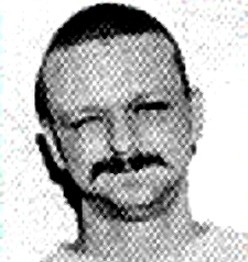
Robert Wayne Vickers
Murderer Ervil LeBaron
Murderer · USA · 1972
Ervil Morrell LeBaron (1925 to August 16, 1981) was the leader of a polygamous…
35 victims
Ervil LeBaron
Murderer · USA · 1972
Ervil Morrell LeBaron (1925 to August 16, 1981) was the leader of a polygamous…
35 victims
 Brian Kevin Rosenfeld
Murderer · USA · 1985
Brian Kevin Rosenfeld Brian Kevin Rosenfeld was sentenced to three concurrent l…
23 victims
Brian Kevin Rosenfeld
Murderer · USA · 1985
Brian Kevin Rosenfeld Brian Kevin Rosenfeld was sentenced to three concurrent l…
23 victims
 Marvin Gray
Murderer · USA · 1975
Marvin Gray was convicted killer who claimed responsibility for 23 slayings and…
23 victims
Marvin Gray
Murderer · USA · 1975
Marvin Gray was convicted killer who claimed responsibility for 23 slayings and…
23 victims
 Yahweh ben Yahweh
Murderer · USA · 1980
Yahweh ben Yahweh was born and legally named Hulon Mitchell Jr. (October 27, 19…
23 victims
Yahweh ben Yahweh
Murderer · USA · 1980
Yahweh ben Yahweh was born and legally named Hulon Mitchell Jr. (October 27, 19…
23 victims
 Robert Charles Ladd
Murderer · USA · 1978
Robert Charles Ladd was a Black man. He had black hair. Ladd had prior prison r…
4 victims
Robert Charles Ladd
Murderer · USA · 1978
Robert Charles Ladd was a Black man. He had black hair. Ladd had prior prison r…
4 victims
 Johnny Dean Pyles
Murderer · USA · 1982
Johnny Dean Pyles (death row inmate; offender number “#724”) was executed by le…
1 victim
Johnny Dean Pyles
Murderer · USA · 1982
Johnny Dean Pyles (death row inmate; offender number “#724”) was executed by le…
1 victim
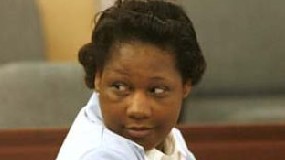 Lashaun Harris
Homicide · USA · 2005
Oct. 19, 2005 — A jury trial later concerned the drownings of three young sons…
3 victims
Lashaun Harris
Homicide · USA · 2005
Oct. 19, 2005 — A jury trial later concerned the drownings of three young sons…
3 victims
 Marlon DeWayne Williams
Murderer · USA · 1993
Marlon DeWayne Williams was a drug dealer. Williams was black. He was 26 when e…
1 victim
Marlon DeWayne Williams
Murderer · USA · 1993
Marlon DeWayne Williams was a drug dealer. Williams was black. He was 26 when e…
1 victim
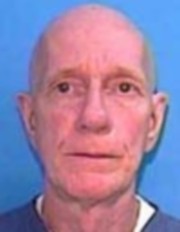 Robert Frederick Carr
Serial killer · USA · 1972
July 6, 2007 — Robert Frederick Carr died in prison after being admitted to a N…
4 victims
Robert Frederick Carr
Serial killer · USA · 1972
July 6, 2007 — Robert Frederick Carr died in prison after being admitted to a N…
4 victims
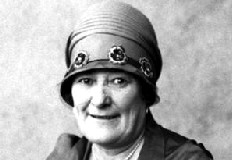 Eva Dugan
Murderer · USA · 1927
Eva Dugan (1878 – February 21, 1930) was convicted of murdering Andrew J. Mathi…
1 victim
Eva Dugan
Murderer · USA · 1927
Eva Dugan (1878 – February 21, 1930) was convicted of murdering Andrew J. Mathi…
1 victim
- Gender
- male
- Country
- USA
- Location
- Pinal County, Arizona, USA
- Date of birth
- April 29, 1958
- Age at first offence
- 20
- Characteristics
- revenge
- Victim profile
- Frank Ponciano (inmate) / Buster Holsinger (death row inmate)
- Method of murder
- Strangulation / Fire
- Date(s) of murder
- 1978 / 1982
- Years active
- 1978–1982
- Date of arrest
- —
- Status
-
Executed
Executed by lethal injection in Arizona on May 4, 1999
Case name
Robert Wayne Vickers
Status
Robert Wayne Vickers was executed by lethal injection in Arizona on May 4, 1999.
Timeline
- May 4, 1999 — Robert Wayne Vickers was executed by lethal injection in Arizona.
The offence
On March 4, 1982, Vickers was on death row at the Arizona State Penitentiary in Florence as a result of killing Frank Ponciano. At around 6:30 p.m., Vickers was out of his cell, allegedly doing clean-up chores. Instead, he went to the cell of Wilmar “Buster” Holsinger, another death row inmate.
Vickers was upset over an earlier remark Holsinger had made about Vickers’ niece. Vickers built an incendiary device from hair gel and an ice-cream carton and then used it to torch Holsinger in his cell, starting a flash fire. Holsinger died as a result of tracheobronchial burns suffered in the resulting flash fire. The attack nearly killed a half-dozen other inmates from smoke inhalation and forced officials to evacuate death row.
When a guard asked Vickers if Holsinger was dead, Vickers responded, “He should be. He's on fire.”
Background
Vickers was an inmate on death row in Arizona State in Florence as a result of killing Frank Ponciano.
Vickers entered Arizona’s prison system as a teenager in 1977 after committing 12 burglaries in 13 days in Tempe. He later admitted to 33 more burglaries in California. His first murder was of inmate Frank Ponciano, whom Vickers sought out as his cellmate because Ponciano had a TV. Vickers strangled Ponciano and stabbed him multiple times with a sharpened toothbrush after being angered that Ponciano did not wake him up for lunch and drank Vickers’ Kool-Aid. He then carved and misspelled the Japanese war cry “Bonzai” in Ponciano’s back; “Banzai Bob” was Vickers’ nickname in prison.
Vickers burned a cigarette on Ponciano’s foot to show a guard he was dead, then said, “‘Get this stinking (expletive) out of my cell.”
Vickers later told prison psychologist Kent Spillman that he regretted only one thing about the attack: that he didn’t have enough time to carve a swastika to dot the ‘i’ on Ponciano’s body.
Vickers had a knack for creating makeshift knives and bombs, which he used to attack more than 11 prison guards. He escaped from death row and climbed atop the roof of Cellblock 6 through a shaft with another inmate. Vickers had short-circuited the electronic locking mechanism on his cell door and left a dummy in his bed. After they got onto the roof, the two were unable to get away because the outside fence was too far away and too high to jump to the ground below. The two then did a striptease for a female tower guard before they were caught by other officers rushing to the roof, corrections Officer Jim Robideau said.
Vickers demanded death multiple times. In a letter the previous year to then-Gov. Bruce Babbitt, he wrote: “So what's the hold up fella? "If ya don't do it soon, I'm gonna draw more blood than your cheap mops can absorb. I'm a very impatient person, I never did like waiting. I've got a date with the devil's wife.”
After the attack on Holsinger, Vickers asked investigators: “Did I do a good job? {ellipsis} I told them they should have gassed me in December when they had a chance.”
In a letter he wrote to Bruce Babbitt asking for a quick execution in 1981, Vickers wrote: “I told my lawyer & attorney General to pull my appeals and gas me," he wrote to Bruce Babbitt, then governor. "I know it don't take to long to do that, so whats the hold up fella?' If ya don't do it soon, i'm gonna draw more blood then your cheap mop's can absorb."
In a later letter, Vickers asked that he be executed quickly so he could donate his heart to a Fort Huachuca boy who needed a transplant. The boy died a day before Babbitt’s office received the letter. A doctor said the heart of a person killed in the gas chamber would be unsuitable for transplant. Vickers also wrote to the governor asking for permission to wear a 3-piece suit when he was executed, writing: “I wanna die dressed," he wrote. "Gonna be some ladies there. I don't want to go nude or in state clothes."
He asked that his last meal be prepared by a woman; neither request was granted.
Vickers’ defense argued that his violent personality was a construct of the Arizona prison system, which failed to provide him with the psychiatric help he needed as a teen and raised him in a culture of violence. Vickers had a history of epileptic seizures, and psychiatrists said he had a brain disorder that resulted in violent outbursts.
Investigation and responses
Before Vickers’ execution, U.S. Supreme Court proceedings were involved in his case. His petition for certiorari was denied on June 28, 1990, and rehearing was denied on Aug. 30, 1990.
Hours after a federal judge granted him a stay of execution in Phoenix, Vickers told reporters that he hoped someone “snuffs Judge Muecke’s momma” and that he would carve the judge’s name on his next victim.
Vickers also acknowledged that he caused the fire and the death.
Trial
The information provided describes two trials with the following officials and schedule:
- Presiding Judge: Robert R. Bean (first trial); James E. Don (second trial)
- Prosecutors: Victor Cook (first trial); Barry McNaughton (second trial)
- Start of Trial: September 28, 1982 (first trial); October 16, 1985 (second trial)
- Verdict: September 29, 1982 (first trial); October 25, 1985 (second trial)
- Sentencing: October 18, 1982 (first trial); April 24, 1986 (second trial)
Published opinions
The following opinions were listed:
- State v. Vickers, 138 Ariz. 450, 675 P.2d 710 (1983).
- State v. Vickers, 159 Ariz. 532, 768 P.2d 1177 (1989).
- Vickers v. Stewart, 144 F.3d 613 (9th Cit. 1998).
Sentencing
The sentencing description included the following aggravating and mitigating circumstances:
Aggravating circumstances
- Prior convictions punishable by life imprisonment
- Prior convictions involving violence
- Risk of death to others
- Especially heinous/cruel/depraved
- Committed offense while in custody
Mitigating circumstances
- None
Appeals
The 9th U.S. Circuit Court of Appeals overturned Vickers’ conviction for the murder of Ponciano, but Vickers remained on death row for the murder of Holsinger.
Vickers was also involved in U.S. Supreme Court proceedings. The record included U.S. Supreme Court docket information: U.S. Supreme Court 497 U.S. 1033. Robert Wayne VICKERS, petitioner v. ARIZONA. No. 88-7629. Case below, 138 Ariz. 450, 675 P.2d 710; 159 Ariz. 532, 768 P.2d 1177. June 28, 1990. The petition for a writ of certiorari to the United States Court of Appeals for the Eleventh Circuit is denied. Rehearing Denied Aug. 30, 1990.
The record also included a dissent by Justice MARSHALL, joined by Justice BRENNAN, beginning: “Adhering to my view that the death penalty is in all circumstances cruel and unusual punishment prohibited by the Eighth and Fourteenth Amendments, Gregg v. Georgia, 428 U.S. 153, 231 , 2973, 49 L. Ed.2d 859 (1976) (MARSHALL, J., dissenting), I would grant the petition for certiorari and vacate the death penalty in this case. Even if I did not hold this view, I would grant the petition to decide whether the Constitution requires a State to provide an indigent defendant access to diagnostic testing necessary to prepare an effective defense based on his mental condition, when the defendant demonstrates that his sanity at the time of the offense will be a significant issue at trial. I believe that our decision in Ake v. Oklahoma, 470 U.S. 68 (1985), compels us to answer that question in the affirmative.”
The dissent further described Vickers’ trial defense as insanity and asserted that the trial court denied diagnostic testing, quoting and discussing Dr. Paul Bindelglas, Dr. David Bear, Dr. Maier Tuchler, and Dr. William Masland, including the statement by Dr. Masland: “ there is absolutely nothing to suggest that this man is epileptic” and that “further diagnostic testing . . . would be totally superfluous.”
Outcome
Vickers was executed by lethal injection in Arizona on May 4, 1999.
At the execution, Vickers was described as 41 years old and from Phoenix. He lifted his head from the gurney, smiled and nodded at relatives including his aunt and cousin. He said, “Hello, everybody” and then “See you later.” Moments later he mouthed “time to go” to family members. Deadly chemicals began flowing into his veins at 3:03 p.m. and he was pronounced dead 2 minutes later.
Aftermath
Vickers’ last meal was listed as: Green Chili Burros — burritos with barbecued steak, french fries and ketchup, vanilla ice cream, cream soda, cigarette.
Spotted an error, or have more information about this case?