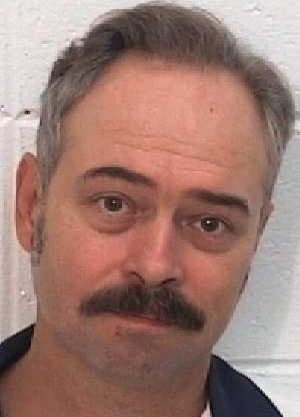
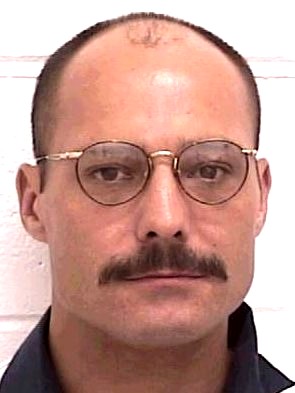
William Mark Mize
Murderer Brian Kevin Rosenfeld
Murderer · USA · 1985
Brian Kevin Rosenfeld Brian Kevin Rosenfeld was sentenced to three concurrent l…
23 victims
Brian Kevin Rosenfeld
Murderer · USA · 1985
Brian Kevin Rosenfeld Brian Kevin Rosenfeld was sentenced to three concurrent l…
23 victims
 Russell Ellwood
Murderer · USA · 1991
Russell Ellwood was a former taxi driver. Authorities suspected him of killing…
20 victims
Russell Ellwood
Murderer · USA · 1991
Russell Ellwood was a former taxi driver. Authorities suspected him of killing…
20 victims
 Robert Martines Perez
Murderer · USA · 1994
Name: Robert Martines Perez · Other name used in proceedings: Robert Martinez P…
15 victims
Robert Martines Perez
Murderer · USA · 1994
Name: Robert Martines Perez · Other name used in proceedings: Robert Martinez P…
15 victims
 Billy Frank Vickers
Murderer · USA · 1993
Billy Frank Vickers Vickers was executed by lethal injection in Texas on Januar…
14 victims
Billy Frank Vickers
Murderer · USA · 1993
Billy Frank Vickers Vickers was executed by lethal injection in Texas on Januar…
14 victims
 John Lynch
Serial killer · Australia · 1835
John Lynch murdered multiple people in the Berrima district in New South Wales,…
10 victims
John Lynch
Serial killer · Australia · 1835
John Lynch murdered multiple people in the Berrima district in New South Wales,…
10 victims
 Amber Hilberling
Murderer · USA · 2011
Amber Hilberling was convicted of second-degree murder in connection with the d…
1 victim
Amber Hilberling
Murderer · USA · 2011
Amber Hilberling was convicted of second-degree murder in connection with the d…
1 victim
 John Couey
Murderer · USA · 2005
Name: John Evander Couey · Lifespan: September 19, 1958 – September 30, 2009 ·…
1 victim
John Couey
Murderer · USA · 2005
Name: John Evander Couey · Lifespan: September 19, 1958 – September 30, 2009 ·…
1 victim
 Raymond Burgess
Murderer · USA · 1977
Raymond Burgess was sentenced to death on February 25, 1992. His case involved…
2 victims
Raymond Burgess
Murderer · USA · 1977
Raymond Burgess was sentenced to death on February 25, 1992. His case involved…
2 victims
 Yudenia Rodriguez
Murderer · USA · 2013
Yudenia Rodriguez, the accused. · Sonia Santiesteban, 65, Rodriguez’s mother an…
1 victim
Yudenia Rodriguez
Murderer · USA · 2013
Yudenia Rodriguez, the accused. · Sonia Santiesteban, 65, Rodriguez’s mother an…
1 victim
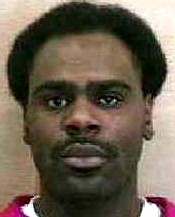 Michael Earl Sexton
Murderer · USA · 1990
Michael Earl Sexton was executed by lethal injection in North Carolina on Novem…
1 victim
Michael Earl Sexton
Murderer · USA · 1990
Michael Earl Sexton was executed by lethal injection in North Carolina on Novem…
1 victim
- Gender
- male
- Country
- USA
- Location
- Oconee County, Georgia, USA
- Date of birth
- July 30, 1956
- Age at first offence
- 38
- Characteristics
- white supremacist
- Victim profile
- Eddie Tucker, 34 (follower of his group)
- Method of murder
- Shooting ( single-shot 12-gauge shotgun)
- Date(s) of murder
- October 16, 1994
- Years active
- 1994
- Date of arrest
- —
- Status
-
Executed
Executed by lethal injection in Georgia on April 29, 2009
Case record: William Mark Mize
Other names and identifiers
- Name: William Mark Mize
- Known aliases: Hattrup; Samuel Jr
- Gender: Male
- Race: White
- Year of birth: 1956
- Age at execution: 52
- Height: 5'10''
- Weight: 226
- Eye color: Brown
- Hair color: Brown
- GDC ID: 0000159189
- Death case (Georgia): Case no. 204979
- Prison information: EF204979 G House PO Box 3877 Jackson, Georgia 30233 USA
Status and sentence
William Mark Mize was executed by lethal injection in Georgia on April 29, 2009.
Offence
The offence and victim
- Victim: Eddie Tucker (the victim’s death was the subject of the murder conviction).
- The evidence showed the victim was shot in the back, chest and head with a shotgun, and that the medical examiner testified the back and chest wounds were inflicted by a shotgun fired at close range.
- The medical examiner testified that the victim’s head exhibited widely scattered pellet wounds that failed to penetrate the skull; the head wounds were consistent with a close-range shotgun blast that had shattered the barrel.
- The medical examiner further testified that shots to the back and chest tore through the victim’s right lung, but that none of the wounds were immediately fatal.
- The victim’s death was due to blood loss, and it could have taken him several minutes to die.
- A fragment of the shotgun barrel was discovered about two feet from the body’s location; the gun was not recovered.
Timeline
- October 15, 1994 — Several NVAP members and applicants gathered at Mize’s home after Mize got off from work; the group went from Mize’s home toward the “crack house” plan and later into the wooded area where the shots occurred.
- January 11, 1995 — Mize was indicted in the Superior Court of Oconee County, Georgia, for malice murder of Eddie Tucker.
- August 8, 1986 — Mize was convicted of arson 1st degree (JACKSON COUNTY).
- September 12, 1986 — Mize was convicted of possible firearm convct felon (BARROW COUNTY).
- December 12, 1995 — A jury found Mize guilty of malice murder.
- December 13, 1995 — The jury’s recommendation of a death sentence was returned.
- June 15, 1998 — The Georgia Supreme Court unanimously affirmed Mize’s conviction and death sentence.
- January 11, 1999 — The Supreme Court of the United States denied certiorari.
- March 3, 1999 — Mize filed his first state habeas corpus petition in the Superior Court of Butts County, Georgia.
- March 19, 1999 — Mize filed a second state habeas corpus petition acting pro se.
- April 7, 1999 — Mr. Matteson filed a notice to dismiss the petition filed by him on Mize’s behalf.
- April 9, 1999 — Bruce Harvey entered an appearance as counsel for Mize in state habeas proceedings.
- October 8, 1999 — The state habeas corpus court allowed Mr. Harvey to withdraw as counsel from Mize’s case.
- October 27, 1999 — The state habeas corpus court entered an order dismissing Mize’s state habeas corpus petition without prejudice.
- December 28, 1999 — Mize, acting pro se, filed a third state habeas corpus petition.
- February 1, 2001 — An evidentiary hearing was held on Mize’s third state habeas petition with Mize acting pro se.
- July 2, 2001 — Mize, with the advice of counsel, withdrew his extraordinary motion for new trial.
- January 10, 2002 — The state habeas corpus court denied relief on Mize’s third state habeas petition.
- July 15, 2002 — Mize’s application for a certificate of probable cause to appeal was denied by the Georgia Supreme Court.
- October 31, 2002 — Mize filed a federal habeas corpus petition in the United States District Court for the Middle District of Georgia, Athens Division.
- July 21, 2003 — Counsel filed an amended petition for writ of habeas corpus.
- November 17, 2006 — The district court denied Mize federal habeas corpus relief.
- January 17, 2007 — The district court denied a motion to alter and amend judgment.
- March 22, 2007 — The district court granted a certificate of appealability on specific issues.
- February 25, 2008 — The case was orally argued before the Eleventh Circuit Court of Appeals.
- July 2, 2008 — The Eleventh Circuit issued an opinion denying relief.
- August 27, 2008 — The panel rehearing petition was denied.
- January 23, 2009 — Mize filed a petition for writ of certiorari in the United States Supreme Court.
- March 23, 2009 — The Supreme Court denied the petition.
- April 29, 2009 — Mize was executed by lethal injection in Georgia.
Background
Group leadership and ideology
William Mark Mize led a small white supremacist group called the National Vastilian Aryan Party (NVAP), described as similar to the Ku Klux Klan. Witnesses testified that Mize made all the decisions for the NVAP. Several witnesses testified that Mize displayed a single-shot 12-gauge shotgun at an NVAP meeting and told members that the shotgun was the kind of weapon the group would use because it could not be traced.
People connected to the group and the victim
- Eddie Tucker had filled out an application form but was not a full member.
- Persons identified as present at Mize’s home and later in the events included: Mark Allen, Chris Hattrup, Brian Dove, Samantha Doster (Mize’s girlfriend), and Tucker.
- The other NVAP members involved in Tucker’s death were arrested. After spending a year in jail, Doster agreed to testify against the others and her charges were dropped.
The offence (as found in the trial evidence)
Plan to burn a “crack house”
Mize told Doster that the group was going camping that night and they all got in Mize’s car. When they were driving, Mize told the group there was a crack house in Athens that he wanted “gotten rid of.” Mize wanted Hattrup and Tucker to set the house on fire, and the group stopped at a convenience store and bought a can of lighter fluid. Hattrup and Tucker were dropped off near the house, but their attempt to set it on fire was unsuccessful. When they rejoined the group, Hattrup told Mize that he needed to talk with him, and Hattrup also said referring to Tucker that they “didn’t need anybody around that couldn’t follow orders.”
Movement to the wooded area
After spending an hour at a bar, Mize drove the group to a wooded area in Oconee County. Dove and Doster were given camping gear to carry and the group set out into the woods. No one had a flashlight even though it was night. Tucker was in the lead, followed by Mize, Allen, Doster, Dove and Hattrup. After they had gone only a short distance, Hattrup passed Dove and Doster and moved up the trail to talk with Allen and Mize. Mize told Allen to stop Dove and Doster from continuing into the woods.
The shooting in the woods and immediate statements
At this point, Tucker, Hattrup and Mize were out of sight in the woods ahead of Allen, Dove and Doster. There was a shot, and Tucker exclaimed, “My God, what did you do that for?” There was a second shot. Doster heard Hattrup ask Mize if he had the gun and Mize replied, “No, man. I thought you had it.” Hattrup stated, “No. He took it away from me,” and Mize said, “If you can’t finish it I can.”
Allen left Dove and Doster and moved up the trail. Dove and Doster heard a discussion among Mize, Allen, and Hattrup about muscle spasms and how Tucker was still moving. There was a third shot. Dove and Doster ran back to Mize’s car. Mize emerged from the woods holding a shotgun and trying to break it down.
After the shooting: questions to the group and warnings
Once in the car, Mize asked everyone if they knew why it was done; everyone nodded in agreement. Mize told the group the same thing could happen to them if they ran their mouth. Mize also told the group that, if asked about Tucker, they should say that they had dropped him off at a convenience store. While they were driving, Allen and Hattrup noticed that the barrel of the shotgun had shattered, so they stopped at a bridge and threw the gun in a river.
Confiding statements and the disposal of the shotgun
Later, Mize confided to Doster that he had finished Tucker off by shooting him in the head. After the body was discovered but before anyone was arrested, Chris Hattrup showed his roommate, Paul McDonald, the newspaper article about Tucker’s death and told him what had happened. When the crack house failed to burn, Mize asked how Tucker had done and Hattrup responded that Tucker “didn’t do what he was supposed to do.” Mize then said, “you know what we have to do.”
Hattrup admitted to McDonald that he shot Tucker in the back and chest, but that Tucker was still alive. Hattrup was out of ammunition and asked Mize for another shotgun shell; Mize gave it to him. Hattrup then shot Tucker in the head. Hattrup also boasted to McDonald that he was now a “hit man for the Klan.” Brian Dove told the police what he had seen and heard that night and later testified at Mize’s trial.
Investigation and discovery
The police discovered Tucker’s body several days later. The body was shot in the back, chest and head with a shotgun. A fragment of the shotgun barrel was found about two feet from the body’s location, and the gun was not recovered. After the body was discovered but before anyone was arrested, Chris Hattrup showed his roommate, Paul McDonald, a newspaper article about Tucker’s death.
Trial
Indictment and verdict
- Mize was indicted in the Superior Court of Oconee County, Georgia on January 11, 1995, for malice murder of Eddie Tucker.
- On December 12, 1995, a jury found Mize guilty of malice murder.
- On December 13, 1995, the jury returned a recommendation of a death sentence.
Witnesses presented at trial
The prosecution relied on the testimony of six principal witnesses in addition to the crime scene investigators:
- Brian Dove testified about what he saw and heard that night and later testified at Mize’s trial.
- Samantha Doster testified about the events before, on, and after October 15.
- Paul McDonald testified about Hattrup’s statements regarding the incident.
- Ronald Allen testified about Mize displaying a shotgun at a meeting and displaying animosity toward Tucker at a meeting less than a month before Tucker was killed.
- Michael Hollis testified about Mize displaying a shotgun at a meeting.
- Jeremy Phillips testified that he put out a fire on the night of October 15 and that a detective later found a can of lighter fluid on the property.
Defense witnesses and issues during trial
The defense put on only two witnesses. Both testified that they remembered seeing Tucker at a restaurant on October 18, more than two days after he died (according to the crime scene investigators, Dove, Doster, and McDonald).
The defense attempted to call Chris Hattrup, but he asserted his Fifth Amendment privilege against self-incrimination. Hattrup later pled guilty to murder and received a sentence of life with no parole eligibility for twenty years. Mark Allen also later pled guilty to murder; the record did not reveal whether he relied on his privilege or whether he was not called.
Sentencing
Death sentence
The jury sentenced Mize to death on the basis of two statutory aggravating factors:
- He ordered another to commit the murder; and
- The murder was outrageously or wantonly vile because it was accompanied by aggravated battery.
During the sentencing phase, Mize took the stand while still asserting his innocence and testified that he wanted no sentence other than death.
Prior to sentencing: jury instructions
The trial court instructed the jury on life without the possibility of parole with language tracking OCGA 17-10-31.1(d)(1), stating the defendant would be incarcerated for the remainder of his natural life and not be eligible for parole unless subsequently adjudicated innocent.
Appeals
Direct appeal in Georgia
- The Georgia Supreme Court unanimously affirmed Mize’s conviction and death sentence on June 15, 1998.
- Mize v. State, 269 Ga. 646, 501 S.E.2d 219 (1998).
United States Supreme Court
- The Supreme Court denied certiorari on January 11, 1999.
- Mize v. Georgia, 525 U.S. 1078, 119 S.Ct. 817 (1999).
- Later, Mize filed a petition for writ of certiorari on January 23, 2009, which was denied on March 23, 2009.
- Mize v. Hall, 2009 U.S. LEXIS 2140 (Case No. 08-8359).
State habeas corpus proceedings (Butts County Superior Court)
Mize filed three petitions described in the case history:
- March 3, 1999: first state habeas petition.
- March 19, 1999: second state habeas petition acting pro se after discharging Mr. Matteson.
- April 7, 1999: notice to dismiss the petition filed by Matteson on Mize’s behalf.
- April 9, 1999: Bruce Harvey entered an appearance as counsel.
- October 8, 1999: state habeas court allowed Mr. Harvey to withdraw.
- October 27, 1999: state habeas court dismissed the petition without prejudice.
- December 28, 1999: third habeas petition filed pro se with assistance from Thomas H. Dunn of the Georgia Resource Center and provision of evidence and investigative services.
Extraordinary motion for new trial and related hearings
- July 2000: during pendency of state habeas, Mize filed an extraordinary motion for new trial in the Superior Court of Oconee County alleging prosecutorial misconduct in that the prosecutor suborned perjury from Samantha Doster.
- January 26, 2000: Honorable Lawton Stephens granted Mize a hearing on the extraordinary motion for new trial.
- February 1, 2001: evidentiary hearing held on the third state habeas petition with Mize acting pro se; the state habeas court reserved ruling pending the outcome of the extraordinary motion for new trial.
- July 2, 2001: Mize withdrew the extraordinary motion for new trial with advice of counsel.
- January 10, 2002: state habeas corpus court denied relief.
Georgia Supreme Court certificate of probable cause
- July 15, 2002: application for a certificate of probable cause to appeal was denied.
Federal habeas corpus and federal appellate review
- October 31, 2002: filed federal habeas corpus petition in the United States District Court for the Middle District of Georgia, Athens Division.
- July 21, 2003: amended petition filed after appointment of counsel.
- November 17, 2006: district court denied federal habeas relief.
- January 17, 2007: district court denied a motion to alter and amend judgment.
- March 22, 2007: certificate of appealability granted on specific issues.
On appeal:
- February 25, 2008: case orally argued before the Eleventh Circuit.
- July 2, 2008: Eleventh Circuit denied relief.
- Mize v. Hall, 532 F.3d 1184 (11th Cir. 2008).
- August 27, 2008: petition for panel rehearing denied.
Outcome
Federal habeas disposition
The Eleventh Circuit affirmed denial of the federal habeas petition, including rulings that:
- The prosecutorial misconduct claim was procedurally defaulted.
- Mize did not demonstrate cause for the procedural default based on ineffective assistance of counsel.
- The Brady claim resolution by the Georgia Supreme Court was not contrary to, and did not involve an unreasonable application of, clearly established federal law.
- The new evidence did not establish actual innocence or invoke the miscarriage of justice exception to the procedural default doctrine.
Final statement and meal
Final meal
Mize’s final meal was steak, fried chicken breast, baked potato, salad, garlic bread, a pint of butter pecan ice cream, half a pecan pie and soda, and soda.
Final words
In his final statement to a room of about 25 witnesses, Mize accused the Oconee County Sheriff’s Office of setting him up. He said Hattrup tried to take responsibility but “the courts have never heard him.” Mize then stated:
“I saw my friend killed by another friend. I’m here because of a travesty of justice. It’s on their hands, not mine. I’m ready.”
Other legal history
Georgia sentence entries (as provided)
- Death case: Case no. 204979; murder; Oconee County; crime commit date 10/16/1994; sentence length death.
- Case no. 204979 also listed for: possible firearm convct felon (BARROW COUNTY); crime commit date 09/12/1986; sentence length 5 years, 0 months, 0 days.
- Case no. 204979 also listed for: arson 1st degree (JACKSON COUNTY); crime commit date 08/08/1986; sentence length 12 years, 0 months, 0 days.
Prior sentences listed (as provided)
- Case no. 43795: poss of marijuana; FULTON COUNTY; crime commit date N/A; sentence length 0 years, 8 months, 0 days.
- Case no. 108507: conversion; GWINNETT COUNTY; crime commit date N/A; sentence length NOT AVAILABLE.
- Case no. 108507: theft motorveH or part; GWINNETT COUNTY; crime commit date N/A; sentence length 5 years, 0 months, 0 days.
- Case no. 108507: escape; GWINNETT COUNTY; crime commit date N/A; sentence length NOT AVAILABLE.
- Case no. 108507: criminal trespassing; GWINNETT COUNTY; crime commit date N/A; sentence length NOT AVAILABLE.
- Case no. 108507: robbery; FULTON COUNTY; crime commit date N/A; sentence length 5 years, 0 months, 0 days.
- Case no. 108507: conversion; conversion listed again as NOT AVAILABLE sentence length.
Incarceration history (as provided)
- 10/28/1977 to 02/11/1982
- 10/08/1974 to 01/23/1975
- 06/25/1987 to 03/25/1993
- 03/10/1995 (active)
Other details
Trial counsel and counsel-related notes in appellate history
- Mize was represented by John Matteson in his first state habeas petition process, later discharged Mr. Matteson, and sought representation by Bruce Harvey.
- In federal habeas, counsel was appointed and filed an amended petition.
- The extraordinary motion for new trial alleged prosecutorial misconduct in that the prosecutor suborned perjury from Samantha Doster.
- Mize withdrew the extraordinary motion for new trial on July 2, 2001.
Additional points raised in appellate discussions (not separate outcomes)
The appellate materials described:
- Mize’s claims about Brady disclosure of pretrial interview notes from Samantha Doster.
- Mize’s claims about prosecutorial misconduct based on Doster’s recantation.
- Mize’s actual innocence claim based on statements by Chris Hattrup and affidavits, including the internal inconsistencies discussed regarding Hattrup’s accounts.
- The Eleventh Circuit’s reasoning that the new evidence did not meet the applicable standard and did not establish actual innocence sufficient to excuse procedural default or support any freestanding actual innocence theory.
Requests and statements included in the record
The record included a request for legal assistance and a pen-pal request. The pen-pal request stated:
- “White male, 44 years old, born July 30, 1956, 5'11" brown eyes, brown hair, 200 lbs. Divorced. 1 son. Locked up since October '94. Country boy at heart, love outdoors, NASCAR, history. Seeking friendship, moral support, legal help, romance, or just exchanging experiences.”

Spotted an error, or have more information about this case?