Arthur Warren Waite
Murderer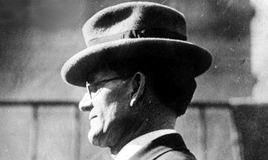 William Hale
Murderer · USA · 1921
Name: William Hale · Known as: the so-called "King of the Osage Hills" · Occupa…
24 victims
William Hale
Murderer · USA · 1921
Name: William Hale · Known as: the so-called "King of the Osage Hills" · Occupa…
24 victims
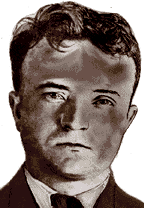 Paul Jaworski
Murderer · USA · 1926
Paul Jaworski was born in Poland as Paul Poluszynski in 1900. He later immigrat…
20 victims
Paul Jaworski
Murderer · USA · 1926
Paul Jaworski was born in Poland as Paul Poluszynski in 1900. He later immigrat…
20 victims
 John S. Williams
Murderer · USA · 1910
John S. Williams was convicted of murder and sentenced to life imprisonment on…
18 victims
John S. Williams
Murderer · USA · 1910
John S. Williams was convicted of murder and sentenced to life imprisonment on…
18 victims
 Edward Adams
Murderer · USA · 1920
Edward J. "Eddie" Adams was born in 1887 on a farm in Hutchinson, Kansas as W.J…
7 victims
Edward Adams
Murderer · USA · 1920
Edward J. "Eddie" Adams was born in 1887 on a farm in Hutchinson, Kansas as W.J…
7 victims
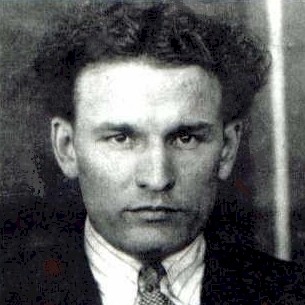 William Kenneth Wagner
Murderer · USA · 1924
William Kenneth (Kinnie) Wagner (born February 18, 1903 in Scott County, VA) wa…
6 victims
William Kenneth Wagner
Murderer · USA · 1924
William Kenneth (Kinnie) Wagner (born February 18, 1903 in Scott County, VA) wa…
6 victims
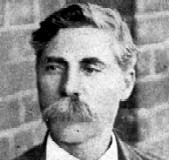 Floyd Allen
Murderer · USA · 1912
Floyd Allen (July 5, 1856 – March 28, 1913) was an American landowner and patri…
5 victims
Floyd Allen
Murderer · USA · 1912
Floyd Allen (July 5, 1856 – March 28, 1913) was an American landowner and patri…
5 victims
 Lendell Hunter
Murderer ? · USA · 1975
Lendell Hunter carried out a string of violent rapes that shocked Augusta, Geor…
1 victim
Lendell Hunter
Murderer ? · USA · 1975
Lendell Hunter carried out a string of violent rapes that shocked Augusta, Geor…
1 victim
 Charles Mamou
Murderer · USA · 1998
Name: Charles Mamou · TDCJ Number: 999333 · Date of birth: 12/06/1974 · Receive…
2 victims
Charles Mamou
Murderer · USA · 1998
Name: Charles Mamou · TDCJ Number: 999333 · Date of birth: 12/06/1974 · Receive…
2 victims
 Robert Farquharson
Murderer · Australia · 2005
Robert Donald William Farquharson (born 1969) was an Australian father convicte…
3 victims
Robert Farquharson
Murderer · Australia · 2005
Robert Donald William Farquharson (born 1969) was an Australian father convicte…
3 victims
 Li Hao
Murderer · China · 2009
Li Hao was convicted of murder, rape, illegal detention, organized prostitution…
2 victims
Li Hao
Murderer · China · 2009
Li Hao was convicted of murder, rape, illegal detention, organized prostitution…
2 victims
- Gender
- male
- Country
- USA
- Location
- New York, USA
- Date of birth
- 1889
- Age at first offence
- 27
- Characteristics
- poisoner
- Victim profile
- Hannah Peck ( his mother-in-law) / John E. Peck (his father-in-law)
- Method of murder
- Poisoning (Germs of diphtheria and tuberculosis- Arsenic)
- Date(s) of murder
- January 30/March 12, 1916
- Years active
- 1916
- Date of arrest
- March 23, 1916
- Status
-
Executed
Executed by electrocution in New York on May 24, 1917
Case record: Arthur Warren Waite
Background
Arthur Warren Waite was a dentist in New York. He shared his luxury apartment on Riverside Drive with his wife's retired parents. Waite’s father-in-law, John Peck, had built up a sizeable fortune after a career as a pharmacist in the Middle West, and Waite longed to inherit as much of the money as possible. John Peck and his wife had not appeared to be in poor health.
Waite wanted to cause harm by arranging for the ingestion of harmful bacteria that would trigger a convincing onset of a serious disease, followed by severe physical decline and ultimate death, without anyone being held responsible.
The offence
Waite began by isolating a mixture of diphtheria and influenza germs and adding these to his wife’s food. After a series of doses, his wife became ill and her condition deteriorated until she died in January 1916.
Waite then shifted his efforts to John Peck. Waite tried several methods without success, including the diphtheria mixture. He prescribed a nasal spray to aid John Peck’s breathing, which Waite had contaminated with tuberculosis germs, but it produced no planned result. Waite also tried influenza and typhoid, but John Peck remained healthy.
In desperation, Waite then hurried his father-in-law’s death. A dose that Waite described to their family servant simply as "11 medicine" was added to tea and soup served to Peck one evening. John Peck died on March 12, 1916, two months after Peck’s wife.
The described cause of death for Peck’s death was arsenic poisoning, and the poisoning was carried out by administering "arsenic" in food. The narrative also described germs and bacteria being used as attempted murder methods before the arsenic approach was used.
Investigation
What brought Dr. Waite under suspicion were an anonymous letter, which was received before Mr. Peck’s body was to be buried, and the discovery of arsenic in the body during an autopsy.
The autopsy testing relied on the presence of arsenic. A reliable test for arsenic presence developed by James Marsh, a London chemist in the 1820s, was described. The first step placed tissue samples from the victim, together with any stomach contents, on to a zinc plate. Sulphuric acid was poured on to the plate. In the ensuing reaction, any arsenic present in either tissue or stomach contents absorbed the hydrogen from the acid and was given off as a gas. The gas was collected and passed down a heated tube and then allowed to cool. The mixture formed white crystals of arsenious oxide. When samples were taken from John Peck’s body, the crystals showed what Dr. Warren Waite had turned to.
Trial
With evidence that was described as clear, the trial was described as something of a formality. Dr. Arthur Waite was convicted of John Peck’s murder.
Before his execution, Waite admitted methods he had used for poisoning his mother-in-law without incurring any suspicion at all.
Waite’s admission included the following verbatim statements:
"Then I gave him arsenic. I don't remember what day it was. I gave him a lot of it in his food. One night I was left to watch by his bedside while my wife got some rest. The old man was groaning with pain. I looked over the medicine bottles beside his bed and found a small vial of chloroform. I saturated a rag with some of this and went over to him and said: `Father, here is some ether and ammonia which will relieve your pain.' I gave him a smell and then I gave him another dose. At last he fell asleep. I continued to put on more until he became unconscious. Then I got a pillow and placed it over Mr. Peck's face and held it there until he died."
The narrative also included the following characterization:
"Dr. Waite slew two and boasted of it."
Sentencing
Arthur Warren Waite was executed by electrocution in New York on May 24, 1917.
Outcome
Dr. Arthur Waite was convicted of John Peck’s murder and was executed.
Aftermath
The narrative stated that if Waite had persevered with the germs-and-poison approach, Mr. Peck may have suffered the same fate as his wife without anyone being the wiser.
Other details
Waite planned to kill his father-in-law, John E. Peck, at "435 Riverside Drive, New York City." The narrative described that Waite tried diphtheria germs but got no results; induced Peck to use a nasal spray with tuberculosis germ colonies; fed the old man calomel to weaken his resistance; and released hordes of typhoid germs and then tried influenza. In desperation, Waite used arsenic.
The narrative also described that Waite was an embarrassment to medical science in 1916 and that he had billions of germs in his bacteriological laboratory.
Additional named publication and excerpt details were included:
- Denis Clark. "The Jekyll and Hyde murders: The case of A.W. Waite."
- J.M. Parrish, and John R. Crossland, eds. The Fifty Most Amazing Crimes of the Last 100 Years. London: Odhams Press, 1936, 699-711.
- A New York Sun citation: "New York Sun, November 29, 1930, p.46 c.1-2."

Spotted an error, or have more information about this case?