James Colbert
Mass murderer Gameel Al-Batouti
Mass murderer · USA · 1999
Gameel Al-Batouti (also rendered “Gamil ElBatouty” or “El Batouty” in U.S. offi…
216 victims
Gameel Al-Batouti
Mass murderer · USA · 1999
Gameel Al-Batouti (also rendered “Gamil ElBatouty” or “El Batouty” in U.S. offi…
216 victims
 Timothy McVeigh
Mass murderer · USA · 1995
Timothy James McVeigh (April 23, 1968 – June 11, 2001) was a United States Army…
168 victims
Timothy McVeigh
Mass murderer · USA · 1995
Timothy James McVeigh (April 23, 1968 – June 11, 2001) was a United States Army…
168 victims
 Julio Gonzalez
Mass murderer · USA · 1990
Julio Gonzalez was sentenced to 174 twenty-five-year sentences (a total of 4,35…
87 victims
Julio Gonzalez
Mass murderer · USA · 1990
Julio Gonzalez was sentenced to 174 twenty-five-year sentences (a total of 4,35…
87 victims
 David Burke
Mass murderer · USA · 1987
David Augustus Burke (May 18, 1952–December 7, 1987) was an employee of USAir,…
43 victims
David Burke
Mass murderer · USA · 1987
David Augustus Burke (May 18, 1952–December 7, 1987) was an employee of USAir,…
43 victims
 George Jo Hennard
Mass murderer · USA · 1991
George Jo Hennard carried out a mass killing at a Luby’s Cafeteria in Killeen,…
23 victims
George Jo Hennard
Mass murderer · USA · 1991
George Jo Hennard carried out a mass killing at a Luby’s Cafeteria in Killeen,…
23 victims
 Jordan Linn Graham
Murderer · USA · 2013
Jordan Linn Graham was 22 years old and married to Cody Johnson, who was 25. Gr…
1 victim
Jordan Linn Graham
Murderer · USA · 2013
Jordan Linn Graham was 22 years old and married to Cody Johnson, who was 25. Gr…
1 victim
 Kirt Wainwright
Murderer · USA · 1988
Kirt Douglas Wainwright was convicted of killing Barbara Smith, who was an atte…
2 victims
Kirt Wainwright
Murderer · USA · 1988
Kirt Douglas Wainwright was convicted of killing Barbara Smith, who was an atte…
2 victims
 Tina Brown
Murderer · USA · 2010
Tina Lasonya Brown was convicted of first-degree murder in the beating and burn…
1 victim
Tina Brown
Murderer · USA · 2010
Tina Lasonya Brown was convicted of first-degree murder in the beating and burn…
1 victim
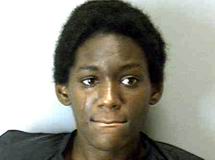 Meriel Bemis
Murderer · USA · 2014
Meriel Bemis was a 21-year-old mother in DeKalb County, Georgia. She lived with…
1 victim
Meriel Bemis
Murderer · USA · 2014
Meriel Bemis was a 21-year-old mother in DeKalb County, Georgia. She lived with…
1 victim
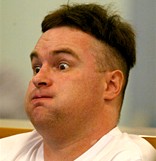 Antonie Dixon
Murderer · New Zealand · 2003
Antonie Ronnie "Tony" Dixon (1968 – 4 February 2009) · 21 January 2003 — Dixon…
1 victim
Antonie Dixon
Murderer · New Zealand · 2003
Antonie Ronnie "Tony" Dixon (1968 – 4 February 2009) · 21 January 2003 — Dixon…
1 victim
- Gender
- male
- Country
- USA
- Location
- Concord, New Hampshire, USA
- Date of birth
- 1952
- Age at first offence
- 39
- Characteristics
- domestic violence, domestic dispute
- Victim profile
- His estranged wife Mary Jayne Jenovese and their three daughters, Emily, 2; Elise, 1; and Patricia, 10 weeks
- Method of murder
- Strangulation - Suffocation
- Date(s) of murder
- October 19, 1991
- Years active
- 1991
- Date of arrest
- Next day
- Status
-
Died in custody
Sentenced to life in prison without the possibility of parole in August 1992; died in prison on March 14, 2012
Case overview
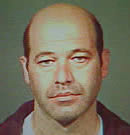
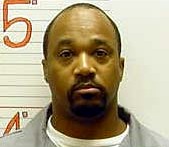
James Colbert was convicted of killing his wife and three daughters in Concord, New Hampshire. After the killings, he travelled to Boston, threatened to jump off a bridge, and confessed to the murders en route to Massachusetts General Hospital for a psychiatric evaluation. He was sentenced to life in prison without the possibility of parole in August 1992. Colbert died in prison on March 14, 2012 after a long illness.
Timeline
- 20 October 1991 — Boston police persuaded James Colbert not to jump off a bridge, after he had killed his wife and three daughters in Concord, New Hampshire.
- 21 years before March 14, 2012 — Colbert strangled his estranged wife and suffocated his three young daughters in their home in Concord.
- August 1992 — A jury ruled that Colbert was sane and he was sentenced to life in prison without the possibility of parole.
- March 14, 2012 — Colbert died in prison at age 59 after a long illness.
The offence
James Colbert strangled his wife, Mary Jayne Colbert, in the couple’s Merrimack Street home in Concord, New Hampshire. He then suffocated his daughters as they slept and tucked them into their beds. Police found Mary Jayne Colbert dead in her bed with the covers pulled to her chin.
The three daughters found at their home were:
- Patricia, who was 10-week-old, found in her bassinette beside her mother’s bed.
- Emily, who was 2½-year-old, found in their bedroom across the hall.
- Elise, who was 1½-year-old, found in their bedroom across the hall.
Colbert left a note visible on the living room table. The note said he couldn’t handle the thought of his wife with another man, couldn’t handle being away from his kids, couldn’t handle recent unemployment after being a trucker his whole life, and couldn’t handle his children with another father figure.
After the murders, Colbert drove to Boston.
Investigation and pre-arrest events
Mary Jayne Colbert had started divorce proceedings, complaining that James Colbert had threatened and sexually assaulted her. She later took out a restraining order on Colbert and filed for divorce. Colbert also discovered that his wife had begun an affair with another man.
Colbert moved to Chester two weeks before the killings, after Mary Jayne Colbert filed a restraining order and divorce papers.
After the murders, Colbert threatened to kill himself. He climbed over a railing on the Tobin Bridge, hundreds of feet above the Mystic River.
A state trooper talked Colbert off the railing and drove him to Massachusetts General Hospital for a psychiatric evaluation.
On the way to Massachusetts General Hospital, Colbert confessed to the killings.
Arrest and charging
After Colbert confessed, he was later charged with four counts of first-degree murder.
Trial
Colbert pleaded insanity at trial and blamed his troubled childhood.
His trial began in July 1992.
Colbert’s defence team included Buzz Scherr, who later became a professor at the University of New Hampshire School of Law. The defence claimed Colbert had been insane when he committed the murders and cited sexual abuse Colbert suffered by his uncle while growing up in Somerville, Mass. The incidents were said to have stretched over a six-year period and to have prevented Colbert from emotionally and mentally dealing with the stress in his life that followed.
During the trial, the jury ruled in August 1992 that Colbert was sane and handed down a life sentence without the possibility of parole.
Sentencing
The jury’s August 1992 ruling resulted in Colbert receiving a sentence of life in prison without the possibility of parole.
Appeals
Subsequent appeals were denied. The appeals were based on charges that the judge had shown bias and that her conversation with a juror who’d been dismissed due to illness after deliberation had begun had not been properly documented.
Imprisonment
Colbert tried to commit suicide in prison at least twice, including once by hanging himself with his shoelaces in the prison shower. He was discovered unconscious by a guard and recovered.
In later years, Colbert made statements acknowledging remorse. Buzz Scherr said Colbert felt genuine remorse, citing that Colbert had made a police video in 2000 to shed light on domestic violence. Scherr also said:
"He did what he could, both before he committed the murders and after he committed the murders," Scherr said. "He tried in prison to lead a life that would begin to make some kind of amends for something you could never make full amends for."
Later public statements on domestic violence
A Dover, New Hampshire domestic violence deterrence video featured James Colbert. The video was created to discourage domestic violence before it escalated to murder. Police in Dover showed the 10-minute videotape to everyone arrested on domestic violence charges starting in February (the video introduction described the practice as beginning in February).
Colbert was interviewed for the video last September, eight years to the week after he killed his estranged wife Mary Jayne and their three daughters—2½-year-old Emily, 1½-year-old Elise, and 10-week-old Patricia—at their home in Concord.
In the video, Colbert said repeatedly:
"There was no reason for them to die," Colbert says repeatedly in the video. "If anybody should have died, it should have been me."
In a telephone interview from prison, Colbert described not remembering much about the murders and described setbacks leading to that night. He said:
"We were going through hard times. I was mentally drained, but I'm not saying those are excuses," he said. "I can't blame the booze. The booze didn't make me do what I did. I did what I did, but I don't believe I was in my right mind."
Colbert said:
"It's a reminder that there was no need of their dying," he said. "I could spend the rest of my life in prison and that's what I deserve, but they didn't deserve that."
In the video, Colbert urged viewers to get counseling and said:
"Stay away from your family. Get help. Until you get help, don't go near your family. Get your head screwed on right," he says. "If you go the way I did, there's no turning back."
The video partnership involved Dover police and the U.S. Secret Service. The Secret Service completed an intensive study of people who had assassinated or tried to assassinate public officials. The study was described as finding that assassins did not act impulsively but rather followed a “pathway to attack.” Robert Fein, a psychologist with the agency’s National Threat Assessment Center, said:
"We continue to learn, in the same way we in the Secret Service have learned about targeted violence, that violence is the end result of an understandable process. These attacks do not come out of the blue," Fein said.
In a separate account, Colbert’s attorney Buzz Scherr described Colbert’s position as acknowledging remorse and presenting Colbert as feeling remorse and seeking amends in prison.
Death
James Colbert died on Tuesday at the age of 59 in a state prison, after a long illness. A spokesman for the state prison said his death followed a long illness, and Jeff Lyons confirmed the date of death.
Buzz Scherr said Colbert died from cancer and did not specify the type of cancer.
Other details
People involved
- Mary Jayne Colbert — wife of James Colbert; victim; maiden name was Jenovese; 1979 Bishop Brady High graduate.
- Patricia — daughter; 10-week-old at the time of the killings.
- Emily — daughter; 2½-year-old at the time of the killings.
- Elise — daughter; 1½-year-old at the time of the killings.
- Buzz Scherr — Colbert’s attorney during the initial trial in 1992; later described as a professor at the University of New Hampshire School of Law.
- Jeff Lyons — New Hampshire State Prison spokesman who confirmed Colbert’s death.
- Dave Goldstein — Franklin police chief in 2012 account; lead investigator for the state police Major Crimes Unit at the time of the murders; later said he interviewed Colbert in 2010 and again in January of the prior year.
Quotes attributed to Dave Goldstein
Dave Goldstein described his impression of Colbert and said:
"For myself, it had to be a vision of this big, burly, almost grotesque Cro-Magnon type of individual," said Goldstein, the lead investigator for the state police Major Crimes Unit at the time that Colbert murdered his estranged wife and their three young children. "These were not my first murder victims I had seen in my career, but for some reason, he stayed with me."
Goldstein also said:
"I believe he knew what he was doing," Goldstein said. "He knew the difference between right and wrong. Absolutely."
Goldstein said:
"It's not (being written) to come up with the definitive, 'This is why he did what he did,' " Goldstein said. "Hopefully some of the readers would be people in the field, telling them that these are the issues that you have to look at."
Goldstein described the trial as “a case of dueling psychiatrists” and characterized Colbert’s version of events, including memory, as follows:
Goldstein called the trial "a case of dueling psychiatrists." He also called Colbert a killer who got what he deserved. "I believe he knew what he was doing," Goldstein said.
Goldstein described the second interview video and said:
"Not an unpleasant man," Goldstein said.
Goldstein denied buying the defence argument and said:
This is not to say that Goldstein bought Colbert's argument, that he had no choice when he committed the crime. Or that he'd lost his mind from severe psychosis, or that the years of sexual abuse at the hands of his uncle prevented him from processing information and dealing with stress properly. Goldstein called the trial "a case of dueling psychiatrists."
Colbert’s statements at interview
In a description of Goldstein’s interviews with Colbert, Colbert said:
"How could anyone in their right mind do that and not be psychotic?" Colbert said, his hands clasped on a sheet of questions Goldstein had sent to him in advance. "If I was in touch with reality, I would have known I was doing something wrong."
Domestic violence prevention framing
The Dover, New Hampshire deterrence initiative showed the videotape to people arrested on domestic violence charges. Colbert appeared as one of three convicted killers in the video, and the video message was described as “Don’t end up like us.”
Spotted an error, or have more information about this case?