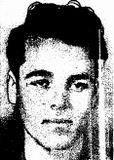
William Erwin Walker
Murderer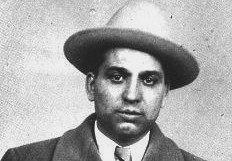 Harry Maione
Murderer · USA · 1937
Harry “Happy” Maione (1908 – February 19, 1942) was a New York mobster who serv…
12 victims
Harry Maione
Murderer · USA · 1937
Harry “Happy” Maione (1908 – February 19, 1942) was a New York mobster who serv…
12 victims
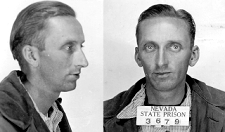 Luther Jones
Murderer · USA · 1936
Luther Jones Luther Jones was executed by asphyxiation-gas in Nevada on January…
4 victims
Luther Jones
Murderer · USA · 1936
Luther Jones Luther Jones was executed by asphyxiation-gas in Nevada on January…
4 victims
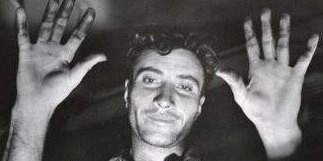 Albert Dyer
Murderer · USA · 1937
Albert Dyer was a 32-year-old WPA crossing guard and traffic guard at Centinela…
3 victims
Albert Dyer
Murderer · USA · 1937
Albert Dyer was a 32-year-old WPA crossing guard and traffic guard at Centinela…
3 victims
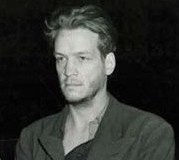 George Sitts
Murderer · USA · 1945
George Sitts was executed by the State of South Dakota on April 8, 1947 for the…
3 victims
George Sitts
Murderer · USA · 1945
George Sitts was executed by the State of South Dakota on April 8, 1947 for the…
3 victims
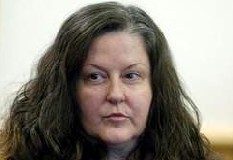 Sheila LaBarre
Murderer · USA · 2005
Sheila LaBarre was convicted of first-degree murders of Kenneth Countie and Mic…
2 victims
Sheila LaBarre
Murderer · USA · 2005
Sheila LaBarre was convicted of first-degree murders of Kenneth Countie and Mic…
2 victims
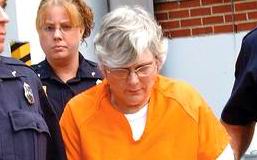 Marybeth Davis
Murderer · USA · 1981
Marybeth Davis (born c. 1952) was an American nurse convicted in 1997 of the mu…
2 victims
Marybeth Davis
Murderer · USA · 1981
Marybeth Davis (born c. 1952) was an American nurse convicted in 1997 of the mu…
2 victims
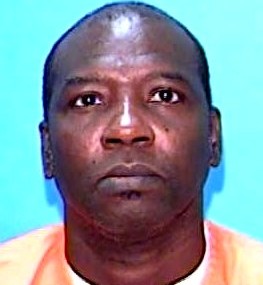 William Reaves
Murderer · USA · 1986
Name: William Reaves · Date of birth: 12/30/48 · Jurisdiction: Nineteenth Judic…
1 victim
William Reaves
Murderer · USA · 1986
Name: William Reaves · Date of birth: 12/30/48 · Jurisdiction: Nineteenth Judic…
1 victim
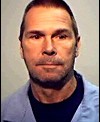 Charles Franklin Smith
Murderer · USA · 1986
Charles Franklin Smith was the husband of 10 years of the murder victim, 27-yea…
1 victim
Charles Franklin Smith
Murderer · USA · 1986
Charles Franklin Smith was the husband of 10 years of the murder victim, 27-yea…
1 victim
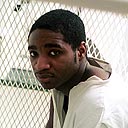 Anzel Keon Jones
Homicide · USA · 1995
Anzel Keon Jones was a 17-year-old at the time of his arrest for the May 1995 m…
1 victim
Anzel Keon Jones
Homicide · USA · 1995
Anzel Keon Jones was a 17-year-old at the time of his arrest for the May 1995 m…
1 victim
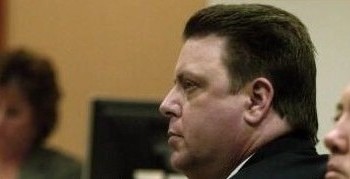 Joseph Peter Smith
Murderer · USA · 2004
Joseph Peter Smith was convicted of abducting, raping and killing 11-year-old C…
1 victim
Joseph Peter Smith
Murderer · USA · 2004
Joseph Peter Smith was convicted of abducting, raping and killing 11-year-old C…
1 victim
- Gender
- male
- Country
- USA
- Location
- Los Angeles County, California, USA
- Date of birth
- 1918
- Age at first offence
- 28
- Characteristics
- fugitive, former mental patient, police officer, drug dealer, history of mental illness
- Victim profile
- Loren Cornwell Roosevelt, 43 (State Highway Patrol Officer)
- Method of murder
- Shooting
- Date(s) of murder
- June 5, 1946
- Years active
- 1946
- Date of arrest
- December 20, 1946
- Status
-
Died in custody
Sentence commuted to life in prison on March 28, 1961; paroled in 1974; died in 1982
Case record
William Erwin Walker, also known as Erwin M. Walker and “Machine Gun Walker” (born 1918, died 1982), was a former police employee and World War II Army veteran. He was best remembered for a violent series of thefts, burglaries, and shootouts with police in Los Angeles County, California during 1945 and 1946.
Background
Walker was born in 1918 to Weston and Irene L. Walker and was raised in Glendale, California. He lived with his parents and a sister. He was nearsighted, but was described as “gentle, affectionate, considerate above the ordinary for the welfare of others, and [giving] no trouble in any way.”
Weston was a Los Angeles County flood control engineer. Walker’s uncle, Herbert V. Walker, was a prominent Los Angeles lawyer and former Chief Deputy District Attorney.
As a student, Walker graduated from the Hoover School and attended the California Institute of Technology for one year, where he excelled in electronics and radio engineering.
Police and military service
Walker took a job as a radio operator and police dispatcher for the Glendale Police Department. He wore thick eyeglasses. Selective Service called him up because of his radio and electronics skills.
During the war, Walker was posted to Australia. He attended the South West Pacific Area (SWPA) U.S. Army officer candidate school (OCS) at Camp Columbia, Wacol, Brisbane, Australia. After three months, Walker graduated from OCS with the rank of second lieutenant in the U.S. Army. Lt. Walker was posted to Wake Island in June 1944.
In November 1944, Walker was assigned to Leyte Island in the Philippines and was placed in charge of a Signal Corps radar unit, along with its 85 personnel. In later testimony, Walker related that on Leyte, Walker and another officer selected the emplacement for the radar and took routine security measures, but did not post a day guard because of prior orders that had been received. Walker was later ordered to return to his ship. When he returned to the island the following day, he learned that there had been a surprise Japanese attack at sunrise, and that his closest friend had been bayoneted to death in the assault.
Walker’s unit was subjected to approximately three days and nights of continuous battle with Japanese army paratroopers, despite being a Signal Corps detachment rather than frontline soldiers. A subsequent investigation found no dereliction of duty on the part of any of the officers in the detachment.
After Leyte, Walker informed his commanding officer that he could no longer serve as an officer and asked to be permitted to return to the United States. He was released from active duty in the South Pacific in December 1944, but was promoted to first lieutenant in July 1945, about three months after his arrival in the United States.
Postwar crime spree
Walker returned from overseas duty deeply disturbed, certain he had caused the death of fellow soldiers in his unit by not preparing adequately for a surprise attack. Walker described his guilt over his best friend’s bayoneting during a Japanese attack on Leyte Island in the Philippines, and stated that he believed a casualty “might have been averted had he given an order to dig foxholes.”
Walker later claimed his guilt was intensified by the anger of fellow soldiers, who shunned him thereafter.
He rejected an offer from the Glendale Police Department to return to his old job as a radio operator/dispatcher, citing low pay scale.
In early 1945, while still on active duty as a 1st Lieutenant with the Army, Walker burglarized an auto repair garage, taking a set of tools, voltmeter and radio tuner. In August 1945, he entered an Army Ordnance warehouse at night and stole seven .45-caliber Thompson submachine guns, twelve .45-caliber automatic pistols, six .38-caliber revolvers, ammunition, holsters, and clips.
His temperament changed upon his return from the Pacific. He did not return to live with his family. He rented an apartment and lived alone. His family reported that he was morose, melancholy, taciturn, brooding, rough with small children, secretive, and difficult. He took several small jobs but quit them. He was frequently seen with a machine gun.
Walker was discharged from the Army in November 1945. During his first week of terminal leave, Walker stole an automobile, changed the license plates, and used it to transfer some stolen goods. From a men’s store, he stole civilian clothes. From record and film companies, he stole amplifiers, electronic equipment, records, movie projectors, recording turntables, cameras, and other equipment.
Walker rented a garage and fitted it out as an experimental workshop. Using the garage as a base, he continued to execute burglaries to pay living expenses and acquire electronic equipment.
Walker’s criminal spree totaled more than a dozen armed robberies, safecrackings, and burglaries, netting him approximately $70,000. Walker later explained that his crimes were motivated by a desire to gather funds and equipment to build an electronic radar gun intended to disintegrate metal into powder and to force the government to pass legislation raising soldiers’ pay, increasing the cost of war to a point where it could not profitably be waged.
On April 25, 1946, Walker critically wounded LAPD police detective Lt. Colin C. Forbes and seriously wounded his partner, Sergeant Stewart W. Johnson, in a shootout. Walker shot Lt. Forbes and Sergeant Johnson, detectives from the LAPD Hollywood division, with a .45-caliber automatic pistol after the detectives sought to arrest him on a charge related to selling $40,000 in stolen motion-picture equipment.
Walker represented himself as a salesman named Paul C. Norris to Willard W. Starr, a sound engineer who bought and sold motion picture and sound recording equipment out of his home at 1347 Fifth Avenue in Los Angeles. Starr suspected the motion-picture equipment was stolen and alerted police. Police staked out Starr’s home to await the suspect’s arrival with the stolen goods.
As Walker strode down the driveway, the detectives emerged to accost Walker. In the ensuing gun battle, Lt. Forbes was hit in the abdomen at point-blank range after his own pistol jammed, and when Walker turned to fire at the other detective, he was wounded in the stomach and left leg by at least two .38 caliber bullets fired by Sergeant Johnson. Although wounded, Walker escaped on foot using labyrinth of storm drains under the city.
Lt. Forbes and Sgt. Johnson were both taken to hospital. Lt. Forbes was found to have a .45-caliber bullet lodged against his spine. He recovered, though doctors were unable to remove the bullet and left it in place.
In May 1946, Walker burglarized another establishment, stealing a roll of safety and detonating fuse and a roll of priming cord. To open safes and break locks, Walker made explosive nitroglycerine from fuming nitric acid, sulphuric acid and glycerine. Walker stabilized the nitroglycerine for vehicle transport by adding a desensitizing agent, probably ethyl alcohol, then packing the nitro vials in cotton.
In the early hours of Wednesday, June 5, 1946, Walker drove to a meat market at the corner of Los Feliz Boulevard and Brunswick Avenue in Glendale. Walker severed the lock on the store with bolt cutters, then put on his own padlock. He hid the bolt cutters in an adjoining area and drove around the block to see if he had been observed. He then retrieved the bolt cutters and returned to his car, again driving around the block.
Walker said he saw a person with a flashlight near where he had hidden the bolt cutters. He watched the person enter a car and drive it toward him. As the car drew opposite, Walker recognized the person as a policeman, later identified as State Highway Patrol Officer Loren Cornwell Roosevelt. Roosevelt called Walker to his car and asked what he was doing in the neighborhood. Walker responded that he was going to see a girlfriend.
The officer, sitting behind the steering wheel with a flashlight in his left hand and his right hand on the butt of his gun, asked Walker for his identification. Walker slowly eased a loaded .45 automatic pistol from under his belt and pointed it at Officer Roosevelt. Roosevelt drew his own police service revolver in response. Walker testified that he shot Officer Roosevelt twice, then ducked and ran, abandoning his own car and escaping via storm drains.
Detectives who interviewed Walker stated that Walker told a different version at the time of his arrest, declaring that Officer Roosevelt had shot at him first, which forced Walker to duck and return fire, hitting Roosevelt twice. Walker later elaborated that Roosevelt asked him to call an ambulance, whereupon Walker responded that he would do nothing for him.
The gunfire awoke residents, who called police. Later newspaper accounts stated that Roosevelt did return fire, but was unable to place a radio call for help due to his wounds.
Officer Roosevelt was hit multiple times by .45-caliber bullets and was rushed to a nearby hospital. Roosevelt died in hospital a few hours after the shooting. Walker’s abandoned car was found to contain bolt cutters, a loaded Thompson submachine gun, a bag of tools, sap, sash cord, bell wire, hacksaw blades, hand drill, electric drill, crescent wrenches, pry bar, extension cord, hammer, pliers, wire cutters, nitroglycerine, adhesive tape, a percussion-type dynamite blasting cap crimped to a white blasting fuse, and a primer cord attached to the percussion cap.
After the fatal shooting of Officer Roosevelt, Walker abandoned safecracking and briefly worked at several jobs. He experimented with making California license plates and drivers’ licenses to sell cars previously stolen.
By December 1946, Walker was robbing liquor stores at gunpoint.
Arrest and admissions
Police acted on a tip and located Walker living at a duplex apartment at 1831 ½ N. Argyle Avenue. At 2AM on the morning of December 20, 1946, three detectives—Officers Wynn, Donahue, and Rombeau—entered Walker’s apartment using a key provided by the owner.
Walker had been asleep with a .45-caliber pistol on his bedside table. When the detectives burst into the living room, Walker was caught reaching for a Thompson submachine gun on the bed beside him. After a fierce struggle for the submachine gun, in which the arresting officers twice shot Walker in the shoulder and broke the butt of a pistol over his head, Walker was finally handcuffed and arrested.
Walker stated: “All right, now, you have me. Do a good job.” Detective Donahue asked Walker why he killed the highway patrolman; Walker replied that he “had to”. When asked “Did you shoot the two officers in Hollywood?”, Walker answered “Yes.”
The officers saw that Walker was bleeding badly and attempted to make him comfortable by covering him and putting a pillow under his head. Officers testified that Walker stayed conscious throughout arrest and transport to the hospital.
Walker’s apartment contained weapons, ammunition, and license plates. Three cars stolen by Walker were found nearby. Walker appeared to be expecting another police stop: one stolen car was fitted with a loaded Thompson submachine gun set to automatic fire and fixed to fire through the driver’s door.
At the hospital, Walker had scars from bullet wounds described as a souvenir of the April gun battle with Forbes’ partner, Sergeant Stewart Johnson. Walker stated he had treated himself.
Police obtained additional statements from Walker while he lay wounded on an ambulance stretcher on the way to Georgia Street Receiving Hospital for emergency treatment. Despite his wounds, Walker told a detective that he was stopped last week by two motorcycle patrolmen on Hollywood Boulevard for a minor traffic violation, but had been given only a warning: “Lucky for them they didn't try to make me get out of the car. I had a submachine gun with me then. You might have had two more dead cops.”
Detective Wynn testified at Walker’s trial that on the morning of December 21, 1946, he talked with petitioner for about an hour at the hospital. Wynn testified that Walker made statements indicating Walker had murdered Officer Roosevelt during an attempt to commit a burglary, and that he had committed attempted murders of Detectives and Jones in addition to various robberies and burglaries. Wynn testified that Bechtel, a stenographic reporter, came and the conversation was repeated and transcribed in the hospital room, where a doctor and nurse were also present. Wynn further testified that he visited Walker two days later at the hospital, where Walker again made admissions. Officer Forbes testified that on December 28, 1946, he talked with Walker at the hospital, and Walker made various admissions.
Detective Wynn stated that on December 30, 1946, he visited Walker again as Walker was being prepared for transfer from the hospital to jail. Wynn testified that Walker “kept asking me for opiates” and asked Wynn to request some from the doctor. Wynn said he tried to do so, but that Walker’s doctor refused. In response to a question about condition, Walker told Wynn that he was “a little weak,” but did not complain about discomfort.
On the way to jail, Wynn said he told Walker that he would like to film a reenactment of the killing of Highway Patrolman Roosevelt and asked if Walker had any objection. Walker replied that he would like to contact his attorney first, Mr. Gerald Frederick Girard of Hindin, Weiss & Girard in Los Angeles. Walker then gave Wynn the attorney’s card.
Wynn stated that after he tried unsuccessfully to reach Girard, he asked if Walker had any objection to going to Griffith Park and Soledad Canyon to recover articles left there. Walker stated: “he didn't see anything wrong in that.” Wynn, Walker, and several officers proceeded to Griffith Park and Soledad Canyon, where the articles were recovered, and Walker made additional incriminating statements.
Trial
Walker pleaded not guilty by reason of insanity.
At trial on June 2, 1947, Walker’s attorney Gerald Frederick Girard cited Walker’s previous excellent record, his war experiences, and a family history of mental illness, including that Walker’s paternal grandfather had been confined to a state mental hospital for 32 years.
Walker’s parents, Weston and Irene L. Walker, testified in defense. Ms. Walker testified that Erwin was kind and affectionate while growing up, but returned from the war as a depressed loner.
The trial judge found Walker sane. The judge stated that Walker’s lengthy time on the witness stand showed a high degree of intelligence, and that Walker “showed a high degree of intelligence. I seldom recall a more intelligent witness, a witness who gave clearer responses to the questions than did Mr. Walker.” The judge said Walker’s war experience might be termed “rugged,” and that “perhaps millions of his fellow Americans had experiences that were equally rugged during the war.” The judge stated: “A killing in an attempt to perpetrate a burglary is murder of the first degree...However, I believe that in addition to my finding that the killing of Loren Roosevelt was murder in the first degree as a matter of law, I feel that it was a deliberate killing, a purposeful killing on the defendant's part.”
Walker was sentenced to death in the gas chamber.
Sentencing, appeals, and changes to status
After a motion for a new trial and an appeal to overturn Walker’s conviction and death sentence were rejected in December 1948, Walker’s father Weston committed suicide by hanging himself with a length of rope.
Walker was sent to death row in San Quentin to await execution. While at San Quentin, Walker was diagnosed by a prison psychiatrist as having paranoid schizophrenia.
On April 14, 1949, thirty-six hours before his scheduled execution, a corrections officer found Walker unconscious after an apparent suicide attempt in which Walker attempted to hang himself with a radio headphone cord wrapped around his neck. He was successfully revived, and the execution was postponed indefinitely while a psychiatric examination was performed.
A psychiatric examination board reported in April 1949 that Walker was agitated by fear of his impending death and was “negativistic, mute, fearful and unresponsive, and possibly reacting to hallucinations,” frequently lapsing into semi-unconsciousness. The psychiatrists found that Walker “does not know the difference between right and wrong”, thus making him insane under the legal standard of the day and ineligible for execution. His execution was postponed indefinitely.
At a competency hearing, Walker was declared insane by a jury and committed to the Mendocino State Hospital in Talmage, California. He remained there for the next 12 years. While receiving electroshock therapy and other treatments, Walker spent most of his time reading, mostly chemistry textbooks. Walker remained aloof from other patients, stating: “even dying in the gas chamber might have been preferable to having to be with these creatures.”
In 1961, Walker was declared sane by a newly-convened panel of psychiatric examiners. On March 28, 1961, in response to a clemency hearing appeal by Walker, Governor Pat Brown commuted Walker’s death sentence to life imprisonment without possibility of parole based on the assumption that Walker would simply revert to a state of insanity again if he once more faced execution.
Walker was sent to the CMF State Prison Facility in Vacaville, California to serve out his sentence. While at Vacaville, Walker continued studying chemistry while working in a laboratory on the prison campus.
In 1970, Walker filed a habeas corpus petition with the Supreme Court of California, which was denied without hearing. Walker then filed a similar petition in the Solano County Superior Court seeking to have his 1947 trial set aside on several grounds, including an allegation that his 1946 confession was made involuntarily.
The case reached the Supreme Court of California again, which decided the case in February 1974. The Supreme Court did not overturn Walker’s conviction or grant him a new trial, but instructed the lower court to delete the portion of Walker’s life sentence that excluded any possibility of parole, allowing him to apply to the California Adult Authority for parole and to have his parole application considered.
Walker applied for parole in 1974; parole was granted, and he was released from the California Medical Facility at Vacaville. After a short stay at a halfway house, Walker was released from further parole restrictions.
Immediately after leaving prison, Walker legally changed his name. He obtained a job as a chemist and disappeared from public view. Walker died in 1982.
Other details
In 1948, Eagle Lion Films released a film loosely based on Walker’s 1946 crime spree in Los Angeles titled He Walked by Night. The film’s character, Roy Morgan, was played by Richard Basehart. The film was shot in a semi-documentary format on location in and around the city of Los Angeles. In the film, Morgan was shot dead by police in one of the city’s underground drainage tunnels as he attempted to shoot his way out of the police dragnet.
Victim
State Highway Patrol Officer Loren Cornwell Roosevelt was killed in hospital a few hours after the June 5, 1946 shooting. Detective Lt. Colin C. Forbes and Sergeant Stewart W. Johnson were wounded in the April 25, 1946 shootout involving Walker.
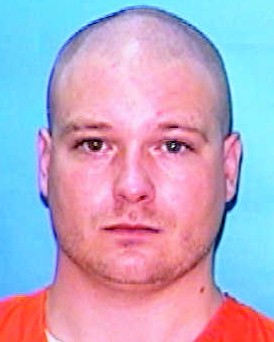
Spotted an error, or have more information about this case?