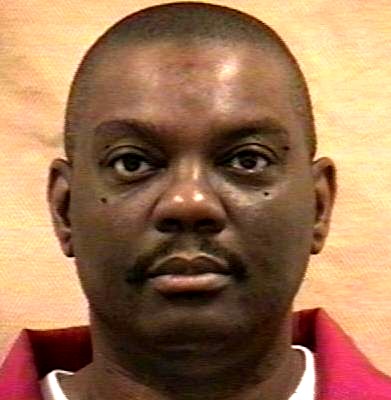
Henry Louis Wallace
Serial killer Glen Edward Rogers
Serial killer · USA · 1993
Glen Edward Rogers was a spree killer whose cross-country rampage in 1994-95 le…
70 victims
Glen Edward Rogers
Serial killer · USA · 1993
Glen Edward Rogers was a spree killer whose cross-country rampage in 1994-95 le…
70 victims
 Michael Swango
Serial killer · USA · 1981
Michael Swango (Joseph Michael Swango) was a physician and American serial kill…
60 victims
Michael Swango
Serial killer · USA · 1981
Michael Swango (Joseph Michael Swango) was a physician and American serial kill…
60 victims
 Efren Saldivar
Serial killer · USA · 1989
Efren Saldivar (born 30 September 1969) was an American serial killer who murde…
50 victims
Efren Saldivar
Serial killer · USA · 1989
Efren Saldivar (born 30 September 1969) was an American serial killer who murde…
50 victims
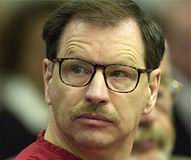 Gary Ridgway
Serial killer · USA · 1982
Gary Leon Ridgway Ridgway was born 18-February-1949 in Salt Lake City, UT. He w…
49 victims
Gary Ridgway
Serial killer · USA · 1982
Gary Leon Ridgway Ridgway was born 18-February-1949 in Salt Lake City, UT. He w…
49 victims
 Charles Cullen
Serial killer · USA · 1984
Charles Cullen (born February 22, 1960) was a former nurse and the most prolifi…
45 victims
Charles Cullen
Serial killer · USA · 1984
Charles Cullen (born February 22, 1960) was a former nurse and the most prolifi…
45 victims
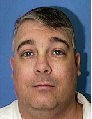 Robert Lloyd Henry
Murderer · USA · 1993
Robert Lloyd Henry was executed in Texas on November 20, 2003. Henry was descri…
2 victims
Robert Lloyd Henry
Murderer · USA · 1993
Robert Lloyd Henry was executed in Texas on November 20, 2003. Henry was descri…
2 victims
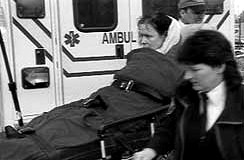 Rachel Capra Craig
Homicide · Canada · 2001
Rachel Capra Craig was a Canadian woman accused of the murder of her fourteen-y…
1 victim
Rachel Capra Craig
Homicide · Canada · 2001
Rachel Capra Craig was a Canadian woman accused of the murder of her fourteen-y…
1 victim
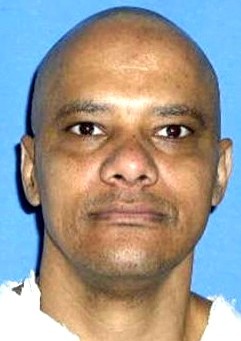 Michael Wayne Richard
Murderer · USA · 1986
Michael Wayne Richard was executed by lethal injection in September 25, 2007. M…
1 victim
Michael Wayne Richard
Murderer · USA · 1986
Michael Wayne Richard was executed by lethal injection in September 25, 2007. M…
1 victim
- Gender
- male
- Country
- USA
- Location
- Charlotte, North Carolina, USA
- Date of birth
- November 4, 1965
- Age at first offence
- 25
- Characteristics
- rape
- Victim profile
- Caroline Love / Shawna Hawk / Audrey Ann Spain / Valencia M. Jumper / Michelle Stinson / Vanessa Little Mack / Betty Jean Baucom / Brandi June Henderson / Deborah Slaughter
- Method of murder
- Strangulation / St abbing with knife
- Date(s) of murder
- 1990 - 1994
- Years active
- 1990–1994
- Date of arrest
- March 12, 1994
- Status
-
Sentenced to death
Sentenced to death on January 29, 1997
Case details
Henry Louis Wallace was sentenced to death on January 29, 1997.
Status and procedural history
Wallace was found guilty of nine murders on January 7, 1997. On January 29, 1997, he was sentenced to nine death sentences. After his sentencing, Wallace issued a statement to the victims’ families: “None of these women, none of your daughters, mothers, sisters or family members in any way deserved what they got. They did nothing to me that warranted their death.”
Wallace remained on Death Row in Central Prison, Raleigh, and pursued appeals to overturn the death sentences, stating that his confessions were coerced and his constitutional rights were violated in the process. In 2005, Superior Court Judge Charles Lamm rejected Wallace’s latest appeal to overturn his convictions and nine death sentences. The North Carolina Supreme Court upheld the death sentences in 2000. The U.S. Supreme Court in 2001 denied his appeal. No execution date was set.
Timeline
- January 7, 1997 — Wallace was found guilty of nine murders.
- January 29, 1997 — Wallace was sentenced to nine death sentences.
- June 5, 1998 — Wallace married Rebecca Torrijas at Central Prison in Raleigh in a ceremony next to the execution chamber.
- 2000 — The North Carolina Supreme Court upheld the death sentences.
- 2001 — The U.S. Supreme Court denied Wallace’s appeal.
- 2005 — Superior Court Judge Charles Lamm rejected Wallace’s latest appeal to overturn his convictions and nine death sentences.
The offence
Wallace was described as an American serial killer who killed 10 women in Charlotte, North Carolina, and as having killed nine women for which he was convicted.
Victims named in the case narrative
- Tashonda Bethea — killed in early 1990; her body was found after weeks. Wallace was questioned regarding her disappearance and death but was never formally charged in her murder.
- Sharon Nance — killed in May 1992; Wallace beat her to death and dropped her body by the railroad tracks; she was found a few days later.
- Caroline Love — strangled at her apartment; her body was dumped in a wooded area; a missing-person report was filed by Wallace and her sisters; her body was discovered in March 1994.
- Shawna Hawk — killed after visiting her at her home on February 19, 1993; Wallace later went to her funeral.
- Audrey Spain — killed on June 22, 1993; her body was found two days later.
- Valencia M. Jumper — killed on August 10, 1993; Wallace set her on fire to cover up his crime; a few days after her murder, he and his sister went to her funeral.
- Michelle Stinson — killed in September 1993; Wallace strangled and stabbed her in front of her oldest son.
- Vanessa Little Mack — killed on February 20, 1994 in her apartment; she had two daughters aged seven and four months at the time of her death.
- Betty Jean Baucom — robbed and strangled on March 8, 1994; Wallace took valuables from the house and left with her car; he pawned everything except the car, which he left at a shopping center.
- Brandi June Henderson — murdered on the night of March 8, 1994; Wallace strangled Henderson and her son, Tarreese.
- Deborah Ann Slaughter — Wallace robbed and attacked her after returning to the same apartment complex; her body was found on March 12, 1994.
- Other admitted killing — Wallace also admitted to having slain a prostitute whose name he did not know, in 1992; he said she demanded money and he did not have any, and that a scuffle led to him beating her to death; he stuffed her body in his car, drove it to Old Mount Holly Road, and abandoned it out of sight.
Investigation
After multiple killings and disappearances, the investigation drew criticism and involved changes in policing approach.
Charlotte’s police chief congratulated Wallace’s arrest and reassured the community that the women of East Charlotte were safe. In response to criticism, Charlotte-Mecklenburg Police Department apologized to its residents for not spotting a link among the murders sooner, stating that the murder cases varied enough to throw off Wallace’s trail.
The investigation included questioning witnesses and responding to missing-person reports. Caroline Love had been reported missing by Wallace and her sisters; her body was later discovered in March 1994. Wallace was also questioned in connection with the attempted rape of a 16-year-old Barnwell girl, but he was never charged for that either.
At an emergency press conference, the police department appointed Sgt. Gary McFadden as lead investigator in the fall and winter of 1993-94. The narrative described that McFadden had no previous involvement with any of the cases in East Charlotte.
The case narrative also described investigative pressure and community responses, including an incident where the police warned the people in East Charlotte that there was a serial killer on the loose in the week of March 9, 1994. It also described that one young lady said the police did not care because the police viewed some victims as “fast girls who hang out a lot”.
Criticism and statements
Charlotte’s police chief Dennis Nowicki was described as saying he was not aware of a killer until early March 1994, when three young black women were murdered within four days of each other. Charlotte-Mecklenburg Police Department apologized to residents for not spotting a link among the murders sooner.
Shawna Denise Hawk’s mother, Dee Sumpter, said: “The victims weren't prominent people with social-economic status. They weren't special. And they were black.”
Another quote attributed to Dee Sumpter described by the narrative was: “The victims weren't prominent people with social-economic status. They weren't special. And they were black.”
An additional quote attributed to Debra Slaughter’s father was: “To me, the girls just weren't important to the police,” and “They didn't live in a high-rent district. They weren't famous or known. They worked in fast-food joints. And they didn't have blond hair and blue eyes.”
Charlotte’s National Organization of Women called for an independent counsel to investigate the police department, stating: “Whether [the problem] is economic, racial, procedural, or managerial this issue must be resolved so that all Charlotteans can feel complete confidence in the Law Enforcement's ability to deal fairly and effectively with crime.”
Arrest
Wallace was arrested on March 13, 1994. For 12 hours, he confessed to the murders of 10 women in Charlotte, describing in detail the women’s appearances and how he raped, robbed and killed them, and describing his crack habit.
Trial
Venue and delays
Wallace’s trial was delayed over choice of venue, DNA evidence from murdered victims, and jury selection. His trial began in September 1996.
Parties and opening arguments
In the opening arguments, prosecutor Marsha Goodnow argued for the death penalty, while defense attorney Isabel Day asked for a life sentence, arguing that Wallace suffered from mental illness, and that the killings were not first-degree murder because they did not result from “premeditation and deliberation”.
Witness testimony and defense theory
Psychologist Faye Sultan testified that Wallace had suffered from mental illness at the time of the killings. The narrative reported that Sultan argued for a life sentence without parole instead of the death penalty.
FBI serial murder expert Robert Ressler testified during the trial, stating: “If he elected to become a serial killer, he was going about it in the wrong way... Mr. Wallace always seemed to take one step forward and two steps back. He would take items and put them in the stove to destroy them by burning them and then forget to turn the stove on.”
Verdict and sentencing at trial
On January 7, 1997, Wallace was found guilty of nine murders. On January 29, he was sentenced to nine death sentences. The narrative also described that after sentencing, Superior Court Judge Robert Johnston handed Wallace 10 more life sentences plus 322 years for 20 other crimes.
Appeals
Wallace appealed the death sentences and convictions, stating that his confessions were coerced and his constitutional rights were violated. In 2005, Superior Court Judge Charles Lamm rejected his latest appeal to overturn his convictions and nine death sentences.
The narrative described that the North Carolina Supreme Court upheld the death sentences in 2000, and that the U.S. Judge Charles Lamm’s rejection was described as moving Wallace another step closer to execution.
Aftermath
Wallace married Rebecca Torrijas on June 5, 1998 in a ceremony next to the execution chamber. Mecklenburg County public defender Isabel Day served as an official witness and photographer, and the manager of the Death Row unit at the prison attended.
The narrative stated that no execution date had yet been set for Wallace.
Other details
Personal life and background facts described in the case narrative
Henry Louis Wallace was born in Barnwell, South Carolina, on November 4, 1965. He was described as the son of Lottie Mae Wallace and a married school teacher who walked out on his lover when he found out she was pregnant. Wallace grew up with his mother working long hours as a textile worker. His mother was described as a harsh disciplinarian who criticized him for small mistakes.
Wallace attended Barnwell High School, was elected to student council, and served as a cheerleader. He graduated in 1983. He became a DJ for a local radio station in Barnwell. He went to several colleges before joining the U.S. Navy in 1985. Wallace married his high school sweetheart, Maretta Brabham, in 1987. He was described as being honorably discharged from the U.S. Navy in 1988.
The narrative described that while in the Navy, he began using several drugs, including crack cocaine. It also described warrants served for burglaries in and around the Seattle metro area and that he was arrested in January 1988 for breaking into a hardware store, then pleaded guilty in June 1988 to second-degree burglary and was sentenced to two years of supervised probation, with Probation Officer Patrick Seaburg stating he did not show up for most mandatory meetings.
Statement made to victims’ families
After sentencing, Wallace read a statement to the victims’ families: “None of these women, none of your daughters, mothers, sisters or family members in any way deserved what they got.
Marriage on Death Row
The narrative described Wallace’s marriage to former prison nurse Rebecca Torrijas and noted that his marriage ceremony occurred next to the execution chamber where he had been sentenced to die.
Spotted an error, or have more information about this case?