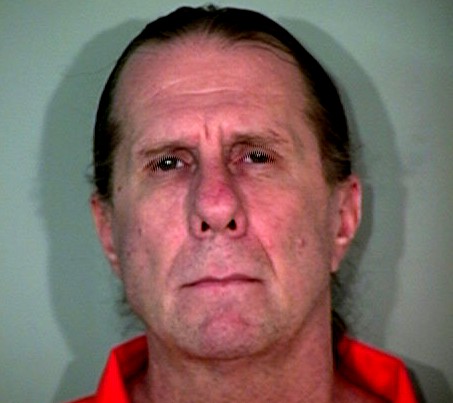
James Granvil Wallace
Murderer Brian Kevin Rosenfeld
Murderer · USA · 1985
Brian Kevin Rosenfeld Brian Kevin Rosenfeld was sentenced to three concurrent l…
23 victims
Brian Kevin Rosenfeld
Murderer · USA · 1985
Brian Kevin Rosenfeld Brian Kevin Rosenfeld was sentenced to three concurrent l…
23 victims
 Marvin Gray
Murderer · USA · 1975
Marvin Gray was convicted killer who claimed responsibility for 23 slayings and…
23 victims
Marvin Gray
Murderer · USA · 1975
Marvin Gray was convicted killer who claimed responsibility for 23 slayings and…
23 victims
 Yahweh ben Yahweh
Murderer · USA · 1980
Yahweh ben Yahweh was born and legally named Hulon Mitchell Jr. (October 27, 19…
23 victims
Yahweh ben Yahweh
Murderer · USA · 1980
Yahweh ben Yahweh was born and legally named Hulon Mitchell Jr. (October 27, 19…
23 victims
 Russell Ellwood
Murderer · USA · 1991
Russell Ellwood was a former taxi driver. Authorities suspected him of killing…
20 victims
Russell Ellwood
Murderer · USA · 1991
Russell Ellwood was a former taxi driver. Authorities suspected him of killing…
20 victims
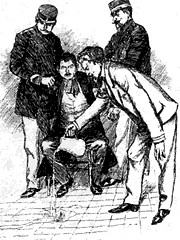 Pierre Voirbo
Murderer · France · 1868
Pierre Voirbo was a prime suspect after he had recently quarreled with the vict…
1 victim
Pierre Voirbo
Murderer · France · 1868
Pierre Voirbo was a prime suspect after he had recently quarreled with the vict…
1 victim
 Gertrude Baniszewski
Murderer · USA · 1965
Name: Gertrude Baniszewski Also known as: Gertrude Wright; Nadine Van Fossan; G…
1 victim
Gertrude Baniszewski
Murderer · USA · 1965
Name: Gertrude Baniszewski Also known as: Gertrude Wright; Nadine Van Fossan; G…
1 victim
 John Richard Baltazar
Murderer · USA · 1997
John Richard Baltazar was executed in Texas. · September 27, 1997 — John Baltaz…
1 victim
John Richard Baltazar
Murderer · USA · 1997
John Richard Baltazar was executed in Texas. · September 27, 1997 — John Baltaz…
1 victim
 Betty Broderick
Murderer · USA · 1989
Elisabeth Anne “Betty” Broderick (born November 7, 1947) was a former American…
2 victims
Betty Broderick
Murderer · USA · 1989
Elisabeth Anne “Betty” Broderick (born November 7, 1947) was a former American…
2 victims
- Gender
- male
- Country
- USA
- Location
- Pima County, Arizona, USA
- Date of birth
- April 28, 1950
- Age at first offence
- 34
- Characteristics
- argument, rape
- Victim profile
- Susan Insalaco and her two children, Anna, 16, and Gabe, 12
- Method of murder
- Beating with a baseball bat and a steel pipe wrench
- Date(s) of murder
- February 1, 1984
- Years active
- 1984
- Date of arrest
- Next day ( surrenders )
- Status
-
Life imprisonment
Sentenced to death on April 7, 2005. Commuted to life in prison without parole on March 27, 2012
Case record: James Granvil Wallace
Background
James Granvil Wallace lived with Susan Insalaco and her two children, 16-year-old Anna and 12-year-old Gabe.
On the night of January 31, 1984, Wallace had an argument with Susan Insalaco. The next day, Susan told Wallace to move out. Susan, Anna, and Gabe left the next day.
Wallace stayed in the house and decided to kill Susan and her children.
The offence
When Anna returned from school that day, Wallace was waiting with a baseball bat. He struck Anna repeatedly on the head until the bat broke, and then pushed the broken end of the bat through her throat. Wallace drug Anna’s body into the bathroom, cleaned up, and then got a steel pipe wrench from a shed.
Gabe arrived next. Wallace followed him into his room and killed him by striking him in the head with the pipe wrench.
Afterwards, Wallace waited for Susan. When Susan arrived about two hours later, she asked him why he had not left as she had requested. Wallace followed her into the kitchen and killed her by hitting her in the head with the same wrench.
Wallace took money from Susan’s wallet, bought some liquor, and drank it. He spent the night at a friend’s house.
After the next day, Wallace turned himself in to the police. He confessed to the murders and pleaded guilty to first degree murder.
Investigation
The circumstances of the crime were described as brutal and undisputed. Wallace reported what he remembered of the murders and insisted on pleading guilty to spare the victims’ family the anguish of a trial.
Dr. Richard Hinton, a court-appointed clinical psychologist, was involved in a competency determination after a mental examination.
Arrest
Wallace turned himself in to the police the next day after the murders.
Trial
Wallace pleaded guilty to the three murders. The proceeding required sentencing because the guilty plea resolved the guilt phase.
Presiding Judge: Hon. James C. Carruth Hon. Virginia C. Kelly (resentencing)
Prosecutor: Edward C. Nesbitt (trial) & John Davis (resentencing) Rick Unklesbay & Teresa Godoy (resentencing)
Defense Counsel: Lamar Couser (trial), George Curtis (resentencing) Eric Larsen & Jill Thorpe (resentencing)
Start of Trial: March 1, 1985 (guilty Plea) Verdict: March 1, 1985 (guilty Plea)
Sentencing
Sentencing: May 15, 1985 Resentencing: August 25, 1987 Resentencing: April 7, 2005
At sentencing, the court found aggravating circumstances:
- Especially heinous, cruel or depraved (applicable to all the murders)
- Pecuniary gain for the murder of Susan Insalaco
The court found one mitigating circumstance: remorse. The court found that remorse did not outweigh the aggravating circumstances and sentenced Wallace to death on all three murder counts.
After counsel change on appeal, George Curtis took over and persuaded the Arizona Supreme Court to:
- Reverse the pecuniary gain aggravating circumstance
- Modify the trial court’s findings on the “cruel, heinous or depraved” aggravating circumstance
The Arizona Supreme Court remanded for resentencing with respect to the mother’s murder, while affirming with respect to the murders of the children.
At resentencing, Curtis presented the testimony of a new psychiatrist, Dr. David Gurland. Curtis provided Gurland with police reports and Dr. Bendheim’s testimony but did not provide information about Wallace’s background or family history. Gurland later claimed he spoke with Wallace’s brother while preparing his diagnosis, but Wallace did not have a brother.
Gurland testified that Wallace was in a dissociative state at the time of the murders and hypothesized that Wallace’s psychological problems were rooted in part in his mother’s early death. The mother remained alive.
Gurland concluded that Wallace was not able to fully appreciate the wrongfulness of his actions or to conform his conduct to the requirements of law, which would have been a mitigating circumstance under Ariz. Rev. Stat. S 13-703(G)(1). Drs. Hinton and Morenz testified for the government that Wallace had not been dissociated at the time of the murders.
The court again sentenced Wallace to death, and the Arizona Supreme Court affirmed.
A transcript quote about the resentencing stage reaction was included:
“My mother's alive. I don't know who the hell you're talking about. You sure as hell aren't talking about me.”
Appeals
Wallace’s case reached multiple appellate levels, including state and federal appeals.
Arizona Supreme Court opinions were listed:
- State v. Wallace, 151 Ariz. 362, 728 P.2d 232 (1986).
- State v. Wallace, 160 Ariz. 424, 773 P.2d 983 (1989).
The matter was also described in the United States Court of Appeals for the Ninth Circuit, with case details: James Granvil Wallace, Petitioner-Appellant, v. Terry Stewart, Respondent-Appellee. No. 97-99016 United States Court of Appeals for the Ninth Circuit Argued and Submitted April 22, 1998 Decided July 21, 1999 Appeal from the United States District Court for the District of Arizona, William D. Browning, District Judge, Presiding. D.C. No. CV-91-00315-WDB
The Ninth Circuit opinion noted:
- Wallace pleaded guilty to first degree murder and was sentenced to death.
- The question on appeal concerned ineffective assistance of counsel at the sentencing phase.
The Ninth Circuit described ineffective assistance allegations and remanded for an evidentiary hearing:
- The Ninth Circuit reversed the district court’s judgment as to ineffective assistance of counsel at the sentencing phase.
- The Ninth Circuit remanded for an evidentiary hearing on that claim.
- The Ninth Circuit affirmed on the remaining portion of the ineffective assistance claim and on the competency hearing claim.
Outcome
Wallace was sentenced to death and remained on Arizona’s death row for 28 years. His death sentences were later commuted.
The legal status after appellate and post-conviction proceedings included:
- Sentenced to death on April 7, 2005.
- Commuted to life in prison without parole on March 27, 2012.
Other details
In the sentencing discussion, an Arizona Assistant Attorney General, Kent Cattani, was quoted:
“He should have known, given the size of the instrument used and the size of the victims, that he had inflicted enough violence to cause death,”
Provisions referenced in the discussion included requirements under Arizona law in 1984 for prosecutors to prove that the crime was especially heinous by showing that Wallace either relished in the crime, inflicted gratuitous violence, or needlessly mutilated the victims.
A quote describing the crimes and the legal conclusion was included:
“Even among capital cases, this case is atrocious,” the justices wrote in their ruling.
A description of the court’s characterization of the murders was included:
“Wallace's premeditated, brutal murders of Anna and Gabriel clearly were senseless, and the unsuspecting, defenseless victims were helpless.”
The court’s rationale for the especially heinous finding included:
“did not inflict more wounds on the family than he thought were necessary to kill them.”
Named participants in the sentencing proceedings included multiple counsel and mental health experts:
- Lamar Couser
- Dr. Richard Hinton
- Drs. Barry Morenz and James Little
- Dr. Otto Bendheim
- George Curtis
- Dr. David Gurland
- Dr. David Lisak
- Dr. Bendheim and Dr. Gurland were referenced through later testimony and affidavits.
Courts and judges were listed:
- Hon. James C. Carruth
- Hon. Virginia C. Kelly (resentencing)
- William D. Browning, District Judge
Additional referenced statutory and case citations appeared in the appellate narrative:
- Caro v. Calderon, 165 F.3d 1223 (9th Cir. 1999)
- Keeney v. Tamayo-Reyes, 504 U.S. 1 (1992)
- Correll v. Stewart, 137 F.3d 1404 (9th Cir. 1998)
- Hendricks v. Calderon, 70 F.3d 1032 (9th Cir. 1995)
- Clabourne v. Lewis, 64 F.3d 1373 (9th Cir. 1995)
- de Kaplany v. Enomoto, 540 F.2d 975 (9th Cir. 1976) (en banc)
- Ake v. Oklahoma, 470 U.S. 68 (1985)
- Clemons v. Mississippi, 494 U.S. 738, 741 (1990)
- Ariz. Rev. Stat. S 13-703.01(B) (1994)
- Ariz. Rev. Stat. S 13-703(G)(1)
- State v. Wallace, 728 P.2d 232 (Ariz. 1986) and 773 P.2d 983 (Ariz. 1989)
An inmate identifier appeared: INMATE 053811 WALLACE JAMES, G
Spotted an error, or have more information about this case?