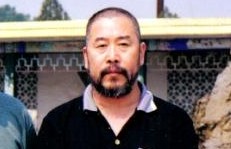
Hu Wanlin
Homicide Yang Jiaqin
Homicide · China · 2010
Yang Jiaqin carried a kitchen cleaver and attacked students and bystanders outs…
2 victims
Yang Jiaqin
Homicide · China · 2010
Yang Jiaqin carried a kitchen cleaver and attacked students and bystanders outs…
2 victims
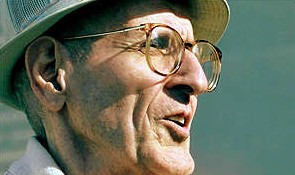 Jack Kevorkian
Homicide · USA · 1990
Jack Kevorkian (born May 26, 1928) was a controversial American pathologist. He…
130 victims
Jack Kevorkian
Homicide · USA · 1990
Jack Kevorkian (born May 26, 1928) was a controversial American pathologist. He…
130 victims
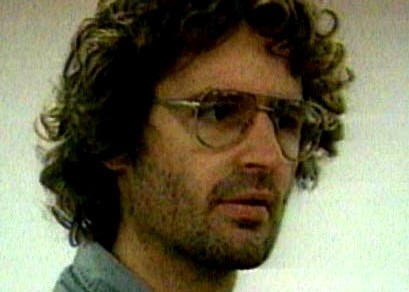 David Koresh
Homicide · USA · 1993
David Koresh (born Vernon Wayne Howell; August 17, 1959 – April 19, 1993) led t…
79 victims
David Koresh
Homicide · USA · 1993
David Koresh (born Vernon Wayne Howell; August 17, 1959 – April 19, 1993) led t…
79 victims
 Todd Hall
Homicide · USA · 1996
Todd Hall was described by neighbors as "mentally slow" and was said to have su…
9 victims
Todd Hall
Homicide · USA · 1996
Todd Hall was described by neighbors as "mentally slow" and was said to have su…
9 victims
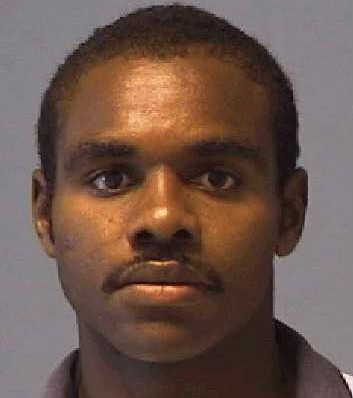 Clinton Bankston
Homicide · USA · 1987
15 August 1987 — Ann Morris (63), her sister Sally Nicholson (59), and Sally’s…
5 victims
Clinton Bankston
Homicide · USA · 1987
15 August 1987 — Ann Morris (63), her sister Sally Nicholson (59), and Sally’s…
5 victims
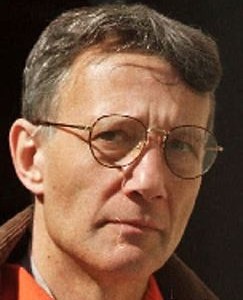 Thomas Capano
Murderer · USA · 1996
Thomas J. Capano was a disbarred American lawyer from Wilmington, Delaware. He…
1 victim
Thomas Capano
Murderer · USA · 1996
Thomas J. Capano was a disbarred American lawyer from Wilmington, Delaware. He…
1 victim
 Robert Reldan
Murderer · USA · 1974
Name: Robert Reldan Robert Reldan was sentenced to life in prison on two counts…
8 victims
Robert Reldan
Murderer · USA · 1974
Name: Robert Reldan Robert Reldan was sentenced to life in prison on two counts…
8 victims
 Dayva Cross
Murderer · USA · 1999
Dayva Michael Cross was sentenced to death for the stabbing deaths of his wife,…
3 victims
Dayva Cross
Murderer · USA · 1999
Dayva Michael Cross was sentenced to death for the stabbing deaths of his wife,…
3 victims
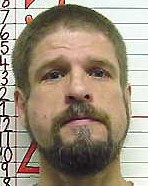 Jeffrey Tokar
Murderer · USA · 1992
March 11, 1992 — Jeffrey Tokar picked up his girlfriend, Sandra Stickley, share…
1 victim
Jeffrey Tokar
Murderer · USA · 1992
March 11, 1992 — Jeffrey Tokar picked up his girlfriend, Sandra Stickley, share…
1 victim
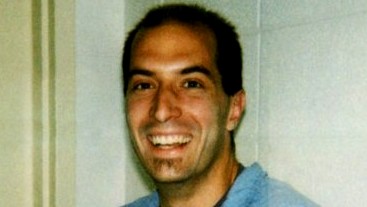 David Lynn Simonsen
Murderer · USA · 1988
David Lynn Simonsen was sentenced to death on February 24, 1989. The judgment o…
2 victims
David Lynn Simonsen
Murderer · USA · 1988
David Lynn Simonsen was sentenced to death on February 24, 1989. The judgment o…
2 victims
 Eduardo Sencion
Mass murderer · USA · 2011
Eduardo Sencion (also identified as Eduardo Perez-Gonzalez and Eduardo Perez-Go…
4 victims
Eduardo Sencion
Mass murderer · USA · 2011
Eduardo Sencion (also identified as Eduardo Perez-Gonzalez and Eduardo Perez-Go…
4 victims
- Gender
- male
- Country
- China
- Location
- Henan, China
- Date of birth
- December 12, 1949
- Age at first offence
- 48
- Characteristics
- fugitive, history of mental illness, torture, drugs
- Victim profile
- Men and women (patients)
- Method of murder
- Poisoning (home-made herbal medicines)
- Date(s) of murder
- 1997 - 1998
- Years active
- 1997–1998
- Date of arrest
- January 18, 1999
- Status
-
Imprisoned
Sentenced to 15 years in prison for practicing medicine without a license; deprivation of voting rights for five years; 150,000 yuan fine (sentenced on 1 October 2000).
Case identification
Hu Wanlin (胡万林), born 1949, was from Mianyang, Sichuan Province.
Timeline
- 1993 — While in prison for intentional homicide, swindling, and abducting and trafficking in women, Hu opened a medical practice.
- 1997 — Hu was released from prison and continued practicing medicine illegally in the northern Shanxi Province and northwestern Shaanxi Province; he set up the Hu Wanling Hospital in Taiyuan, Shaanxi province.
- 7 — Hu practiced medicine illegally in the northern Shanxi Province and northwestern Shaanxi Province from July 1997 to February 1998.
- 16 December 1997 — Wang Baoran, a Henan engineer with a kidney dysfunction, died as a result of Hu’s traditional Chinese medicine.
- November 1997 — Hu established the Zhongnanshan Hospital in Shaanxi; authorities alleged 146 people died under his treatment.
- 1 February 1998 — Hu’s illegal practice in Shaanxi was banned by local authorities.
- June 1998 — Hu went to Henan to continue practicing medicine after the ban on his practice in Shaanxi; he had been practicing qigong in the Shangqiu area since June 1998.
- 18 January 1999 — Hu was arrested in Shangqiu.
- 1 October 2000 — Hu was convicted and sentenced to 15 years imprisonment for practicing medicine without a license.
- 5 years — Voting rights were suspended for five years as part of the sentence.
- 150,000 yuan — A fine of 150,000 yuan was imposed.
Background
Hu Wanlin was described as a self-styled “doctor” who practiced the traditional medical art of qigong.
He had completed primary education.
Hu led a troubled life.
While serving a sentence in jail for intentional homicide, swindling, and abducting and trafficking in women, Hu opened a medical practice in 1993.
Hu called himself a miracle-worker who could diagnose patients with only a cursory examination that might last only five seconds.
Hu became a public figure, having his medical practice and “medical miracles” described by a well-known Chinese novelist, Ke Yunlu.
Qigong masters were described as having the ability to concentrate “qi” or energy in certain parts of their bodies and to use it to help diagnose and cure a wide range of ailments.
The qi was described as having curative powers without physical contact being necessary.
Hu became well-known having his medical practice and “medical miracles” described by Ke Yunlu.
The offence
Hu was arrested and tried for practicing medicine without a license.
Authorities alleged Hu’s “treatments” involved herbal preparations that were proved to contain high amounts of sodium sulphate, which was poisonous in large doses.
Hu sold home-made herbal medicines that were mixed with the mineral salt mirabilite.
Three deaths were clearly attributed to his illegal and unsafe practices.
Authorities alleged his treatments resulted in the death of at least 146 people.
It was also alleged that he was responsible for killing between 100 to 190 patients.
Hu was described as having previously served two prison terms for operating illegal medical clinics in various parts of China.
Investigation and arrest
Hu was arrested in January 1999 in Shangqiu.
He was suspected of causing the deaths of nearly 150 patients.
The reporting stated that, since June 1998, Hu had been practicing qigong in the Shangqiu area.
Trial
Hu was tried for practicing medicine without a license.
Hu was convicted on 1 October 2000.
Sentencing
Hu received 15 years imprisonment.
Voting rights were suspended for five years.
A fine of 150,000 yuan was imposed.
The court decided on a stern punishment because of the serious consequences and great impact on society.
Outcome
As a direct result of the trial, an official system of medical licensing was set up in China.
An additional account described that China set up a medical licensing system under which only licensed doctors were allowed to treat patients.
Other details
Hospitals and alleged deaths
After his release in 1997, Hu continued practicing medicine illegally in the northern Shanxi Province and northwestern Shaanxi Province.
He set up the Hu Wanling Hospital in Taiyuan, Shaanxi province.
Authorities alleged his treatment in Taiyuan caused the death of 20 patients.
Authorities alleged that, in November 1997, Hu established the Zhongnanshan Hospital in Shaanxi and 146 people died under his treatment.
After police closed the hospital, Hu fled to Shangqiu.
A local health bureau formally invited him to set up the Weida Hospital.
Authorities alleged that 30 patients died there under his care.
Specific deaths attributed to Hu’s prescriptions
Wang Baoran, a Henan engineer with a kidney dysfunction, died as a result of Hu’s traditional Chinese medicine on 16 December 1997.
Liu Famin, mayor of Luohe city in Henan, who had liver cancer, died from using Hu’s prescription medicine after taking it for four days.
He Suyun, a retired teacher in Shangqiu, also died for the same reason on 1 October (year not specified in the record excerpt).
Claims and public profile
Hu came to prominence in 1997 with claims of a 90 percent cure rate in treatment of cancer, hepatitis and high blood pressure.
He was described as the subject of a book, “Qigong Master,” which supported his claim to possess mystical healing powers.
He was described as an “Omnipotent Doctor.”
International and domestic effects mentioned
The case was described as bringing attention to problems China had with unauthorized medical practice.
It was stated that, in 1999, 300,000 Chinese passed a national medical examination and became China’s first group of licensed doctors.
Spotted an error, or have more information about this case?